
In 2015, smartphone buyers faced a pivotal decision: stick with Apple’s polished ecosystem or embrace Samsung’s powerful, feature-rich flagship. The iPhone 6s and Galaxy Note 4 represented two very different philosophies in mobile design. One emphasized seamless integration and longevity; the other offered versatility, customization, and productivity tools like the S Pen. Years later, with the benefit of hindsight, we can assess whether upgrading from one to the other—or choosing between them—was truly worthwhile.
This isn’t just a specs comparison. It’s a reflection on real-world usability, software support, resale value, and how each device held up over time. For users deciding between ecosystems or considering future upgrades, this retrospective offers valuable insights into what actually matters beyond launch-day excitement.
Design and Build: Contrasting Philosophies
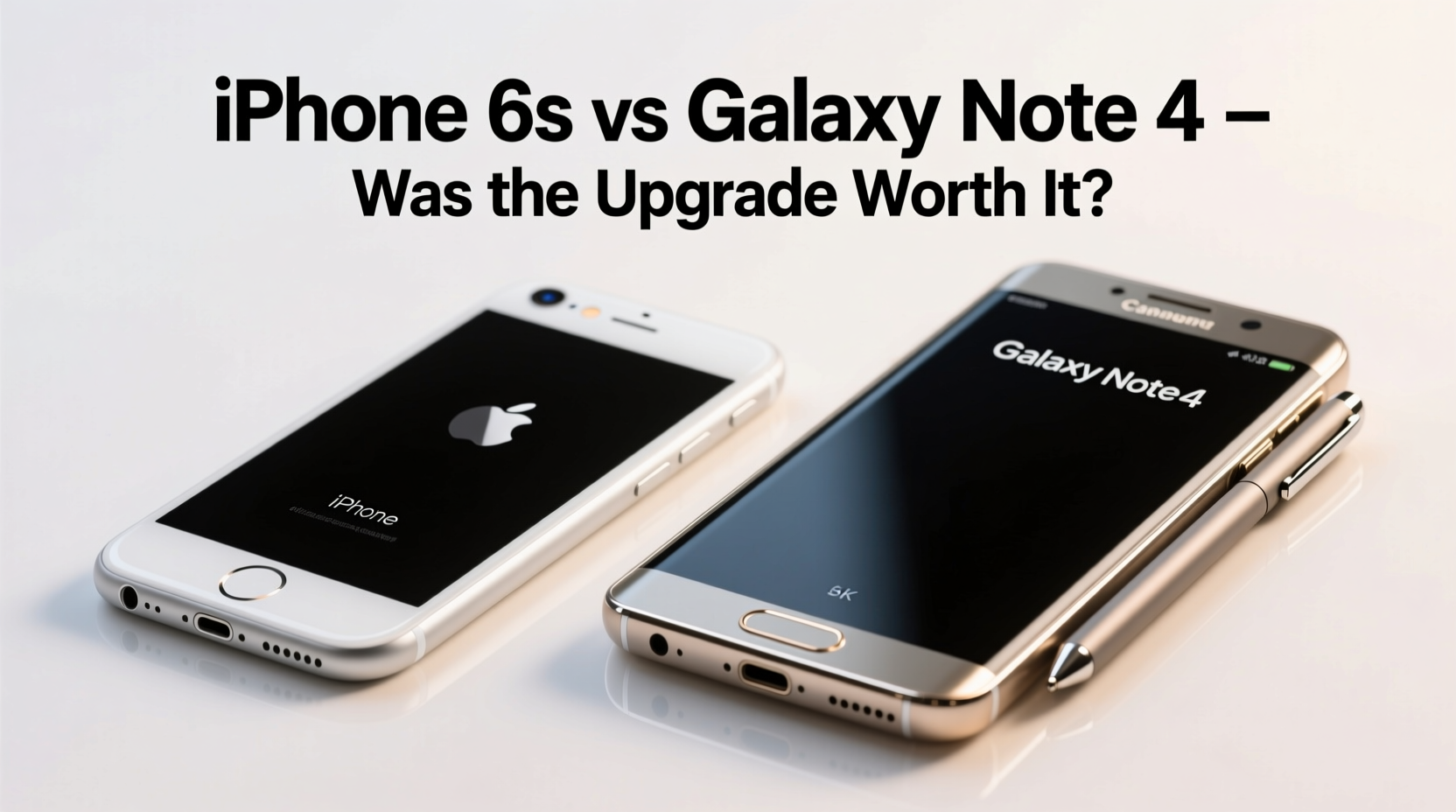
The iPhone 6s introduced Apple’s aerospace-grade aluminum (7000 series), a response to the “bendgate” controversy of the previous year. With its rounded edges and minimalist aesthetic, the 6s felt solid in hand—though still prone to slipping without a case. At 143 grams and 7.1mm thick, it struck a balance between presence and portability.
In contrast, the Galaxy Note 4, released a year earlier in 2014, was a phablet before the term became mainstream. Measuring 143.9 x 77.4 x 8.5 mm and weighing 176 grams, it was significantly larger and heavier. Its faux-leather back and metallic trim gave it a premium look, but also made it less pocket-friendly. However, that size came with advantages: a 5.7-inch Quad HD Super AMOLED display that outshone the iPhone’s 4.7-inch Retina screen in resolution and vibrancy.
Tip: If you prioritize one-handed use, the iPhone 6s remains more ergonomic despite its age. For media consumption and multitasking, the Note 4’s larger screen still holds appeal.Performance and Software Longevity
Beneath the surface, these phones diverged sharply in long-term viability. The iPhone 6s launched with Apple’s A9 chip and 2GB of RAM—a modest configuration by today’s standards but remarkably efficient thanks to iOS optimization. Crucially, Apple supported the 6s with iOS updates all the way to iOS 15, released in 2021. That’s six years of security patches, feature updates, and app compatibility.
The Galaxy Note 4, powered by either an Exynos 5433 or Snapdragon 805 (depending on region), had higher peak hardware specs on paper. But Android’s fragmented update system meant official support ended after just two major OS upgrades—from Android 4.4 KitKat to 5.1 Lollipop, then 6.0 Marshmallow in limited markets. By 2017, most Note 4 units were stuck on outdated software, leaving them vulnerable and incompatible with modern apps.
“iOS devices from 2015 still run current apps in 2023. Most Android flagships from that era couldn’t even handle 2018’s app requirements.” — David Lin, Mobile Analyst at TechTrend Weekly
This disparity in software lifespan fundamentally shifted the value proposition. While the Note 4 felt faster initially, especially in benchmarks, the iPhone 6s aged far more gracefully.
Camera Comparison: Still Photos vs. Video
The iPhone 6s featured a 12MP rear camera—the first major megapixel jump for Apple—and introduced 4K video recording, Live Photos, and improved low-light performance. Its color accuracy and dynamic range were praised for consistency across lighting conditions. Front-facing selfie quality also improved dramatically with a 5MP FaceTime camera.
The Galaxy Note 4, meanwhile, packed a 16MP sensor with optical image stabilization and an f/2.2 aperture. In daylight, it captured sharper details and richer colors, particularly in landscape shots. However, its video capabilities maxed out at 2160p (4K) only in certain regions and lacked the audio stabilization and color grading refinements seen in the 6s.
More importantly, Apple’s computational photography advancements—gradually rolled out via software updates—meant the 6s continued to improve its photo processing over time. Samsung’s older hardware couldn’t leverage similar gains.
Differences That Mattered Over Time
Let’s break down key differences that influenced long-term satisfaction:
| Feature | iPhone 6s | Galaxy Note 4 |
|---|---|---|
| OS Support Duration | 6 years (iOS 9 to iOS 15) | ~2–3 years (KitKat to Marshmallow) |
| RAM | 2GB | 3GB |
| Storage Options | 16/32/64/128GB (non-expandable) | 32GB + microSD (up to 128GB) |
| Battery Replaceability | Non-user-replaceable | User-replaceable |
| Premium Feature | 3D Touch, Touch ID, Siri integration | S Pen, IR blaster, heart rate sensor |
| Resale Value After 3 Years | Moderate ($30–$50) | Low ($10–$20) |
While the Note 4 offered expandable storage and removable batteries—features many users valued—the inability to receive timely security updates diminished their practical benefit. Conversely, the iPhone’s closed ecosystem ensured tighter control over performance and privacy, even as hardware aged.
A Real-World Upgrade Scenario
Consider Sarah, a college student in 2015 who used a Galaxy S4. She debated between upgrading to the Note 4 or switching to the iPhone 6s. She chose the Note 4 for its large screen, stylus functionality, and SD card slot. Initially thrilled, she found herself frustrated by 2017: apps crashed frequently, Chrome stopped supporting her OS version, and WhatsApp announced it would drop support for devices below Android 4.1.
By 2018, she sold her Note 4 for $15 and bought a refurbished iPhone 6s. Despite being the same age, the 6s ran iOS 12 smoothly, received regular updates, and supported all her daily apps. Her productivity improved—not because the hardware was superior, but because the software environment remained functional.
This scenario wasn’t unique. Many Android users during this era experienced what analysts call “update obsolescence”—a device rendered unusable not by broken hardware, but by unsupported software.
Was Upgrading Really Worth It?
The answer depends on your priorities at the time—and what you expected to get out of the device long-term.
- If you wanted immediate power and flexibility: The Note 4 delivered. The S Pen enabled note-taking, sketching, and precise text selection—features absent from iPhones until much later.
- If you valued long-term reliability and ecosystem integration: The iPhone 6s was clearly the better investment. iCloud sync, AirDrop, iMessage, and consistent app performance created a cohesive experience.
- If you planned to keep your phone for 3+ years: The 6s wins decisively. Even today, some 6s units are still usable as secondary devices or emergency phones.
Frequently Asked Questions
Could the Galaxy Note 4 be updated to newer Android versions unofficially?
Yes, through custom ROMs like LineageOS. However, this required technical knowledge, voided warranties, and often led to instability or missing drivers (e.g., camera, sensors). For average users, this wasn’t a practical solution.
Did the iPhone 6s suffer from any major hardware issues?
Yes—Apple acknowledged a defect in certain 6s units where the battery would unexpectedly shut down. They launched a free replacement program. Additionally, early models experienced “touch disease,” caused by a failing logic board connector, though this was repairable.
Is either phone usable in 2024?
Marginally. Both lack modern security protections and cannot install current versions of essential apps like Google Maps, banking services, or Zoom. While basic calling and texting work, neither is recommended for primary use.
Final Verdict: Long-Term Thinking Wins
Looking back, upgrading from the Galaxy Note 4 to the iPhone 6s—or choosing the 6s over the Note 4—proved more worthwhile for most users. Not because the iPhone was inherently better on day one, but because it lasted longer, stayed secure, and remained functional in a rapidly evolving app landscape.
The Note 4 was a powerhouse in 2014, pushing boundaries with its display and stylus. But technological leadership means little if it isn’t sustained. Apple’s commitment to long-term software support turned the 6s into a benchmark for upgrade value—one that many subsequent Android devices have struggled to match.
For today’s consumers, the lesson is clear: when choosing between smartphones, don’t just compare specs and prices. Ask how long each device will remain secure, supported, and compatible with the tools you rely on. That single factor may matter more than any camera or processor spec.
🚀 Still using an old flagship? Evaluate its software support window before your next upgrade. Share your experience—what phone surprised you by lasting longer than expected?