The leap between iPhone generations often sparks debate: is the new model truly better, or just slightly refined? For photographers and videographers who rely on their phones daily, the jump from the iPhone 12 Pro Max to the iPhone 13 brings tangible changes—especially in the camera department. While both devices are powerhouses, understanding the real-world impact of these upgrades is key to deciding whether the investment pays off.
Camera Hardware: What Changed?
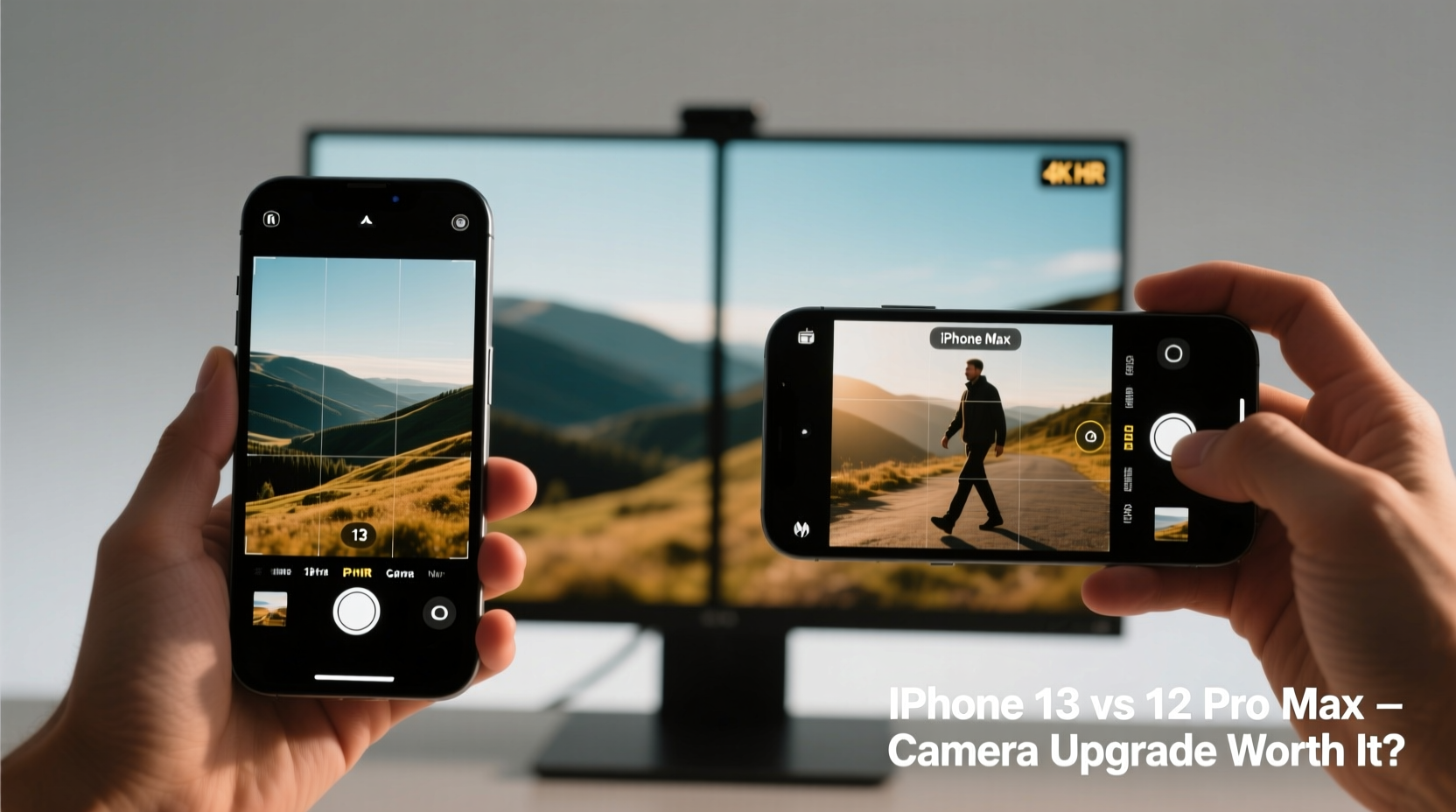
The iPhone 12 Pro Max already set a high bar with its triple-lens system: a 12MP wide, ultra-wide, and telephoto lens. Its standout feature was sensor-shift stabilization on the main sensor—a first for any smartphone—which dramatically improved photo stability and sharpness.
The iPhone 13 inherits that same stabilization but enhances the primary sensor with a larger aperture (f/1.6 compared to f/1.6 on the 12 Pro Max—slightly improved light gathering) and a bigger sensor surface area. Apple also rearranged the dual-camera lenses diagonally, allowing more room for hardware under the hood. Most importantly, the new sensor captures 47% more light, which directly affects low-light performance and dynamic range.
The ultra-wide lens remains at f/2.4, but improvements in software processing help reduce lens flare and noise. The telephoto lens still offers 2x optical zoom, but the overall computational photography engine—powered by the A15 Bionic chip—brings smarter HDR, deeper depth mapping, and better color accuracy.
Tip: Always tap to focus and expose before taking a shot—this gives you control over brightness and subject clarity, especially in mixed lighting.Photo Quality: Real-World Differences
In daylight, both phones produce stunning results. Colors are natural, details are crisp, and Smart HDR handles contrast well. However, the iPhone 13 consistently pulls ahead in dynamic range. Shadows retain more detail, and highlights are less likely to blow out, thanks to Photographic Styles and second-generation Deep Fusion.
Low-light performance is where the iPhone 13 shines. Night mode activates faster and works across all lenses—not just the main one. In dim restaurant lighting or evening cityscapes, the 13 produces cleaner images with less grain and more accurate skin tones. The increased light capture means shorter exposure times, reducing motion blur even without a tripod.
Portrait mode has also evolved. With the A15’s enhanced machine learning, edge detection around hair and glasses is far more precise. Background separation feels more natural, and the bokeh effect is smoother. These improvements are subtle but noticeable when viewed at full resolution.
“Smartphone photography isn’t just about megapixels—it’s about how the hardware and software work together. The iPhone 13’s fusion of sensor size, aperture, and computational imaging represents a meaningful step forward.” — David Kim, Mobile Imaging Analyst at DXOMARK
Video Capabilities: Cinematic Mode and Beyond
If you shoot video, the iPhone 13 introduces a game-changing feature: Cinematic Mode. This applies real-time depth-of-field effects, automatically shifting focus between subjects like a professional film camera. It works in 1080p at 30fps and is available on both front and rear cameras.
While the iPhone 12 Pro Max supports Dolby Vision HDR recording, the 13 improves upon it with extended dynamic range and better stabilization. The addition of sensor-shift on the main camera (already present in the 12 Pro Max) combined with optical and electronic stabilization in the 13 makes handheld footage remarkably steady—even while walking or filming in a moving vehicle.
One underrated upgrade is the microphone system. The 13 filters background noise more effectively during outdoor recordings. Wind reduction is noticeably better, making vlogging and interview clips cleaner without external gear.
| Feature | iPhone 12 Pro Max | iPhone 13 |
|---|---|---|
| Main Aperture | f/1.6 | f/1.5 |
| Sensor-Shift Stabilization | Main camera only | Main camera only |
| Night Mode (All Lenses) | No (ultra-wide & telephoto limited) | Yes |
| Cinematic Mode | No | Yes (1080p/30fps) |
| Dolby Vision HDR | 4K up to 60fps | 4K up to 60fps (improved tone mapping) |
| Front Camera Video | 4K, no cinematic mode | 4K with cinematic mode support |
Mini Case Study: Travel Photographer’s Experience
Maya Tran, a freelance travel photographer based in Lisbon, upgraded from the iPhone 12 Pro Max to the 13 for a two-week assignment in Morocco. Her goal was to test whether the new phone could replace her mirrorless setup for social-first content.
Shooting in Marrakech’s bustling souks and the blue streets of Chefchaouen, she relied heavily on low-light performance and quick autofocus. “The iPhone 13 handled narrow alleys with inconsistent lighting far better,” she said. “I got usable shots at dusk without pulling out a flash. And Cinematic Mode made my Instagram reels look instantly more polished.”
She noted that while the 12 Pro Max produced excellent stills, the 13’s faster processing allowed her to shoot bursts in rapid succession without lag—critical when capturing fleeting moments. “It felt more responsive, especially when switching between lenses.”
For her, the upgrade was justified not because of dramatic differences, but due to cumulative improvements that reduced post-processing time and increased success rate per shot.
Is the Upgrade Worth It? A Practical Checklist
Before deciding, consider your usage patterns. Here’s a checklist to help determine if the camera upgrade matters for your needs:
- Do you frequently shoot in low light? → The 13’s improved sensor and Night mode make a visible difference.
- Are you creating video content for social media? → Cinematic Mode adds production value with minimal effort.
- Do you rely on portrait photography? → Better edge detection and bokeh on the 13 enhance professional-looking results.
- Do you edit photos on-device? → The A15 chip processes images faster, improving workflow.
- Are you satisfied with your 12 Pro Max photos? → If yes, the gains may feel incremental rather than transformative.
Frequently Asked Questions
Can the iPhone 13 replace a DSLR for casual photography?
For everyday use—family events, travel, social media—the iPhone 13 delivers exceptional quality that rivals entry-level DSLRs in many lighting conditions. However, dedicated cameras still offer superior zoom, interchangeable lenses, and manual controls for advanced users.
Does the iPhone 13 have better zoom than the 12 Pro Max?
No. Both phones offer 2x optical zoom and up to 10x digital zoom. There’s no telephoto upgrade in the 13, so long-distance shots remain similar in quality.
Is Cinematic Mode editable after recording?
Yes. You can adjust focus points, depth effect intensity, and even reapply the blur in the Photos app after shooting—giving you creative flexibility during editing.
Final Verdict: Who Should Upgrade?
The iPhone 13’s camera improvements are evolutionary, not revolutionary. If you’re coming from an older iPhone, the jump will feel significant. But for 12 Pro Max owners, the benefits are nuanced: better low-light shots, smarter HDR, and powerful new video tools.
For creators, vloggers, and mobile photographers who prioritize video storytelling or shoot in challenging lighting, the upgrade is worthwhile. The combination of hardware refinements and software intelligence results in more consistent, higher-quality output with less effort.
However, if your current 12 Pro Max meets your needs and you don’t actively use features like Night mode or Dolby Vision, the practical gains may not justify the cost. In that case, saving for the iPhone 15 or waiting for newer innovations might be the smarter move.
💬 Have you upgraded from the 12 Pro Max to the 13? Share your camera experience and let others know what changed in your daily shooting routine!