Setting boundaries is one of the most empowering yet challenging acts of self-care. For many, saying “no” or expressing personal limits triggers an immediate wave of guilt. This guilt often stems from years of conditioning—being taught to prioritize others’ needs, fear conflict, or worry about being perceived as selfish. But healthy boundaries aren’t selfish; they’re essential for emotional well-being, respectful relationships, and long-term resilience.
The truth is, you can protect your time, energy, and values without damaging relationships or sacrificing kindness. The key lies in understanding why guilt arises, recognizing what constitutes a healthy boundary, and practicing communication techniques that honor both yourself and others. This guide provides actionable steps, real-life examples, and expert-backed insights to help you establish boundaries confidently and consistently—without the weight of guilt.
Why Guilt Follows Boundary-Setting (And Why It Shouldn’t)
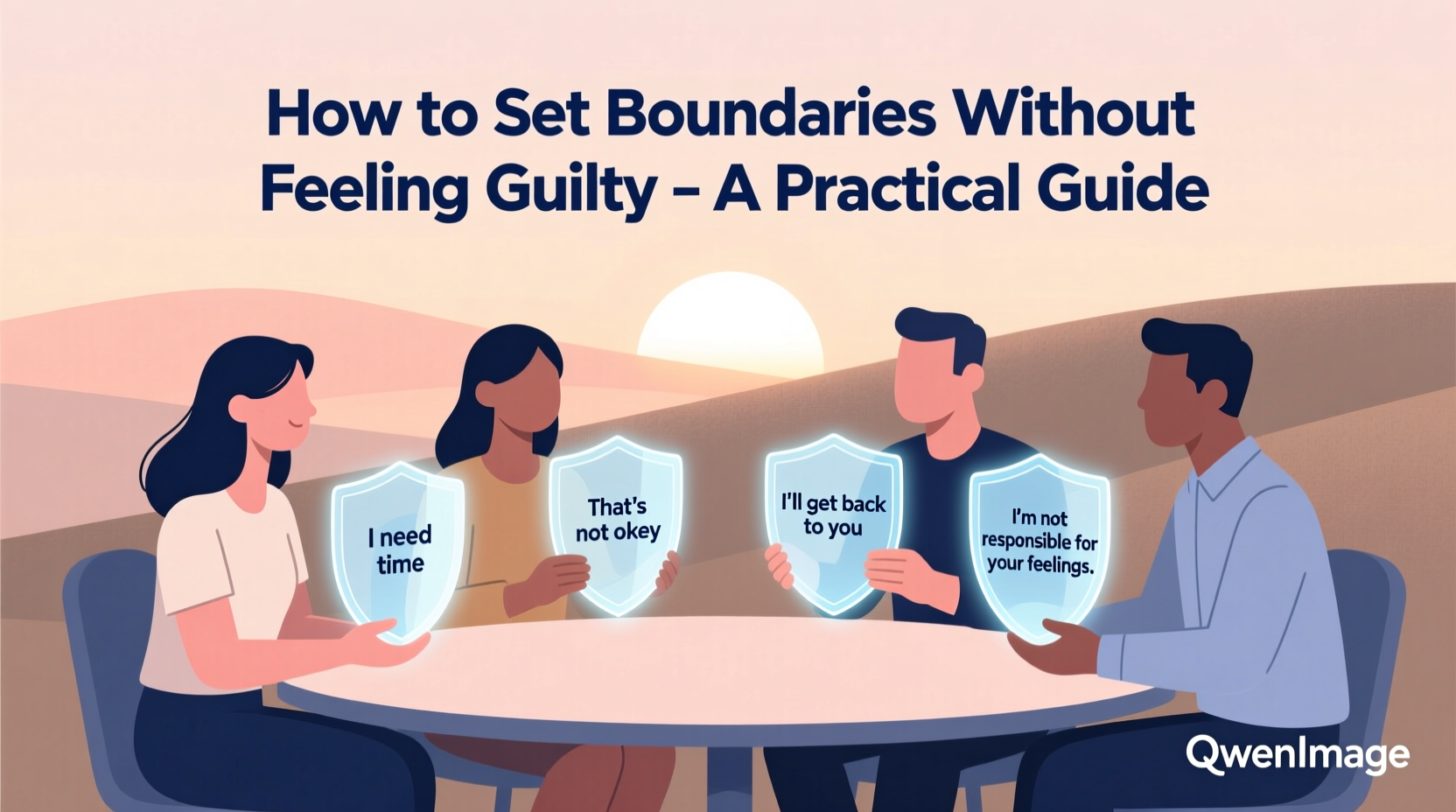
Guilt after setting a boundary is common, especially if you’ve spent years accommodating others at your own expense. Psychologists identify several root causes:
- Pleaser mentality: A deep-seated need to be liked or approved of leads to over-giving.
- Fear of rejection: Worry that saying no will result in abandonment or resentment.
- Cultural or familial norms: In some environments, assertiveness is mistaken for rudeness.
- Misunderstanding selfishness: Many confuse self-care with self-centeredness, when in fact, boundaries enable healthier giving.
Dr. Nedra Glover Tawwab, therapist and author of *Set Boundaries, Find Peace*, explains:
“Boundaries are not walls—they are gates. You decide who and what gets access to your time, energy, and emotions. Feeling guilty doesn’t mean you did something wrong; it means you’re breaking a pattern of overextending.”
The discomfort of guilt is often a sign of growth, not wrongdoing. When you begin honoring your limits, old habits resist. But each time you respond to that guilt with compassion and clarity, you rewire your nervous system to accept self-protection as normal—and necessary.
Tip: When guilt arises after setting a boundary, pause and ask: “Am I hurting someone, or am I honoring my needs?” Most often, the answer is the latter.What Healthy Boundaries Actually Look Like
Boundaries aren’t ultimatums or punishments. They are clear, respectful statements about your needs and limits. They can be internal (emotional) or external (behavioral), and they apply across all areas of life—work, family, friendships, and romantic relationships.
Examples include:
- Saying no to weekend work emails after 6 PM.
- Asking a friend not to make jokes about your appearance.
- Leaving a conversation that turns into criticism or shaming.
- Declining an invitation because you need rest, not because you’re angry.
Healthy boundaries share three core qualities:
- Clarity: They are specific and unambiguous.
- Consistency: They are upheld regularly, not just when you’re exhausted.
- Kindness: They are communicated respectfully, without blame.
A common misconception is that boundaries require dramatic confrontation. In reality, many are quiet acts of self-awareness—like choosing not to engage in gossip or ending a call when you’re overwhelmed.
Do’s and Don’ts of Boundary Communication
| Do’s | Don’ts |
|---|---|
| Use “I” statements: “I feel drained when I don’t have downtime.” | Blame: “You always demand too much from me.” |
| Be direct but calm: “I can’t take on this project right now.” | Apologize excessively: “I’m so sorry, I’m the worst, but…” |
| Offer alternatives when possible: “I can’t meet today, but let’s connect Thursday.” | Over-explain: Justifying every decision invites debate. |
| Stay firm without hostility: “That doesn’t work for me.” | Backtrack under pressure: “Fine, I’ll do it anyway.” |
Step-by-Step Guide to Setting Boundaries Without Guilt
Changing lifelong patterns takes practice. Use this five-step process to build confidence and reduce guilt over time.
- Identify Your Limits
Reflect on situations where you felt resentful, drained, or taken advantage of. These are clues to unmet needs. Ask: What made me uncomfortable? What would have felt fair? - Clarify the Boundary
Define exactly what you need. Instead of “I need space,” specify: “I need two evenings a week free from social obligations.” Precision reduces anxiety and confusion. - Choose the Right Time and Place
Don’t address boundaries in the heat of conflict. Schedule a calm conversation or send a thoughtful message when both parties can listen. - Communicate with Confidence
Use simple, non-defensive language. Example: “I’ve realized I need to protect my sleep, so I won’t be answering texts after 9 PM. I’ll reply in the morning.” - Respond to Pushback Calmly
Others may test your boundary. Stay composed: “I understand this might be different than before, but this is what works for me now.” Repeat as needed.
Real-Life Example: Sarah’s Work-Life Shift
Sarah, a marketing manager, routinely answered emails late into the night and took on extra projects to avoid disappointing her boss. Over time, she developed insomnia and irritability. After a panic attack, she decided to change.
She identified her limit: no work communications after 7 PM or on weekends. She scheduled a meeting with her supervisor and said: “I’ve been reflecting on my sustainability in this role. To maintain my performance and health, I’m setting a boundary to disconnect from email after 7 PM. I’ll complete urgent tasks during work hours and flag anything needing weekend attention by Friday at 4 PM.”
Her boss was surprised but respectful. Two weeks later, he admitted he admired her clarity. Within a month, Sarah’s sleep improved, and her focus at work sharpened. The guilt she initially felt faded as she saw positive outcomes—for herself and her team.
Sarah’s experience shows that well-communicated boundaries often earn respect, not rejection. People adjust more quickly than expected when the request is reasonable and consistent.
Your Boundary-Setting Checklist
Use this checklist to prepare for and reinforce your boundary-setting efforts:
- ☐ I’ve identified the specific situation causing distress.
- ☐ I’ve defined my boundary clearly and realistically.
- ☐ I’ve chosen a calm moment to communicate it.
- ☐ I’ve rehearsed my statement using “I” language.
- ☐ I’m prepared to repeat my boundary without apology if challenged.
- ☐ I’ve planned self-care afterward to process any guilt or anxiety.
- ☐ I’ll review in one week: Did the boundary hold? How do I feel?
This checklist transforms abstract intentions into actionable steps. Completing it increases follow-through and reduces second-guessing.
Managing Guilt: Reframe, Reflect, Respond
Guilt doesn’t vanish overnight. But you can change your relationship with it. Try this three-part approach:
1. Reframe the Narrative
Instead of “I’m letting them down,” say: “I’m modeling self-respect.” Remind yourself that setting boundaries teaches others how to treat you. It also preserves your capacity to show up fully when you *do* say yes.
2. Reflect on Past Overextension
Recall times you ignored your limits. How did it affect your mood, health, or relationships? Guilt over setting a boundary often pales in comparison to the resentment built from chronic self-neglect.
3. Respond with Self-Compassion
When guilt surfaces, speak to yourself as you would a friend: “It’s okay to prioritize your well-being. You’re learning to balance care for others with care for yourself.”
“Guilt is often misplaced responsibility. You’re not responsible for managing other people’s reactions to your self-care.” — Dr. Kristin Neff, researcher in self-compassion
Frequently Asked Questions
Isn’t setting boundaries selfish?
No. Selfishness involves disregarding others’ needs for personal gain. Boundaries involve respecting both your own and others’ needs. In fact, people with strong boundaries are often more generous because they avoid burnout.
What if someone gets angry when I set a boundary?
Anger often signals that the other person benefits from your lack of limits. Stay calm and restate your boundary without justification. Their reaction reflects their own discomfort, not your wrongdoing. If anger becomes abuse, seek support—it may indicate an unhealthy dynamic.
How do I set boundaries with family members who guilt-trip me?
Familial guilt is powerful but manageable. Use empathetic but firm language: “I love you, and that’s why I need to be honest. When I say no, it’s not rejection—it’s care for our long-term relationship.” Reduce exposure if needed, and consider therapy to unpack deep-seated patterns.
Conclusion: Own Your Worth, One Boundary at a Time
Setting boundaries without guilt isn’t about becoming rigid or indifferent—it’s about becoming honest. Every boundary you uphold is a vote for your worth, your peace, and your ability to contribute meaningfully to the world. The initial discomfort fades with repetition, replaced by a quiet confidence that comes from living in alignment with your values.
You don’t need permission to protect your energy. Start small: delay a reply, decline an invite, or leave a draining conversation. Notice how the world doesn’t end—and how, slowly, your relationships deepen because they’re built on authenticity, not obligation.
💬 Ready to reclaim your time and peace? Choose one boundary to set this week. Write it down, practice it, and take the leap. Your future self will thank you.