
Sitting on a park bench trying to read, riding the bus during your morning commute, or enjoying a quiet coffee at an outdoor café—these moments are meant for relaxation or focus. But when loud music from a nearby phone or speaker cuts through the calm, it can be jarring, distracting, and even stressful. While personal freedom includes listening to music, public spaces require shared respect. The challenge lies in addressing the issue without escalating tension or causing embarrassment.
Knowing how to approach someone about their volume isn’t just about etiquette—it’s about emotional intelligence, communication skills, and maintaining social harmony. A poorly handled request can lead to defensiveness or conflict; a well-delivered one can result in cooperation and mutual understanding. This guide explores practical, respectful methods for asking someone to turn down their music in public, backed by psychology, real-world examples, and expert insights.
Why Volume Matters in Shared Spaces
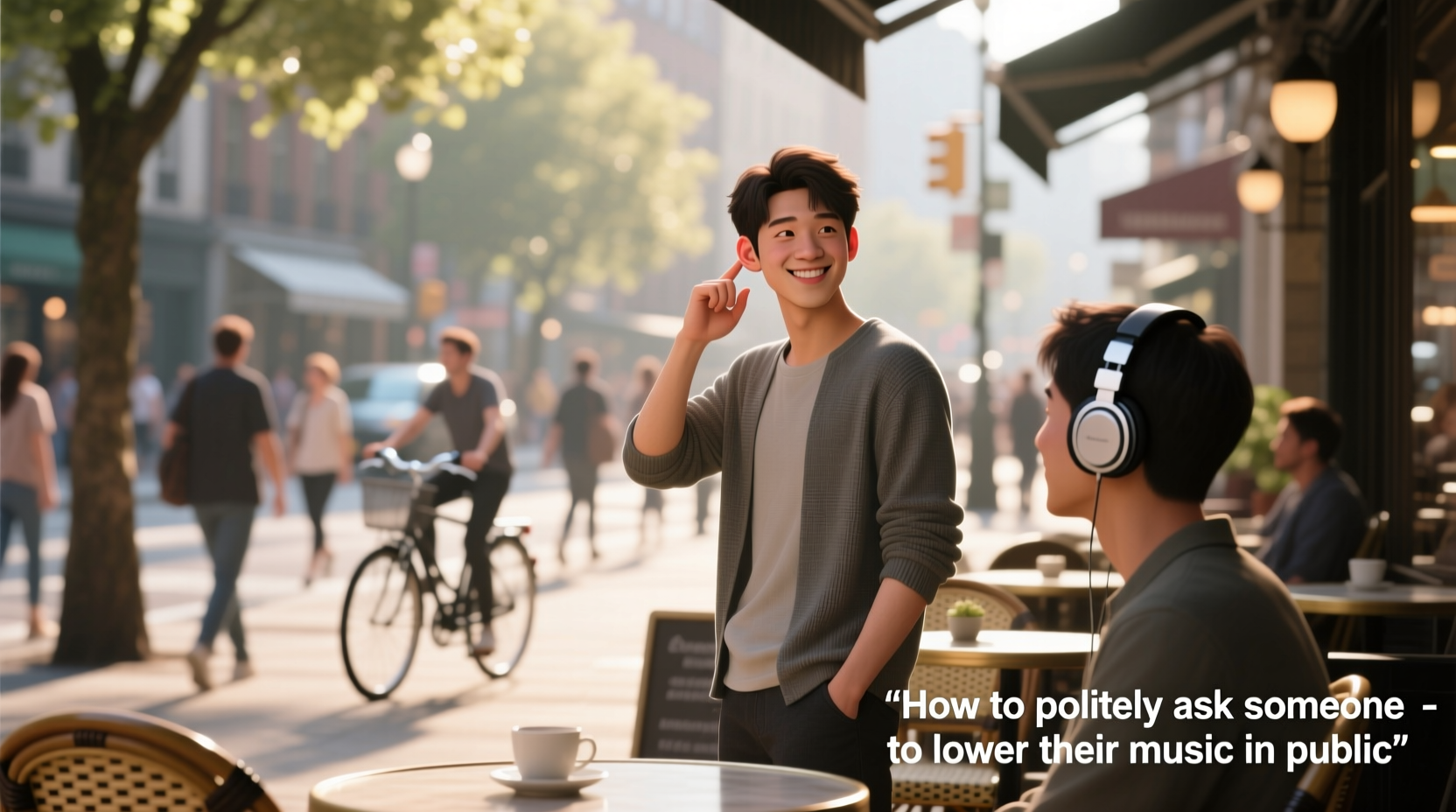
Public areas like parks, buses, libraries, and restaurants are designed for collective use. Unlike private homes or headphones-only zones, these environments expect a baseline level of consideration. Sound travels, and unlike visual distractions, unwanted noise is difficult to ignore. According to the World Health Organization, prolonged exposure to noise above 65 decibels (about the level of normal conversation) can contribute to stress, fatigue, and reduced concentration.
When someone plays music aloud in public, they unintentionally impose their auditory experience on others. Even if the song is pleasant, the lack of consent makes it intrusive. Yet, many people who do this aren’t being malicious—they may not realize how far the sound carries or assume “everyone likes this track.” That gap in awareness is where polite intervention becomes both necessary and effective.
Tip: Approach the situation assuming good intentions. Most people aren't trying to disturb others—they just need a gentle reminder.The Psychology of Polite Requests
Effective communication hinges on tone, timing, and framing. Research in social psychology shows that people respond more positively to requests that include empathy, justification, and non-confrontational language. A study published in the Journal of Applied Social Psychology found that adding a simple reason—even an obvious one—increased compliance rates significantly. For example, “Can you turn it down? It’s a bit loud” works better than “Turn it down,” even though the meaning is similar.
Nonverbal cues also play a role. Approaching someone with open body language—uncrossed arms, relaxed posture, and a neutral facial expression—signals friendliness rather than aggression. Standing too close or pointing can trigger defensiveness, even if your words are kind.
“People are more likely to cooperate when they feel respected, not corrected. Frame your request as a shared concern, not a personal attack.” — Dr. Lena Patel, Social Behavior Researcher, University of Michigan
Step-by-Step Guide to Asking Politely
Handling this situation gracefully takes preparation and presence of mind. Follow this five-step process to increase the chances of a positive outcome:
- Assess the Environment: Before speaking, observe whether the person is alone or with others, wearing headphones, or clearly focused on something else. If they’re using headphones but the sound leaks out, the issue may be technical (e.g., broken earbuds). Adjust your approach accordingly.
- Choose the Right Moment: Wait for a natural pause—between songs or during a lull in activity. Interrupting mid-beat increases frustration. If possible, avoid doing so during emotionally charged music (e.g., intense lyrics or fast tempo).
- Start with a Friendly Greeting: Begin with eye contact and a smile. Say something like, “Hi there,” or “Excuse me.” This establishes rapport before making a request.
- Make Your Request Clearly but Softly: Use “I” statements to express your experience without blaming. For example: “I’m having a little trouble concentrating with the music so loud—would you mind turning it down a bit?”
- Accept the Response Gracefully: Whether they comply immediately or hesitate, thank them. If they refuse, don’t argue. Walk away calmly. Escalation rarely improves the situation.
Alternative Approaches When Direct Talk Feels Risky
Not every situation calls for face-to-face confrontation. In crowded trains, late-night settings, or if you feel unsafe, indirect methods may be wiser:
- Use a Third Party: On public transit or in cafes, notify staff or security instead of confronting the individual. Employees are trained to handle such issues diplomatically.
- Signal Nonverbally: In some cultures, direct speech is less common. A polite hand gesture near your ear (like lowering an imaginary volume knob) paired with a friendly shrug can communicate your message without words.
- Change Your Position: Sometimes the simplest solution is relocation. Move a few feet away or switch seats. This avoids conflict entirely while reclaiming your peace.
- Wear Noise-Canceling Earbuds: Proactively protect your space. High-quality earbuds block ambient noise and let you enjoy silence or your own playlist.
Do’s and Don’ts: What Works and What Backfires
| Do’s | Don’ts |
|---|---|
| Use a calm, friendly tone | Yell, point, or use sarcasm (“Wow, we all love your taste in music!”) |
| Phrase it as a request, not a demand | Say “You need to” or “You have to” |
| Maintain neutral body language | Stand too close or cross your arms aggressively |
| Thank them regardless of outcome | Insult their music taste or device quality |
| Offer compromise: “Maybe use headphones?” | Threaten to report them unless they comply |
“Respectful communication doesn’t guarantee compliance, but it preserves dignity—for both parties.” — Mark Tran, Conflict Resolution Coach
Real-Life Example: A Park Bench Encounter
Jamila was reading a novel in Riverside Park when a man nearby began playing upbeat hip-hop from his phone speaker. At first, she tried to ignore it, but after 15 minutes, the bass made it impossible to concentrate. She took a breath, closed her book, and walked over slowly.
“Hey,” she said with a small smile. “Sorry to interrupt—this music is great, but I’m trying to read and it’s a bit loud for me. Any chance you could turn it down or use headphones?”
The man looked surprised but not angry. “Oh! I didn’t realize it was carrying that far. Yeah, totally—I’ll pop in my earbuds.” He lowered the volume and slipped on his AirPods. Jamila thanked him and returned to her book, relieved.
This interaction succeeded because Jamila led with kindness, acknowledged the music wasn’t bad, and gave him control over how to fix it. No shame, no conflict—just a quick, human connection.
Checklist: How to Ask Someone to Lower Their Music Respectfully
Before approaching someone, run through this checklist to ensure your request is constructive and courteous:
- ☐ Stay calm and regulate your breathing to avoid sounding frustrated
- ☐ Choose a moment when the person isn’t deeply engaged or distracted
- ☐ Make eye contact and offer a slight smile to set a friendly tone
- ☐ Use “I” statements: “I’m finding it hard to focus” vs. “You’re being rude”
- ☐ Suggest a solution: headphones, lower volume, or moving location
- ☐ Thank them, even if they only partially comply
- ☐ Be ready to walk away if they react negatively—your safety comes first
Frequently Asked Questions
What if the person gets defensive or refuses?
Stay composed. Respond with, “I understand—you enjoy your music. I just wanted to mention how it affected me.” Then disengage. Arguing won’t help. Consider relocating or using noise-canceling tools instead.
Is it okay to ask a group to turn down their music?
Yes, but aim your request at the person holding the device, not the whole group. Speak to them individually: “Hey, mind turning it down a touch? It’s a bit loud for this space.” Avoid singling anyone out publicly or making jokes in front of peers.
Should I report someone who consistently plays loud music in public?
If informal requests fail and the behavior is repeated in regulated areas (libraries, public transit), reporting to authorities or venue staff is reasonable. Many cities have noise ordinances limiting amplified sound in parks or streets after certain hours.
Conclusion: Kindness Is the Loudest Voice
Asking someone to lower their music isn’t about winning a battle—it’s about restoring balance in shared spaces. The way you make the request often matters more than the request itself. A kind tone, empathetic wording, and respectful delivery can turn a potential conflict into a moment of mutual understanding.
In a world growing louder in every sense, the ability to speak up gently is a rare and valuable skill. You don’t have to tolerate constant noise, nor do you have to become confrontational. With the right approach, you can protect your peace while preserving goodwill.
💬 Have you successfully asked someone to lower their music? Share your story or tip in the comments���your experience could help someone else handle it with grace.