
Setting a goal is the first spark of progress, but turning that vision into tangible results requires more than motivation—it demands strategy, discipline, and consistent action. Too many people set ambitious goals only to see them fade within weeks due to vague plans or lack of structure. The difference between those who succeed and those who don’t often comes down to one thing: a practical, step-by-step approach. This guide breaks down exactly how to transform abstract aspirations into measurable achievements by focusing on clarity, systems, and sustainable effort.
Clarify Your Goal with Precision
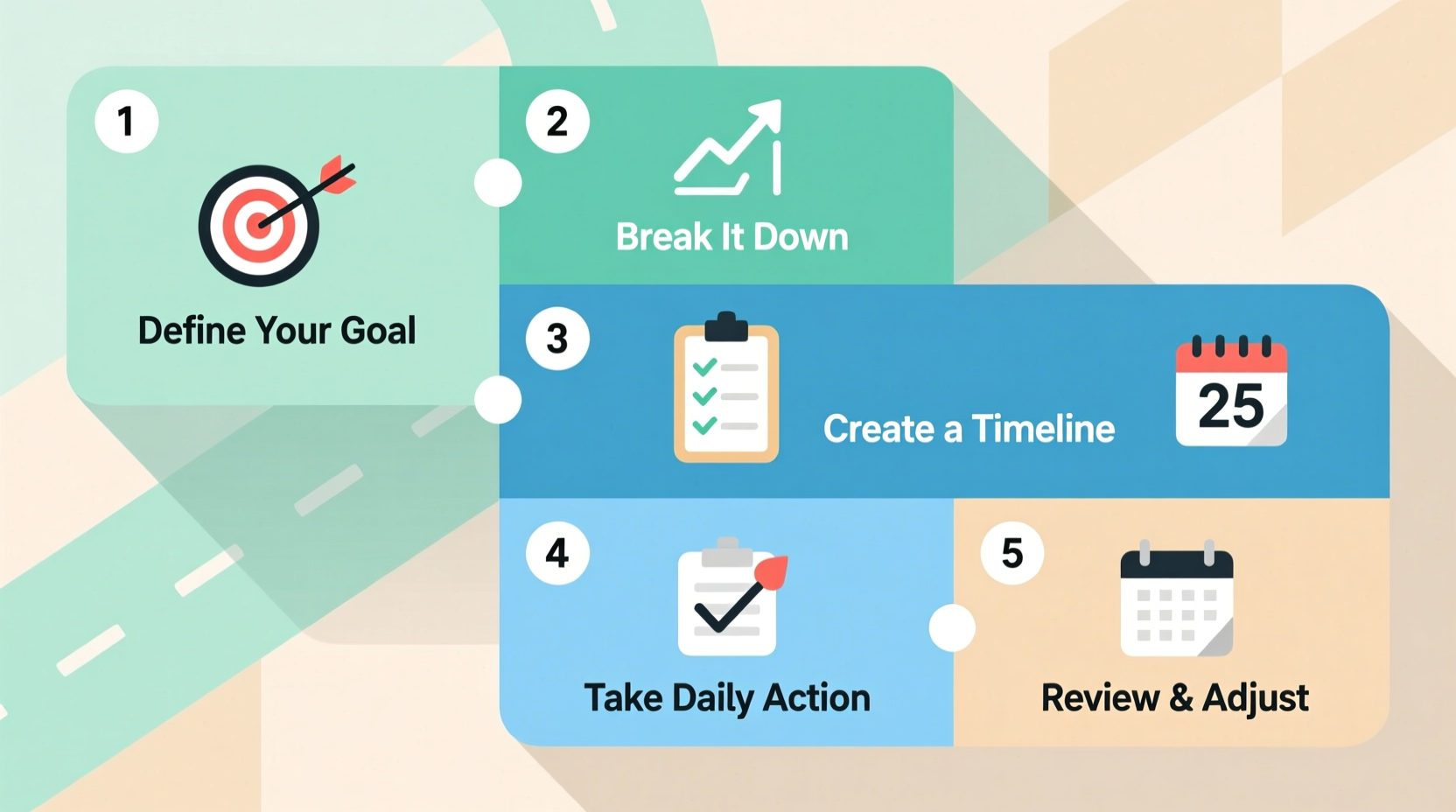
Vague goals lead to vague outcomes. “I want to be healthier” or “I want to grow my business” are common intentions, but they lack direction. To move forward, you must define what success looks like in concrete terms. Use the SMART framework—Specific, Measurable, Achievable, Relevant, Time-bound—to refine your objective.
- Specific: What exactly do you want to achieve? Instead of “get fit,” say “lose 15 pounds through strength training and nutrition.”
- Measurable: How will you track progress? Weight, workouts per week, body measurements, or income milestones.
- Achievable: Is the goal realistic given your current resources and constraints?
- Relevant: Does this goal align with your values and long-term vision?
- Time-bound: Set a deadline. “In six months” creates urgency and focus.
Create a Step-by-Step Action Plan
Once your goal is clearly defined, break it into smaller, manageable actions. Think of your goal as a destination and each task as a mile marker along the way. Without these markers, it’s easy to lose direction or become overwhelmed.
Sample Timeline: Launching a Freelance Writing Business in 90 Days
- Week 1–2: Research niches, identify target clients, and finalize brand name.
- Week 3–4: Build a simple portfolio website and create profiles on freelance platforms.
- Week 5–6: Draft 3–5 sample articles and reach out to 5 potential clients per week.
- Week 7–8: Refine pitch based on feedback; secure first paid project.
- Week 9–12: Deliver high-quality work, request testimonials, and scale outreach.
This phased approach prevents burnout and builds momentum. Each completed task strengthens confidence and provides data to adjust tactics if needed.
Build Systems, Not Just Schedules
Motivation fades. Discipline wavers. But systems endure. A system is a repeatable process that supports consistent behavior regardless of how you feel. For example, instead of relying on the mood to “exercise when I feel like it,” build a system: “Every Monday, Wednesday, and Friday at 6:30 AM, I go to the gym for 45 minutes.”
Effective systems include triggers (time, location, habit cues), clear routines, and built-in accountability. They reduce decision fatigue and make progress automatic.
| Goal | Ineffective Approach | System-Based Solution |
|---|---|---|
| Write a book | “I’ll write when I have time.” | Write 500 words every morning before checking email. |
| Save $10,000 | “I’ll try to spend less.” | Automate $300 transfer to savings account each payday. |
| Improve fitness | “I’ll go to the gym sometimes.” | Lay out workout clothes the night before; attend class at 7 AM three times a week. |
“We don’t rise to the level of our goals—we fall to the level of our systems.” — James Clear, author of *Atomic Habits*
Track Progress and Adjust Strategically
Measurement isn’t just about proving success—it’s about learning. Regularly reviewing your progress helps identify what’s working and what needs refinement. Use a journal, spreadsheet, or habit-tracking app to log actions and outcomes weekly.
Ask yourself:
- Am I completing the planned tasks consistently?
- Are there recurring obstacles (e.g., time, energy, distractions)?
- Do I need to adjust the timeline or break tasks further?
Adjustments aren’t failures—they’re signs of intelligent execution. If you aimed to launch a course in two months but realize content creation takes longer than expected, extend the deadline rather than abandon the project.
Tip: Schedule a 15-minute weekly review every Sunday to assess progress and plan the next week’s actions.Real Example: From Idea to Income in 6 Months
Sophia wanted to start an online coaching business for remote workers struggling with productivity. She began with a broad idea but applied structure:
- Defined her niche: mid-level professionals working from home.
- Set a SMART goal: earn $3,000/month from coaching by month six.
- Broke it down: needed 15 clients at $200/month, so she focused on acquiring five new clients every two months.
- Created a system: posted twice weekly on LinkedIn, offered free 30-minute discovery calls, and followed up via email.
- Tracked results: after three months, she had five paying clients. She refined her messaging based on feedback and increased conversion rates.
By month five, she hit $2,800 in monthly revenue and launched a group program to scale. Her structured approach turned a side idea into a sustainable income stream.
Essential Checklist to Turn Goals Into Reality
Use this checklist to ensure your goal-setting process is actionable and results-oriented:
- ☑ Define your goal using the SMART criteria.
- ☑ Break the goal into 3–5 major milestones.
- ☑ List specific actions required for each milestone.
- ☑ Assign deadlines to each task.
- ☑ Identify potential obstacles and solutions.
- ☑ Design a daily or weekly system to support consistent action.
- ☑ Choose a tracking method (journal, app, calendar).
- ☑ Schedule weekly reviews to assess progress and adapt.
- ☑ Share your goal with an accountability partner or community.
- ☑ Celebrate small wins to maintain motivation.
Frequently Asked Questions
What if I miss a day or fall behind schedule?
Progress isn’t linear. Missing a day doesn’t erase your progress. The key is consistency over perfection. Resume the next day without self-judgment. If delays persist, reassess your timeline or workload—sometimes goals need recalibration, not abandonment.
How do I stay motivated when results take time?
Focus on process-based rewards rather than outcome-based ones. Celebrate completing a workout, writing 500 words, or sending five outreach emails. These reinforce identity (“I am someone who writes”) and build intrinsic motivation over time.
Should I have multiple goals at once?
Limit yourself to 1–3 primary goals at a time. Too many goals dilute focus and increase cognitive load. Prioritize based on impact and urgency. Complete or stabilize one before launching another major initiative.
Make It Happen—Starting Today
Turning goals into reality isn’t about grand gestures or sudden inspiration. It’s about the quiet, consistent application of practical steps. Clarity turns dreams into targets. Planning transforms vision into tasks. Systems replace reliance on willpower with reliable routines. And regular review ensures you’re not just busy—but moving forward.
You don’t need to be perfect. You need to be persistent. Start small, document your journey, and trust the process. Every major achievement was once a goal written on a page, followed by one action, then another. Your future self won’t remember the doubts—you’ll only remember that you started.
🚀 Ready to make it real? Pick one goal, apply the SMART framework, and take your first action today. Share your commitment in a comment or with a friend—accountability begins now.