Choosing a business name is one of the most consequential early decisions an entrepreneur makes. It’s more than just a label—it’s the foundation of your brand identity, the first impression you make on customers, and a key factor in how easily people can find and remember you. A powerful name conveys professionalism, clarity, and purpose. Yet many founders rush this process, settling on something generic or forgettable. The truth is, finding the right name requires strategy, creativity, and due diligence. This guide walks you through each stage with actionable steps to help you land on a name that resonates, scales, and lasts.
Why Your Business Name Matters More Than You Think
Your business name shapes perception before anyone interacts with your product or service. It influences searchability, impacts marketing effectiveness, and affects legal and digital asset availability. A strong name should be easy to spell, pronounce, and recall. It should also reflect your brand’s values, niche, and target audience. Consider names like “Tesla,” “Patagonia,” or “Slack”—each communicates a distinct tone and promise. Weak names, on the other hand, create confusion, limit growth, or become liabilities as your business evolves.
“Your company name is the first chapter of your brand story. Make it meaningful, memorable, and aligned with your mission.” — Lisa Chen, Brand Strategist & Founder of Veridian Collective
A Step-by-Step Process to Discover Your Ideal Business Name
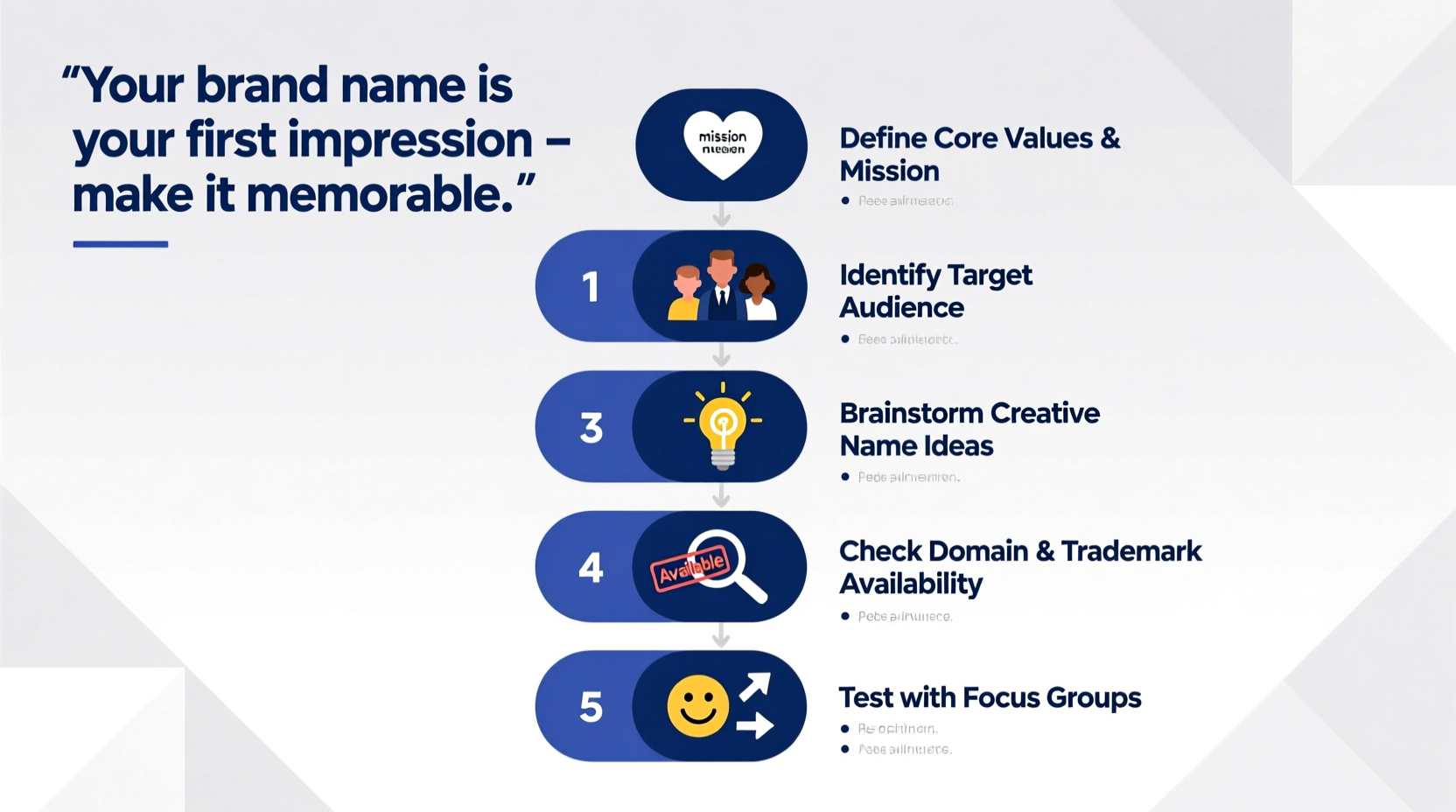
Finding the perfect name isn’t about inspiration striking at random. It’s a structured process that balances creativity with practicality. Follow these seven steps to systematically narrow down options and select a name with real potential.
- Clarify Your Brand Identity: Define your mission, values, ideal customer, and unique selling proposition. Ask: What feeling should the name evoke? Trust? Innovation? Simplicity?
- Brainstorm Keywords: List relevant words related to your industry, location, benefits, or founder story. Include synonyms, metaphors, and foreign language terms if appropriate.
- Explore Naming Styles: Understand different approaches—descriptive (e.g., General Motors), suggestive (e.g., Amazon), abstract (e.g., Kodak), or coined (e.g., Google).
- Generate 50+ Ideas: Use word combinations, portmanteaus, alliteration, or acronyms. Don’t filter yet—quantity fuels quality.
- Shortlist 10–15 Options: Eliminate names that are hard to spell, too similar to competitors, or limiting for future expansion.
- Test for Availability: Check domain names, social media handles, and trademark databases. A great name is useless if someone else owns it.
- Validate with Real People: Share top choices with trusted advisors, potential customers, or mentors. Gather honest feedback on clarity and appeal.
Common Pitfalls and How to Avoid Them
Even thoughtful entrepreneurs make naming mistakes that can cost time and money later. Being aware of these traps helps you steer clear of costly rebrands.
| Pitfall | Why It’s Risky | How to Avoid |
|---|---|---|
| Too Generic (e.g., \"Elite Solutions\") | Lacks differentiation; hard to trademark or rank online | Incorporate specificity—use a unique adjective, location, or invented word |
| Hard to Spell or Pronounce | Customers won’t find you when searching; word-of-mouth suffers | Say names aloud and ask others to spell them after hearing once |
| Naming After Yourself | Can limit scalability if you sell the business or expand offerings | Only use personal names if central to brand story (e.g., Ben & Jerry’s) |
| Geographic Limitation | Hard to expand beyond local area (e.g., “Brooklyn Bakeshop”) | Use location only if hyper-local focus is intentional and permanent |
Real Example: From Idea to Iconic Name
When Sarah launched her eco-friendly cleaning supply startup, she initially called it “Green Home Care.” Functional—but forgettable and already used by three businesses in her state. She revisited her brand values: sustainability, simplicity, and science-backed solutions. She brainstormed keywords like “pure,” “earth,” “nova,” and “cycle.” After combining ideas, she landed on “EcoNua” (pronounced ee-koh-new), blending “ecology” and “renewal.”
The name was unique, available as a .com, and had no trademark conflicts. On testing, 85% of respondents said it sounded innovative and trustworthy. Within six months, EcoNua gained traction online, secured retail partnerships, and became synonymous with clean, modern home care. The right name didn’t just identify the brand—it elevated it.
Essential Checklist Before Finalizing Your Name
Before committing, run through this verification checklist to ensure your chosen name is viable and protected.
- ✅ Is the name easy to spell and say?
- ✅ Does it reflect your brand’s personality and market position?
- ✅ Is the .com domain available (or a credible alternative)?
- ✅ Are major social media handles (@yourname) free on Instagram, Twitter/X, LinkedIn?
- ✅ Has a USPTO trademark search been conducted?
- ✅ Is it distinguishable from competitors in your industry?
- ✅ Will it still make sense if you expand product lines or enter new markets?
- ✅ Have you tested it with at least five neutral third parties?
Frequently Asked Questions
Can I change my business name later?
Yes, but rebranding is expensive and disruptive. It requires updating legal documents, marketing materials, websites, and customer communications. It can also confuse existing customers. Choose wisely from the start to avoid this complexity.
Should I include keywords in my business name for SEO?
While descriptive names can help with initial clarity, exact-match domains no longer guarantee SEO advantages. Search engines prioritize relevance, content, and user experience. Focus on a memorable, brandable name rather than keyword stuffing (e.g., “BestPlumberDenver.com” feels spammy and limits growth).
What if someone already has the same name in another industry?
Trademark law protects names within specific classes of goods or services. If another company uses your desired name in an unrelated field (e.g., “Phoenix Yoga” vs. “Phoenix Roofing”), conflict may not exist. However, consult a trademark attorney to assess risk, especially if scaling nationally.
Build a Name That Lasts
Your business name is more than an identifier—it’s the cornerstone of your brand equity. A well-chosen name builds trust, enhances recognition, and supports long-term growth. By following a disciplined process, avoiding common errors, and validating your choice thoroughly, you set the stage for a brand that stands out and endures. Don’t rush this decision. Invest the time to explore, test, and refine until you find a name that doesn’t just sound good—but feels right.
🚀 Ready to name your vision? Start today: Grab a notebook, define your brand essence, and begin brainstorming with confidence. Your perfect business name is closer than you think.