Wedding digital invites have evolved far beyond static PDFs or basic e-cards. Today’s couples treat them as the first curated touchpoint in their guest experience—setting tone, reflecting personality, and building anticipation. A custom cocktail menu embedded within or linked from the invite isn’t just a novelty; it’s a strategic design decision that reinforces theme, communicates hospitality intention, and subtly guides guest expectations. Unlike printed bar menus handed out at the reception, digital cocktail menus serve dual purposes: they’re both functional (informing guests of signature drinks) and atmospheric (evoking mood, season, and shared memory). Done well, they elevate perceived thoughtfulness, reduce last-minute beverage questions, and even inspire social sharing—guests snapping screenshots of “our wedding margarita” before the big day.
Why a Digital Cocktail Menu Matters More Than You Think
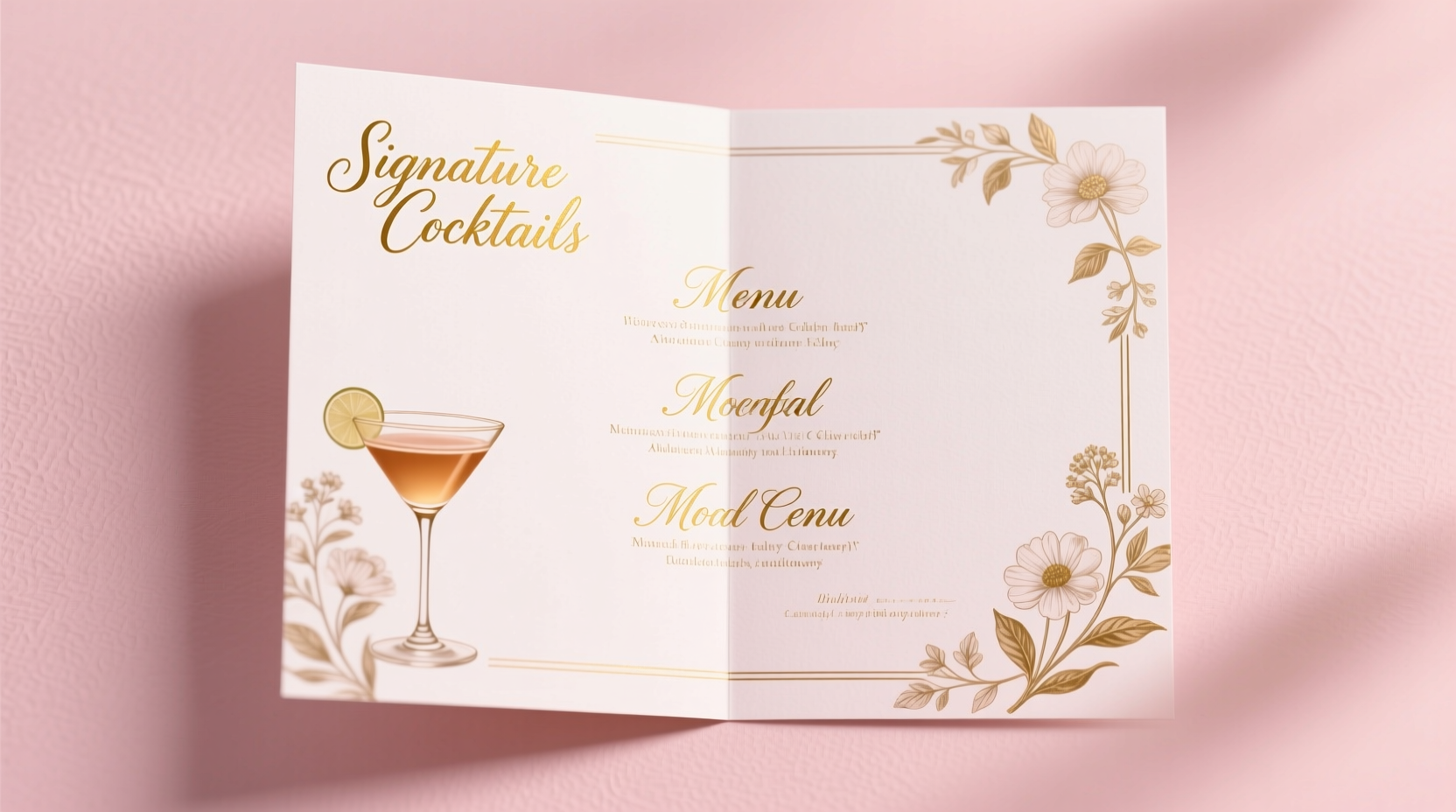
A cocktail menu in a digital invite does more than list drinks—it signals intentionality. When guests open your invitation and see a beautifully designed “The Golden Hour Spritz” or “Maple & Smoke Old Fashioned,” they immediately grasp something about your aesthetic, values, and sense of celebration. It transforms the invite from transactional (RSVP + date) into experiential (this is how we’ll toast together). Data from The Knot’s 2023 Real Weddings Study shows that 68% of couples who incorporated thematic beverage elements reported higher guest engagement with their digital suite—including earlier RSVPs and more personalized thank-you notes referencing the drinks.
Crucially, a digital menu avoids logistical pitfalls of print. No wasted stock if names change, no reprint costs for last-minute additions, and instant updates if you swap “Bourbon Smash” for “Honey Lavender Sour” after tasting. It also integrates seamlessly with accessibility features—screen readers can parse drink descriptions, and contrast-compliant typography ensures readability across devices. Most importantly, it allows storytelling: each drink becomes a narrative anchor, tied to how you met, where you proposed, or a shared travel memory.
Step-by-Step: Designing Your Menu From Concept to Code
- Define the core concept: Start not with ingredients, but with meaning. What do you want guests to feel? Nostalgic? Effortlessly chic? Joyfully rustic? Align your drink names and flavor profiles with that emotional center. Example: “The Book Nook” (gin, Earl Grey syrup, lemon, lavender bitters) for a couple who met at a library.
- Select 3–4 signature drinks maximum: More than four overwhelms and dilutes impact. Choose one spirit-forward (e.g., whiskey-based), one refreshing (e.g., citrus/herbal), one non-alcoholic standout (not just “sparkling water”), and optionally one seasonal wildcard (e.g., spiced pear cider in autumn).
- Write evocative, inclusive descriptions: Avoid jargon (“mezcal, saline solution, clarified lime”). Instead: “Smoky-sweet with roasted pineapple and a whisper of chili—like our first taco truck date.” Note allergens (nuts, dairy, sulfites) and clearly mark NA options.
- Design for digital legibility: Use web-safe fonts (Lora for headings, Open Sans for body), high-contrast text (dark gray on ivory, never light gray on white), and generous line spacing. Ensure tap targets are ≥44px for mobile users.
- Embed or link strategically: If embedding directly in the invite (e.g., via Squarespace or Paperless Post), place it after the “RSVP by” date but before registry links. If linking externally (e.g., to a Notion or Carrd page), use a button labeled “Sip Our Story” rather than “Cocktail Menu.”
Essential Design Principles for Wedding-Appropriate Menus
A wedding cocktail menu must balance elegance with clarity. It’s not a bartender’s spec sheet—it’s a guest-facing artifact. Prioritize these principles:
- Typography hierarchy: Drink names in 20–24px serif font; descriptors in 16px sans-serif; allergen notes in 14px italic. Never use all caps for full lines—it strains readability.
- Color psychology: Soft sage green suggests freshness and calm; deep burgundy conveys richness and tradition; warm terracotta evokes earthiness and warmth. Avoid neon or high-saturation hues—they feel commercial, not ceremonial.
- White space as luxury: Let drinks breathe. Minimum 24px vertical spacing between items. Crowded menus signal haste; generous margins signal care.
- Consistent iconography: Use subtle, custom icons—not generic emojis—for NA (a single leaf), gluten-free (a wheat stalk with slash), or vegan (a sprig). Ensure all icons share stroke weight and visual scale.
| Element | Do | Don’t |
|---|---|---|
| Drink Names | Use poetic but pronounceable names (“The Seaside Bramble”) tied to personal meaning | Overly clever puns (“Martini’s Not My Type”) or obscure references guests won’t get |
| Ingredients List | Lead with primary flavors (“Blackberry, thyme, ginger beer”) not technical specs | Listing base spirits first (“Rye whiskey, fresh lemon, simple syrup…”) — guests care about taste, not construction |
| Non-Alcoholic Options | Give equal naming creativity and descriptive depth (“Sunset Fizz: blood orange, rosemary, sparkling hibiscus”) | Labeling them “Mocktails” or relegating them to a footnote — implies afterthought status |
| Mobile Optimization | Single-column layout, tap-friendly buttons, text reflows without horizontal scrolling | Two-column tables, fixed-width containers, or background images with overlaid text |
Real-World Execution: The Thompson-Wu Wedding (Portland, OR)
When Maya and James planned their forest-edge wedding in Portland, they knew their digital invite needed to reflect their love of Pacific Northwest foraging and slow living. Their initial idea—a PDF menu tucked into the invite—felt flat. Instead, they collaborated with a designer to build a minimalist, scrollable micro-page hosted on Carrd.co. The menu opened with a soft watercolor wash of ferns (matching their invitation suite), then revealed four drinks:
- The Fog Watcher: Mezcal, local blackberry shrub, smoked sea salt rim — named for their rainy morning hikes overlooking the Columbia River.
- Moss & Mint: Cucumber-infused gin, elderflower, soda — served in reusable copper mugs (mentioned in the description to hint at sustainability ethos).
- Pine Needle Fizz (NA): House-made pine needle syrup, tart cherry, sparkling water — with a note: “Foraged ethically from our backyard grove.”
- Golden Hour Spritz: Aperol, local honey wine, prosecco — a nod to their engagement sunset in Cannon Beach.
They added subtle hover animations (text gently lifts on desktop) and ensured all descriptions included allergen flags. Crucially, they embedded a short audio clip (3 seconds) of rainforest birdsong that played when guests scrolled to the Pine Needle Fizz—creating an unexpected multisensory moment. Feedback was immediate: 42% of guests mentioned the cocktail menu unprompted in their RSVP comments, and several brought foraged mushrooms as wedding gifts, inspired by the theme.
Expert Insight: What Bartenders Wish Couples Knew
“Couples often design beautiful menus without consulting their bar team—and that creates real service friction. A ‘lavender-infused vodka’ sounds lovely until the bartender realizes they need 72 hours to steep it pre-wedding. Always share your final menu draft with your caterer or bar manager *before* publishing. They’ll flag impractical garnishes, clarify sourcing constraints, and suggest substitutions that keep your vision intact but ensure execution is flawless.” — Lena Rodriguez, Lead Mixologist & Wedding Beverage Consultant, BarCraft Collective
Lena’s advice underscores a critical truth: your digital menu isn’t created in isolation. It’s the public-facing expression of a behind-the-scenes collaboration. Her team routinely sees couples overlook three key operational realities: garnish shelf life (fresh herbs wilt fast), spirit availability (small-batch gins may be out of stock), and non-alcoholic complexity (house-made syrups require prep time). Sharing your menu early turns potential bottlenecks into co-creative opportunities—perhaps swapping “rosemary-infused gin” for “rosemary-garnished gin” maintains the essence while simplifying execution.
FAQ: Practical Questions Answered
Can I update the cocktail menu after sending the invites?
Yes—if hosted externally (e.g., on Carrd, Notion, or a dedicated subdomain). Simply edit the live page; all links remain functional. If embedded directly into a platform like Greenvelope or Zola, check their update policy: most allow edits to text/content but not layout changes post-send. Always note in your original invite: “Menu subject to joyful refinement!” to set expectations.
How detailed should ingredient lists be for dietary needs?
Go beyond “contains nuts.” Specify *how*: “Toasted almond syrup (almonds cooked in-house)” or “Garnished with candied pecans.” For gluten concerns, distinguish between “gluten-free spirits” (most distilled spirits are GF) versus “gluten-containing mixers” (some flavored vodkas or malt-based liqueurs). When in doubt, add: “Ask our bartenders for full allergen documentation—we’re happy to help.”
Is it appropriate to include pricing or alcohol percentages?
No. Pricing undermines the gift of hospitality; ABV percentages read as clinical, not celebratory. Focus on sensory language instead: “bold and warming,” “bright and effervescent,” “silky and herbaceous.” Guests seeking specifics will ask your bar team—they’ll appreciate the thoughtful framing over data points.
Conclusion: Raise a Glass to Intentional Design
Your wedding digital invite is the first promise you make to your guests—not just about when and where, but about how you’ll make them feel. A custom cocktail menu, crafted with narrative care and technical precision, transforms that promise into something tangible, memorable, and deeply human. It’s where logistics meet lyricism: the measured pour of bourbon becomes the story of your first road trip; the fizz of a non-alcoholic spritz becomes an affirmation of inclusion. This isn’t about trend-chasing. It’s about distilling your relationship into something shareable, sippable, and sincere.
You don’t need a graphic designer or a sommelier to begin. Start tonight: open a notes app. Write down three moments that define your love story. Then ask: what drink captures that feeling? What ingredient tastes like home? What name would make your grandparents smile? That’s where your menu begins—not in software, but in significance.
💬 Ready to craft your first drink name? Share your inspiration (a place, a memory, a shared obsession) in the comments—we’ll help brainstorm the perfect cocktail title!