Distillation is one of the oldest and most versatile chemical processes known to humanity—used for centuries to purify water, extract plant essences, concentrate flavors, and isolate compounds. Today, home distillation has seen a quiet resurgence: hobbyists craft lavender hydrosols for skincare, gardeners produce rosemary-infused distilled water for seed starting, brewers refine essential oil co-products, and preppers build emergency water purification systems. Yet this growing interest collides with a complex web of regulations—some clear, many ambiguous, and nearly all jurisdiction-specific. Misunderstanding the law doesn’t excuse violation. What separates a lawful kitchen experiment from a federal offense isn’t equipment size or intent—it’s the substance being distilled and the regulatory framework governing it.
Why Distillation Law Is Not About Equipment—It’s About Output
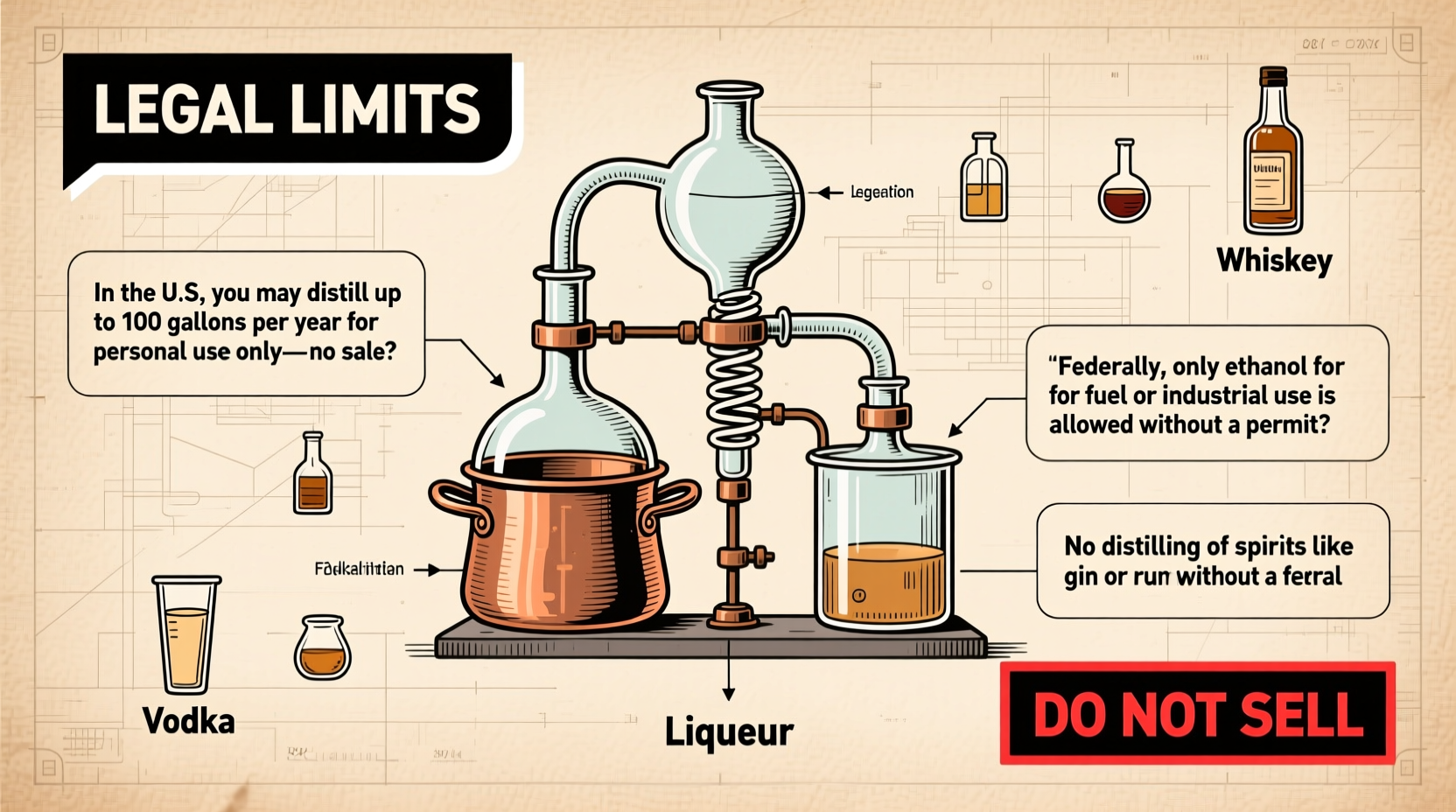
U.S. federal law does not prohibit distillation *per se*. The Alcohol and Tobacco Tax and Trade Bureau (TTB) regulates the production, sale, and distribution of alcohol—not the ownership of stills or the act of distillation itself. This distinction matters profoundly. You may legally own a 50-gallon copper alembic in your garage—but if you use it to produce ethanol for human consumption, even for personal use, you’ve triggered federal licensing requirements. Conversely, using that same still to produce distilled water for a CPAP machine or to extract eucalyptus oil for aromatherapy falls outside TTB jurisdiction entirely.
The critical legal threshold lies in intended use and chemical identity. Federal law defines “alcohol” as ethyl alcohol (ethanol) intended for beverage, medicinal, or industrial purposes—and only ethanol produced for beverage or medicinal use triggers strict licensing. Industrial ethanol (e.g., fuel-grade or solvent-grade) requires separate ATF registration but permits larger-scale production under different rules. Meanwhile, non-ethanol distillates—water, plant-based hydrosols, citrus terpenes, frankincense resinoids—are unregulated at the federal level when produced for non-beverage use.
“Owning a still is legal. Using it to make beverage alcohol without a permit is not. But distilling rose water for your kitchen cabinet? That’s as lawful as boiling pasta water.” — Dr. Elena Rodriguez, Regulatory Chemist & Former TTB Compliance Advisor
What You Can Legally Distill at Home (With Conditions)
Below is a practical breakdown of common home distillation activities, their legal status under U.S. federal law, and key state-level considerations. Note: This applies to individuals operating without commercial intent or distribution.
| Distillate Type | Federal Legal Status | Key Requirements & Caveats |
|---|---|---|
| Distilled Water (for appliances, labs, humidifiers) | ✅ Fully legal | No restrictions. Verify local water utility rules if drawing from municipal supply for large-volume production. |
| Plant Hydrosols (e.g., lavender, chamomile, rose) | ✅ Fully legal | Must be labeled accurately; cannot claim therapeutic effects unless FDA-compliant. Avoid marketing as “natural medicine.” |
| Essential Oil Co-Distillates (e.g., tea tree water, peppermint hydrolat) | ✅ Fully legal | Not classified as cosmetics unless marketed for cleansing/moisturizing. Keep records of botanical sources and batch logs for traceability. |
| Flavor Extracts (non-alcoholic: vinegar-based or glycerin-based distillates) | ✅ Fully legal | Alcohol-free base required. Ethanol-based extracts—even food-grade—cross into TTB jurisdiction if >0.5% ABV and sold commercially. |
| Fuel Ethanol (for generators, camp stoves) | ⚠️ Permitted with ATF Form 5110.74 | Requires annual registration with ATF. Must be denatured per 27 CFR § 21.151. Cannot be consumed or diverted to beverage use. |
What You Cannot Legally Distill Without Authorization
The line becomes sharp—and legally perilous—when distillation targets ethanol for human consumption. Under 26 U.S.C. § 5601, producing distilled spirits without a federal distilled spirits plant (DSP) permit is a felony punishable by up to 5 years in prison and $10,000 in fines per violation. Importantly, this prohibition applies regardless of quantity, purpose (“just for family”), or alcohol content. A single 250-mL batch of apple brandy made in a countertop still violates federal law.
Common misconceptions include:
- “Small batches are exempt.” False. No volume exemption exists for beverage alcohol.
- “I’m not selling it, so it’s fine.” False. Personal use is not a defense under federal law.
- “My state allows it, so I’m covered.” False. State law cannot override federal prohibition—though some states add additional layers of restriction.
- “I used a ‘non-alcohol’ recipe.” False. If fermentation occurs (e.g., fruit + yeast), ethanol forms—and distillation concentrates it. Intent is irrelevant once ethanol is isolated.
Also prohibited without specific authorization: distillation of controlled substances (e.g., cannabis-derived terpenes where THC exceeds 0.3%), hazardous solvents (e.g., benzene, chloroform), or pharmaceutical actives—even for personal use. The FDA prohibits compounding unapproved drugs at home, including distilled herbal preparations labeled for disease treatment.
State-Level Variations You Must Check
While federal law sets the floor, states impose their own rules—especially regarding labeling, sales, and agricultural exemptions. As of 2024, six states explicitly ban all home distillation of any kind, citing public safety and fire code concerns:
- Tennessee (TCA § 57-3-202): Prohibits stills capable of producing >1 gallon per run, regardless of output.
- North Carolina (G.S. § 18B-102): Bans possession of stills “designed or adapted for manufacturing spirituous liquor,” interpreted broadly by courts.
- Alabama (Code § 20-2-55): Criminalizes possession of distillation apparatus without written agricultural research permit.
- Kansas (KSA § 41-102): Requires annual license for any still, even for water.
- Utah (Utah Code § 32B-1-102): Defines “distilled spirits” to include any liquid containing >0.5% alcohol derived from distillation—effectively outlawing hydrosol production.
- Georgia (OCGA § 3-3-2): Prohibits stills unless registered with the Department of Revenue and used solely on licensed farm property for approved crops.
In contrast, states like Oregon, Vermont, and Maine have clarified that non-beverage distillation—including hydrosols, distilled water, and essential oil extraction—is expressly permitted under agricultural and cottage food laws. Always verify current statutes via your state’s Department of Agriculture or Attorney General website—not third-party blogs or forums.
Real-World Scenario: How One Herbalist Stayed Compliant
Maya Chen, a certified clinical herbalist in western Massachusetts, launched “Hearth & Still”—a micro-business producing organic hydrosols for local wellness clinics. She began with a 3-gallon stainless reflux still, sourcing lavender and yarrow from her certified organic plot. Her first misstep? Listing “soothing for anxiety” on her rose geranium hydrosol label. Within weeks, an FDA warning letter arrived, citing unapproved drug claims.
She responded immediately: removed all health-related language, added “For external aromatic use only” to every label, implemented batch tracking with harvest dates and pH logs, and enrolled in her state’s Cottage Food Program—which allowed her to sell up to $35,000/year of non-potentially-hazardous botanical products. Crucially, she installed a dedicated distillation space outside her home kitchen (a converted shed with explosion-proof ventilation), documented all safety protocols, and consulted a food-law attorney before launching her online store. Today, her hydrosols are stocked in 12 regional apothecaries—and she’s never faced enforcement action.
Her experience underscores three realities: (1) labeling drives regulatory exposure more than distillation itself; (2) documentation transforms subjective intent into objective compliance; and (3) physical separation of process spaces reduces liability risk significantly.
Your 5-Step Compliance Checklist
- Identify your primary distillate type—and confirm its federal classification (e.g., “distilled water” vs. “spirituous liquor”).
- Verify your state’s statutes and administrative codes—search terms: “still,” “distillation,” “hydrosol,” “cottage food,” and “agricultural exemption.”
- Review local zoning and fire codes—many municipalities restrict heat-intensive processes in residential zones, regardless of output.
- Document everything: raw material sources, batch numbers, distillation parameters (temp/time/pressure), pH/EC readings, and storage conditions.
- Label transparently: Include product name, net quantity, date of production, your name/address, and precise intended use—never “therapeutic,” “medicinal,” or “for ingestion.”
FAQ: Clarifying Common Confusions
Can I distill fermented apple cider into hard cider at home?
Yes—fermentation alone is federally legal for personal use (up to 200 gallons/year for households with two+ adults). However, distilling that cider into applejack or calvados is illegal without a DSP permit. Fermenting and drinking is protected; concentrating the alcohol is not.
Is it legal to distill ethanol for cleaning or sanitizing solutions?
Yes—but only if you register with the ATF using Form 5110.74 and denature the ethanol according to federal formulas (e.g., adding 5% methyl isobutyl ketone). Undenatured ethanol—even for wiping down countertops—is federally restricted. Pre-made 70% isopropyl alcohol remains the safer, legal alternative for disinfection.
What if I only collect the “heads” or “tails” fraction—not the ethanol-rich middle cut?
Legally irrelevant. The TTB regulates the process of distillation aimed at isolating ethanol—not which fractions you keep. Collecting heads (which contain methanol and acetone) or tails (fusel oils) still constitutes regulated distillation activity if the feedstock was fermented. Safety hazard aside, the act itself triggers jurisdiction.
Conclusion: Distill With Integrity, Not Ignorance
Home distillation holds remarkable potential—for self-reliance, sustainability, botanical exploration, and everyday utility. But its power demands proportionate responsibility. The law isn’t designed to stifle curiosity; it exists to prevent harm, ensure transparency, and maintain public safety standards. Knowing the boundaries isn’t about restriction—it’s about freedom exercised with precision. When you understand that distilling rose water is as lawful as brewing tea, while distilling rye whiskey—even for your own cellar—is a federally regulated industrial act, you reclaim agency over your craft. You stop guessing. You stop risking. You start creating with clarity, confidence, and full alignment with the frameworks that protect both you and your community.
Begin today: pull up your state’s code, open a notebook for batch logs, and choose one compliant project—a lavender hydrosol for linen spray, distilled water for your iron, or lemon verbena steam for your face. Do it right, document it fully, and share your experience—not just the results, but the rigor behind them. Because true craftsmanship isn’t measured in yield, but in integrity.
💬 Have you navigated home distillation legally? Share your state-specific tip, labeling hack, or compliance resource in the comments—help others distill knowledge, not liability.