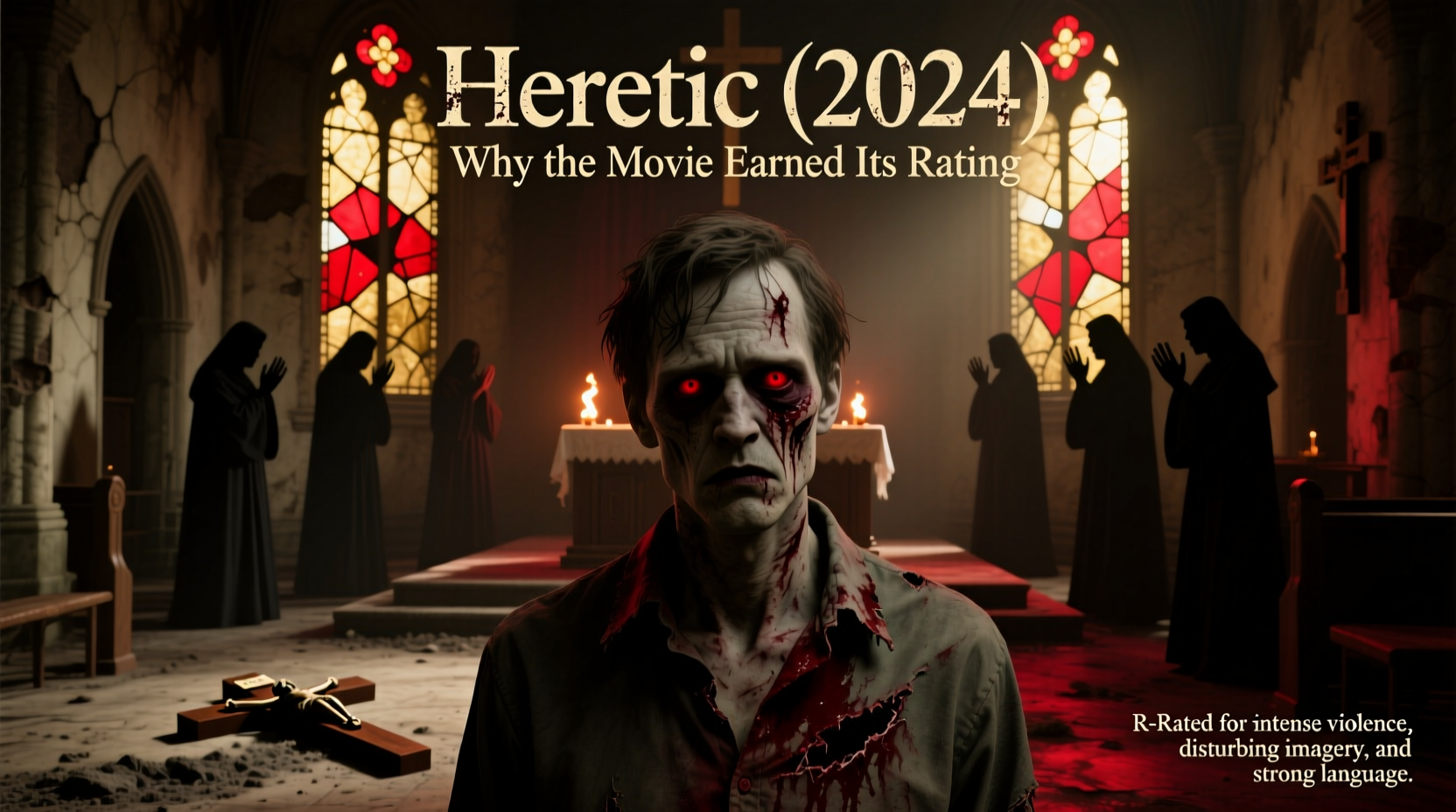
The 2024 horror film Heretic, directed by Scott Beck and Bryan Woods, has quickly drawn attention not only for its chilling premise but also for its official Motion Picture Association (MPA) rating: R. While many modern horror films flirt with mature themes, Heretic crosses a definitive threshold in tone, content, and execution—earning its restrictive classification without compromise. Unlike films that receive an R rating through minor profanity or fleeting moments of gore, Heretic builds its entire narrative around psychological tension, graphic realism, and morally complex subject matter. Understanding why this film was rated R requires a closer look at its key elements: disturbing violence, intense thematic material, strong language, and sustained suspense.
Understanding the MPA’s R Rating Criteria
The MPA defines an R rating as “Restricted – Under 17 requires accompanying parent or adult guardian.” Films receive this designation when they contain content deemed unsuitable for younger audiences, typically due to one or more of the following:
- Strong bloody violence
- Pervasive language
- Sexual content
- Drug use
- Disturbing or psychologically intense themes
Heretic does not rely on shock value alone. Instead, it meets multiple criteria across these categories, creating a cumulative effect that justifies the R rating. The MPAA’s official summary cites “disturbing violent content, pervasive language, and some sexual references” as the reasons for the classification. But behind this concise statement lies a film deeply committed to emotional authenticity and visceral impact.
Graphic and Realistic Violence
One of the most significant contributors to Heretic’s R rating is its unflinching portrayal of physical and psychological violence. The film centers on two young missionaries who find themselves trapped in a remote home with a man whose beliefs are both fanatical and dangerous. What begins as a tense ideological standoff escalates into scenes of brutal physical confrontation.
Unlike stylized horror where bloodshed is theatrical or symbolic, Heretic opts for realism. Wounds appear authentic, sounds of struggle are raw, and the aftermath of violence is not sanitized. There is no glorification—only consequence. A pivotal scene involving a broken glass shard and self-defense results in extended, close-up shots of injury and blood loss, filmed with minimal cuts to heighten discomfort.
Tip: If you're sensitive to depictions of real-world violence or bodily harm, consider watching Heretic with caution—even seasoned horror fans may find certain sequences difficult to endure.Thematic Intensity and Psychological Horror
Beyond physical violence, Heretic delves into psychological manipulation, religious extremism, and existential dread—all handled with a level of maturity that pushes beyond typical genre boundaries. The antagonist, played with unsettling restraint by Hugh Grant, embodies a warped spiritual authority. His dialogue often blurs the line between prophecy and threat, making the psychological pressure on the protagonists palpable.
The film explores themes such as forced indoctrination, isolation, and the erosion of personal agency. These are not background elements; they are central to the plot. Scenes involving sleep deprivation, coercive questioning, and spiritual gaslighting contribute to a mounting sense of helplessness. This sustained psychological weight qualifies as “disturbing content” under MPA guidelines, even in the absence of overt gore.
“Horror works best when fear comes from something recognizable. In Heretic, the terror isn’t supernatural—it’s human conviction twisted into control.” — Dr. Lena Peterson, Film Psychologist & Author of *The Mind of Fear*
Language and Dialogue
While not the primary reason for the R rating, the use of strong language in Heretic is both frequent and contextually impactful. The film includes multiple uses of sexually derived expletives, including variations of the f-word, often during moments of high stress or confrontation. Unlike gratuitous swearing for edginess, the language here reflects genuine desperation and emotional breaking points.
In one particularly intense exchange, a character uses explicit language while pleading for mercy—a moment that underscores their vulnerability rather than toughness. This authenticity in dialogue contributes to the film’s overall realism and earns it points under the MPA’s “pervasive language” criterion.
Sexual References and Implied Content
Though Heretic contains no explicit nudity or sex scenes, it does include several unsettling references to sexuality within the framework of religious obsession. The antagonist makes veiled allusions to purity, sin, and divine punishment tied to sexual behavior. At one point, he forces one of the missionaries to recite a list of \"moral failings,\" which includes indirect but clear references to premarital sex and desire.
These moments are not titillating; they are oppressive. They serve to illustrate how belief systems can be weaponized to shame and dominate. Still, their inclusion places the film within the MPA’s definition of “some sexual references,” further solidifying the justification for the R rating.
Comparison with Other R-Rated Horror Films
To better understand where Heretic stands in the broader landscape of horror cinema, consider how it compares to other recent R-rated releases:
| Film | Primary Reason for R Rating | Violence Level | Psychological Intensity |
|---|---|---|---|
| Heretic (2024) | Disturbing violence, pervasive language, sexual references | High (realistic, prolonged) | Extremely High |
| The Exorcist: Believer (2023) | Bloody violence, disturbing images | High (supernatural) | Moderate-High |
| Smile (2022) | Violence, bloody images | Moderate (brief, implied) | High (paranoia-driven) |
| Get Out (2017) | Violence, language | Moderate | Very High (social commentary) |
As shown, Heretic ranks among the most intense entries—not necessarily in body count, but in sustained emotional and psychological engagement. Its R rating is not inflated; it is well-earned through consistent tonal severity.
Mini Case Study: Viewer Reaction During Early Screenings
Prior to its wide release, Heretic was screened at select festivals and advance showings. Reports from attendees indicate a notably high rate of audience discomfort. At a Los Angeles preview, three viewers reportedly left the theater before the final act. One attendee later described the experience: “It wasn’t jump scares. It was the way silence was used, the way the camera lingered after a violent moment. I felt complicit, like I wasn’t supposed to look away.”
This kind of reaction aligns with films that push ethical and emotional boundaries—another hallmark of R-rated content designed for mature reflection, not passive entertainment.
Frequently Asked Questions
Can teenagers watch Heretic with parental permission?
Yes, under the R rating, viewers under 17 may attend with a parent or guardian. However, due to the film’s intense psychological themes and realistic violence, it is strongly recommended for mature teens only. Parents should consider their child’s sensitivity to religious trauma, captivity scenarios, and bodily harm before permitting viewing.
Is there any nudity in Heretic?
No. The film contains no full nudity. Any references to the body are contextual and non-sexualized, primarily related to injury or vulnerability.
Why wasn’t Heretic rated NC-17?
Despite its intensity, Heretic avoids the NC-17 rating because it does not depict explicit sexual acts, gratuitous gore, or prolonged torture for spectacle. The MPAA typically reserves NC-17 for films with extreme or exploitative content. Heretic maintains artistic restraint, using its R-rated elements to serve narrative and theme rather than shock.
Actionable Viewing Checklist
Before watching Heretic, consider the following steps to ensure a safe and thoughtful experience:
- Assess your tolerance for psychological tension and real-world violence.
- Avoid watching alone if you’re prone to anxiety or nightmares.
- Research triggers—the film touches on religious coercion and captivity.
- Watch in a controlled environment with ability to pause if overwhelmed.
- Debrief afterward—discussing the film can help process its heavier themes.
Conclusion: Respecting the R Rating
Heretic (2024) earns its R rating not as a marketing tactic, but as a necessary boundary. It confronts uncomfortable truths about belief, power, and human fragility through a lens of unrelenting realism. Every element—from dialogue to pacing to visual composition—contributes to an experience intended for adult audiences capable of engaging with dark, complex narratives.
The film doesn’t exploit its rating; it fulfills it. And in doing so, it joins a growing wave of horror cinema that treats the genre as a vehicle for serious storytelling, not just thrills. Whether you decide to watch Heretic depends on your readiness for a challenging, emotionally taxing journey—one that demands reflection long after the credits roll.
💬 Have you seen Heretic? Did the R rating prepare you for the experience? Share your thoughts and warnings for future viewers in the comments.