When it comes to air travel, few things are more frustrating than opening your suitcase at your destination to find crushed electronics, torn clothing, or a cracked shell. The culprit? Often, the rough handling by baggage personnel. While airlines claim most luggage arrives safely, millions of bags are mishandled annually—making durability a top concern for travelers. One of the biggest debates in luggage selection is whether hardshell or soft luggage fares better under the stress of baggage handlers. The answer isn’t as straightforward as it seems.
This article dives deep into how each type performs when tossed, dropped, stacked, and dragged through airports worldwide. We’ll examine construction, impact resistance, flexibility, repairability, and real-world data to help you make an informed decision based on your travel habits—not marketing hype.
Construction and Materials: What You’re Really Packing Into
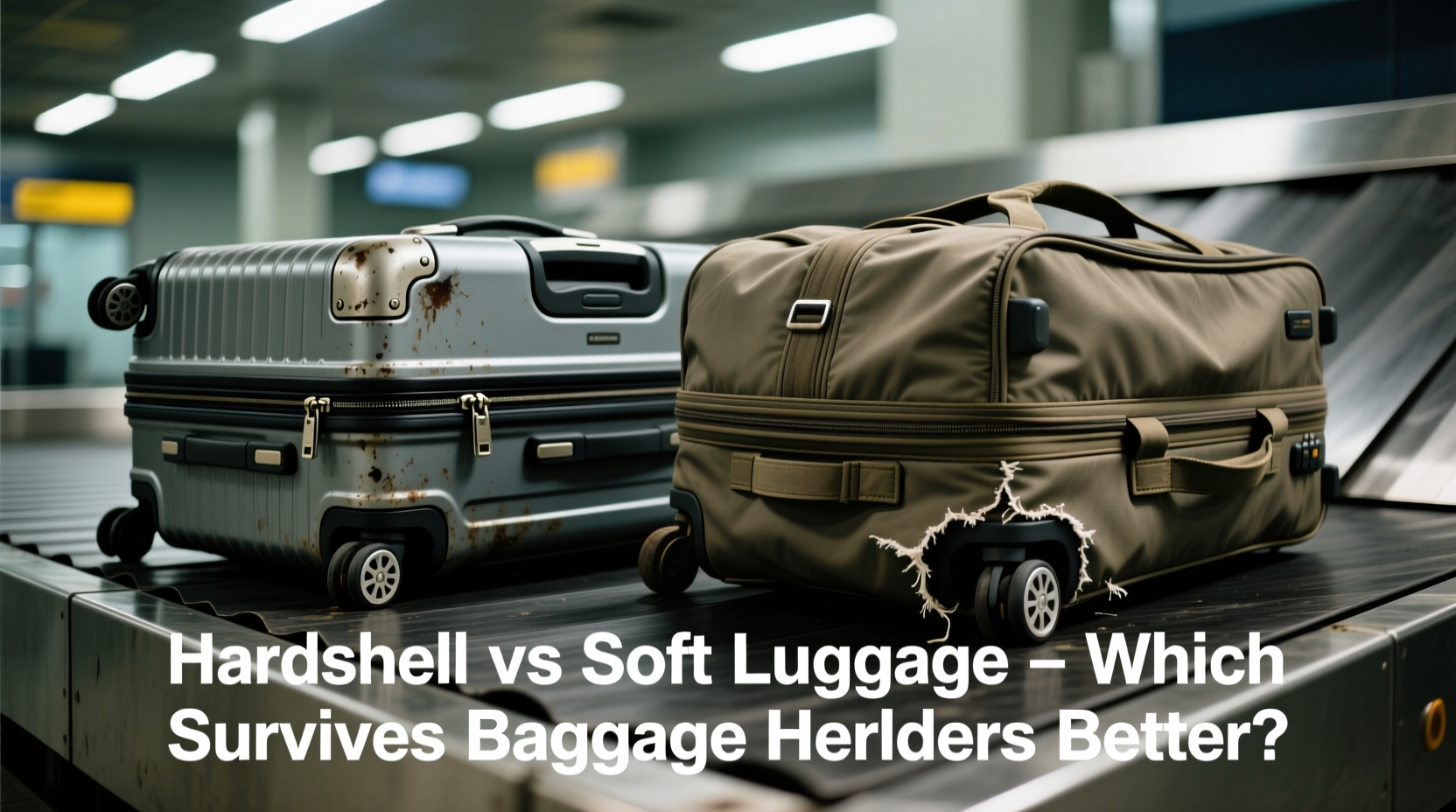
The core difference between hardshell and soft luggage lies in materials and structural integrity. Hardshell suitcases are typically made from polycarbonate, ABS plastic, or a blend of both. Polycarbonate, in particular, is known for its high impact resistance and flexibility—it can absorb shocks without cracking. These shells are molded into rigid forms, creating a protective exoskeleton around your belongings.
Soft luggage, on the other hand, uses fabrics like ballistic nylon, polyester, or ripstop material, often reinforced with internal frames or aluminum stays. While not rigid, these materials offer stretch and give, allowing the bag to compress and absorb force differently. Zippers are usually heavy-duty coil or water-resistant types, and many models feature expansion panels for added capacity.
The rigidity of hardshells provides excellent crush protection—ideal if you're transporting fragile items like cameras, bottles, or souvenirs. Soft bags, while less protective against direct compression, tend to be more forgiving during drops and impacts due to their ability to deform slightly and rebound.
“From a materials engineering standpoint, polycarbonate has superior energy absorption per unit mass compared to textiles. But real-world durability also depends on design, not just material.” — Dr. Alan Zhou, Materials Scientist, MIT Transport Lab
Impact Resistance: How Each Type Handles Drops and Kicks
Baggage handlers move thousands of bags daily. Speed matters, and corners get cut. Suitcases are routinely dropped from heights of 3–5 feet onto concrete or metal trolleys. So how do hardshell and soft luggage respond?
Hardshell cases excel in resisting punctures and surface damage. A polycarbonate shell may scratch, but it rarely tears. Many premium models use multi-layered shells with shock-absorbing ribs or grooves that distribute impact forces across the surface. In controlled tests, high-end polycarbonate suitcases have survived repeated 4-foot drops onto concrete with minimal structural compromise.
However, hardshells aren’t indestructible. Low-quality ABS plastic can crack or shatter under repeated stress. And once a hardshell cracks, especially along seams or wheel mounts, it compromises the entire structure. Repairs are difficult and often affect aesthetics or functionality.
Soft luggage behaves differently. When dropped, the fabric stretches slightly, dissipating energy. Stitching and reinforcement zones play a critical role here—bags with double-stitched seams and corner guards fare significantly better. Ballistic nylon, originally developed for bulletproof vests, resists tearing even after abrasion. If a soft bag does get punctured, repairs are often simpler: patch kits or zipper replacements can restore usability.
Tip: Look for soft bags with reinforced corners and bumpers—these areas take the brunt of impact during handling.Real-World Performance: Case Study from Frequent Flyer Data
To assess long-term survivability, consider the experience of James R., a corporate consultant who logs over 150,000 miles annually. Over five years, he used two primary suitcases: a premium polycarbonate spinner and a high-denier ballistic nylon roller.
The hardshell case, while pristine in appearance for the first year, developed a hairline crack near the handle base after being thrown off a conveyor belt in Frankfurt. By year three, the crack had spread, and one wheel detached during a transfer in Dubai. Despite no major drops, cumulative stress weakened the structure.
The soft bag, meanwhile, showed visible wear—scuffs on the base, faded fabric—but no functional failures. After four years, all zippers operated smoothly, wheels rotated evenly, and the frame remained intact. James attributes this resilience to the bag’s flexible design and replaceable parts.
His conclusion? “The hardshell looked sleeker and protected my laptop better, but the soft bag simply lasted longer under constant abuse.”
Comparative Analysis: Strengths and Weaknesses Side-by-Side
| Feature | Hardshell Luggage | Soft Luggage |
|---|---|---|
| Crush Protection | Excellent – rigid shell prevents compression damage | Fair to poor – contents vulnerable to stacking weight |
| Impact Resistance | Good (high-end), Poor (low-end) – can crack under repeated stress | Very Good – fabric absorbs shock, less prone to catastrophic failure |
| Puncture Resistance | Excellent – resistant to sharp objects | Variable – depends on fabric thickness and reinforcement |
| Weight | Heavier – adds to overall baggage mass | Lighter – more packing allowance |
| Expansion Capacity | Limited – some models expand slightly | High – many soft bags offer 2–3 inch expansion |
| Repairability | Poor – cracks are hard to fix; often requires replacement | Good – zippers, wheels, and fabric can be replaced |
| Water Resistance | Good – seamless shell resists moisture | Fair – fabric can absorb water unless coated |
This comparison shows that while hardshells win in protecting contents from crushing, soft luggage generally offers better longevity and adaptability under repeated physical stress—the kind common in airline baggage systems.
What Experts and Airlines Say About Luggage Survival
A 2023 report by SITA, a global air transport IT provider, found that approximately 25 million bags were mishandled globally that year—an average of 5.3 bags per 1,000 passengers. While most issues involve misrouting, physical damage accounts for nearly 18% of claims.
Airlines don’t officially recommend one luggage type over another, but behind the scenes, ground crew supervisors note patterns. “We see more shattered hardshells than torn soft bags,” said Maria Lopez, a baggage operations manager at a major U.S. hub. “The plastic ones sometimes explode on impact, especially if they’re overstuffed. Soft bags just bounce.”
Consumer Reports’ independent testing echoes this: in drop and compression trials, mid-to-high-end soft luggage consistently outperformed similarly priced hardshells in terms of functional lifespan. However, hardshells provided superior protection for delicate items.
“Think of hardshell like a helmet—great for preventing dents, but if it cracks, it’s done. Soft luggage is like a padded jacket—it won’t stop every bruise, but it keeps working even after taking hits.” — Lisa Tran, Travel Gear Analyst, Consumer Review Labs
Choosing Based on Your Travel Needs: A Practical Guide
The best luggage depends on what—and how—you travel. Use this step-by-step guide to match your needs with the right type.
- Assess your typical contents: Are you carrying fragile electronics, glassware, or expensive equipment? Choose hardshell for maximum crush and puncture protection.
- Evaluate your trip frequency: Frequent flyers benefit from soft luggage’s durability and easier repairs. If you check bags monthly or more, longevity trumps aesthetics.
- Consider destination conditions: Traveling to rainy climates? Hardshells offer better water resistance. Heading to rugged terrain? Soft bags tolerate dirt, mud, and scraping better.
- Weigh portability: Soft bags are generally lighter, giving you more allowance for souvenirs or duty-free purchases.
- Check airline policies: Some carriers impose strict size limits. Hardshells are less forgiving on dimensions, while soft bags can be squeezed slightly to comply.
Maximizing Luggage Lifespan: A Maintenance Checklist
No suitcase lasts forever, but proper care extends its life significantly. Follow this checklist to protect your investment:
- ✅ Clean exterior after international trips—dirt and salt accelerate wear
- ✅ Rotate luggage if you own multiple pieces—prevents overuse of one set of wheels
- ✅ Replace worn wheels or zippers promptly—small fixes prevent bigger failures
- ✅ Store in a cool, dry place—avoid garages or attics where temperature fluctuates
- ✅ Use packing cubes to distribute weight evenly—prevents stress on seams and frames
- ✅ Avoid overpacking—overstuffed bags strain zippers and distort shape
Frequently Asked Questions
Can TSA damage my luggage during inspection?
Yes. Even with TSA-approved locks, agents may cut straps or force open compartments if they suspect prohibited items. Soft bags with external pockets are more likely to be torn open. To minimize risk, avoid packing valuables in easily accessible areas and use tamper-evident seals.
Do hybrid luggage options exist?
Yes. Hybrid suitcases combine a hardshell front with a soft back or use flexible polycarbonate frames with fabric overlays. These aim to merge the best of both worlds—rigid protection on one side, expandability and lightness on the other. However, the hinge points or joining seams can become weak spots over time.
Is price a reliable indicator of durability?
Not always. While premium brands like Samsonite, Rimowa, or Briggs & Riley invest in rigorous testing, some mid-range soft luggage outperforms expensive hardshells in drop tests. Always check independent reviews and warranty terms—lifetime warranties with repair services (like Briggs & Riley’s) often signal true confidence in durability.
Final Verdict: Which Survives Baggage Handlers Better?
If survival means enduring repeated handling without functional failure, soft luggage generally wins. It’s lighter, more flexible, easier to repair, and less prone to catastrophic breakdown. High-quality fabrics and smart construction allow soft bags to absorb punishment and keep performing.
Hardshell luggage excels in protecting contents from crushing and punctures, making it ideal for delicate cargo. However, its Achilles’ heel is brittleness—especially in lower-tier models. Once cracked, a hardshell’s structural integrity is compromised, and replacement is often the only option.
For most travelers, especially those who fly frequently or check bags regularly, soft luggage offers better long-term value and resilience. For occasional trips with fragile items, a hardshell remains a smart choice.
The truth is, no suitcase is immune to rough handling. But by choosing the right type for your needs, maintaining it properly, and packing wisely, you can dramatically increase its odds of surviving flight after flight—intact and functional.
🚀 Ready to upgrade your travel gear? Reassess your last luggage failure—was it a crack, a tear, or a broken wheel? Use that insight to choose your next bag wisely. Share your experience in the comments to help others make smarter choices.