
Gifting money or property to loved ones is a generous act, but it can come with tax implications. The federal gift tax exists to prevent individuals from avoiding estate taxes by giving away large portions of their wealth before death. However, thanks to generous exemptions and annual exclusions, most people will never owe gift tax. Understanding how the gift tax works—its rates, exclusions, and reporting requirements—is essential for effective financial planning, especially when transferring significant assets.
How the Gift Tax Works
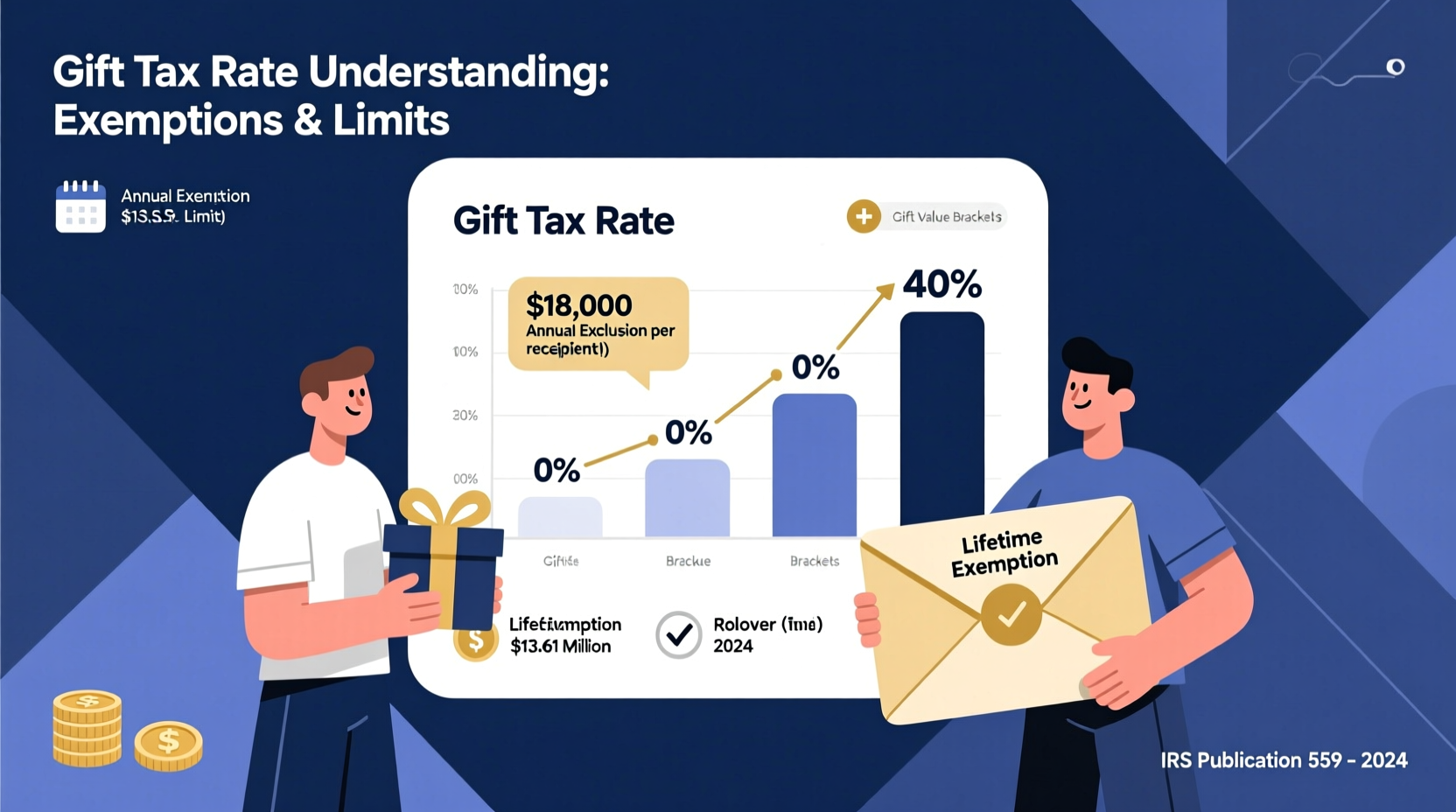
The U.S. federal gift tax applies to any transfer of property or money where something of value is given without receiving full value in return. It’s important to note that the giver—not the recipient—bears responsibility for paying the gift tax, though in practice, few individuals actually end up owing anything due to high exemption thresholds.
Each year, the IRS allows individuals to give a certain amount to as many people as they want without triggering any gift tax liability or even the need to report the gift. This is known as the annual exclusion. Gifts above this amount may count against a lifetime exemption, and only once that lifetime limit is exceeded does actual tax become due.
The gift tax operates alongside the estate tax, sharing a unified credit system. In essence, if you use part of your lifetime exemption during life through taxable gifts, less will be available to shield your estate from taxes after death.
Current Annual Exclusion and Lifetime Exemption
For 2024, the IRS has set the annual gift tax exclusion at $18,000 per recipient. This means you can give up to $18,000 in cash or assets to any individual each year without needing to file a gift tax return or using any portion of your lifetime exemption.
If you're married, you and your spouse can together gift up to $36,000 to a single recipient annually by electing to \"split gifts,\" even if only one of you provided the funds.
Beyond the annual exclusion, there's also a substantial lifetime exemption. For 2024, the federal lifetime gift and estate tax exemption is **$13.61 million per person** (or $27.22 million for married couples). This represents the total amount an individual can give away over their lifetime—above the annual exclusion—that counts toward the unified credit.
“Many clients are surprised to learn they can gift millions over time without ever paying a dime in gift tax. Proper structuring ensures both generosity and tax efficiency.” — Laura Simmons, CPA and Estate Planning AdvisorTip: Use the annual exclusion every year—even if you don’t think you’ll exceed the lifetime exemption. Gifting early removes future appreciation from your taxable estate.
When You Must File a Gift Tax Return
Filing IRS Form 709, United States Gift (and Generation-Skipping Transfer) Tax Return, is required in certain situations—even if no tax is owed. Common triggers include:
- Giving more than $18,000 to a single person in one year (2024 figure).
- Making a gift of a future interest (e.g., placing assets in a trust with delayed access).
- Gifting jointly owned property where your share exceeds the annual exclusion.
- Electing gift splitting with your spouse for a gift made by one spouse alone.
Filing Form 709 doesn’t mean you owe tax—it simply documents that you’ve used part of your lifetime exemption. For example, if you give $25,000 to your child in 2024, $18,000 falls under the annual exclusion, and the remaining $7,000 is applied to your $13.61 million lifetime exemption. No tax is due, but the transaction must be reported.
Gifts That Are Always Exempt
Not all transfers count toward the annual or lifetime limits. The IRS excludes several types of gifts from taxation entirely:
| Type of Gift | Exemption Status | Notes |
|---|---|---|
| Spousal gifts (U.S. citizen) | Unlimited | No limit on how much you can give your spouse. |
| Charitable donations | Unlimited | Must go to qualified 501(c)(3) organizations. |
| Medical expense payments | Unlimited | Paid directly to provider; not reimbursed later. |
| Tuition payments | Unlimited | Must be paid directly to educational institution. |
These exclusions can be powerful tools. For instance, grandparents who pay college tuition directly for a grandchild avoid using any of their gift tax exemption while helping reduce the family’s overall taxable estate.
Step-by-Step Guide to Making Large Gifts Strategically
To maximize tax benefits and minimize complications, follow this timeline when planning major gifts:
- Evaluate your net worth and goals: Determine whether reducing your taxable estate is a priority.
- Review annual exclusion limits: Plan recurring gifts up to $18,000 per recipient each year.
- Consider direct payments: Pay medical bills or tuition directly to providers to bypass gift tax rules entirely.
- Document spousal gift splitting: If giving over $18,000 as a couple, file Form 709 to formalize the split.
- File Form 709 when necessary: Report gifts exceeding the annual exclusion by April 15 of the following year.
- Track lifetime usage: Maintain records of reported gifts to understand how much exemption remains.
Real-Life Example: Funding a Child’s Home Purchase
Consider Mark and Diane, a married couple looking to help their daughter buy her first home. They plan to give her $100,000 toward the down payment.
Rather than writing one large check, they structure the gift strategically:
- They each give $18,000 in January (total: $36,000), utilizing the full annual exclusion.
- An additional $32,000 ($16,000 each) is gifted in December, bringing the total to $68,000 under the annual exclusion.
- The remaining $32,000 is treated as a taxable gift and reported on Form 709. Since it’s covered by their combined $27.22 million exemption, no tax is due.
This approach minimizes reporting burden, preserves estate tax protection, and accelerates homeownership for their daughter—all while staying compliant.
Frequently Asked Questions
Do I have to pay gift tax if I give someone $20,000?
Not necessarily. If you give $20,000 to one person in 2024, $18,000 is covered by the annual exclusion. The remaining $2,000 counts against your $13.61 million lifetime exemption. You must file Form 709, but no tax is due unless you’ve already used up your entire lifetime exemption.
Can my parents give me $100,000 tax-free?
Yes, but it depends on how it’s structured. If both parents give $18,000 each (total $36,000), that portion is fully excluded. The remaining $64,000 would be considered a taxable gift and reported on Form 709. However, as long as they haven’t used their lifetime exemption, no tax is owed. Alternatively, they could spread the gift over multiple years to stay under the annual limit.
Does receiving a gift affect my income taxes?
No. Recipients of gifts do not owe income tax on the amounts received. The IRS treats gifts as nontaxable income. However, any earnings generated from the gifted asset (like interest or dividends) are taxable to the recipient.
Key Checklist for Responsible Gifting
- ☑ Know the current annual exclusion ($18,000 in 2024).
- ☑ Track gifts to each individual to ensure accurate reporting.
- ☑ Use direct payments for tuition and medical expenses to avoid limits.
- ☑ File Form 709 if giving more than the annual exclusion to any one person.
- ☑ Consult a tax professional when gifting real estate, business interests, or large sums.
- ☑ Consider spreading large gifts over multiple years to optimize exclusions.
Looking Ahead: Sunset of Current Exemption Levels
A critical point often overlooked is that the high lifetime exemption is scheduled to sunset after 2025. Under current law, the exemption will revert to approximately $6 million per person (adjusted for inflation) in 2026. While Congress may extend the higher threshold, there’s uncertainty.
This creates a strategic window: individuals with sizable estates may benefit from making larger gifts before 2026 to lock in the higher exemption. The IRS has confirmed that gifts made during the elevated exemption period won’t trigger clawbacks later, even if the exemption drops.
Conclusion
Understanding the gift tax rate, exemptions, and limits empowers you to transfer wealth wisely and efficiently. With smart planning, most people can give generously without ever paying a dollar in gift tax. Whether you’re helping a child start a new chapter or reducing your estate’s future tax burden, the tools exist to do so legally and effectively.
🚀 Ready to make your first tax-smart gift? Review your annual gifting strategy today—consult a financial advisor or tax professional to ensure your generosity aligns with your long-term goals.