When we think about meaningful moments in life—birthdays, anniversaries, holidays—the choice often comes down to giving a gift or creating an experience. A watch, a book, or a piece of jewelry might seem like a safe bet. But so does a concert ticket, a weekend getaway, or a cooking class. The deeper question isn’t just about what feels right in the moment, but what lasts: which leaves a stronger imprint on memory?
Psychologists, behavioral economists, and neuroscientists have spent years studying how humans form and retain memories. Their findings consistently point toward a surprising truth: while physical gifts may be admired, used, or even cherished, it’s experiences that tend to endure in our minds with greater emotional clarity and longevity.
The Psychology of Memory and Emotional Salience
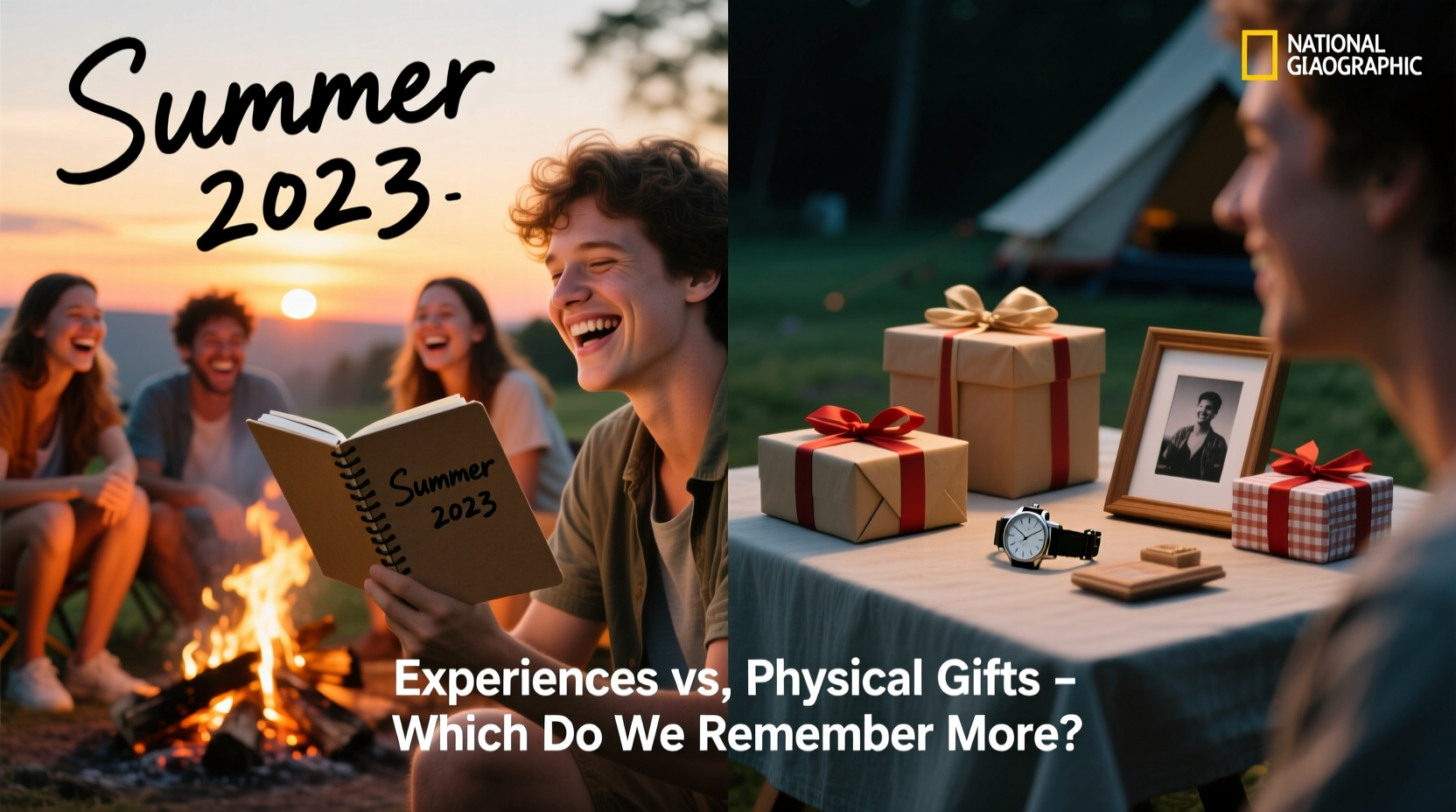
Human memory doesn’t function like a video recorder. Instead, it’s selective, reconstructive, and deeply influenced by emotion. Events tied to strong feelings—joy, surprise, anticipation, connection—are more likely to be encoded into long-term memory. This process, known as emotional salience, plays a central role in determining what we remember and for how long.
Experiences inherently carry higher emotional weight than objects. Consider a surprise trip to a mountain cabin. The planning, the journey, the smell of pine, the laughter around a fire—all of these sensory and social elements create rich neural associations. In contrast, a new sweater, no matter how luxurious, rarely engages multiple senses or triggers deep emotional engagement beyond initial appreciation.
“We don’t remember days, we remember moments.” — Cesare Pavese, Italian writer and literary critic
This quote captures the essence of experiential memory. It’s not the duration of an event that matters most, but its intensity and meaning. Research from Cornell University shows that people derive more enduring happiness from spending money on experiences rather than material goods, largely because experiences become part of our identity and are more frequently revisited in memory.
Why Experiences Outlast Possessions in Memory
Several key factors explain why experiences are remembered more vividly and for longer periods:
- Narrative value: Experiences naturally evolve into stories. People recount trips, concerts, or meals with friends far more often than they describe their latest gadget purchase.
- Social sharing: Shared experiences strengthen relationships and are more likely to be discussed, reinforcing the memory through repetition.
- Anticipation and reflection: The joy of an experience begins before it happens (planning) and continues afterward (reminiscing), doubling its emotional footprint.
- Uniqueness: While physical items can be replaced or duplicated, personal experiences are inherently one-of-a-kind.
- Less adaptation: Humans quickly adapt to new possessions—a phenomenon called hedonic adaptation. But memories of experiences resist this fading effect.
A study published in the Journal of Consumer Psychology found that participants who spent money on experiences reported higher levels of satisfaction weeks later compared to those who bought material items. Even when experiences included negative elements—like bad weather or travel delays—the overall memory remained positive due to the richness of the narrative.
Tip: When choosing a gift, consider whether it enables a shared moment. A gift card for a pottery class is more memorable than a mug, even if both serve the same purpose.Physical Gifts: When Objects Do Stick in Memory
This isn’t to say physical gifts are forgettable. Some objects become powerful memory anchors—wedding rings, heirloom watches, childhood toys. These items gain significance not from their material value, but from the stories attached to them.
The key difference lies in context. A necklace given on a milestone birthday may be remembered not for its design, but because it was presented during a heartfelt speech. In such cases, the object becomes a symbolic token of an experience. Without that emotional backdrop, however, most physical gifts fade into the background of daily life.
Moreover, functional gifts—clothing, electronics, home goods—are often appreciated in the short term but quickly integrated into routine use. Once normalized, they stop triggering conscious appreciation. An iPhone is used constantly, yet few people fondly recall the day they received theirs unless it was tied to a larger event, like a graduation or promotion.
When Physical Gifts Become Memorable
| Circumstance | Example | Why It's Remembered |
|---|---|---|
| Tied to a major life event | Watch gifted at retirement party | Symbolizes achievement and transition |
| From a loved one who has passed | Mother’s scarf inherited after her death | Emotional connection transcends object |
| Custom or handmade | Painting created by a child | Effort and personal meaning enhance value |
| Rare or irreplaceable | Vintage record from a favorite era | Scarcity increases sentimental weight |
In these cases, the object functions less as a possession and more as a relic of an experience. The memory isn’t of the item itself, but of the moment it represented.
Real-Life Example: The Birthday That Wasn’t About Presents
Take the case of Mark, a 38-year-old teacher celebrating his birthday. His partner, Sarah, faced a dilemma: buy him the high-end headphones he’d mentioned, or use the budget for a surprise weekend in a nearby wine region. She chose the latter.
The trip included a vineyard tour, a private tasting, and dinner at a farm-to-table restaurant. There were minor hiccups—a delayed reservation, overcast skies—but Mark later described it as “one of the best birthdays I’ve ever had.”
Five years later, he still talks about that weekend. He remembers the taste of the aged cheddar paired with merlot, the way sunlight broke through the clouds during the tour, and how Sarah surprised him with a handwritten letter at dinner. The headphones would have been useful, maybe even impressive. But they wouldn’t have generated stories, nor would they have deepened their connection.
This example illustrates a broader trend: gifts that foster presence, attention, and shared emotion leave deeper imprints than those measured in utility or cost.
Expert Insight: What Neuroscience Says About Lasting Memories
Dr. Linda Chang, a cognitive neuroscientist at the University of Michigan, explains how the brain prioritizes experiential memories:
“Experiences activate multiple regions of the brain simultaneously—sensory cortex, emotional centers, and autobiographical memory networks. This multi-modal encoding makes them more resilient to forgetting. A physical gift might light up reward circuits briefly, but it doesn’t engage the same depth of neural integration.” — Dr. Linda Chang, Cognitive Neuroscientist
She adds that social interaction during experiences further enhances memory consolidation. When we share moments with others, the brain releases oxytocin and dopamine, chemicals linked to bonding and pleasure. These neurochemical responses act as memory glue, making the event more vivid and retrievable over time.
How to Choose Gifts That Are Actually Remembered
Whether you’re shopping for a partner, friend, or family member, the goal should be to create a lasting impression—not just deliver a transaction. Here’s a practical checklist to ensure your gift stands out in memory:
Checklist: Making Your Gift Unforgettable- Ask: Does this gift create or enable a moment?
- Prioritize participation over possession (e.g., tickets vs. souvenirs).
- Personalize based on their interests, not your preferences.
- Include an element of surprise or novelty.
- Design opportunities for shared reflection (e.g., photo books after a trip).
- If giving a physical item, pair it with an experience (e.g., a cookbook + dinner class).
- Attach a handwritten note explaining why you chose it.
Step-by-Step Guide to Planning a Memorable Experience Gift
- Identify the recipient’s passions: Are they into food, nature, art, music? Align the experience with genuine interests.
- Consider timing: Avoid scheduling during stressful periods. Birthdays, anniversaries, or seasonal breaks work best.
- Build anticipation: Reveal clues in advance or send a teaser message to heighten excitement.
- Minimize logistics: Handle bookings, transportation, and details so they can focus on enjoyment.
- Incorporate personal touches: Include a favorite snack, playlist, or meaningful location.
- Encourage documentation: Suggest taking photos or keeping a journal to reinforce memory retention.
- Follow up: Afterward, share a recap—maybe a photo collage or a shared album—to extend the emotional lifespan of the experience.
Frequently Asked Questions
Do younger people remember experiences more than older adults?
Research suggests that across age groups, experiences generate stronger emotional memories. However, younger adults may place higher value on novel experiences, while older adults often cherish nostalgic or family-oriented ones. The core mechanism—emotional salience—remains consistent regardless of age.
What if someone prefers practical gifts?
Practicality doesn’t have to mean impersonal. You can combine utility with experience: a high-quality backpack paired with a planned hiking trip, or noise-canceling headphones with a curated playlist and a note suggesting a “digital detox day.” The key is layering functionality with intentionality.
Can virtual experiences be as memorable as in-person ones?
While in-person interactions generally produce richer memories due to full sensory engagement, well-designed virtual experiences—especially interactive ones like online escape rooms or live-streamed concerts with chat—can still be meaningful. They work best when they involve active participation and social connection.
Conclusion: What We Remember Shapes Who We Are
At the end of the day, people don’t define their lives by the things they owned, but by the moments they lived. A luxury watch may gleam on the wrist, but it’s the story behind how it was given—the hike to a summit at sunrise, the quiet dinner where it was handed over—that truly lingers.
Experiences win in the memory game not because they’re extravagant, but because they engage us fully—emotionally, socially, sensorially. They become chapters in our personal narratives. Physical gifts can join that narrative, but only when they’re woven into the fabric of a meaningful moment.
If you want your generosity to be remembered, shift your focus from the tangible to the temporal. Invest in time, attention, and shared joy. Those are the gifts that echo longest in the mind.
🚀 Ready to make your next gift unforgettable? Start planning an experience today—something small, personal, and full of presence. Then come back and tell us about it in the comments.