
Maintaining strong connections across continents is essential in today’s globalized world. Whether you're contacting family, managing remote work, or coordinating business ventures, calling the United States from France doesn’t have to be complicated—or expensive. With the right strategies, you can make seamless international calls while significantly reducing costs. The key lies in understanding dialing codes, leveraging cost-effective technologies, choosing optimal times, and avoiding common billing pitfalls.
This guide delivers practical, field-tested advice to help you communicate efficiently and affordably. From traditional phone services to modern VoIP solutions, we break down everything you need to know to stay connected without overspending.
Understanding International Dialing: The Basics
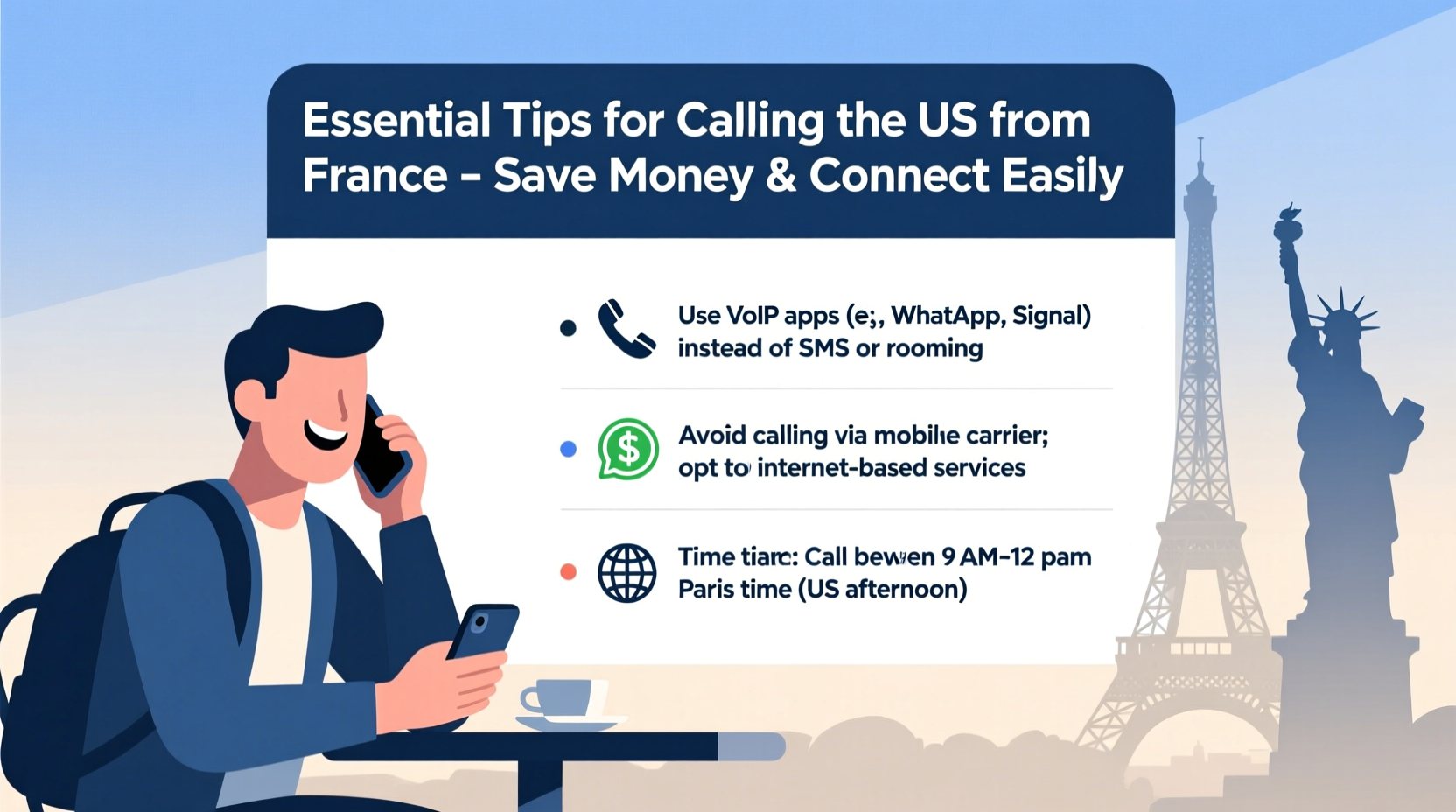
Before making a call from France to the U.S., it's crucial to understand the correct dialing sequence. Missteps here can result in failed calls or unexpected charges. The standard format follows this structure:
- Dial the French international exit code: 00
- Enter the country code for the United States: 1
- Input the area code (e.g., 212 for New York)
- Dial the local 7-digit phone number
So, to reach a number like (555) 123-4567 in Los Angeles (area code 310), you would dial: 00 1 310 555 1234.
Tip: Always double-check the full number before dialing. A single wrong digit can lead to costly misconnections or voicemail scams.Mobile networks in France often allow this format directly from your smartphone keypad. However, some carriers may require the \"+\" symbol instead of \"00\". If your phone supports it, typing +1 followed by the area code and number is more reliable and universally recognized.
Choosing the Right Calling Method
Not all calling methods are created equal. Your choice impacts both call quality and cost. Below is a comparison of the most common options available to callers in France.
| Method | Cost per Minute | Call Quality | Best For |
|---|---|---|---|
| Traditional Mobile Carrier | €0.30–€1.50 | High | Emergency calls, short conversations |
| Landline (Fixed Line) | €0.20–€0.80 | Very High | Longer calls, older users |
| VoIP Apps (WhatsApp, FaceTime, Telegram) | Free (with internet) | High (depends on connection) | Regular contact, video calls |
| Dedicated VoIP Services (Skype, Rebtel) | €0.01–€0.10 | Good to High | Business calls, scheduled meetings |
| Prepaid Calling Cards | €0.05–€0.25 | Variable | Users without smartphones or Wi-Fi |
Voice over Internet Protocol (VoIP) services offer the best value for frequent callers. Applications like WhatsApp and FaceTime use data or Wi-Fi, allowing free calls between users. For non-app contacts, platforms such as Skype Credit or Rebtel provide low-cost alternatives with predictable pricing.
“Switching to VoIP reduced my monthly international bill by over 80%. I now use Skype for business and WhatsApp for family.” — Laurent Dubois, Remote Project Manager based in Lyon
Smart Timing: When to Call for Lower Rates
Many traditional carriers apply variable rates based on time of day. Calling during off-peak hours can yield significant savings. While mobile plans often bundle international minutes, landline and pay-per-use services typically charge less during evenings, weekends, and holidays.
Consider these optimal calling windows:
- Evenings (after 7 PM local time in France): Reduced rates on many fixed-line providers
- Weekends (Saturday–Sunday): Special international packages or flat-rate deals
- U.S. Business Hours (9 AM–5 PM EST): Best for professional calls; aligns with 3 PM–1 AM in France
Avoid peak hours between 8 AM and 6 PM in France if using traditional lines—rates are often highest then.
Tip: Use a world clock app to sync French and U.S. time zones effortlessly. Calling too early or late can inconvenience recipients and reduce conversation effectiveness.Step-by-Step Guide to Making a Low-Cost Call
Follow this simple process to ensure affordability and clarity every time you call the U.S.:
- Verify the recipient’s availability via text or messaging app to avoid unanswered calls and wasted minutes.
- Choose your method: Use WhatsApp if both parties have it; otherwise, opt for Skype or a low-cost carrier.
- Check your internet connection if using VoIP—ensure stable Wi-Fi or sufficient mobile data.
- Dial correctly: Use +1 XXX XXX XXXX format on mobile devices.
- Monitor call duration if not on an unlimited plan. Set a timer for budget control.
- Review your bill monthly to detect any unexpected charges or subscription creep.
This routine helps prevent technical issues and keeps costs under control, especially for those on tight communication budgets.
Common Pitfalls and How to Avoid Them
Even experienced callers fall into traps that inflate bills or disrupt communication. Here are frequent mistakes and how to sidestep them:
- Forgetting to disable roaming: If traveling in France, ensure data roaming is off unless necessary. Background app usage can rack up charges.
- Using default carrier rates: Many users unknowingly pay premium rates. Switch to Wi-Fi-based apps whenever possible.
- Ignoring hidden fees on calling cards: Some prepaid services deduct maintenance fees daily. Use them quickly or switch to transparent providers.
- Calling toll-free U.S. numbers (800, 888, etc.): These are often not free from abroad and may incur high charges. Confirm accessibility first.
“Over a three-month period, one client was charged €120 for 'free' customer service calls to a U.S. airline. Always verify international access to toll-free lines.” — Sophie Renard, Consumer Telecom Advisor at UFC-Que Choisir
Mini Case Study: Reducing Monthly Costs by 75%
Marie, a freelance translator living in Bordeaux, regularly collaborates with clients in New York and California. Initially, she used her mobile provider for calls, averaging €65/month in international fees. After researching alternatives, she implemented the following changes:
- Switched to WhatsApp and Signal for messaging and voice calls
- Scheduled weekly check-ins during weekend rate discounts on her landline
- Used Skype Credit for clients who didn’t use messaging apps
Within two months, her average monthly expense dropped to €16. She maintained the same call volume but improved efficiency through better planning and technology use.
Essential Checklist Before You Call
Use this checklist to ensure every call is smooth, clear, and cost-effective:
- ✅ Confirm the correct U.S. number format (+1 XXX XXX XXXX)
- ✅ Connect to Wi-Fi when using VoIP apps
- ✅ Check time difference to avoid disturbing the recipient
- ✅ Disable mobile data roaming if not needed
- ✅ Test microphone and speaker quality beforehand
- ✅ Have a backup method ready (e.g., SMS or email)
- ✅ Review your calling plan for included minutes or caps
Frequently Asked Questions
Can I use WhatsApp to call the U.S. for free from France?
Yes. As long as both you and the person you’re calling have WhatsApp installed and a stable internet connection, voice and video calls are completely free—regardless of country.
Why is my call to the U.S. so expensive on my French mobile plan?
Some carriers charge high per-minute rates for international calls unless you’ve subscribed to a specific add-on or international package. Check your plan details or consider switching to a VoIP solution.
Are there legal restrictions on using VoIP in France?
No. VoIP services like WhatsApp, Skype, and Telegram are fully legal and widely used in France. However, emergency calls (e.g., 112) cannot be made via most VoIP apps—always use a traditional line for emergencies.
Final Thoughts: Stay Connected Without the Cost
Calling the U.S. from France no longer requires sacrificing your budget for reliability. By combining smart dialing practices, modern communication tools, and strategic timing, you can maintain high-quality connections at a fraction of traditional costs. The shift from carrier-dependent calling to internet-based solutions has democratized international communication—putting control back in your hands.
🚀 Start today: Audit your last three international calls. Identify where you can switch to free or lower-cost options. Small changes lead to big savings—take control of your communication strategy now.