
A well-crafted business plan is more than a document—it’s a roadmap for sustainable growth, strategic decision-making, and investor confidence. For small business owners, especially those in early or expansion phases, a clear and compelling plan can mean the difference between stagnation and scalable success. Whether you're seeking funding, refining operations, or preparing for market shifts, following a structured approach ensures your business stays aligned with its goals.
Define Your Vision and Objectives Clearly
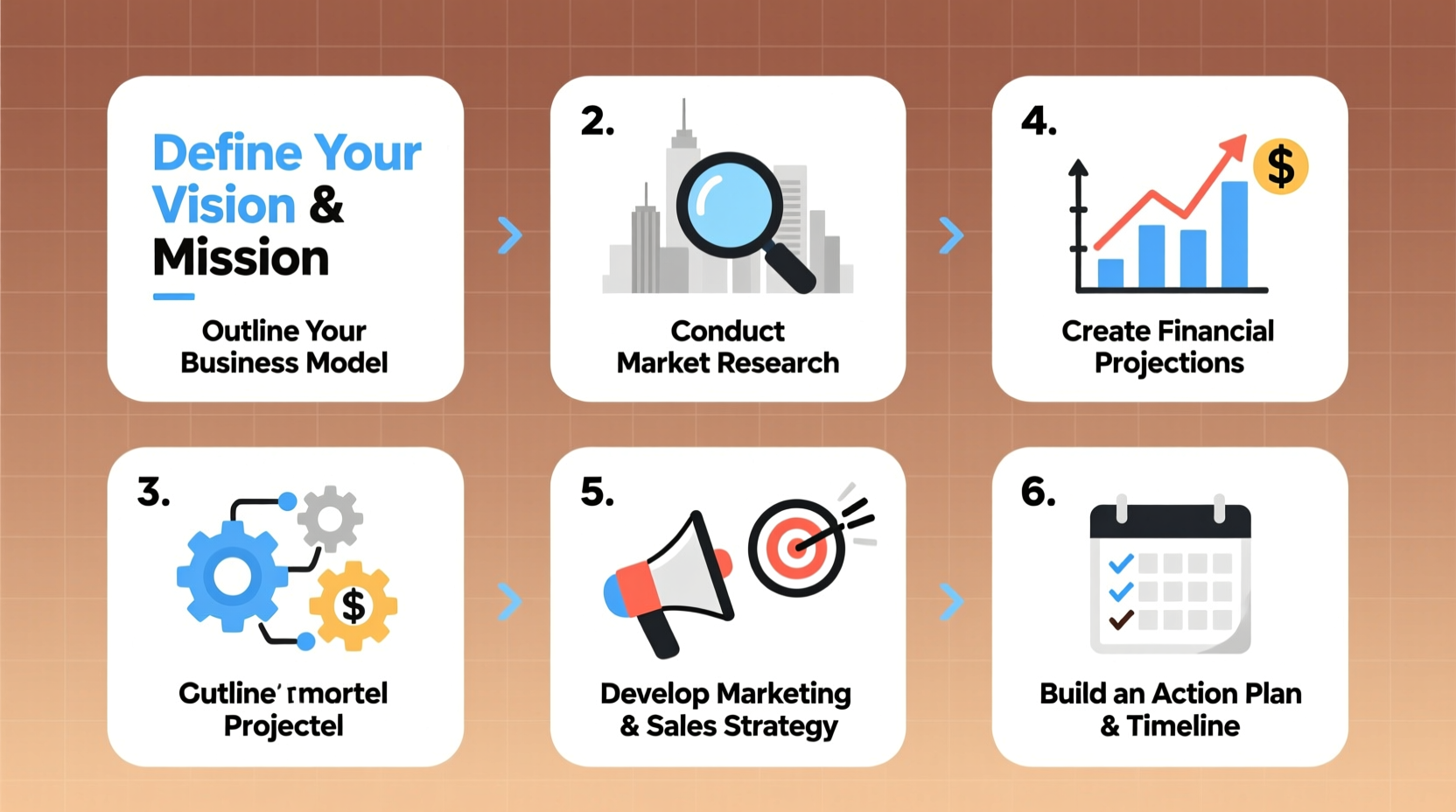
Every strong business plan begins with clarity of purpose. Start by articulating your company's mission, vision, and core values. These foundational elements guide every other section of your plan and help stakeholders understand what your business stands for.
Your objectives should be specific, measurable, achievable, relevant, and time-bound (SMART). For example, instead of saying “increase sales,” aim for “grow monthly revenue by 25% within 12 months through targeted digital marketing and product line expansion.” This precision strengthens accountability and allows progress tracking.
Tip: Revisit your mission statement quarterly to ensure it still aligns with your evolving business strategy.Conduct Thorough Market Research
Understanding your market is non-negotiable. A business plan built on assumptions without data is vulnerable to failure. Invest time in gathering real insights about customer needs, industry trends, competitor strategies, and pricing models.
Start by identifying your target audience—demographics, behaviors, pain points, and purchasing habits. Use surveys, focus groups, and public data sources like U.S. Census reports or industry publications. Analyze at least three key competitors: their strengths, weaknesses, market positioning, and customer reviews.
This research should directly inform your value proposition: what makes your product or service uniquely valuable to customers? Answer this clearly and concisely.
“Businesses that validate their ideas with market data before launch are 30% more likely to survive past five years.” — Dr. Laura Simmons, Small Business Economist, Stanford Graduate School of Business
Create a Structured Financial Plan
Investors and lenders prioritize financial clarity. Your business plan must include realistic projections backed by logic and historical data where available. At minimum, include these three components:
- Income Statement Forecast: Projected revenues, costs, and profits over 1–3 years.
- Cash Flow Statement: Monthly cash inflows and outflows to assess liquidity.
- Balance Sheet: Assets, liabilities, and equity at key intervals.
If you’re just starting, base estimates on industry benchmarks and conservative assumptions. Always include a break-even analysis showing when your business will become profitable.
| Financial Component | Purpose | Time Frame |
|---|---|---|
| Startup Costs | Initial investment needed to launch | Pre-launch to Month 3 |
| Sales Forecast | Expected revenue based on market demand | Monthly for Year 1, Quarterly for Years 2–3 |
| Operating Budget | Monthly expenses including payroll, rent, supplies | Ongoing |
| Break-Even Analysis | Determine when revenue covers all costs | By Month/Quarter |
Outline a Realistic Go-to-Market Strategy
How will customers find you? Your go-to-market (GTM) strategy defines your path from product development to customer acquisition. It includes pricing, distribution channels, promotional tactics, and sales processes.
For example, a local bakery expanding into e-commerce might adopt a GTM strategy that includes:
- Setting competitive online prices with bundled delivery options
- Using Instagram and Google Ads to reach nearby urban customers
- Partnering with food delivery platforms like DoorDash or Uber Eats
- Offering first-order discounts to build initial traction
The key is alignment: your marketing budget, messaging, and channels must reflect your target audience’s behavior. Avoid spreading resources too thin—focus on 1–2 high-impact channels initially.
Mini Case Study: GreenSprout Organics
GreenSprout Organics, a small organic skincare brand, struggled to gain visibility despite high-quality products. After revising their business plan to include a detailed GTM strategy, they shifted focus from broad social media ads to influencer partnerships with eco-conscious beauty bloggers. Within six months, website traffic increased by 70%, and direct sales rose by 45%. Their revised plan also included customer retention tactics like email nurturing and loyalty rewards, which improved repeat purchase rates.
Build an Actionable Implementation Timeline
A business plan without execution is just a wishlist. Translate your strategy into a step-by-step timeline with milestones, responsibilities, and deadlines.
- Month 1: Finalize product inventory and secure supplier contracts.
- Month 2: Launch website and set up payment processing.
- Month 3: Begin targeted ad campaigns and initiate PR outreach.
- Month 6: Evaluate customer feedback and adjust product offerings.
- Month 9: Expand distribution to two new retail partners.
- Month 12: Achieve profitability and explore secondary markets.
Assign team members to each task and schedule monthly review meetings to track progress. Use project management tools like Trello or Asana to keep everyone aligned.
Essential Business Plan Checklist
Before finalizing your plan, ensure it includes the following components:
- Executive summary (1-page overview)
- Company description and legal structure
- Market analysis with supporting data
- Clear value proposition and competitive advantage
- Detailed product or service offering
- Marketing and sales strategy
- Operational plan (location, equipment, staffing)
- Management team bios and organizational chart
- 3-year financial projections (income, cash flow, balance sheet)
- Funding request (if applicable) with use-of-funds breakdown
- Risk assessment and contingency plans
Frequently Asked Questions
How long should my business plan be?
Most effective small business plans range from 15 to 30 pages. The key is completeness, not length. Focus on clarity and relevance. Investors prefer concise, well-organized documents over lengthy narratives.
Do I need a business plan if I’m not seeking funding?
Yes. Even without external financing, a business plan serves as a strategic tool for goal setting, performance tracking, and identifying operational gaps. It keeps you focused during periods of change or growth.
How often should I update my business plan?
Review and revise your plan at least once per quarter. Major updates should follow significant events—launching a new product, entering a new market, or experiencing unexpected financial shifts.
Conclusion: Turn Your Plan Into Progress
A successful business plan isn’t written once and shelved—it evolves with your company. By defining your vision, validating your market, projecting finances responsibly, and mapping out actionable steps, you create a living document that drives growth. The most impactful plans aren’t perfect on the first draft; they improve through iteration, feedback, and real-world testing.
🚀 Ready to grow your small business? Download a free business plan template, share this guide with your team, or leave a comment with your biggest planning challenge—we’d love to help.