In recent years, emotional support animals (ESAs) have become an essential part of mental health treatment for millions of Americans. Unlike service animals trained to perform specific tasks, ESAs provide comfort simply by being present. However, their legal status is often misunderstood—especially when it comes to housing rights under federal law. For both tenants seeking accommodations and landlords managing rental properties, clarity on emotional support animal laws is critical. This article breaks down the rules governing ESAs in residential settings, outlining exactly what landlords must allow, what they can legally deny, and how both parties can navigate these situations fairly and lawfully.
Federal Laws Governing Emotional Support Animals
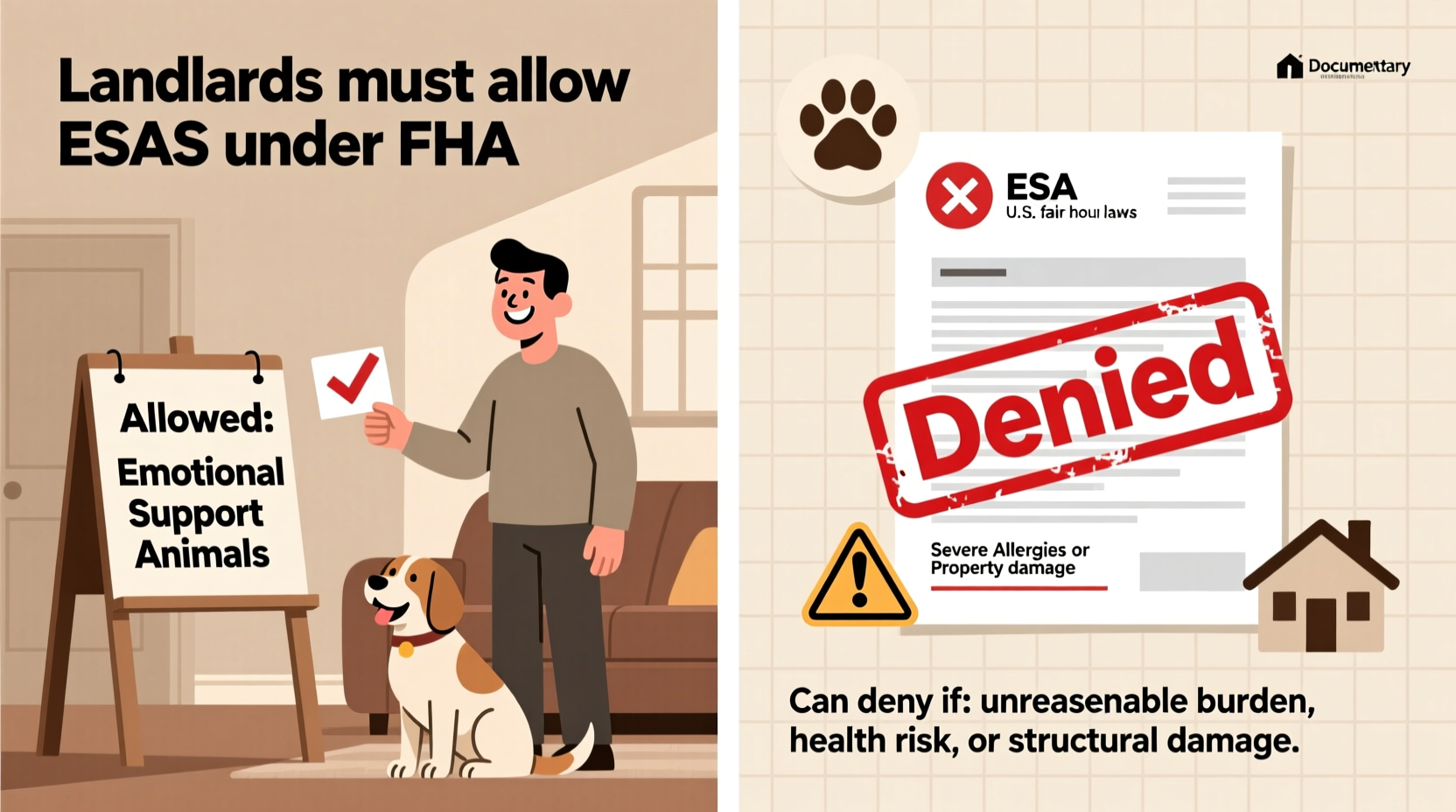
The primary legal framework protecting tenants with emotional support animals comes from two key federal statutes: the Fair Housing Act (FHA) and Section 504 of the Rehabilitation Act. These laws fall under the jurisdiction of the U.S. Department of Housing and Urban Development (HUD), which enforces anti-discrimination policies in housing.
Under the FHA, individuals with disabilities—including mental health conditions such as anxiety, depression, PTSD, and certain phobias—are entitled to reasonable accommodations in housing. An emotional support animal qualifies as such an accommodation when it alleviates symptoms of a diagnosed condition. Landlords cannot refuse tenancy or charge extra fees solely because a tenant requires an ESA, even if the property has a strict “no pets” policy.
It’s important to note that while the Americans with Disabilities Act (ADA) grants broad access rights to service animals in public spaces, it does not extend those protections to ESAs. The ADA only covers dogs—and in some cases miniature horses—specifically trained to perform tasks for people with disabilities. Emotional support animals, regardless of species, are not granted public access rights under the ADA. Their protection is limited to housing and, in some cases, air travel (though airline policies have tightened significantly since 2021).
“Emotional support animals play a vital therapeutic role for many individuals. HUD consistently upholds that denying an ESA request without valid reason constitutes disability discrimination.” — Sarah Thompson, Senior Attorney at the National Fair Housing Alliance
What Landlords Must Allow
When a tenant presents a legitimate request for an emotional support animal, landlords are obligated to make certain allowances. Failure to comply can result in formal complaints, fines, or lawsuits. Here's what landlords must permit under federal law:
- Waive pet restrictions: A landlord cannot enforce a “no pets” rule against an approved ESA. Even breed- or size-specific bans must be suspended for emotional support animals.
- Forgo pet deposits or fees: Charging additional rent, security deposits, or monthly pet fees for an ESA is illegal. The animal is not considered a pet but a medical accommodation.
- Accept common species: While dogs and cats are most common, other animals like rabbits, birds, or even miniature pigs may qualify as ESAs if they provide emotional benefit and are supported by documentation.
- Respond promptly to requests: Landlords should acknowledge ESA requests within a reasonable timeframe—typically 10 business days—and engage in an interactive process if clarification is needed.
- Maintain confidentiality: Information about a tenant’s disability and ESA status is protected under privacy laws and should not be disclosed to other tenants or staff unnecessarily.
What Landlords Can Legally Deny
While tenants have strong protections, landlords are not required to approve every ESA request. There are specific, legally recognized grounds for denial. Understanding these exceptions helps prevent abuse of the system and protects property owners’ rights.
A landlord may deny an emotional support animal request if:
- No disability-related need is established: The tenant must have a qualifying mental or physical disability as defined by the FHA. A general desire for companionship does not qualify.
- Lack of credible documentation: A letter from a licensed mental health professional (LMHP)—such as a psychologist, psychiatrist, or clinical social worker—is required. Notes from general practitioners without mental health credentials may be challenged.
- The animal poses a direct threat: If the ESA has a history of aggression, biting, or causing property damage, the landlord can refuse accommodation based on safety concerns.
- Unreasonable accommodation: If allowing the animal would impose an undue financial or administrative burden—or fundamentally alter the nature of the housing operation—the request may be denied. This is rare in standard rental scenarios but could apply in extremely small owner-occupied buildings with shared facilities.
- The animal is not housebroken: Tenants are responsible for ensuring their ESA is properly trained to live indoors. Persistent soiling, excessive noise, or disruptive behavior can justify denial or removal.
- Exotic or non-domesticated animals: While there’s no official list of prohibited species, HUD generally recognizes only domesticated animals commonly kept in homes. Requests involving reptiles, ferrets, or barnyard animals are more likely to be denied unless strongly justified.
Case Example: When a Request Was Lawfully Denied
In a 2022 case in Ohio, a tenant applied for an emotional support peacock, citing anxiety relief. The landlord initially accepted the request but reversed the decision after the bird caused significant noise disturbances, damaged landscaping, and frightened neighbors. The tenant provided a letter from a therapist, but the letter lacked specificity about how the peacock directly alleviated symptoms. HUD reviewed the case and sided with the landlord, noting that the accommodation was unreasonable due to the animal’s impracticality in a densely populated apartment complex. This case illustrates that even with documentation, not all ESAs will be approved if they create undue disruption.
Step-by-Step Process for Submitting an ESA Request
For tenants, following a clear procedure increases the likelihood of approval and reduces conflict. Here’s a recommended timeline:
- Obtain an ESA letter: Consult a licensed mental health professional who knows your medical history. The letter must confirm your disability, state that the animal provides therapeutic benefit, and be on official letterhead.
- Review lease terms: Check whether your building falls under FHA exemptions (e.g., owner-occupied buildings with four or fewer units may have limited obligations).
- Submit request in writing: Send the ESA letter and a formal accommodation request via email or certified mail. Include your name, unit number, and a brief explanation.
- Wait for response: Landlords have up to 10–14 days to respond. They may ask for verification (but not detailed medical records).
- Follow up: If denied, request the reason in writing. You may appeal with additional documentation or file a complaint with HUD within one year.
Do’s and Don’ts: A Landlord’s Checklist
| Action | Do | Don't |
|---|---|---|
| Receiving an ESA Request | Review documentation promptly and respectfully. | Ignore the request or delay response unreasonably. |
| Verification | Ask for confirmation from the LMHP if authenticity is in doubt. | Request full medical records or diagnosis details. |
| Denial | Cite specific legal reasons (e.g., direct threat, lack of disability link). | Refuse based on personal opinion or blanket pet policies. |
| Fees | Waive pet deposits and monthly charges. | Charge extra for cleaning or insurance related to the ESA. |
| Enforcement | Hold ESA owners accountable for damage or disturbances. | Punish the tenant through eviction without proper notice and cause. |
Frequently Asked Questions
Can a landlord require an ESA to be registered or certified?
No. There is no federally recognized registration or certification process for emotional support animals. Websites selling ESA “certificates” are not legitimate under HUD guidelines. The only valid document is a letter from a licensed mental health professional.
What if my ESA causes damage to the apartment?
Tenants remain financially responsible for any damage caused by their ESA beyond normal wear and tear. Landlords can deduct repair costs from the standard security deposit, just as they would for any other tenant-caused damage.
Can I have more than one emotional support animal?
Yes, but each animal must be justified by a mental health professional. HUD has upheld cases where multiple ESAs were approved—for example, a dog for grounding during panic attacks and a cat for daily companionship. However, the more animals requested, the greater the burden of proof.
Protecting Both Parties: Best Practices
Successful ESA arrangements rely on mutual respect and adherence to the law. Tenants should understand that having an ESA comes with responsibilities: maintaining control of the animal, addressing neighbor complaints promptly, and ensuring cleanliness. Landlords, meanwhile, should avoid knee-jerk denials and instead evaluate each request on its merits.
Clear communication is essential. Some landlords choose to implement an ESA agreement form—not required by law, but helpful for setting expectations. This document might outline noise standards, waste disposal rules, and procedures for reporting issues. While not a substitute for legal compliance, it fosters accountability.
Additionally, training matters. Though ESAs don’t require specialized task training like service animals, basic obedience and socialization significantly reduce conflicts. A well-behaved animal strengthens the legitimacy of the accommodation and benefits the entire community.
Conclusion
Navigating emotional support animal laws requires balance: protecting the rights of individuals with mental health needs while preserving landlords’ ability to manage safe, functional housing environments. The law is clear—tenants with legitimate disabilities have the right to reasonable accommodations, including emotional support animals, even in no-pet housing. At the same time, landlords retain the authority to deny requests that lack proper documentation, pose safety risks, or involve exotic or unmanageable species.
Understanding these boundaries empowers both sides to act responsibly. Tenants should approach the process with valid documentation and a commitment to responsible pet ownership. Landlords should respond with fairness, timeliness, and legal awareness. When handled correctly, ESA accommodations support mental wellness without compromising housing standards.
💬 Have experience with an ESA housing request? Share your story in the comments to help others navigate this important issue with confidence and compassion.