In an era where knowledge evolves faster than ever, the traditional classroom model no longer holds a monopoly on meaningful education. While universities and schools remain valuable, they are not the only—or even the best—path to deep understanding, career advancement, or personal growth. Today’s learners have access to global resources, expert instructors, and self-directed curricula that rival formal degrees in both rigor and relevance. The key lies in knowing how to navigate this landscape with intention, discipline, and strategic planning.
Whether you're seeking to upskill for a new job, explore a passion, or gain expertise without the burden of student debt, alternative education offers powerful opportunities. But without structure, it’s easy to get overwhelmed or lose momentum. The most successful self-directed learners don’t just consume content—they design their own educational journeys using proven strategies that ensure depth, retention, and real-world application.
Leverage Online Learning Platforms Strategically
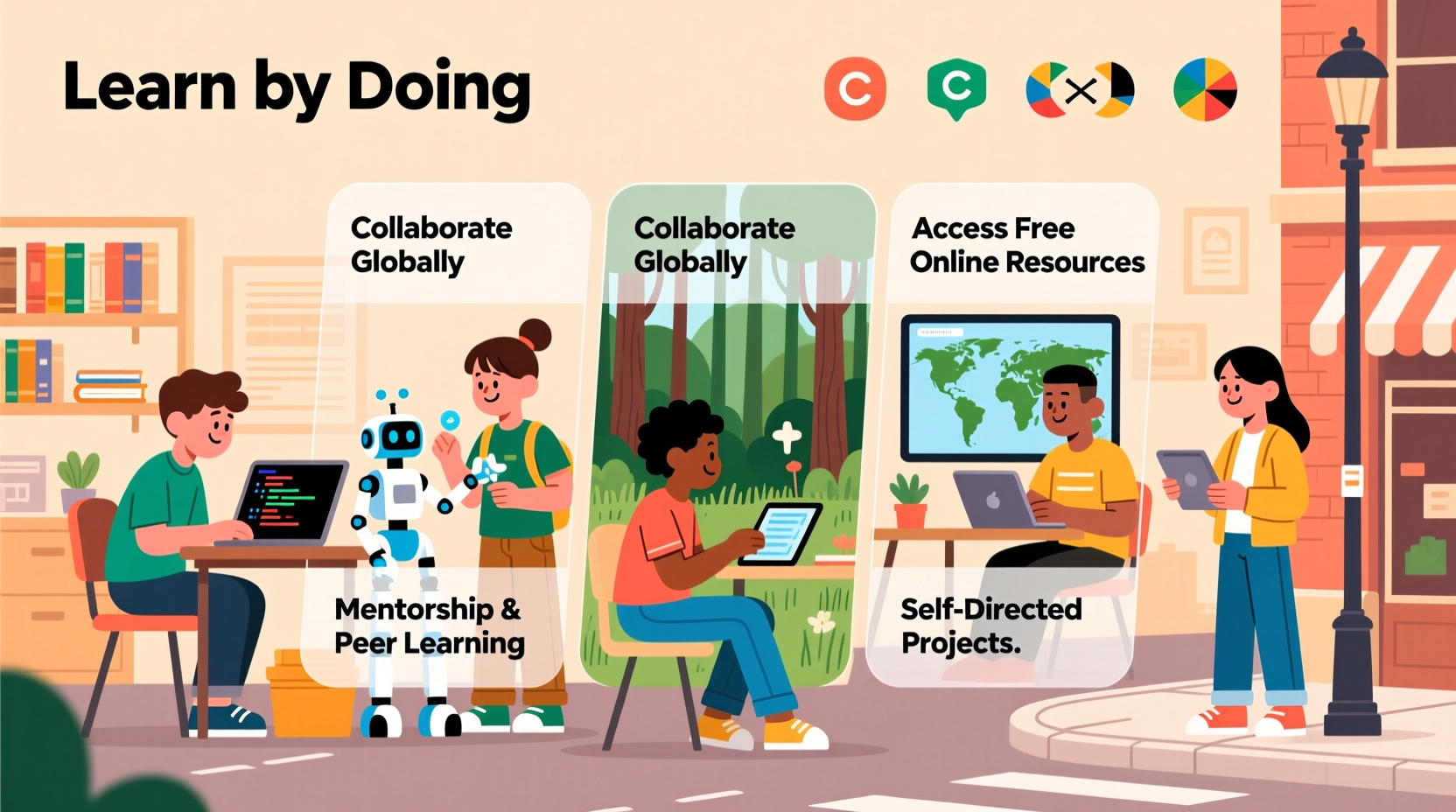
Massive Open Online Courses (MOOCs) like Coursera, edX, and FutureLearn have democratized access to world-class instruction from institutions like MIT, Stanford, and the University of London. However, simply enrolling in a course doesn’t guarantee results. The difference between casual browsing and transformative learning comes down to strategy.
To maximize value from online platforms:
- Select courses with project-based assessments rather than passive lectures.
- Prioritize programs offering verified certificates or microcredentials.
- Enroll during scheduled session dates to benefit from peer interaction and deadlines.
- Supplement video content with note-taking, reflection journals, or teaching concepts to others.
Build a Personal Learning Curriculum
One of the greatest advantages of non-traditional education is the ability to customize your learning path. Instead of following a fixed syllabus, you can assemble a curriculum tailored to your goals, whether that’s mastering data science, becoming fluent in Spanish, or understanding philosophy.
A well-designed personal curriculum includes:
- Clear objectives: Define what success looks like (e.g., “Build a full-stack web app” or “Pass the DELE B2 exam”).
- Progressive structure: Start with foundational topics and advance to complex applications.
- Diverse resources: Combine videos, books, podcasts, and hands-on practice.
- Feedback loops: Use quizzes, mentors, or online communities to assess understanding.
For example, someone aiming to become a UX designer might begin with design thinking fundamentals, move into Figma tutorials, then complete a capstone project reviewed by professionals on platforms like ADPList or Dribbble.
Engage in Communities of Practice
Learning in isolation limits growth. Real mastery often emerges through dialogue, collaboration, and shared problem-solving. Online communities—such as Reddit forums, Discord groups, LinkedIn networks, or GitHub repositories—provide spaces to exchange ideas, receive feedback, and stay motivated.
Active participation accelerates learning more than passive consumption ever could. Contributing answers, sharing projects, or joining study groups creates accountability and exposes you to diverse perspectives.
“Education is not the filling of a pail, but the lighting of a fire.” — William Butler Yeats
This quote captures the essence of community-driven learning: engagement sparks curiosity, which fuels deeper inquiry. Platforms like Stack Overflow, Kaggle, and Indie Hackers exemplify how peer interaction turns abstract knowledge into practical skill.
Create Real-World Applications
The true test of learning is application. Without opportunities to apply knowledge, retention drops significantly. Project-based learning bridges the gap between theory and practice, reinforcing concepts through doing.
Consider these approaches:
- After studying web development, build a portfolio website.
- Following a course in behavioral economics, design a small experiment or write an analysis blog.
- Learning a language? Start a conversation exchange via Tandem or HelloTalk.
Projects also serve as tangible proof of competence when applying for jobs or freelance work. A GitHub repository, published article, or recorded presentation often speaks louder than a certificate alone.
Step-by-Step Guide to Launching a Self-Directed Learning Project
- Identify a skill or topic you want to master.
- Break it into sub-components (e.g., Python → variables, loops, functions, APIs).
- Select 2–3 high-quality resources per component (course, book, tutorial).
- Schedule consistent study blocks (e.g., 5 days/week, 1 hour/day).
- Build a final project that integrates all components.
- Share it publicly and invite feedback.
Evaluate Credibility and Quality of Resources
Not all online content is created equal. With millions of articles, videos, and courses available, discernment is essential. Relying on outdated, inaccurate, or oversimplified material can lead to misconceptions or wasted time.
Use the following checklist to assess resource quality:
| Criteria | Do’s | Don’ts |
|---|---|---|
| Author Credentials | Look for subject-matter experts with verifiable experience or academic background. | Avoid anonymous authors or those with no relevant track record. |
| Content Depth | Choose materials that explain the \"why,\" not just the \"how.\" | Skip overly simplistic or clickbait-style guides. |
| Last Updated | Prefer resources updated within the last 1–2 years, especially in fast-changing fields. | Be cautious with outdated programming syntax or obsolete business models. |
| User Reviews | Check platform reviews, testimonials, or community discussions. | Ignore sources with consistently poor feedback or complaints about inaccuracies. |
“With the internet, everyone has a voice. Your job is to find the ones worth listening to.” — Dr. Linda Zhang, Digital Literacy Researcher
Mini Case Study: From Retail Worker to Data Analyst
Meet Jamal, a 29-year-old retail supervisor with no formal tech background. Determined to transition into a data-driven role, he spent 10 months building his skills outside the classroom. He began with free courses on Khan Academy and Google’s Data Analytics Certificate on Coursera. He practiced daily in spreadsheets and later learned SQL and Tableau through interactive platforms like DataCamp.
Jamal joined a local data science meetup and contributed to open-source projects on GitHub. He documented his journey on LinkedIn, sharing insights and challenges. After completing a portfolio of real-world datasets—including sales trends from his workplace (with permission)—he landed a junior analyst role at a logistics firm.
Jamal’s story illustrates that structured self-education, combined with visibility and networking, can lead to tangible career outcomes—without stepping foot in a university.
FAQ
Can self-taught education replace a college degree?
In many fields—especially technology, design, and entrepreneurship—demonstrated skill often matters more than formal credentials. While some professions require licensed degrees (e.g., medicine, law), numerous employers now prioritize portfolios, certifications, and problem-solving ability over diplomas.
How do I stay motivated when learning independently?
Motivation thrives on progress and purpose. Break large goals into small wins, track your learning in a journal, and connect with others pursuing similar paths. Setting public commitments—like posting weekly updates—can significantly boost consistency.
Are free resources reliable enough for serious learning?
Yes, many high-quality resources are free. MIT OpenCourseWare, Harvard’s CS50, and the Library of Congress offer rigorous materials at no cost. The key is supplementing them with structured practice and external validation, such as peer review or certification exams.
Conclusion: Take Ownership of Your Intellectual Growth
Quality education is no longer confined to lecture halls or semester schedules. The tools for deep, meaningful learning are accessible to anyone with curiosity and commitment. By strategically selecting resources, engaging with communities, building real projects, and holding yourself accountable, you can achieve expertise on your own terms.
The future belongs to lifelong learners who adapt quickly, think critically, and act decisively. Don’t wait for permission to grow. Design your curriculum, launch your first project, and join the global community of self-directed learners shaping their futures—one lesson at a time.
🚀 Ready to start your journey? Pick one skill today, find one credible resource, and commit to 30 minutes of focused learning. Progress begins with action.