The Kansas City Chiefs, once hailed as a dominant force in the NFL, have recently faced a string of disappointing losses that have left fans and analysts questioning what’s gone wrong. After years of consistent playoff appearances and Super Bowl contention, the team's sudden decline raises legitimate concerns. While no single factor explains every loss, a combination of strategic missteps, personnel issues, and evolving league dynamics has contributed to their downturn. Understanding these elements provides clarity not only for frustrated supporters but also for those analyzing modern football trends.
1. Offensive Line Decline and Protection Breakdowns
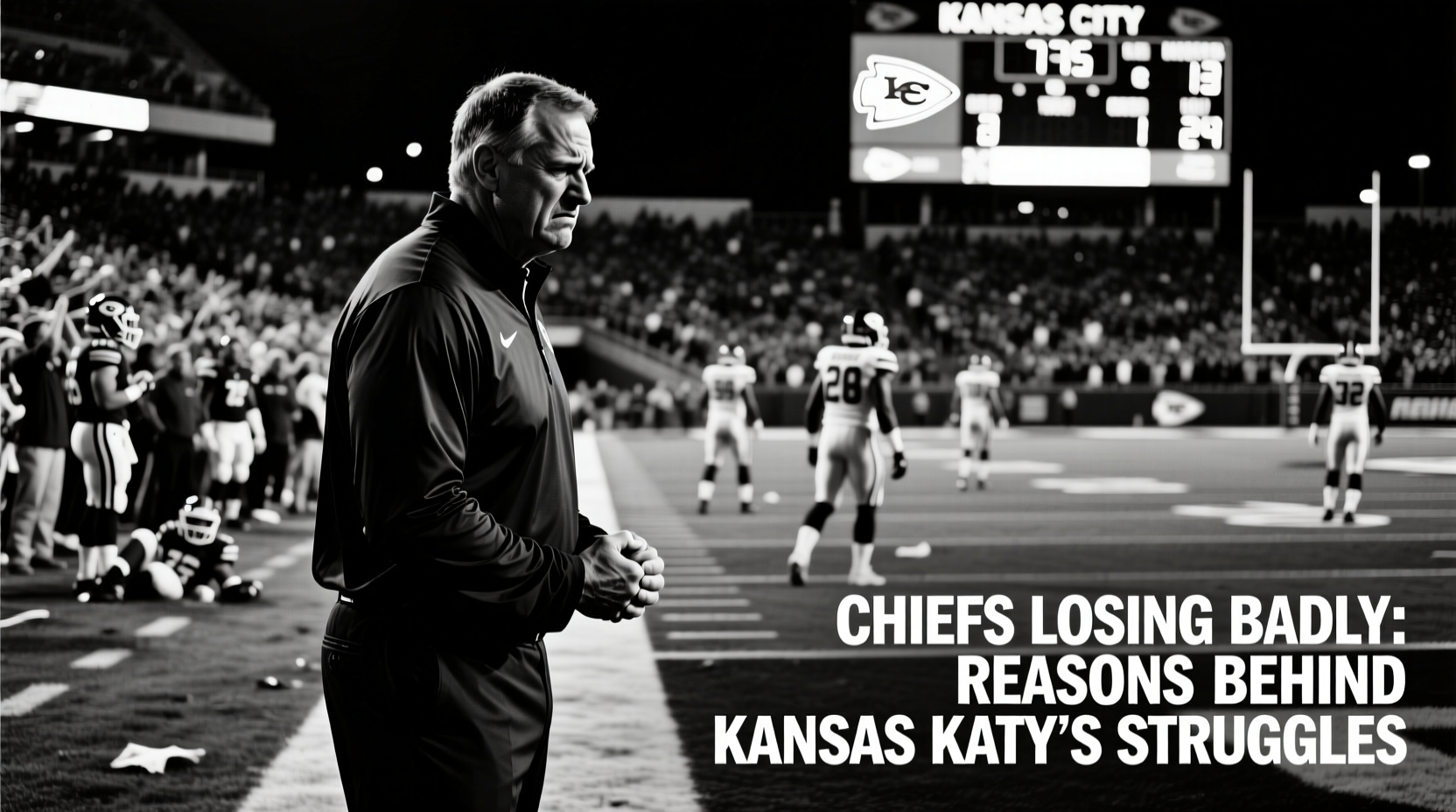
One of the most glaring issues plaguing the Chiefs is the deterioration of their offensive line. Patrick Mahomes, known for his ability to extend plays with mobility, now faces increased pressure due to inconsistent blocking. In past seasons, quick passes and screen plays masked some of the line’s limitations, but opposing defenses have adapted—rushing with precision and collapsing the pocket before Mahomes can find open receivers.
Recent games show a sharp increase in sacks and hurried throws. According to NFL statistics, the Chiefs’ offensive line allowed over 40 sacks in the last season—a significant jump from previous years when they hovered around 30. This lack of protection disrupts timing, forces turnovers, and limits the effectiveness of both the passing and running games.
Tip: A strong offensive line isn’t just about talent—it requires continuity. Frequent rotation or injury replacements often lead to communication breakdowns and poor chemistry.2. Defensive Inconsistency and Schematic Vulnerabilities
The Chiefs’ defense has long been viewed as the weaker half of the team compared to their explosive offense. However, recent performances reveal deeper structural problems. The secondary, once bolstered by Tyrann Mathieu’s leadership, now lacks playmakers capable of shutting down elite wideouts. Younger players have shown flashes but struggle with consistency under pressure.
Additionally, defensive coordinator changes have led to schematic confusion. The shift between aggressive blitz packages and conservative zone coverages has made the unit predictable. Teams like the Buffalo Bills and Cincinnati Bengals have exploited this by identifying tendencies and attacking mismatches early in games.
| Season | Predicted Points Allowed (Preseason) | Average Points Allowed Per Game | Result vs. Expectation |
|---|---|---|---|
| 2021 | 22.5 | 23.1 | Met Expectations |
| 2022 | 23.0 | 24.7 | Slight Overperformance |
| 2023 | 23.5 | 28.9 | Significant Underperformance |
The data shows a clear trend: the defense is allowing nearly six more points per game than projected in 2023, indicating systemic failure rather than bad luck.
3. Injuries and Roster Depth Challenges
Injuries have played a critical role in the Chiefs’ decline. Key absences—including Travis Kelce missing two games due to a knee issue and Chris Jones battling through an ankle sprain—have weakened both sides of the ball. But beyond star players, depth has become a concern.
The team’s reliance on high-impact veterans means younger backups aren’t always ready to step in seamlessly. For example, when starting right tackle Andrew Wylie went down, his replacement struggled against elite edge rushers, leading directly to increased pressure on Mahomes.
“Teams don’t lose because of injuries alone—they lose when their depth isn’t prepared to respond. That’s where championship teams separate themselves.” — Mike Giddings, former NFL scout and analyst at Professional Personnel Services.
4. Coaching Adjustments and Scheme Fatigue
Andy Reid remains one of the most respected offensive minds in football, but opponents have had years to study and counter his system. The once-innovative use of motion, pre-snap shifts, and RPOs (run-pass options) has become more predictable. Defenses now anticipate these moves and adjust coverage accordingly, often leaving receivers covered and Mahomes scrambling.
Moreover, the pace of the game has changed. With more teams adopting faster tempos and complex disguise packages, the Chiefs’ traditional methodical approach sometimes falls behind. There’s also growing debate about clock management in close games, particularly in the fourth quarter when timeouts are misused or challenges squander precious seconds.
Common Strategic Mistakes Observed in Recent Losses
- Overuse of short-yardage formations in neutral situations
- Late challenges that don’t affect possession or score
- Predictable third-down play-calling patterns
- Failure to adjust halftime if initial game plan fails
5. Evolving Competition Across the AFC
The Chiefs’ struggles must also be viewed within the broader context of a stronger AFC landscape. Teams like the Cincinnati Bengals, Buffalo Bills, and Baltimore Ravens have improved significantly—not just in talent, but in coaching and player development. These franchises now match or exceed Kansas City in speed, discipline, and adaptability.
For instance, Joe Burrow’s precision under center and Ja’Marr Chase’s deep-threat capability challenge the Chiefs’ vulnerable secondary in ways few quarterbacks could five years ago. Similarly, Lamar Jackson’s dual-threat prowess forces defensive coordinators into difficult choices—something the Chiefs’ current scheme hasn’t consistently answered.
As analytics-driven decision-making spreads across the league, even mid-tier teams make smarter fourth-down calls and utilize situational substitutions more effectively. The Chiefs, once ahead of the curve, now appear to be playing catch-up.
Tip: When your team loses multiple close games, examine decision-making late in regulation—not just player performance. Small coaching errors compound over time.Mini Case Study: The Week 9 Loss to the Raiders
In a stunning upset during Week 9, the Chiefs fell 27–20 to the Las Vegas Raiders, a team with a losing record. Despite holding a 13–7 halftime lead, Kansas City committed three second-half turnovers, including a critical fumble by Isiah Pacheco at midfield that led directly to a Raiders touchdown.
Defensively, the Chiefs failed to contain Davante Adams, who caught 9 passes for 115 yards and a score. Blitzes were poorly timed, leaving single coverage on the outside—exactly where Adams thrives. Offensively, Mahomes was sacked four times, two coming on third-and-short situations that stalled drives.
This game exemplified recurring themes: offensive line breakdowns, defensive miscommunication, and inability to close out games. It wasn’t an anomaly—it was a pattern.
Action Plan: What the Chiefs Can Do to Rebound
Recovery is possible, but it requires honest evaluation and decisive action. Here’s a checklist the organization should consider:
- Invest in offensive line depth: Prioritize drafting or signing versatile interior linemen who can rotate without disrupting rhythm.
- Revamp defensive playbook: Simplify schemes to improve recognition and reduce hesitation among younger defenders.
- Accelerate youth integration: Give promising rookies and second-year players defined roles to build experience before playoffs.
- Enhance injury prevention protocols: Work with sports scientists to reduce soft-tissue injuries through tailored conditioning.
- Conduct mid-season coaching reviews: Evaluate situational decision-making and adjust timeout/challenge strategies.
FAQ
Are the Chiefs still a Super Bowl threat?
Yes, but only if they address defensive weaknesses and improve offensive consistency. With Mahomes at quarterback, they’ll always have a chance—but sustained success requires more than star power.
Is Andy Reid losing his edge?
Not necessarily. Reid’s career track record speaks for itself. However, all coaches face adaptation curves. The question isn’t whether he’s declined, but whether his staff can innovate fast enough to stay ahead of copycat defenses.
Could trading for a defensive player help?
Potentially. A proven pass rusher or lockdown cornerback could provide immediate relief. However, the Chiefs’ cap constraints limit big moves unless salary dumps or extensions are restructured.
Conclusion
The Kansas City Chiefs’ recent struggles stem from a confluence of factors—aging roster components, defensive fragility, coaching predictability, and rising competition. While the spotlight often falls on Mahomes, the reality is far more nuanced. Long-term solutions require investment in depth, innovation in strategy, and humility in self-assessment.
Fans may hope for a quick turnaround, but sustainable success comes from fixing systems, not just winning next week’s game. The Chiefs have the foundation to rebuild their dominance. Now, they need the courage to make tough decisions.
🚀 What do you think is the biggest reason for the Chiefs’ slump? Share your insights in the comments and join the conversation on how KC can reclaim its place atop the AFC.