
In an age of constant distractions and overflowing to-do lists, staying organized isn’t just a luxury—it’s a necessity. Whether managing personal goals, tracking habits, or scheduling work tasks, the tools we use can make or break our productivity. Two popular systems dominate the organization space: bullet journaling and digital planners. One is analog, tactile, and customizable; the other is tech-driven, instant, and synced across devices. But which one truly helps you stay more organized?
The answer isn’t universal. It depends on your lifestyle, cognitive preferences, and how you interact with information. By examining the strengths and limitations of each method—and understanding how they support memory retention, task completion, and long-term planning—we can determine which system aligns best with genuine organizational success.
The Anatomy of Bullet Journaling
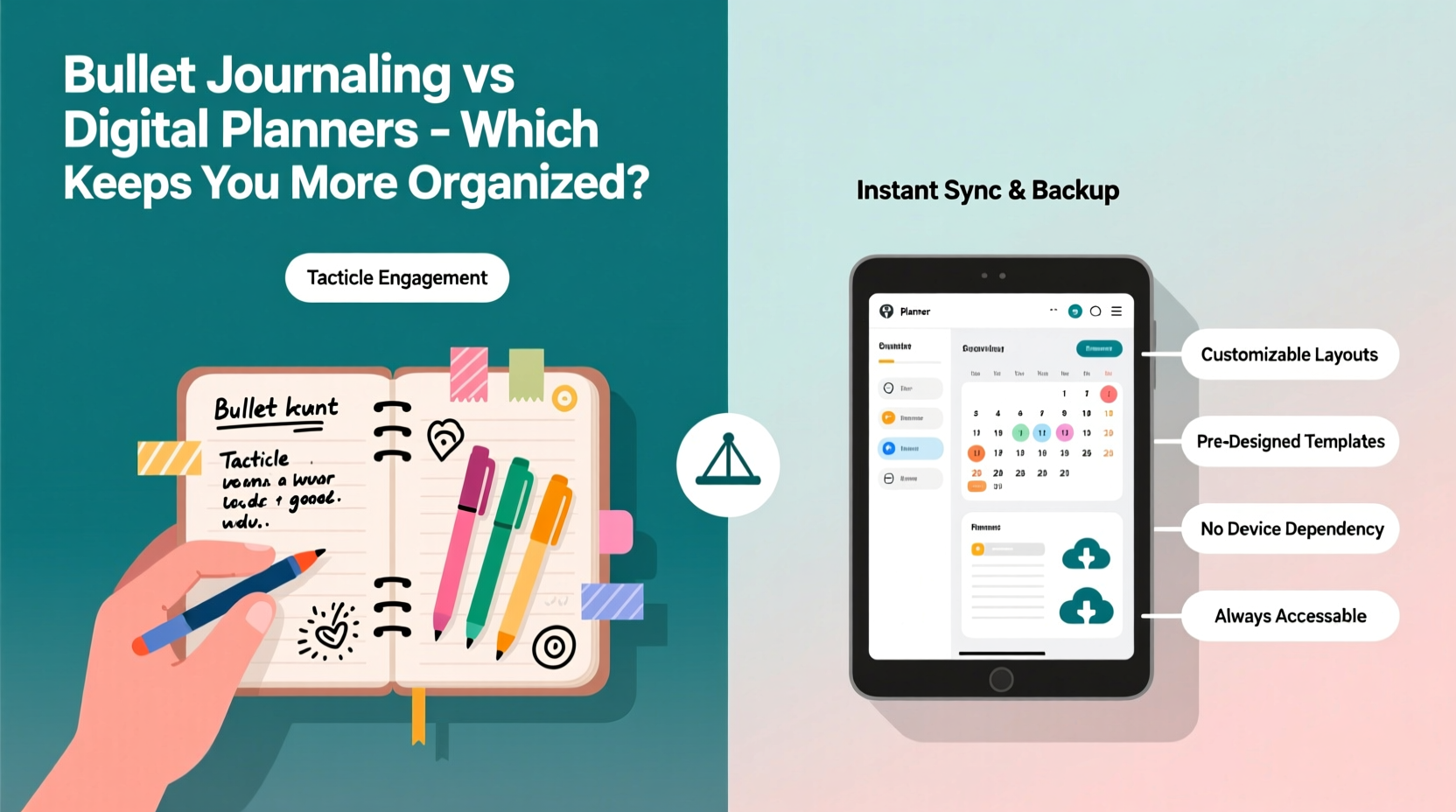
Bullet journaling, popularized by designer Ryder Carroll, is more than just a notebook with lists. It’s a modular, hand-written system that combines calendar logs, task trackers, habit grids, and reflection pages into a personalized productivity ecosystem. At its core, it emphasizes intentionality: every page serves a purpose, and every entry is made deliberately.
The structure typically includes:
- Future Log – A high-level overview of upcoming months.
- Monthly & Daily Logs – Space for deadlines, appointments, and daily tasks.
- Trackers – Visual indicators for habits like water intake, exercise, or mood.
- Index & Collections – Custom categories such as book lists, project notes, or goal breakdowns.
Because everything is handwritten, bullet journaling engages spatial and kinesthetic memory. Studies suggest that writing by hand improves information retention and cognitive processing compared to typing. This physical engagement often leads users to be more thoughtful about what they record—reducing clutter and increasing focus.
Tip: Use rapid logging (short bullets with symbols) to quickly capture tasks, events, and notes without overthinking.Digital Planners: Efficiency at Your Fingertips
Digital planners operate through apps like Notion, GoodNotes, or dedicated platforms like My Study Life and Timepage. They offer pre-designed templates, drag-and-drop scheduling, cloud syncing, and integration with calendars, reminders, and email. For many, this represents the pinnacle of modern organization—automated, searchable, and always accessible.
Digital tools excel in environments requiring collaboration or frequent updates. Need to reschedule a meeting? A few taps update everyone involved. Want to search all instances of “budget review”? Instant results. These capabilities eliminate friction and reduce the risk of missed deadlines due to poor visibility.
Moreover, digital planners support multimedia integration. You can attach PDFs, voice memos, photos, and links directly to entries—something impossible in traditional notebooks. Automation features like recurring tasks, deadline alerts, and progress bars further reduce mental load.
“Digital tools don’t just store data—they anticipate needs. When used well, they act as proactive assistants.” — Dr. Lena Torres, Cognitive Technologist at MIT Media Lab
Comparative Analysis: Bullet Journaling vs Digital Planners
To evaluate which system promotes better organization, consider key dimensions: flexibility, accessibility, cognitive impact, maintenance effort, and adaptability.
| Feature | Bullet Journaling | Digital Planners |
|---|---|---|
| Customization | Highly customizable—design layouts from scratch | Template-based but modifiable within app limits |
| Portability | One notebook only; no backup if lost | Accessible across devices with cloud sync |
| Cognitive Engagement | Strong—writing boosts memory and focus | Moderate—typing is faster but less memorable |
| Maintenance Effort | High—requires consistent manual updates | Low—auto-sync, reminders, templates reduce labor |
| Searchability | Poor—relies on index and memory | Excellent—full-text search across entries |
| Distraction Risk | Very low—no notifications or apps | High—device access invites multitasking |
This comparison reveals a fundamental trade-off: bullet journals foster deeper engagement and mindfulness, while digital planners prioritize speed, reliability, and reach. Neither is inherently superior—but their effectiveness depends on user context.
Real-World Application: A Case Study
Sarah, a freelance graphic designer and mother of two, struggled with time management for years. Her days were fragmented between client calls, school pickups, and creative work. She tried both systems over six months.
First, she adopted a bullet journal. She loved the creativity—color-coded sections, doodles, and motivational quotes kept her inspired. However, after three weeks, she fell behind. Updating the journal took too long, and she couldn’t access it during errands when inspiration struck. Missed deadlines piled up.
She then switched to a digital planner in Notion. She created dashboards for clients, set automated reminders, and linked project files directly to tasks. Within two weeks, her turnaround time improved by 30%. The ability to edit on her phone during commutes was transformative. Still, she missed the reflective quality of handwriting and felt her planning had become transactional.
Her solution? A hybrid approach. She uses the digital planner for active scheduling and client work but maintains a small bullet journal for weekly reflections, gratitude logs, and creative brainstorming. This blend gave her both efficiency and emotional grounding.
Tip: Combine systems strategically—use digital tools for execution and analog methods for reflection.Which System Keeps You More Organized?
Organization isn’t just about recording tasks—it’s about consistency, clarity, and follow-through. The most effective tool is the one you’ll use regularly and trust implicitly.
Bullet journaling tends to work best for individuals who value mindfulness, enjoy creative expression, and benefit from slowing down. It suits students setting academic goals, artists tracking inspiration, or anyone seeking a meditative planning ritual. However, it demands discipline. Without regular maintenance, it becomes obsolete quickly.
Digital planners, on the other hand, are ideal for fast-paced professionals, remote workers, or those juggling multiple roles. Their strength lies in automation and integration. If your life involves dynamic schedules, team coordination, or frequent travel, digital tools provide unmatched agility.
But technology comes with pitfalls. Notifications can fragment attention. Over-reliance on pre-built templates may lead to passive planning—filling slots without critical thinking. And unlike a worn notebook filled with personal milestones, digital entries often feel impersonal.
“The best organizational system is not the fanciest or fastest—it’s the one that aligns with your brain’s natural rhythms.” — Dr. Alan Reed, Behavioral Psychologist
Step-by-Step Guide to Choosing Your System
Follow this process to identify the right fit for your needs:
- Assess Your Lifestyle: Are you mobile or desk-bound? Do you switch contexts often (e.g., home to office)? Digital planners thrive in fluid environments.
- Evaluate Your Tech Comfort: Are you comfortable troubleshooting apps or syncing devices? If not, analog may reduce frustration.
- Identify Your Planning Style: Do you prefer visual layouts or structured lists? Bullet journals allow artistic freedom; digital tools favor clean, standardized formats.
- Test Both for Two Weeks: Dedicate one week to each method. Track completion rates, stress levels, and ease of use.
- Measure Outcomes, Not Aesthetics: Did you miss fewer deadlines? Feel more in control? Stick with what delivers results, not what looks prettiest.
Checklist: Optimizing Your Chosen System
Regardless of format, these practices enhance organizational effectiveness:
- Review your planner daily—morning and evening
- Limit tasks to 3–5 priorities per day
- Use color coding consistently (e.g., red = urgent, blue = personal)
- Schedule weekly reviews to migrate unfinished items
- Include habit trackers for consistency (sleep, exercise, hydration)
- Archive old entries to prevent clutter
- Keep backups (scan journal pages or export digital data monthly)
Frequently Asked Questions
Can I switch between bullet journaling and digital planners?
Absolutely. Many people transition between systems based on life phases. A student might use a bullet journal during exams for focus, then shift to a digital planner for post-grad job hunting. Flexibility is a strength, not a flaw.
Is one method more sustainable long-term?
Digital planners generally require less ongoing effort, making them easier to sustain under pressure. However, bullet journaling can become a cherished habit when integrated into a mindful routine. Longevity depends on personal alignment, not inherent superiority.
Do digital planners cause more distractions?
They can. Using a planner on a smartphone or tablet exposes you to messages, social media, and emails. To minimize this, use distraction-free modes, schedule focused planning times, or consider e-ink tablets like the reMarkable, which mimic paper but support digital functionality.
Conclusion: Choose What Serves Your Life
Ultimately, the question isn’t whether bullet journaling or digital planners is objectively better—it’s which one helps you stay organized consistently. Organization is not a destination; it’s a practice. The tool you choose should remove friction, not add it.
If you crave presence, creativity, and deep reflection, the bullet journal offers a sanctuary from digital noise. If you need speed, scalability, and seamless integration, a digital planner will likely serve you better. And increasingly, the smartest choice is a balanced blend—leveraging the precision of technology with the introspection of handwriting.
Start where you are. Try one system for a full cycle—monthly or quarterly. Measure what matters: reduced stress, completed goals, and regained time. Then adjust. True organization isn’t about perfection. It’s about progress, clarity, and reclaiming control over your days.
🚀 Ready to get organized? Pick a system, commit for 21 days, and track your results. Share your experience in the comments—your journey could inspire someone else to find theirs.