
The \"Bro Code\" and \"Sister Code\" emerged as informal rulebooks governing loyalty, friendship, and conduct among men and women respectively. Initially framed as humorous or bonding guidelines, these codes have come under increasing scrutiny for reinforcing problematic behaviors, gender stereotypes, and toxic group dynamics. While some still view them as lighthearted traditions of camaraderie, critics argue that both codes perpetuate exclusion, enable harmful actions, and undermine personal integrity. This article examines why these social contracts are now widely questioned—and often condemned—in modern discussions about ethics, consent, and equality.
The Origins of Bro Code and Sister Code
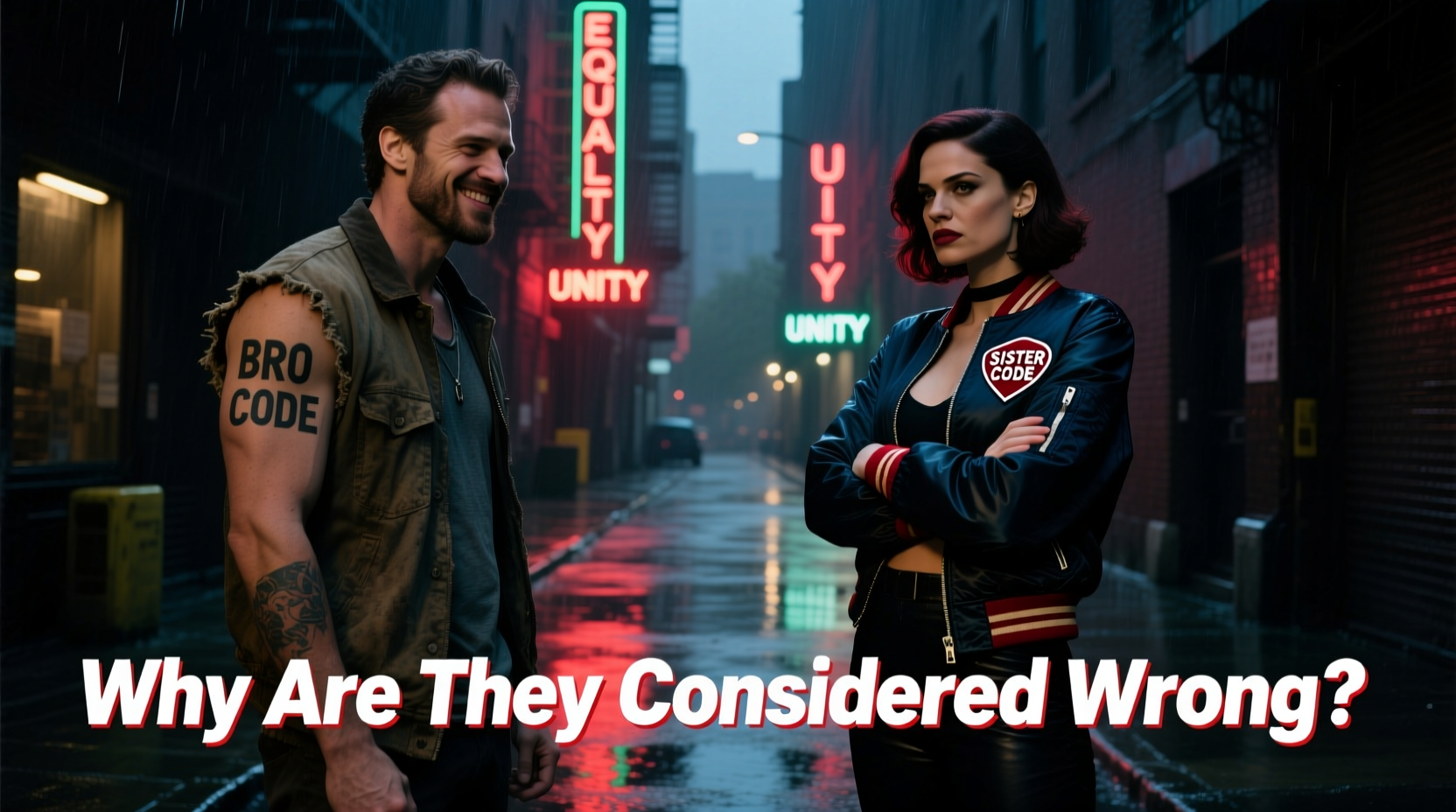
The Bro Code gained mainstream popularity through the TV show How I Met Your Mother, where it was portrayed as a satirical yet rigid set of rules dictating male behavior—especially around dating, loyalty, and competition over romantic interests. Phrases like “bros before hoes” became cultural shorthand for prioritizing male friendships over other relationships, particularly with women.
Likewise, the \"Sister Code\" evolved informally as a counterpart, emphasizing female solidarity. It encouraged women to support one another, avoid dating friends’ exes, and maintain trust within their social circles. Though less codified than the Bro Code, it functioned similarly: as an unspoken agreement to protect group cohesion at the expense of individual agency.
While both codes began as expressions of loyalty, their underlying assumptions reveal deeper issues about how society frames gendered relationships and moral responsibility.
Why the Bro Code Is Problematic
The Bro Code is frequently criticized for normalizing behaviors that excuse poor judgment, disrespect boundaries, and minimize accountability. Its core tenets often prioritize loyalty over ethics, creating environments where misconduct is overlooked or even celebrated.
- Encourages secrecy over honesty: The idea that you must cover for a friend’s wrongdoing—such as lying to a partner or hiding infidelity—undermines transparency in relationships.
- Dehumanizes women: Referring to women as prizes to be competed for or avoided based on a friend's interest reduces individuals to objects governed by male ownership.
- Promotes toxic masculinity: The code discourages emotional vulnerability, framing support as conditional on adherence to rigid rules rather than empathy or moral reasoning.
- Enables predatory behavior: In extreme cases, the Bro Code has been cited in college hazing, sexual assault cover-ups, and workplace harassment, where silence is enforced to protect group identity.
The Flaws in the Sister Code
While often seen as more positive due to its emphasis on unity and protection, the Sister Code also carries significant drawbacks. When applied rigidly, it can foster cliquishness, suppress individual choice, and place undue pressure on women to conform.
For example, the expectation not to date a friend’s ex—even years after a breakup—can limit personal freedom and romantic autonomy. In some cases, women feel pressured to end relationships or lie about connections to avoid conflict within their social circle.
“We need solidarity, yes—but not at the cost of our right to make independent decisions about who we spend our lives with.” — Dr. Lena Peterson, Gender Studies Professor at Columbia University
Additionally, the Sister Code sometimes reinforces binary views of womanhood and excludes those who don’t fit traditional molds—such as LGBTQ+ individuals or women with differing values. Solidarity should stem from shared respect, not enforced conformity.
Comparison: Bro Code vs. Sister Code – Core Differences and Shared Issues
| Aspect | Bro Code | Sister Code |
|---|---|---|
| Primary Focus | Loyalty among men; dominance in social/dating hierarchies | Support among women; emotional safety and trust |
| Common Rule Example | Never date a bro’s ex-girlfriend | Don’t pursue someone your friend likes |
| Positive Intent | Strengthen male bonds | Foster female empowerment |
| Criticisms | Normalizes misogyny, enables abuse, discourages accountability | Restricts autonomy, creates exclusivity, pressures conformity |
| Impact on Relationships | Undermines honesty and consent | Can lead to resentment or dishonesty in friendships |
Despite their different tones, both codes share a fundamental flaw: they place group loyalty above personal ethics and individual agency. Whether protecting a friend’s bad behavior or avoiding a romantic interest out of obligation, the result is often self-suppression in the name of belonging.
A Real-World Scenario: When Loyalty Crosses the Line
Consider this scenario: Mark finds out his close friend Jake sent inappropriate messages to a mutual acquaintance who clearly expressed disinterest. When Mark confronts him, Jake invokes the Bro Code: “You’re supposed to have my back, man.” Mark stays silent, later learning that Jake repeated the behavior with others.
In contrast, Sarah develops feelings for a man her best friend once dated casually two years ago. Despite no ongoing connection between them, Sarah hides the budding relationship out of fear of violating the Sister Code. Eventually, the deception damages both her romance and her friendship.
These examples illustrate how both codes can lead to outcomes contrary to their intended purpose—eroding trust instead of building it, and harming relationships rather than protecting them.
Toward Healthier Alternatives: Building Ethical Friendships
Instead of relying on rigid, rule-based codes, healthier relationships are built on principles of mutual respect, open communication, and ethical consistency. Here’s how to shift from outdated loyalty models to more constructive frameworks:
- Prioritize consent and dignity: No friendship should demand that you ignore harm done to others, especially in matters involving dating or power imbalances.
- Practice courageous honesty: Supporting a friend means helping them grow, not shielding them from consequences.
- Respect individual autonomy: Everyone has the right to choose their relationships without fear of social punishment.
- Encourage inclusive communities: Replace exclusive codes with values that welcome diverse perspectives and identities.
- Reframe solidarity as active care: Support others not because of gender or group membership, but because it’s the right thing to do.
Checklist: Building Better Relationship Norms
- ✅ Evaluate friendships based on mutual growth, not just loyalty
- ✅ Speak up when a friend crosses ethical lines
- ✅ Respect others’ romantic choices without judgment
- ✅ Avoid gossip or pressure to conform in social groups
- ✅ Promote inclusivity—welcome people regardless of gender, sexuality, or background
Frequently Asked Questions
Is there ever a time when the Bro Code or Sister Code is acceptable?
In very limited contexts—like playful banter among close friends who understand the irony—it might serve as light-hearted humor. However, when taken seriously or used to justify real-world decisions, both codes risk causing harm. The key is recognizing the difference between joking and enabling.
Does rejecting these codes mean abandoning friendship loyalty?
No. True loyalty involves holding friends accountable, supporting their well-being, and respecting broader ethical standards. Blind allegiance isn't loyalty—it's complicity.
Can women and men build strong bonds without these codes?
Absolutely. The healthiest friendships—regardless of gender—are rooted in authenticity, empathy, and shared values, not arbitrary rules. Moving beyond tribalistic codes allows for deeper, more meaningful connections.
Conclusion: Choosing Integrity Over Tradition
The Bro Code and Sister Code may have originated as attempts to define loyalty and belonging, but their legacy is increasingly defined by exclusion, double standards, and moral compromise. In a world striving for greater equity and emotional intelligence, clinging to outdated social scripts does more harm than good.
Letting go of these codes doesn’t weaken relationships—it strengthens them. By replacing rigid rules with thoughtful principles, we create space for honesty, inclusion, and genuine support. Friendship shouldn’t require silence in the face of wrongdoing or sacrifice of personal freedom. It should inspire us to be better, not bind us to flawed traditions.
💬 What unwritten rules have you walked away from? Share your experience and help others rethink outdated social norms.