
Traveling alone offers unmatched freedom—choosing your pace, itinerary, and experiences without compromise. But one of the first decisions solo travelers face is where to stay. The debate between Airbnb and hotels isn’t just about cost or comfort; it’s deeply tied to two core concerns: safety and social connection. For someone navigating a new city with no familiar faces, these factors can make or break the trip. While both options have evolved significantly in recent years, their strengths differ in ways that matter to solo travelers.
This guide breaks down the realities of staying in an Airbnb versus a hotel when traveling alone, focusing on personal security, interaction potential, and peace of mind. Drawing from traveler insights, industry trends, and expert perspectives, we’ll help you decide which accommodation style aligns better with your priorities—whether that’s feeling protected at night or meeting fellow explorers over coffee.
Safety Considerations for Solo Travelers
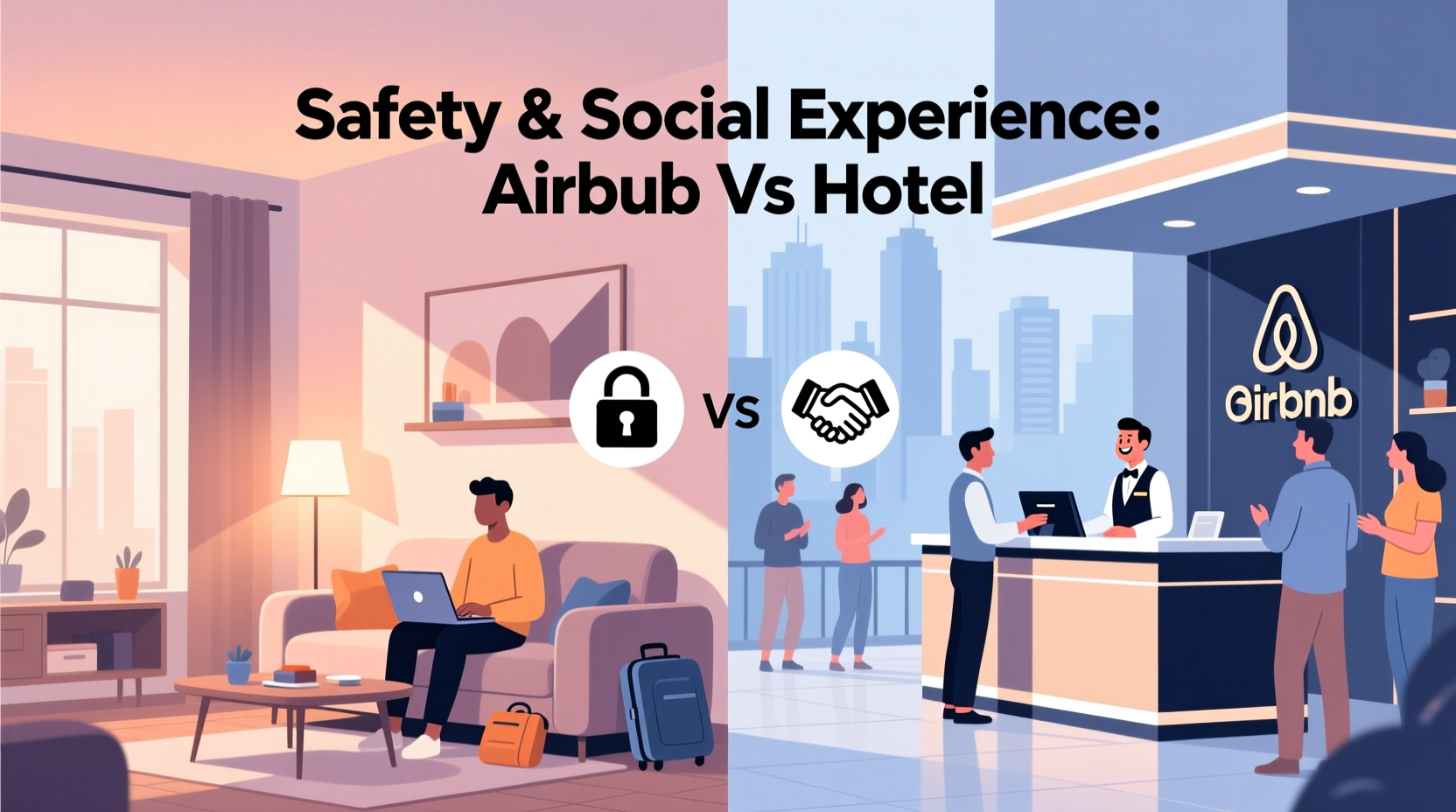
Safety is often the top priority for solo travelers, especially women, younger adventurers, or those visiting unfamiliar destinations. A secure place to sleep allows you to explore confidently during the day. Both Airbnbs and hotels offer protections, but they operate differently.
Hotels provide institutionalized safety measures. Front desk staff are available 24/7, surveillance systems monitor hallways, and rooms are typically accessed via key cards. Most reputable chains follow standardized protocols for guest protection, including background checks on employees and emergency response plans. If something goes wrong—like a suspicious person lingering near your room or a power outage—you can call reception immediately.
Airbnbs, on the other hand, depend heavily on individual hosts. Security varies widely based on location, host diligence, and property type. Some hosts install smart locks, cameras (outside private areas), and even panic buttons. Others may offer little more than a basic deadbolt. Verified photos, detailed reviews, and Superhost status help reduce risk, but there’s no universal standard. One traveler might book a secure apartment with a doorman in downtown Barcelona, while another ends up in a ground-floor basement unit with poor lighting in a quiet neighborhood.
Tip: Always check if the Airbnb has a lockable door, peephole, and window coverings. Look for listings that mention “self check-in via keypad” or “smart lock” for added control.“Solo travelers should prioritize predictability. Hotels offer consistency in safety infrastructure, while Airbnbs require more due diligence.” — Lena Patel, Travel Safety Consultant and Founder of SafeWander Collective
Social Opportunities: Who Will You Meet?
Loneliness can creep in during extended solo trips. Many travelers seek accommodations not just for shelter, but as gateways to connection. Here, the contrast between Airbnb and hotels becomes stark—and sometimes counterintuitive.
Hotels, particularly hostels or boutique properties geared toward younger crowds, often foster spontaneous interactions. Common spaces like lobbies, bars, rooftop terraces, or communal kitchens naturally encourage mingling. Front desk staff might organize walking tours, pub crawls, or language exchanges. Even business hotels with lounges can spark casual conversations over morning coffee. The transient nature of hotel stays means people are open to brief but meaningful connections.
Airbnbs are generally more private. You’re staying in someone’s home—or at least a space managed like one. Interaction depends entirely on the host’s approach. Some hosts go out of their way to welcome guests with handwritten notes, local tips, or invitations for dinner. Others use fully automated check-ins and avoid contact altogether. Shared rooms or apartments within a host’s residence increase the chance of conversation, but entire-home rentals isolate you unless you actively seek community elsewhere.
That said, certain Airbnb categories are designed for socializing. “Experience Hosts” now offer group activities—from cooking classes to hiking excursions—where guests meet not only the host but also fellow travelers. These curated events bridge the gap between privacy and engagement, offering structure without pressure.
Real Example: A Week in Lisbon
Emma, a 29-year-old graphic designer from Toronto, spent a week exploring Lisbon. She booked two different accommodations: three nights in a centrally located design hostel and three in a private Airbnb apartment across the river.
At the hostel, she joined a free Fado music tour organized by staff, shared tapas with backpackers from Australia and Germany, and ended each night chatting in the lounge. “I never ate alone,” she says. “Even introverted moments felt safe because there were always people around.”
In the Airbnb, she enjoyed quiet mornings with ocean views and full kitchen access. Her host left fresh fruit and a map of hidden viewpoints. But aside from a brief greeting, they didn’t interact. “It was peaceful, but I had to push myself to go out every evening just to avoid feeling isolated,” Emma recalls. “The apartment was beautiful, but it didn’t create connections—I had to build them myself.”
Comparing Key Factors: Airbnb vs Hotel
| Factor | Airbnb | Hotel |
|---|---|---|
| Safety Infrastructure | Varies by host; relies on individual setup | Standardized: 24/7 staff, key cards, CCTV |
| Privacy Level | High (especially entire homes) | Moderate (shared walls, housekeeping access) |
| Social Potential | Low to moderate; depends on host or shared space | High in hostels/boutique hotels; low in business chains |
| Consistency | Unpredictable; quality varies | Reliable brand standards |
| Kitchen & Laundry Access | Common in mid-to-long-term stays | Rare, except in extended-stay suites |
| Cost Efficiency (Long Stay) | Often cheaper after 5+ days | Higher nightly rates, fewer discounts |
The table highlights a fundamental trade-off: Airbnbs offer privacy and practicality, while hotels provide reliability and interaction. Your ideal choice hinges on how much you value each factor—and for how long you're staying.
Action Plan: Choosing Based on Your Priorities
Instead of treating Airbnb and hotels as opposites, think of them as tools for different phases of travel. Your needs may shift depending on destination, duration, and personal energy levels. Use this step-by-step framework to decide what works best for your solo journey.
- Assess your primary goal: Are you seeking adventure and connection, or rest and reflection? If social engagement is key, lean toward hostels or social hotels. If solitude matters more, consider an Airbnb.
- Evaluate the destination: In high-crime areas or cities with unreliable public transport, a well-lit hotel with staff presence adds peace of mind. In walkable, tourist-friendly neighborhoods, an Airbnb can be equally safe.
- Check host communication: On Airbnb, message potential hosts before booking. Ask about check-in procedures, noise levels, and nearby conveniences. Responsive, detailed replies signal professionalism.
- Look beyond the listing photos: Read recent reviews specifically mentioning “safety,” “cleanliness,” and “interaction.” Watch for red flags like “door didn’t lock properly” or “felt uncomfortable at night.”
- Consider hybrid options: Boutique hotels with local charm or aparthotels that combine hotel services with apartment-style units offer middle-ground solutions.
Essential Checklist for Solo Accommodation Decisions
- ✅ Is the neighborhood well-lit and accessible by public transit?
- ✅ Does the accommodation have a secure lock and peephole?
- ✅ Is there 24/7 support or emergency contact available?
- ✅ Are there common areas or events that encourage guest interaction?
- ✅ Have recent guests mentioned feeling safe and comfortable?
- ✅ Can you cook meals or store food if needed?
- ✅ Is the Wi-Fi reliable for remote work or staying in touch with family?
This checklist helps filter emotional decisions with practical criteria. Print it or save it on your phone when comparing options.
Frequently Asked Questions
Is Airbnb safe for solo female travelers?
Yes, but with caveats. Choose entire homes in central neighborhoods, read reviews carefully, and prefer hosts who verify ID and communicate openly. Opt for places with self check-in via keypad locks so you’re not dependent on someone meeting you late at night. Avoid ground-floor units with visible windows if privacy is a concern.
Do hotels really offer more social opportunities?
It depends on the type. Hostels, boutique hotels, and properties in popular tourist zones often host events or have lively common areas. Business hotels in financial districts may feel sterile and isolating. Research the specific hotel’s vibe through guest photos and recent comments on platforms like Google or TripAdvisor.
Can I find social Airbnbs?
Absolutely. Search for “shared room” or “experience host” listings where the host lives on-site and offers activities. Look for keywords like “meet other travelers,” “communal dinners,” or “local hangouts.” These setups mimic hostel sociability with a homier feel.
Final Thoughts: Match Your Stay to Your Travel Style
There’s no universal answer to whether Airbnb or hotels are safer or more social for solo travelers. The best choice reflects your personality, destination, and goals. If you thrive on spontaneity and want effortless interactions, a well-chosen hotel—especially a social hostel or boutique property—can enrich your journey. If you value independence, longer stays, and immersive living like a local, an Airbnb with strong reviews and thoughtful host engagement delivers unmatched depth.
Safety doesn’t come from a brand name—it comes from preparation. Whether you’re unlocking a smart door at an Airbnb or sliding a key card into a hotel room, your awareness, research, and instincts matter most. Trust verified reviews, listen to your gut, and don’t hesitate to change accommodations if something feels off.
🚀 Ready to plan your next solo trip? Start by defining your top priority—safety, social life, or solitude—then use this guide to pick the stay that supports it. Share your own solo travel tips in the comments and help others travel smarter.