When winter rolls around, the sweater drawer gets a serious workout. But as you reach for your favorite knit, a question lingers: is that soft wool pullover really warmer than its synthetic acrylic counterpart? With price tags often double or triple for wool, it’s fair to wonder whether natural fibers are worth the investment when it comes to staying warm. The answer isn’t just about material—it’s about how heat, moisture, and insulation interact with your body and environment.
While acrylic may feel cozy off the rack, real-world performance in cold conditions reveals deeper differences. Understanding the science behind thermal regulation, moisture management, and long-term wear can help clarify whether wool truly outperforms acrylic—or if marketing has been pulling the wool over our eyes.
How Warmth Works: It’s Not Just About Thickness
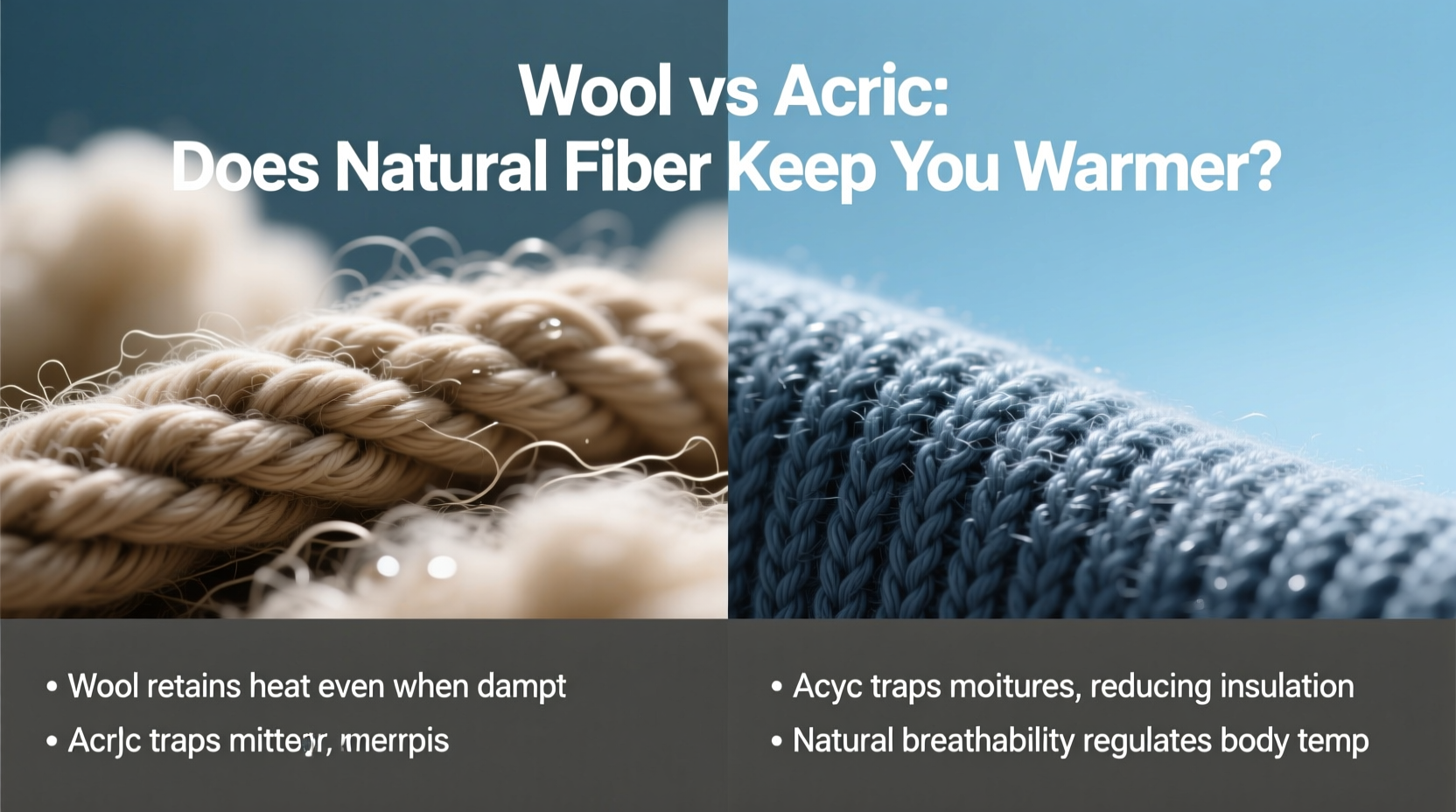
Warmth in clothing doesn’t come from thickness alone. Instead, it depends on a fabric’s ability to trap air, manage moisture, and resist wind. Air pockets between fibers act as insulators—slowing down heat loss from your body. Materials that retain these pockets even when compressed or damp perform better in cold weather.
Wool excels here due to its crimped fiber structure, which naturally forms tiny air chambers. These chambers create a buffer against cold air. Acrylic, while engineered to mimic wool’s loft, tends to collapse more easily under pressure or after repeated washing, reducing its insulating capacity over time.
More importantly, moisture plays a critical role. When sweat accumulates next to your skin, it cools rapidly and increases heat loss—a dangerous effect during outdoor activity. Wool absorbs up to 30% of its weight in moisture without feeling wet, and continues to insulate even when damp. Acrylic, being hydrophobic, doesn’t absorb moisture but instead allows it to pool on the skin or condense inside layers, increasing discomfort and chill risk.
“Natural fibers like wool offer dynamic thermal regulation. They don’t just trap heat—they respond to changes in humidity and temperature.” — Dr. Lena Patel, Textile Scientist at the Institute for Sustainable Apparel
Material Breakdown: Wool vs Acrylic
To understand their performance, it helps to examine the core properties of each fiber.
Merino Wool: Nature’s Performance Fiber
Merino wool, sourced from Merino sheep, is renowned for its fine texture and superior thermoregulation. Unlike older, scratchy wools, modern Merino is soft enough for base layers. Its key advantages include:
- Natural temperature regulation—warms when cold, cools when hot
- High moisture-wicking capacity (up to 30% absorption)
- Odor-resistant due to antimicrobial properties
- Retains warmth even when wet
- Biodegradable and renewable
These traits make Merino ideal for active use in variable conditions—whether hiking in snowy woods or commuting through icy city streets.
Acrylic: The Synthetic Stand-In
Acrylic is a petroleum-based polymer designed to imitate wool. It’s lightweight, colorfast, and inexpensive to produce. However, its benefits come with trade-offs:
- Poor breathability compared to natural fibers
- Builds static and pills easily
- Traps odors over time (cannot be washed out completely)
- Loses shape and insulation with repeated wear and wash
- Releases microplastics when laundered
While acrylic can feel warm initially—especially in dry indoor environments—it often fails under prolonged exposure to cold, wet, or active conditions.
Tip: If you’re layering for extreme cold, always place a moisture-wicking base layer closest to your skin—preferably merino wool, not acrylic.Performance Comparison: Real-World Conditions
Theoretical advantages mean little without real-world testing. Consider two scenarios:
Scenario 1: A Winter Hike in Damp Weather
You’re trekking through a misty forest, climbing steadily. Your body heats up, then cools during rests. With an acrylic sweater, sweat vapor has nowhere to go. It condenses inside the fabric, making you feel clammy. As you stop moving, the trapped moisture accelerates cooling. You shiver despite the sweater’s thickness.
In contrast, a wool sweater absorbs moisture from your skin, releasing it into the air. The fibers continue generating heat through a process called heat of sorption—a chemical reaction where water molecules bind to keratin, releasing small amounts of warmth. This means wool can literally warm you as it absorbs moisture.
Scenario 2: Office to Evening Commute
You wear an acrylic turtleneck all day. By evening, it smells faintly sour—even though you weren’t sweating heavily. Acrylic lacks antimicrobial properties, so bacteria thrive in the humid microclimate next to your skin. Wool, meanwhile, resists odor buildup thanks to lanolin and complex protein structures that inhibit bacterial growth.
Detailed Comparison Table
| Property | Wool (Merino) | Acrylic |
|---|---|---|
| Insulation when dry | Excellent | Good |
| Insulation when wet | Very Good | Poor |
| Moisture wicking | Excellent | Fair (moves moisture poorly) |
| Breathability | High | Low to Moderate |
| Odor resistance | High (natural antimicrobial) | Low (traps odors) |
| Durability | Good (with care) | Fair (pills, stretches) |
| Environmental impact | Biodegradable, renewable | Non-biodegradable, microplastic pollution |
| Cost | Higher initial cost | Low |
Care and Longevity: What Happens After a Year?
A sweater’s warmth isn’t static—it degrades with use. How you care for it determines how long it performs well.
Wool requires gentle handling: hand wash or machine wash on wool cycle, lay flat to dry. Done correctly, a quality wool sweater lasts 5–10 years. Acrylic is often labeled “machine washable,” but frequent washing causes pilling and fiber breakdown. After one season, many acrylic sweaters lose shape and develop thin spots, reducing their insulating ability.
Additionally, wool can be repaired. Small holes can be darned; worn elbows reinforced. Acrylic repairs poorly—the fibers don’t felt or hold stitches well. Once damaged, it’s usually discarded.
Maintenance Checklist
- ✔ Wash wool only when needed—air out between wears
- ✔ Use pH-neutral detergent formulated for wool
- ✔ Never tumble dry wool—heat shrinks fibers
- ✔ Store folded, not hung, to prevent stretching
- ✔ Use cedar blocks, not mothballs, for pest protection
- ✔ Turn acrylic garments inside out before washing to reduce pilling
Expert Insight: Why Natural Fibers Still Matter
In an age of high-tech synthetics, some assume man-made materials have surpassed nature. But experts in textile science argue otherwise—especially for thermal wear.
“We’ve spent decades trying to replicate what wool does naturally. Even advanced blends still rely on wool’s baseline performance. No synthetic matches its combination of moisture management, warmth retention, and breathability.” — Prof. Alan Zhou, Materials Research Lab, University of Edinburgh
This doesn’t mean acrylic has no place. For budget-conscious shoppers, decorative knits, or occasional indoor wear, acrylic offers a functional, colorful option. But for reliable warmth in cold, active, or damp conditions, wool remains unmatched.
Frequently Asked Questions
Is wool itchy?
Not all wool. Merino fibers are measured in microns—finer than 19.5 microns feel soft and non-irritating for most people. Older, coarser wools (like traditional lambswool) can be scratchy, but modern processing has largely solved this issue.
Can I wear wool if I’m sensitive to animal products?
Yes, but consider ethical sourcing. Look for certifications like ZQ or Responsible Wool Standard (RWS), which ensure humane treatment and sustainable land management. Alternatively, explore plant-based alternatives like TENCEL™ blends, though they don’t match wool’s warmth-to-weight ratio.
Does acrylic ever make sense over wool?
Yes—in low-activity settings, fashion-focused pieces, or for those with strict budgets. Acrylic is also hypoallergenic for people allergic to lanolin (though true allergies are rare). Just don’t rely on it for real cold-weather protection.
Conclusion: Warmth Is More Than a Feeling
So, does natural fiber actually keep you warmer? The evidence says yes—especially when conditions are less than ideal. Wool doesn’t just feel warm; it functions intelligently with your body, managing moisture, resisting cold, and adapting to changing environments. Acrylic may win on price and ease of care, but it falls short in sustained thermal performance.
Choosing between wool and acrylic isn’t just about comfort—it’s about purpose. If you value durability, sustainability, and real protection from the cold, wool is worth the investment. If you need a seasonal piece for mild weather or fashion rotation, acrylic can suffice.
🚀 Ready to upgrade your winter wardrobe? Try one high-quality Merino wool sweater this season and notice the difference in comfort, warmth, and confidence—even when the temperature drops.








