
The nose is one of the most challenging areas when applying foundation. Even with careful blending, many people notice their makeup breaking apart in this area within hours. Foundation separation—where the product cracks, slides, or forms visible lines—can be frustrating, especially when you've taken time to perfect your look. Understanding why this happens and how to prevent it starts with recognizing the unique conditions of the nose and how they interact with your skincare and makeup choices.
The Science Behind Nose Skin and Makeup Breakdown
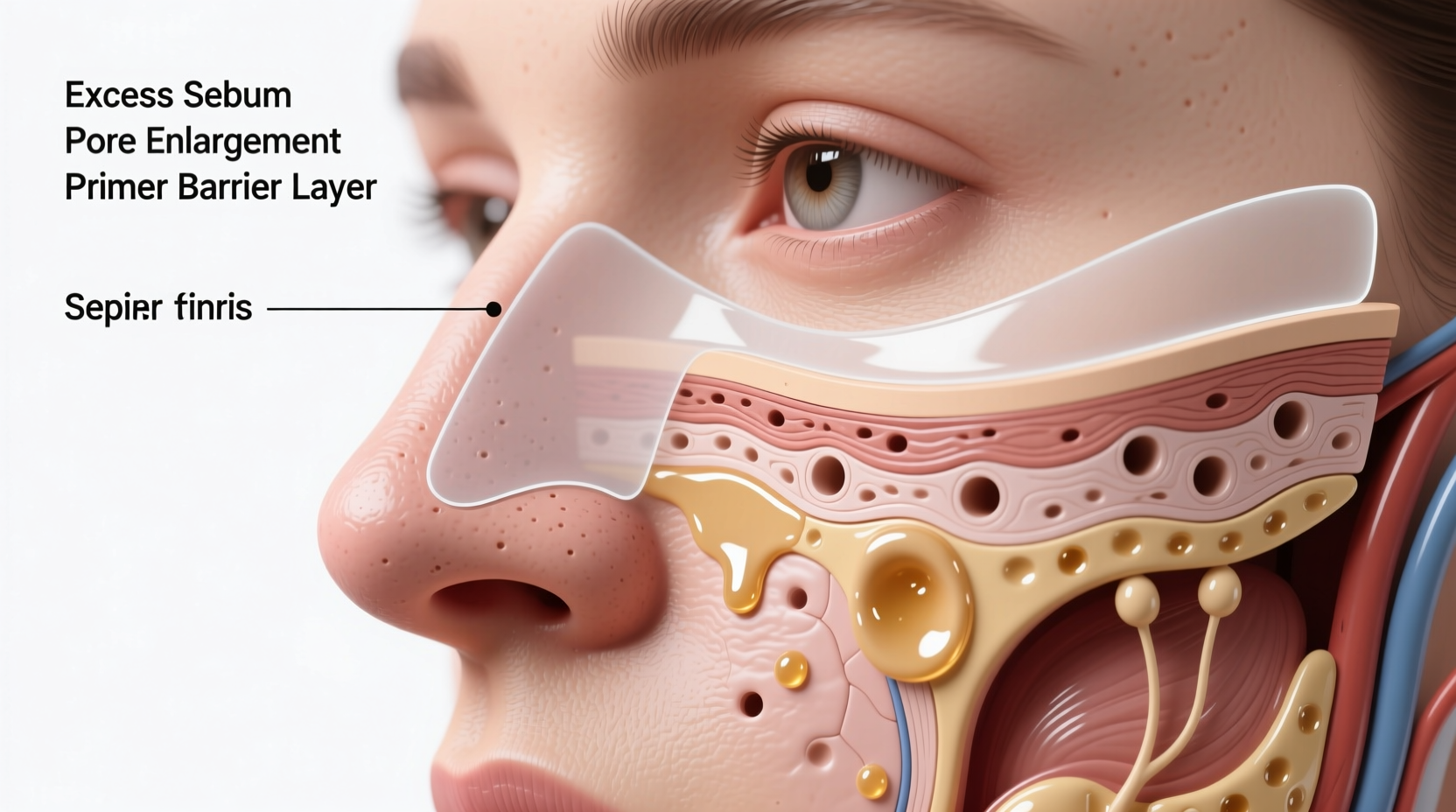
The skin on the nose differs significantly from other facial zones. It has a higher concentration of sebaceous (oil) glands, particularly along the bridge and tip. This increased oil production plays a major role in why foundation tends to separate here. When oil rises to the surface, it disrupts the bond between your skin and foundation, causing the product to slide, crease, or oxidize unevenly.
In addition, the nose is a dynamic area—it moves constantly with facial expressions, breathing, and talking. These micro-movements create friction that can break down makeup over time. The shape of the nose also contributes: its raised profile and angular contours make it prone to catching light, which highlights any imperfections, including patchiness or caking.
Environmental factors like humidity, heat, and air conditioning further stress the skin’s surface. In humid climates, sweat mixes with oils, accelerating separation. In dry environments, dehydration can cause flakiness beneath foundation, leading to an uneven texture.
“Foundation failure on the nose is rarely about the foundation itself—it’s usually a mismatch between skin prep, product chemistry, and environmental exposure.” — Dr. Lena Torres, Cosmetic Dermatologist
Common Causes of Foundation Separation on the Nose
Several interrelated factors contribute to foundation breakdown on the nose. Identifying the root cause is essential for choosing the right solution.
- Excess sebum production: Oily skin naturally breaks down makeup faster, especially in T-zone areas like the nose.
- Poor skincare preparation: Skipping moisturizer or using incompatible products can leave skin either too greasy or too dry, both of which compromise foundation adherence.
- Product incompatibility: Mixing silicone-based foundations with water-based primers (or vice versa) can cause pilling and separation due to repulsion between formulas.
- Over-application: Applying too much foundation or layering without proper drying time leads to buildup that cracks as it settles into pores and fine lines.
- Dehydrated skin: Even oily skin can be dehydrated. When skin lacks water, it produces more oil to compensate, creating a cycle that destabilizes makeup.
- Touching the face: Habitual touching, adjusting glasses, or wiping the nose introduces bacteria and friction, disrupting the makeup film.
How Primers Prevent Foundation Separation
A well-chosen primer acts as a bridge between skincare and makeup, creating a stable canvas that extends wear and minimizes separation. On the nose, where conditions are less than ideal, primers play a critical role in controlling oil, smoothing texture, and enhancing adhesion.
There are several types of primers, each designed to address specific concerns:
| Primer Type | Best For | Key Benefits |
|---|---|---|
| Silicone-based | Oily, large-pored skin | Fills pores, creates a smooth barrier, controls shine |
| Hydrating (water-based) | Dry, flaky skin | Prevents cracking, improves blendability |
| Mattifying | T-zone, combination skin | Reduces oil production, extends wear |
| Pore-minimizing | Visible pores, textured skin | Blurs imperfections, creates even surface |
| Color-correcting | Redness, discoloration | Neutralizes tone while prepping skin |
For nose-specific concerns, silicone-based or mattifying primers are typically most effective. They form a breathable yet resilient layer that resists oil penetration while allowing foundation to adhere evenly.
Applying Primer Correctly on the Nose
Even the best primer won’t work if applied incorrectly. Use a targeted approach:
- Start with clean, toned, and moisturized skin. Wait at least two minutes after moisturizing to ensure full absorption.
- Take a rice-sized amount of primer. Warm it between your fingertips to activate the formula.
- Gently press—don’t rub—the primer onto the nose, focusing on the sides and tip where oil accumulates.
- Allow 60–90 seconds for the primer to set before applying foundation. This ensures it forms a cohesive base rather than mixing into the next layer.
Real-Life Case: From Midday Meltdown to All-Day Wear
Sophia, a 32-year-old marketing consultant, struggled with her foundation separating on her nose by 11 a.m., despite using high-end products. She wore glasses, which added pressure and friction, and worked in a warm office environment. Her routine included a hydrating serum, moisturizer, SPF, and liquid foundation—but no primer.
After consulting a makeup artist, she made three changes: switched to a lightweight, oil-free moisturizer; began using a mattifying silicone primer only on her T-zone; and allowed each step to set before continuing. She also started blotting instead of powdering midday to avoid buildup.
Within a week, her foundation stayed intact past 6 p.m. The key wasn’t changing her foundation—it was correcting the prep. “I didn’t realize how much my moisturizer was working against my makeup,” she said. “Now I only use half what I used to, and the difference is night and day.”
Step-by-Step Guide: Fixing and Preventing Nose Separation
Follow this proven routine to stop foundation from separating on your nose:
- Cleanse gently: Use a pH-balanced cleanser to remove impurities without stripping natural oils.
- Exfoliate 2–3 times weekly: Use a mild chemical exfoliant (like salicylic acid) to clear dead skin and prevent clogged pores.
- Moisturize wisely: Choose an oil-free, non-comedogenic moisturizer. Apply sparingly on the nose.
- Apply targeted primer: Use a mattifying or pore-refining primer only on the nose and surrounding T-zone.
- Let layers set: Wait 60–90 seconds between skincare, primer, and foundation.
- Apply foundation with precision: Use a damp sponge or small brush to stipple product onto the nose—avoid dragging or swiping.
- Set strategically: Use a translucent setting powder only on the sides of the nose, not the bridge, to avoid dullness.
- Carry blotting papers: Blot excess oil throughout the day instead of reapplying powder, which can lead to caking.
Checklist: Foundation Stability on the Nose
Use this daily checklist to maintain a seamless base:
- ✅ Wash face with gentle cleanser
- ✅ Exfoliate 2–3x per week (not daily)
- ✅ Apply lightweight moisturizer, avoiding excess on nose
- ✅ Wait 2 minutes for absorption
- ✅ Apply targeted primer to nose and T-zone
- ✅ Wait 90 seconds for primer to set
- ✅ Stipple foundation with sponge or brush
- ✅ Set with minimal translucent powder
- ✅ Carry blotting papers for touch-ups
- ✅ Avoid touching face throughout the day
FAQ: Common Questions About Foundation and Nose Separation
Can I use a different foundation just on my nose?
No—it’s not advisable to mix foundation formulas on the same face. Instead, adjust your prep. Use a mattifying primer on the nose and your regular foundation over it. This gives targeted control without creating visible lines or texture mismatches.
Why does my foundation separate even though I don’t have oily skin?
Dehydration can trick skin into overproducing oil. Even dry skin types may experience localized oiliness on the nose due to environmental stress or heavy skincare. Switch to a lighter moisturizer and add a balancing primer to stabilize the area.
Should I skip moisturizer on my nose to reduce oil?
No. Skipping moisturizer signals your skin to produce more oil. Instead, use a pea-sized amount of oil-free moisturizer across your entire face, including the nose. Proper hydration supports a balanced complexion and better makeup adherence.
Expert Tips for Long-Term Results
Beyond daily routines, long-term skin health determines how well makeup performs. Incorporate these habits for lasting improvement:
- Use salicylic acid weekly: As a beta-hydroxy acid (BHA), it penetrates oil to exfoliate inside pores, reducing congestion that can cause foundation to lift.
- Switch pillowcases regularly: Cotton pillowcases collect oil, bacteria, and residue that transfer to your face overnight. Change them every 2–3 days if you’re prone to midday separation.
- Assess product expiration dates: Old foundation or primer can separate on the skin due to ingredient breakdown. Most liquid makeup lasts 6–12 months after opening.
- Consider climate adjustments: In summer, switch to lighter formulas and increase blotting frequency. In winter, focus on hydration but still prime the nose to prevent flake-prone areas from disrupting coverage.
“The nose is the epicenter of makeup wear. Control the environment there—oil, texture, movement—and you’ll solve 80% of foundation issues.” — Marcus Lee, Celebrity Makeup Artist
Conclusion: Take Control of Your Base
Foundation separation on the nose isn’t inevitable—it’s a signal that your routine needs refinement. With the right combination of skincare, primer selection, and application technique, you can achieve a flawless, enduring finish. The key lies in understanding your skin’s behavior and responding with precision, not excess.
Start small: introduce one change at a time, like adding a targeted primer or adjusting your moisturizer amount. Track results over a few days. Over time, these adjustments become second nature, giving you confidence that your makeup will stay put—no matter how long your day is.
💬 Have a tip that transformed your nose coverage? Share your experience in the comments and help others master their base routine!








