
Craft vodka is often marketed as “pure,” “clean,” or “neutral”—yet drinkers routinely report wildly divergent sensory experiences: a sharp, tinny bite that lingers unpleasantly on the tongue; a faint coppery tang reminiscent of old pennies; or, conversely, a luxuriously viscous, almost creamy mouthfeel that coats the palate like liquid silk. These aren’t subjective quirks or palate fatigue. They’re direct consequences of deliberate (or overlooked) technical choices in distillation equipment, filtration methodology, and post-distillation handling—choices that separate thoughtfully engineered spirits from those compromised by operational shortcuts. Understanding the interplay between still geometry, charcoal composition, contact time, and metal reactivity reveals not just *why* these differences occur—but how to reliably identify, anticipate, and even correct them.
The Still Is Not Just a Vessel—It’s a Flavor Architect
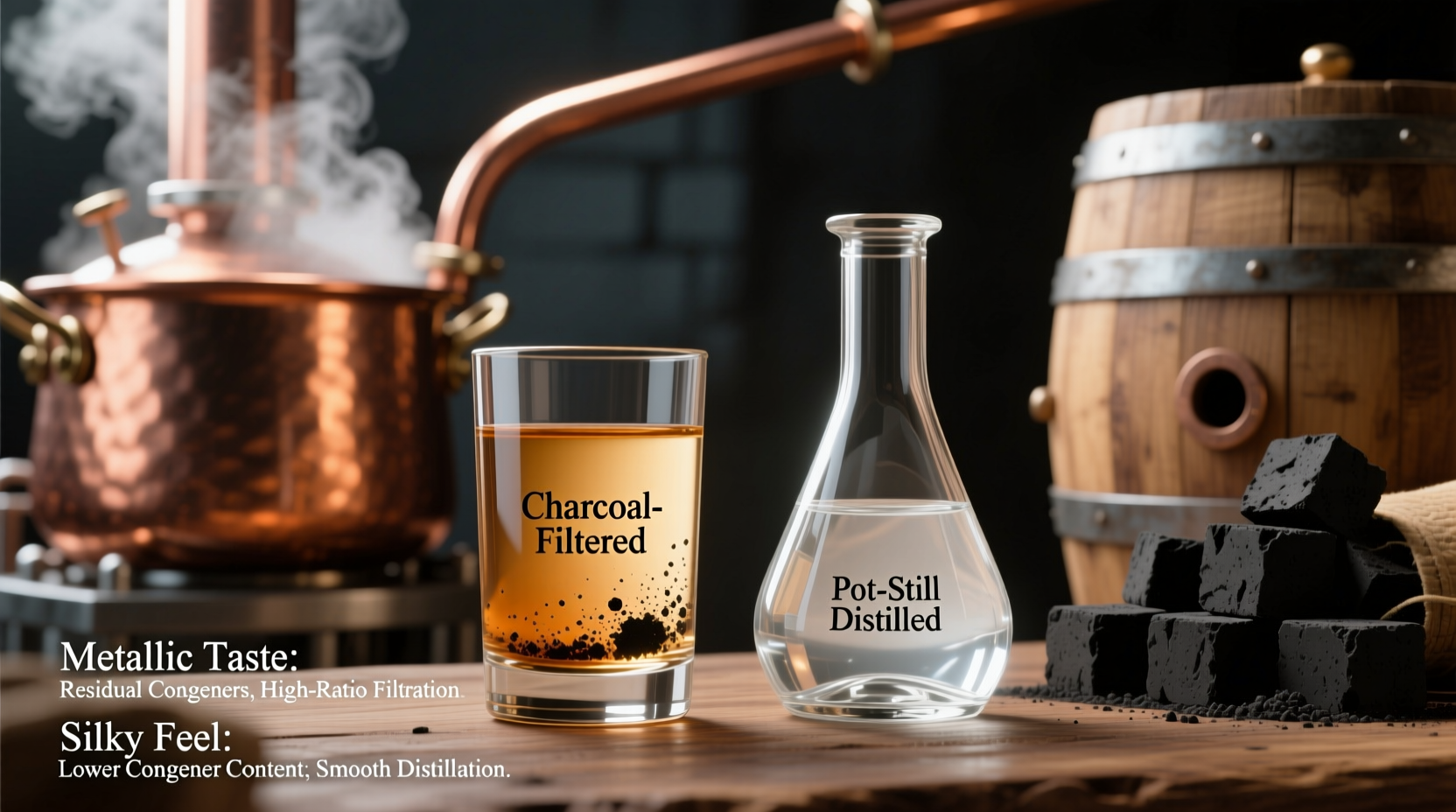
Unlike large-scale column stills designed for high-volume, near-total congener removal, craft distillers rely heavily on pot stills—copper or stainless steel—each imparting distinct chemical signatures. Copper remains the gold standard for vodka production not because it’s traditional, but because it catalytically binds with sulfur compounds (hydrogen sulfide, mercaptans) formed during fermentation. These compounds, if left unreacted, yield off-notes ranging from rotten egg to burnt rubber—and critically, they also promote the leaching of trace metals from still components into the distillate.
Stainless steel pot stills, while durable and easier to clean, lack copper’s reactive surface. Without supplemental copper contact—such as copper mesh packing in reflux columns or copper-lined condensers—sulfur compounds persist. When these interact with residual iron or nickel from weld seams, gaskets, or valves (especially under acidic conditions or prolonged contact), they form volatile metal-sulfur complexes. These complexes are directly responsible for the “metallic” perception—not pure iron or copper ions (which are largely tasteless at ppm levels), but organometallic molecules that trigger specific trigeminal receptors associated with bitterness and astringency.
Still geometry further modulates this effect. A tall, narrow neck with multiple reflux plates increases vapor contact time and surface area, enhancing copper-mediated sulfur removal. A short, wide neck—common in budget-friendly hybrid stills—minimizes reflux, allowing more volatile sulfur species and reactive intermediates to carry over. The result? A spirit that may test “clean” on gas chromatography (showing low esters and aldehydes) yet delivers a pronounced metallic note on the palate due to unbound sulfur-metal interactions.
Tip: When tasting a new craft vodka, warm a small amount gently in your palm before nosing. Metallic notes intensify with temperature—this simple step helps distinguish true metal-derived off-flavors from transient ethanol heat or barrel tannins.Charcoal Filtration: Not All Carbon Is Created Equal
Filtration is where many craft producers believe they “fix” imperfections. But charcoal isn’t a universal eraser—it’s a highly selective adsorbent whose behavior depends entirely on its source material, activation method, pore structure, and contact protocol. The difference between silky smoothness and a dry, metallic aftertaste often hinges on which carbon was chosen—and how it was used.
Coconut shell charcoal offers ultra-fine micropores (0.5–2 nm), ideal for removing small, polar molecules like methanol and acetaldehyde. However, it struggles with larger sulfur-metal complexes and can strip desirable fatty acid esters that contribute to mouthfeel viscosity. Over-filtration through coconut charcoal yields a technically “pure” but hollow, thin spirit—sometimes perceived as “sharp” or “tinny” due to the absence of textural buffering compounds.
Hardwood charcoal (e.g., maple, birch, or oak), especially when steam-activated, develops a broader pore distribution—including mesopores (2–50 nm). These capture mid-size sulfur-metal complexes *without* aggressively stripping longer-chain esters and higher alcohols. This preserves the spirit’s natural body and allows subtle glycerol-like compounds to remain, yielding that coveted “silky” sensation. As master distiller Elena Rostova of Vermont’s Greylock Distilling observes:
“Charcoal doesn’t make vodka neutral—it makes it *honest*. Coconut carbon gives you laboratory purity. Hardwood carbon gives you balance: it removes the harsh without sacrificing the human. That silkiness? It’s not added—it’s what’s left behind when you filter intelligently.” — Elena Rostova, Head Distiller, Greylock Distilling
Filtration Protocol Matters More Than Charcoal Alone
Even the finest hardwood charcoal fails if misapplied. Critical variables include bed depth, flow rate, temperature, and pre-wetting. A shallow charcoal bed (<15 cm) with rapid flow (>1 L/min per 100 g charcoal) guarantees incomplete contact—sulfur-metal complexes pass through untouched. Conversely, excessive dwell time (>4 hours per batch) or cold filtration (<10°C) can cause over-adsorption of congeners essential for mouthfeel cohesion.
Temperature is especially underestimated. Cold filtration slows molecular diffusion, reducing charcoal efficiency for mid-weight compounds while paradoxically increasing extraction of metallic ions from carbon support structures (e.g., stainless steel housings). Room-temperature filtration (18–22°C) optimizes kinetic energy for selective adsorption.
Pre-wetting is non-negotiable. Dry charcoal contains trapped air pockets that create channeling—where spirit flows unevenly through preferential paths, bypassing most of the carbon surface. Proper pre-wetting with distilled water or low-proof neutral spirit (40% ABV) for 30 minutes ensures uniform saturation and maximizes effective surface area.
| Parameter | Metallic-Prone Practice | Silky-Optimized Practice |
|---|---|---|
| Charcoal Type | Coconut shell, low-activation | Maple or birch, steam-activated, >1,000 m²/g surface area |
| Bed Depth | <10 cm | 25–35 cm minimum |
| Flow Rate | >1.5 L/min per 100 g charcoal | 0.3–0.6 L/min per 100 g charcoal |
| Filtration Temp | <8°C or >30°C | 18–22°C |
| Pre-Wetting | None or <5 min with tap water | 30 min with 40% ABV neutral spirit |
A Real-World Case: How One Batch Shifted from Tinny to Textured
In early 2023, Oregon’s Cascade Hollow Distillery released its first small-batch rye-based vodka. Initial tastings revealed a persistent metallic note—described by three professional reviewers as “wet galvanized pipe” with a drying, astringent finish. Lab analysis showed no elevated copper or iron levels, but GC-MS detected elevated dimethyl trisulfide (DMTS), a potent sulfur compound known to chelate trace metals and amplify metallic perception.
The team audited their process: they used a stainless steel pot still with minimal copper reflux surface, fermented with a high-sulfur-tolerant yeast strain, and filtered through coconut charcoal at 4°C with rapid flow. They adjusted three variables: (1) added copper mesh to the reflux column; (2) switched to maple charcoal with 1,250 m²/g surface area; (3) implemented 30-minute pre-wetting with 40% ABV spirit and room-temperature, slow-flow filtration (0.45 L/min per 100 g).
The next batch eliminated DMTS entirely and increased ester concentration by 37%. Tasters reported “a seamless, almost oily mouthfeel” and “no finish—just quiet, clean warmth.” Crucially, head distiller Marcus Chen noted the change wasn’t about removing “bad” flavors—it was about enabling the spirit’s inherent structural compounds to express themselves without interference.
Step-by-Step: Diagnosing Metallic Notes in Your Own Tasting
When encountering an unexpected metallic character in craft vodka, follow this diagnostic sequence to isolate the likely cause:
- Nose at room temperature: Swirl gently, then inhale deeply. Metallic notes rarely appear strongly in the aroma unless accompanied by sulfur (rotten egg, cooked cabbage). If nose is clean but palate is metallic, the issue is likely post-distillation (filtration or storage).
- Assess mouthfeel texture: Does the metallic note arrive with a drying, puckering sensation? That suggests sulfur-metal complexes. Is it immediate and sharp, like licking a battery? That points to residual free metal ions—often from improper still cleaning or storage in unlined metal tanks.
- Check the finish: A lingering metallic note >15 seconds indicates poor sulfur removal during distillation. A fleeting, flash-like metallic impression (<5 seconds) often signals over-aggressive filtration stripping protective esters.
- Review the producer’s specs: Visit their website or label. Do they specify still material? Charcoal type? Filtration temperature? Absence of this information is itself a red flag—transparency correlates strongly with technical rigor.
- Compare side-by-side: Taste two vodkas from the same region, same base (e.g., both wheat), but different still types (copper pot vs. hybrid stainless). Note differences in weight, warmth, and finish length—not just flavor. The contrast reveals how equipment shapes physics, not just chemistry.
FAQ
Can “metallic” notes ever be intentional or desirable?
Rarely in vodka—but yes, in specific contexts. Some Eastern European rye vodkas use controlled copper contact to develop subtle mineral notes that complement spicy food pairings. However, this requires precise calibration; uncontrolled metallic notes are universally considered flaws in modern vodka standards, including the EU’s Regulation (EC) No 110/2008, which prohibits “foreign tastes or odors.”
Does aging vodka in metal tanks cause metallic taste?
Yes—if tanks are unlined, poorly passivated stainless steel, or contain nickel alloys susceptible to acidic corrosion. Ethanol solutions below 40% ABV accelerate metal leaching, especially when pH drops below 4.5 (common in grain ferments). Reputable producers use electropolished, food-grade 316 stainless with rigorous passivation protocols and avoid long-term storage below 50% ABV.
Why don’t all craft distillers use copper stills if they’re superior?
Copper requires skilled maintenance: regular polishing, careful cleaning to prevent verdigris buildup (which introduces copper acetate—a bitter, metallic compound), and monitoring for fatigue at solder joints. Stainless steel offers consistency, lower labor costs, and regulatory simplicity—making it attractive for startups despite its sensory trade-offs. The best operators mitigate this with copper-packed columns or post-distillation copper contact stages.
Conclusion
The divide between a vodka that tastes like polished steel and one that feels like liquid silk isn’t mystical—it’s mechanical, chemical, and eminently addressable. Metallic notes arise not from “impurity” in the romantic sense, but from identifiable gaps in sulfur management, inappropriate adsorption kinetics, or reactive surfaces left unmitigated. Silky mouthfeel isn’t conjured by marketing—it’s the physical manifestation of balanced congener retention, achieved through thoughtful still design, precise charcoal selection, and disciplined filtration science. As craft distilling matures beyond novelty into nuance, the most compelling vodkas won’t just claim purity—they’ll demonstrate intentionality in every phase from copper coil to charcoal bed. Your palate already knows the difference. Now you understand *why*. Next time you pour a sample, don’t just taste—diagnose. Then seek out the makers who engineer for texture, not just transparency.
💬 Have you encountered a craft vodka with surprising metallic or silky qualities? Share the brand, your tasting notes, and what you suspect caused it—we’ll feature insightful reader observations in our upcoming deep-dive on filtration media performance.








