Every holiday season, homes light up with tradition, memory, and the quiet sparkle of ornaments hanging from evergreen boughs. For many, these decorations are more than festive accents—they’re heirlooms, time capsules, and silent storytellers of family history. Among them, a quiet debate persists: do vintage glass ornaments hold more lasting sentimental value than their plastic counterparts? The answer isn’t just about material—it’s about emotion, legacy, and how we preserve what matters.
While both types serve the same decorative purpose, their ability to endure emotionally—and physically—varies significantly. Glass ornaments, especially those passed down through generations, often carry deeper resonance. Plastic ones, though practical and durable, rarely inspire the same reverence. To understand why, we must examine not only craftsmanship and longevity but also the intangible weight of memory, nostalgia, and cultural continuity.
The Emotional Weight of Material
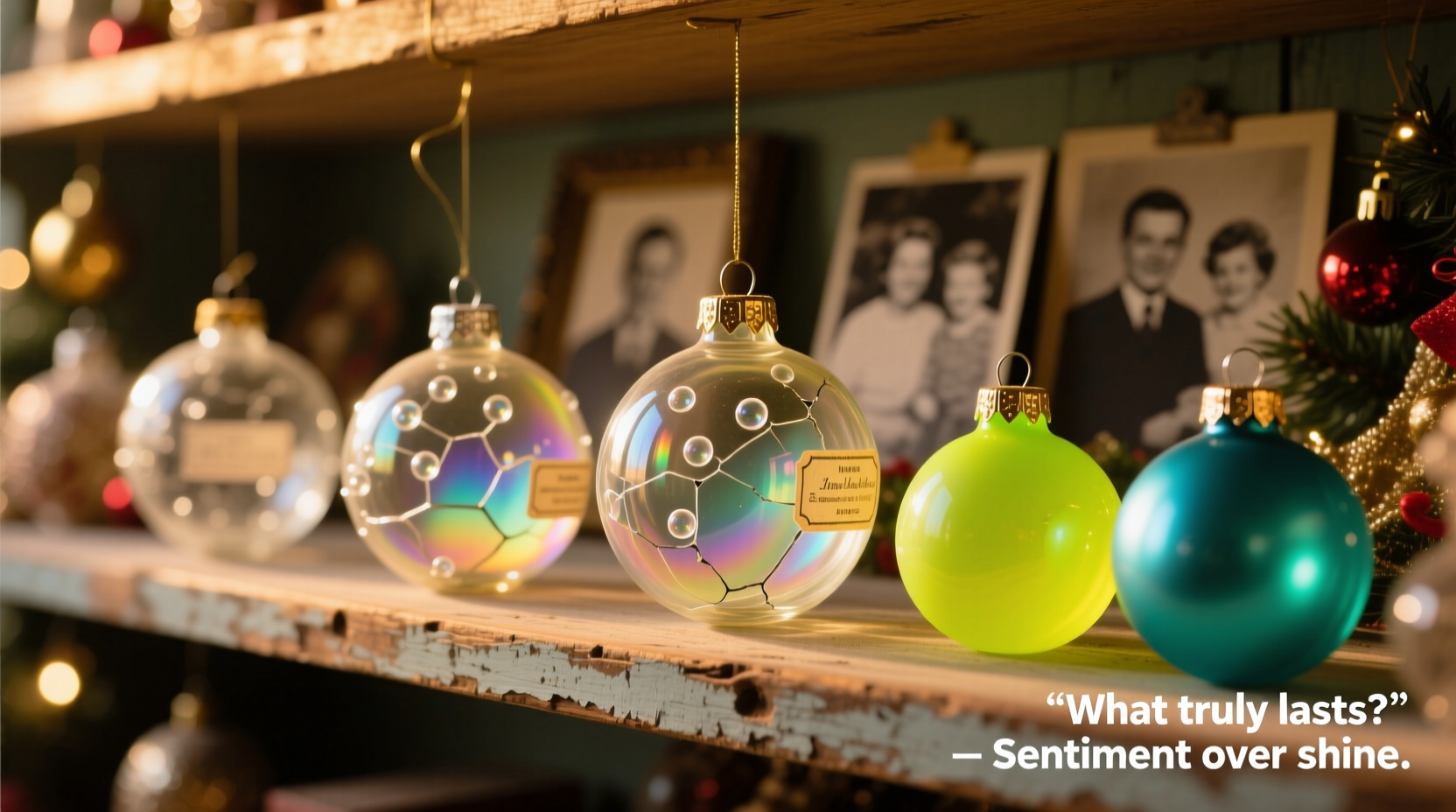
Material shapes meaning. A hand-blown glass ornament, delicate and shimmering, carries an aura of care and intention. Its fragility suggests something precious—something worth protecting. This physical vulnerability mirrors the emotional delicacy of memory itself. We guard these ornaments not just from breakage, but from loss—the kind that comes with forgetting or neglect.
In contrast, plastic ornaments are designed for resilience. They withstand drops, temperature changes, and years of storage without visible wear. But this very durability can undermine their emotional significance. Because they are easily replaced, they lack the irreplaceable quality that deepens sentiment over time. As one collector put it: “A broken glass ball from 1947 feels like a piece of my grandmother is gone. A cracked plastic snowman? I’ll buy another tomorrow.”
“Sentimental value grows in proportion to perceived uniqueness and effort. Handmade glass ornaments require both—time, skill, and attention. That investment transfers into emotional capital.” — Dr. Lila Monroe, Cultural Psychologist, University of Vermont
Longevity and Preservation: A Comparative Analysis
Physical endurance plays a crucial role in whether an object can maintain its emotional relevance. An ornament that discolours, cracks, or degrades may still be cherished, but its condition affects how often it’s displayed—and remembered.
| Feature | Vintage Glass Ornaments | Plastic Ornaments |
|---|---|---|
| Lifespan (with care) | 50–100+ years | 10–30 years |
| Fade Resistance | High (if stored properly) | Low to moderate (prone to yellowing) |
| Fragility | High (breakable) | Low (impact-resistant) |
| Repairability | Moderate (can be glued, rehung) | Poor (cracks often spread; adhesive fails) |
| Rarity & Collectibility | High (especially pre-1960s European pieces) | Low (mass-produced) |
| Sentimental Depth Potential | Very High | Moderate (unless tied to specific event) |
The table reveals a paradox: glass is physically fragile but emotionally enduring, while plastic is tough but forgettable. However, longevity depends on stewardship. A well-maintained glass ornament from the 1920s can outlive multiple generations, becoming a touchstone of identity. A plastic tree-topper from 1995 might survive intact—but if it lacks narrative or provenance, it risks being discarded during a closet purge.
Tip: Wrap each glass ornament individually in acid-free tissue paper and store in compartmentalized boxes away from humidity and temperature swings.The Role of Craftsmanship and Provenance
Vintage glass ornaments, particularly those made in Germany, Poland, or Czechoslovakia before the mid-20th century, were often handcrafted using techniques lost to mass production. Each piece bears subtle imperfections—slight asymmetry, brushstroke variations in paint, or unique glitter application—that signal human touch. These nuances become part of the story: “This was made by someone who cared.”
Provenance amplifies this effect. Knowing that a mercury-glass bell was hung by your great-aunt during her first Christmas in America after fleeing war adds layers of meaning. Even without documentation, the age and style of vintage glass ornaments invite curiosity and research, turning display into historical engagement.
Plastic ornaments, by contrast, emerged widely in the 1960s and 70s as affordable alternatives. While some mid-century designs have gained nostalgic appeal (think aluminum trees or retro Santa figures), most lack individuality. Their uniformity makes them symbols of era rather than personal journey. Exceptions exist—customized plastic ornaments from school years, weddings, or travels—but these derive value from inscription or context, not material.
A Mini Case Study: The Heirloom Ball from Dresden
In a farmhouse outside Portland, Oregon, lives a single red glass orb with gold filigree trim. It belonged to Elsie Hartmann, who received it in 1938 as a gift from her fiancé before he shipped out in World War II. She hung it every year, even when they could afford no other decorations. After her passing, her granddaughter placed it at the center of the family tree, calling it “the heart ornament.”
When the ornament cracked during a move, the family didn’t discard it. Instead, they had it professionally restored, adding a tiny silver band around the seam—a visible memento of survival. Today, children are taught its story before touching it. No plastic ornament in the box commands such reverence.
This example illustrates how material, memory, and ritual intertwine. The glass wasn’t chosen for its durability—it was valued because it survived despite fragility. Its damage became part of its legend, much like a scar on a veteran. A plastic version would have resisted breakage but failed to accumulate the same symbolic weight.
Caring for Sentiment: A Step-by-Step Preservation Guide
To ensure ornaments retain both physical integrity and emotional resonance, intentional care is essential. Follow this timeline to protect your collection year-round:
- After the Holidays: Remove ornaments carefully. Handle glass by the cap, never the body.
- Cleaning: Wipe glass gently with a microfiber cloth dampened with distilled water. Avoid alcohol-based cleaners. For plastic, use mild soap and water; dry thoroughly.
- Inspection: Check for loose hangers, chips, or cloudiness. Repair minor issues immediately.
- Packing: Use divided storage boxes with padding. Never stack ornaments loosely in bins.
- Storage Location: Choose a cool, dry place—ideally between 60–70°F and under 50% humidity. Avoid attics, basements, or garages.
- Spring Check-In: Every May, inspect stored ornaments for pests, mold, or degradation.
- Documentation: Photograph each significant ornament. Record its origin, who gave it, and any stories attached.
- Display Rotation: Rotate fragile pieces annually to reduce exposure to light and handling.
Consistent care turns preservation into ritual. Over time, the act of unpacking, dusting, and retelling stories becomes as meaningful as the ornaments themselves.
When Plastic Earns Sentiment: Exceptions to the Rule
It’s unfair to dismiss all plastic ornaments as emotionally inert. Certain conditions allow them to accrue deep personal significance:
- Personalization: Ornaments engraved with names, dates, or messages (e.g., “Our First Christmas, 1984”)
- Event Markers: Graduation, birth, or memorial ornaments created for specific milestones
- Cultural Nostalgia: Retro designs that evoke childhood memories (e.g., 1970s sitcom-themed balls)
- Handmade Effort: DIY plastic canvas crafts or painted foam balls made by children
Yet even in these cases, the sentiment resides in the association—not the material. A child’s handprint in polymer clay will always matter more than its composition. Still, plastic’s tendency to yellow, crack, or lose paint over decades limits its ability to bridge generations. Without careful preservation, these tokens fade literally and figuratively.
Checklist: Building a Sentiment-Rich Ornament Collection
Whether starting fresh or curating an existing set, use this checklist to prioritize lasting emotional value:
- ✅ Prioritize handmade or artisanal pieces over mass-market decor
- ✅ Include at least one new ornament per year that marks a family milestone
- ✅ Source vintage glass ornaments from reputable dealers or estate sales
- ✅ Label each meaningful ornament with a tag noting its story
- ✅ Involve younger family members in decorating to pass down narratives
- ✅ Digitize photos of older ornaments that may not survive another decade
- ✅ Designate a “legacy branch” of the tree for heirlooms only
Frequently Asked Questions
Can sentimental value outweigh fragility?
Absolutely. In fact, the need for careful handling often deepens attachment. Fragility demands attention, and attention reinforces memory. Many families treat their oldest glass ornaments like relics—displayed with reverence, discussed with pride. The risk of breakage doesn’t diminish value; it heightens awareness of what’s at stake.
Are modern glass ornaments as valuable as vintage ones?
Not inherently. Modern glass ornaments can become valuable over time, but they lack the immediate historical weight of pre-war or mid-century pieces. However, if made with traditional methods (e.g., hand-blown, hand-painted) and preserved consistently, they stand a strong chance of becoming future heirlooms.
Should I replace broken glass ornaments?
Replacement misses the point. If a vintage ornament breaks, consider keeping the fragments in a shadow box with its story. Some collectors opt for professional restoration instead. The goal isn’t perfection—it’s continuity. A repaired ornament often carries more meaning than an unbroken copy.
Conclusion: Choosing What Lasts Beyond the Season
The choice between vintage glass and plastic ornaments isn’t just aesthetic or practical—it’s philosophical. It asks what we want our traditions to say about us. Do we value convenience and replaceability, or rarity, care, and continuity?
Vintage glass ornaments, though fragile, consistently prove capable of holding deeper and longer-lasting sentimental value. Their craftsmanship, history, and irreplaceability forge stronger emotional bonds. With proper care, they can outlive decades, becoming anchors of identity across generations. Plastic ornaments serve a role—especially in households with young children or high-traffic trees—but they rarely achieve the same depth of meaning.
If you’re building a collection meant to endure, focus less on material alone and more on intention. Choose pieces with stories, or create opportunities for new ones. Care for them deliberately. Share their histories aloud. Let the tree become a living archive.
💬 What’s the most meaningful ornament in your collection? Share its story with someone today—and ensure the sentiment lives on.








