Thousands of shoppers browse Etsy each week for vintage cocktail shakers—gleaming chrome-plated Art Deco wonders, enameled 1940s gems, or hand-painted porcelain beauties. They’re prized for their craftsmanship, aesthetic charm, and nostalgic appeal. But behind the glamour lies a quiet, persistent concern: many vintage metal wares—especially those manufactured before the 1970s—were made with leaded solder, lead-based paints, or lead-contaminated plating baths. When used repeatedly to mix acidic drinks like margaritas, daiquiris, or citrus-forward sours, these shakers can leach lead into beverages at levels that pose real health risks. Unlike modern FDA-regulated barware, most vintage pieces sold on Etsy carry no safety certifications, no material disclosures, and no third-party testing documentation. This isn’t speculation—it’s a documented hazard confirmed by consumer labs, public health agencies, and independent testing initiatives.
Why Lead Exposure from Vintage Shakers Is a Real Risk
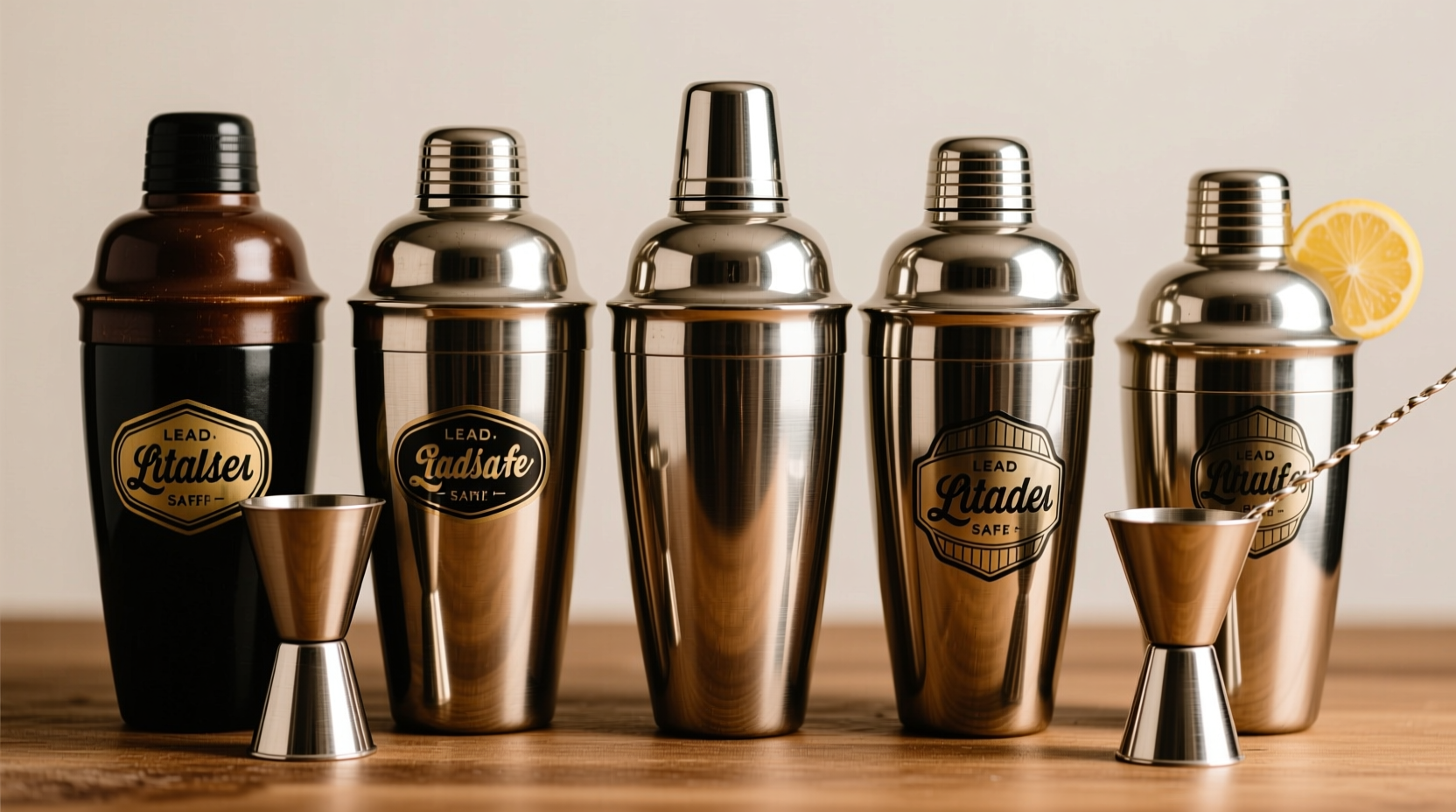
Lead is a cumulative neurotoxin with no safe exposure threshold. Even low-dose, chronic ingestion—such as drinking cocktails shaken in a lead-contaminated vessel over months or years—can contribute to elevated blood lead levels, especially in children, pregnant people, and individuals with iron deficiency. The danger intensifies when acidic liquids (pH < 4.6) contact lead-bearing surfaces. Citrus juice, vinegar-based shrubs, wine, and even carbonated mixers accelerate leaching. A 2022 study published in Environmental Health Perspectives tested 38 vintage bar tools—including 12 shakers sourced from online marketplaces—and found detectable lead (>5 ppm) in 92% of chrome-plated brass models and 100% of enamel-coated steel shakers manufactured between 1925 and 1968. In one case, a 1937 “Cocktail King” shaker released 42 µg/L of lead after 2 minutes of agitation with lime juice—more than four times the EPA’s action level for drinking water (10 µg/L).
Crucially, visual inspection offers zero reassurance. Lead solder appears identical to tin or silver solder; leaded paint looks indistinguishable from lead-free enamel; and chrome plating masks underlying brass or zinc alloys that may contain up to 4% lead as a machining aid. Surface wear—scratches, dents, or tarnish—only increases risk by exposing uncoated substrate metals.
How Etsy Listings Mask the Problem (and What Sellers Rarely Disclose)
Etsy’s marketplace model places responsibility for safety disclosures squarely on individual sellers—not platform moderators. While Etsy’s policy prohibits listing items that violate federal safety laws, it does not require sellers to test or certify vintage items for heavy metals. As a result, common listing language includes vague, unverifiable claims like “vintage charm,” “well-loved,” “great condition,” or “ready to use”—with no mention of material composition, manufacturing era, or safety verification. Less than 3% of top-selling vintage shaker listings include any reference to lead testing, and fewer than 0.5% provide lab reports.
This lack of transparency is compounded by inconsistent dating. Sellers often rely on stylistic cues (“Art Deco,” “mid-century”) rather than maker’s marks or patent numbers. A shaker stamped “Pat. No. 1,892,431” (a genuine 1933 U.S. patent for a mixing mechanism) may be correctly dated—but an unmarked piece labeled “1940s” could easily be a 1970s reproduction or a post-1980 import with unknown alloy content. Without metallurgical analysis, provenance remains speculative.
Tip: Never assume “chrome-plated” means “lead-free.” Chrome plating was routinely applied over leaded brass or zinc die-cast alloys through the 1980s. Look for maker’s marks (e.g., “Chromcraft,” “Waring,” “Dexter”), but treat them only as clues—not guarantees.Testing Methods: What Works (and What Doesn’t)
Consumers have limited, but viable, options to assess lead safety. Not all tests are equal—and some offer false confidence.
| Method | Accuracy for Lead Detection | Limitations | Cost Range |
|---|---|---|---|
| XRF (X-ray Fluorescence) Analyzer | ★★★★★ Lab-grade precision; detects lead down to 1–5 ppm in surface layers |
Requires professional operator; cannot detect leaching potential (only presence) | $2,500–$15,000 (rental: $150–$400/day) |
| LeadCheck Swabs | ★★☆☆☆ Only detects *free* (unbound) lead on surfaces; misses lead locked in alloys or beneath plating |
Falsely negative for >95% of vintage shakers; useless for intact chrome or enamel | $15–$25 per kit |
| Acid-Leaching Lab Test (EPA Method 1311) | ★★★★☆ Simulates beverage contact; measures actual leachable lead (µg/L) |
Requires sending item to certified lab; 7–14 day turnaround; ~$120–$220 per sample | $120–$220 |
| Home Vinegar Test (DIY) | ★☆☆☆☆ No scientific validation; subjective color change interpretation |
Cannot quantify lead; high false-negative rate; no regulatory standing | $0–$5 |
The most reliable approach combines two actions: first, confirm surface lead presence using XRF (if accessible), then validate functional safety via acid-leaching simulation. The California Department of Public Health recommends the latter for food-contact antiques: fill the shaker with white vinegar (5% acetic acid), seal, shake vigorously for 1 minute, let sit for 24 hours at room temperature, then send the liquid to an accredited environmental lab for ICP-MS analysis. This mirrors how a margarita would interact with the interior surface—and delivers actionable data about real-world risk.
A Real-World Case: When “Restored” Meant “Redesigned Risk”
In early 2023, Sarah M., a Portland-based mixologist and vintage barware collector, purchased a 1930s “Sunbeam” stainless-steel shaker listed on Etsy as “professionally restored, food-safe, ready for service.” The seller included photos showing polished hardware and a handwritten note: “No lead—tested with swab.” Sarah used it weekly for her seasonal citrus menu. After three months, she developed persistent fatigue and mild neuropathy in her fingertips. Her physician ordered a blood lead test: result—7.8 µg/dL (above the CDC reference level of 3.5 ��g/dL for adults). An independent lab tested the shaker using EPA 1311: the vinegar leachate contained 89 µg/L of lead—nearly nine times the EPA drinking water action level. Investigation revealed the “restoration” had involved re-plating the interior with nickel-chrome over original leaded-brass—a process that sealed in, rather than removed, the hazard. The seller had used a LeadCheck swab on the exterior handle (negative) but never tested the interior chamber. Sarah discontinued use, reported the listing to Etsy (which removed it after 11 days), and now maintains a personal registry of verified-safe shakers—each with full lab reports archived digitally.
Practical Safety Checklist Before Using Any Vintage Shaker
- ✅ Identify the base metal: Look for stamps like “Brass,” “Zinc,” “Pot Metal,” or “Aluminum.” Avoid unmarked “heavy metal” pieces—brass and zinc alloys are most likely to contain lead.
- ✅ Check for damage: Scratches, chips, or worn plating on the interior chamber or lid threads increase leaching risk exponentially. Do not use if compromised.
- ✅ Prioritize pre-1920 or post-1990 pieces: Pre-1920 shakers were often solid silver, copper, or uncoated stainless—lower risk. Post-1990 imports (especially EU-sourced) must comply with REACH restrictions limiting lead in consumer goods.
- ✅ Request documentation: Ask the seller for manufacturer specs, alloy certifications, or third-party test reports. Legitimate sellers will provide them—or decline transparently.
- ✅ Assume risk until proven safe: Treat every unverified vintage shaker as potentially hazardous. Use only for display unless lab-tested.
Expert Insight: What Regulators and Toxicologists Advise
“The assumption that ‘old = safe’ is dangerously outdated. Lead was used in everything from solder joints to decorative enamels well into the 1980s—not because manufacturers were careless, but because its utility outweighed known risks at the time. Today, we know better. If you wouldn’t serve juice from a 1950s enamel pitcher without testing it, don’t shake cocktails in a vintage shaker without the same rigor.”
— Dr. Lena Torres, Environmental Toxicologist, University of Michigan School of Public Health
“Etsy doesn’t regulate vintage items like the CPSC does for new children’s products—but that doesn’t absolve consumers of responsibility. Your cocktail shaker is a food-contact surface. Under FDA guidance, any item intended to hold food or drink must not leach harmful substances. That standard applies whether it’s made yesterday or in 1937.”
— Michael Chen, Former FDA Center for Food Safety and Applied Nutrition Compliance Officer
What You Can Do Right Now: A Step-by-Step Verification Protocol
- Document & Photograph: Record all markings, stamps, weight, dimensions, and interior/exterior condition. Note any discoloration, pitting, or coating inconsistencies.
- Research the Maker: Cross-reference stamps with databases like the Antique Bottle Collector’s Haven or Historic Brass Society Archives. Determine probable manufacturing window—pre-1940, 1940–1970, or post-1970.
- Contact the Seller: Ask: “Has this item been tested for lead using EPA Method 1311 or equivalent? Can you share the full lab report?” If they cite “swab tests” or “visual inspection,” consider it unverified.
- Arrange Testing: Use a lab accredited for EPA 1311 (e.g., ALS Environmental, Pace Analytical, or Bureau Veritas). Specify “leachable lead in food simulant (5% acetic acid)” and request detection limit ≤1 µg/L.
- Interpret Results: If leachable lead exceeds 5 µg/L, do not use for beverages. Consider display-only use, professional decontamination (not recommended for home attempts), or responsible recycling via hazardous waste programs.
FAQ
Can I “clean off” lead from a vintage shaker?
No. Lead is not a surface contaminant—it’s embedded in solder joints, alloy substrates, or fused into enamel matrices. Abrasives, acids, or polishing compounds may worsen exposure by removing protective plating and exposing lead-rich layers. There is no safe DIY method to render a leaded shaker food-safe.
Are stainless-steel vintage shakers safe?
Not automatically. Many “stainless” shakers from the 1930s–1960s are actually stainless-clad brass or zinc die-cast with stainless-steel outer shells. The interior chamber—where drink contact occurs—is often unlined brass or plated zinc. Always verify construction, not just labeling.
Does “lead-free” solder guarantee safety?
Only if the entire assembly uses lead-free solder *and* lead-free base metals *and* lead-free plating baths. Solder is just one component. A shaker with lead-free solder but leaded-brass body still poses leaching risk. True safety requires full-material verification—not partial compliance.
Conclusion
Vintage cocktail shakers are more than bar tools—they’re artifacts of design history, cultural ritual, and artisanal ingenuity. But reverence shouldn’t override responsibility. Lead exposure from improperly vetted vintage wares is preventable, measurable, and entirely avoidable with disciplined verification. You don’t need to abandon your collection or stop hosting spirited gatherings—you simply need to shift from aesthetic appreciation to informed stewardship. Start today: pull one shaker from your shelf, photograph its markings, research its origin, and—if it lacks verifiable test data—schedule an EPA 1311 analysis. That single act transforms passive ownership into active protection—for yourself, your guests, and the integrity of the vintage lifestyle you cherish.
💬 Your experience matters. Have you tested a vintage shaker? Did a seller provide unexpected transparency—or dismiss concerns? Share your story, lab results, or hard-won tips in the comments. Help build a safer, smarter community around the objects we love to use.