Waking up with tangled, creased hair can be frustrating—especially if you’ve spent time styling it the night before. For many, switching from traditional elastic bands to gentler alternatives like velvet scrunchies or silk hair ties has become a nightly ritual. But when it comes to preventing creases during sleep, which one truly performs better? The answer isn’t as simple as material alone—it involves texture, tension, absorbency, and how each interacts with different hair types. This article dives deep into the science and real-world use of velvet scrunchies versus silk hair ties, helping you make an informed choice for healthier, smoother mornings.
Understanding Hair Creasing During Sleep
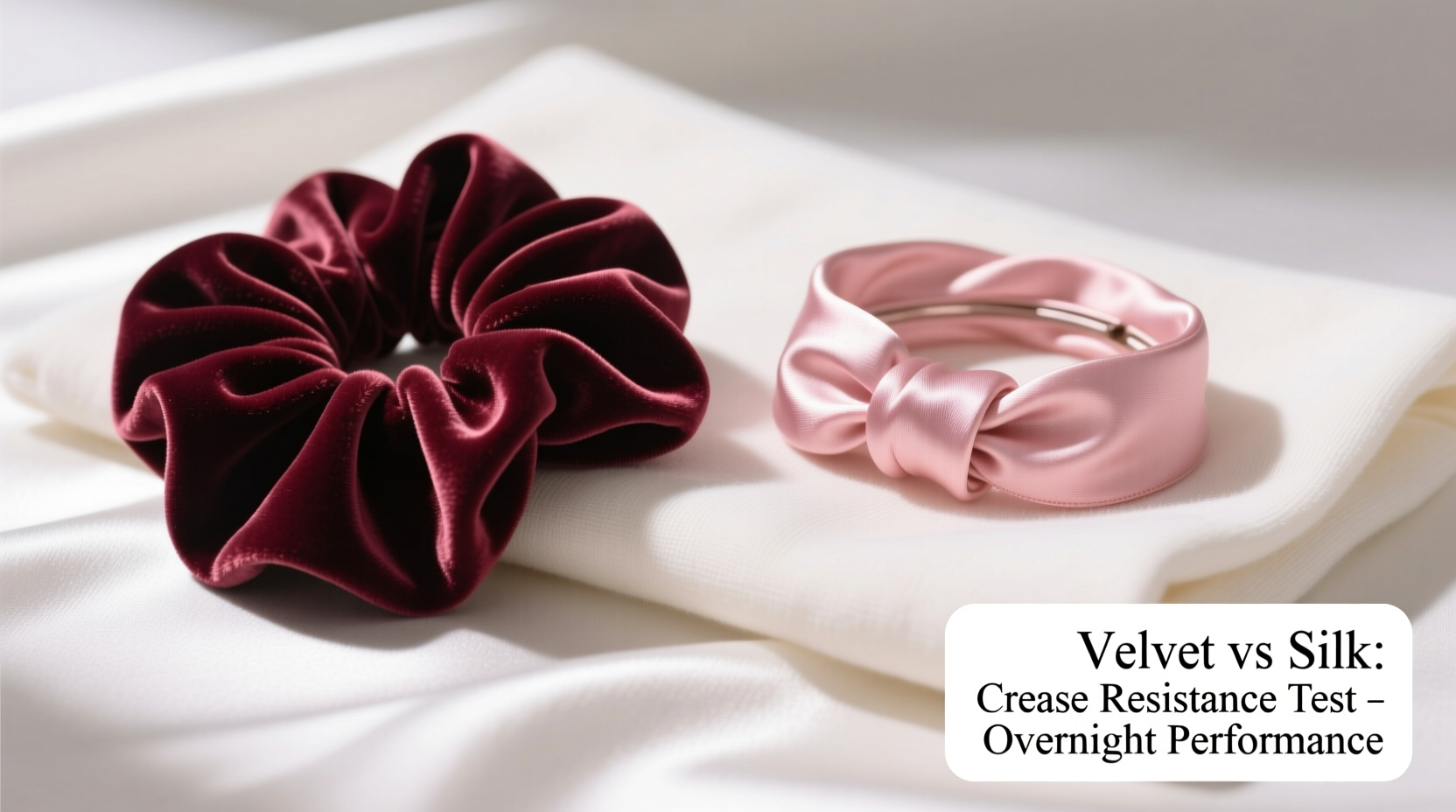
Hair creasing at night typically occurs due to friction, pressure, and moisture loss. When hair is pulled into a tight ponytail or bun and left in contact with cotton pillowcases or rough elastics, it bends sharply and rubs against surfaces that pull on the cuticle. Over several hours, this creates kinks, flat spots, and even breakage. The goal of using specialty hair ties is to minimize these forces while still securing hair comfortably through the night.
The two leading contenders—velvet scrunchies and silk hair ties—address these issues differently. Velvet scrunchies rely on grip and softness, while silk hair ties prioritize slip and moisture retention. To determine which prevents creases more effectively, we must examine their structure, function, and performance under common sleeping conditions.
Material Science: How Velvet and Silk Interact with Hair
Velvet and silk are fundamentally different materials, both in composition and behavior. Understanding their physical properties helps clarify why one might outperform the other in crease prevention.
- Velvet: Typically made from polyester, cotton, or rayon blends, velvet features a dense, plush pile that gives it a soft, grippy texture. This texture allows the scrunchie to hold hair securely without needing excessive tension, reducing strain on the roots.
- Silk: A natural protein fiber (usually mulberry silk), silk has a smooth, low-friction surface. It glides easily over hair strands and resists absorbing moisture, helping preserve natural oils and reduce static.
In terms of friction coefficient, silk ranks among the lowest for textiles—meaning hair slides across it rather than catching. Velvet, while soft, still presents micro-resistance due to its raised fibers. However, this slight grip can be beneficial for keeping styles in place without slipping off during restless sleep.
“Silk’s smooth surface significantly reduces cuticle disruption compared to cotton or rubber-based elastics.” — Dr. Lena Torres, Trichologist & Hair Research Scientist
Performance Comparison: Key Factors in Crease Prevention
To evaluate which option wins in the battle against overnight creases, consider the following criteria:
| Factor | Velvet Scrunchie | Silk Hair Tie |
|---|---|---|
| Friction Level | Moderate (soft grip) | Very Low (slippery) |
| Tension Required | Low (holds well with minimal tightening) | Low to Moderate (may require tighter loop to stay secure) |
| Maintenance of Style | High (less likely to loosen) | Moderate (can slip, especially on fine hair) |
| Moisture Retention | Neutral (fabric doesn't absorb much oil) | High (preserves natural scalp oils) |
| Cease Formation Risk | Low to Moderate (depends on placement and tightness) | Very Low (minimal imprinting due to smooth wrap) |
| Durability | High (resists fraying and wear) | Moderate (silk can snag or degrade over time) |
While silk scores higher in friction reduction and moisture preservation—two major contributors to crease formation—its tendency to loosen during sleep may indirectly increase creasing. If a silk tie slips and hair becomes partially loose, it can tangle and fold unevenly against the pillow, creating new pressure points. Velvet scrunchies, by contrast, maintain consistent hold, minimizing movement-induced distortion.
Tip: For maximum crease protection, combine either option with a silk or satin pillowcase to reduce overall friction.Real-World Use: A Mini Case Study
Amy, a 32-year-old graphic designer with long, wavy brunette hair, struggled with morning creases after tying her hair up at night. She experimented with both velvet scrunchies and silk hair ties over a four-week period, documenting results daily.
Week 1–2 (Velvet Scrunchies): Amy used wide, plush velvet scrunchies to secure loose buns on top of her head. She reported that her hair stayed in place all night, with no slippage. Morning creases were minimal and mostly limited to the base of the ponytail. Detangling was quick, and there was no noticeable flattening along the crown.
Week 3–4 (Silk Hair Ties): Switching to thin silk-covered elastics, Amy noticed that her ponytail often loosened by morning. While the silk itself didn’t leave marks, the partial release caused her hair to twist and press against the pillowcase, resulting in horizontal creases mid-length. On nights she paired the silk tie with a silk pillowcase, improvement was visible—but not complete.
Her conclusion: “The velvet scrunchie kept everything secure and reduced sharp bends. The silk tie felt fancier, but I ended up with worse creases because it didn’t hold well.”
This case reflects a broader trend: security matters just as much as material smoothness when preventing creases. A perfectly smooth band that fails to keep hair stable may do more harm than good.
Best Practices for Using Either Option Overnight
No hair tie eliminates creasing entirely if used incorrectly. Technique plays a crucial role. Follow this step-by-step guide to maximize results regardless of your choice:
- Start with detangled hair: Brush or comb thoroughly before tying to prevent knots from tightening overnight.
- Choose a loose style: Opt for a low, gentle ponytail or a loose bun. Avoid high tension at the scalp.
- Use a large-diameter tie: Wider scrunchies or thicker silk ties distribute pressure over a larger area, reducing localized creasing.
- Position carefully: Place the tie at the nape or crown, avoiding areas where hair naturally folds against the pillow.
- Combine with protective bedding: Sleep on a silk or satin pillowcase to further reduce friction across the entire head.
- Avoid rubber-core elastics: Even silk-covered ties with rubber cores can stretch and degrade, increasing tension over time.
- Rinse and refresh periodically: Accumulated oils and product residue can stiffen fabric, reducing effectiveness.
“The ideal nighttime hair tie does two things: minimizes friction and maintains structural integrity throughout the night.” — Jasmine Reed, Celebrity Stylist & Hair Wellness Advocate
Which Is Better for Different Hair Types?
The optimal choice depends heavily on your hair’s thickness, texture, and porosity.
- Fine or Slippery Hair: Silk hair ties may slide off too easily, causing instability. Velvet scrunchies offer better grip without damage.
- Thick or Coarse Hair: Both options work, but velvet scrunchies handle volume more effectively. Silk ties may struggle to contain bulk without excessive tightening.
- Curly or Frizz-Prone Hair: Silk excels here due to its moisture-preserving qualities and anti-static properties. Pair with a scrunchie-style silk wrap for hybrid benefits.
- Short or Shoulder-Length Hair: Neither option is ideal for very short styles, but when applicable, silk ties create less visible imprinting.
For those with mixed concerns—e.g., thick but frizzy hair—a layered approach works best: use a velvet scrunchie for hold, then wrap the ensemble in a silk scarf for added smoothing.
Tip: Try a \"silk-wrapped scrunchie\" technique: secure hair with a velvet scrunchie, then cover the base with a small silk scarf or bonnet to eliminate any residual friction.FAQ: Common Questions About Velvet Scrunchies and Silk Hair Ties
Do velvet scrunchies cause hair breakage?
No—when used properly, velvet scrunchies are gentler than standard elastics. Their soft texture and wide surface area reduce tension and prevent snagging. However, avoid pulling too tightly or leaving them in for multiple days consecutively.
Can silk hair ties prevent split ends?
Indirectly, yes. By reducing friction and preserving moisture, silk ties help maintain cuticle integrity, which can slow the development of split ends. They don’t repair damage but support overall hair health.
Are there vegan silk alternatives that work as well?
Yes. High-quality silk-like fabrics made from bamboo, modal, or cupro (often labeled “vegan silk”) offer similar smoothness and low friction. Look for tightly woven versions without rubber cores for best results.
Checklist: Choosing the Right Nighttime Hair Tie
Before making your decision, review this checklist:
- ✅ Does it have a wide diameter to distribute pressure?
- ✅ Is the core non-rubber (e.g., fabric-wrapped elastic)?
- ✅ Does it hold your hair type securely without slipping?
- ✅ Is it compatible with your pillowcase material?
- ✅ Can it be cleaned easily without losing shape?
- ✅ Does it feel smooth against the skin and hair?
- ✅ Have you tested it over multiple nights for consistent results?
Final Verdict: Which Prevents Creases Better?
After evaluating material properties, user experiences, and practical application, the verdict leans toward silk hair ties for pure crease prevention—provided they stay securely in place.
Silk’s ultra-low friction surface leaves almost no imprint on hair, allowing strands to lie naturally even when bound. Its ability to retain moisture also supports overall hair resilience, reducing brittleness that can exacerbate creasing.
However, **velvet scrunchies win in real-world reliability**, especially for active sleepers or those with thick, heavy hair. Their superior grip ensures consistent positioning, preventing the shifting and tangling that often lead to unintended creases.
Ultimately, the best solution may not be choosing one over the other—but combining both. Use a velvet scrunchie for secure anchoring, then enhance it with a silk pillowcase or protective wrap. This hybrid method leverages the strengths of each: grip from velvet, glide from silk.
Conclusion
When it comes to preventing overnight hair creases, both velvet scrunchies and silk hair ties offer meaningful advantages over traditional elastics. Silk takes the lead in minimizing surface friction and preserving hair integrity, making it ideal for delicate, curly, or dry hair types. Velvet scrunchies excel in durability and hold, offering peace of mind for those who move frequently during sleep or have voluminous hair.
The key takeaway? Material matters, but so does method. No hair tie can compensate for poor technique or incompatible bedding. For truly crease-resistant mornings, pair your preferred tie with a silk pillowcase, loose styling, and regular maintenance.
💬 Have you tried both velvet scrunchies and silk hair ties? Share your experience below—your insights could help others find their perfect nighttime solution!








