When shopping for a leather jacket, the decision between vegan and real leather is no longer just about ethics—it’s about performance, longevity, and cost over time. One of the most common concerns among buyers is whether vegan leather will peel after just one season. The answer isn’t straightforward, but understanding material composition, manufacturing quality, and maintenance practices can help you make a smarter investment.
While vegan leather has gained popularity for its animal-free origins and lower environmental footprint (in some cases), its reputation for peeling and cracking persists—especially with cheaper variants. Real leather, on the other hand, ages gracefully when cared for properly, developing a desirable patina over years. But it comes with higher costs, ethical concerns, and greater environmental impact in terms of resource use.
This guide breaks down both materials in depth, compares their real-world durability, and provides actionable advice to extend the life of either jacket—regardless of your values or budget.
Understanding Vegan Leather: What It’s Made Of
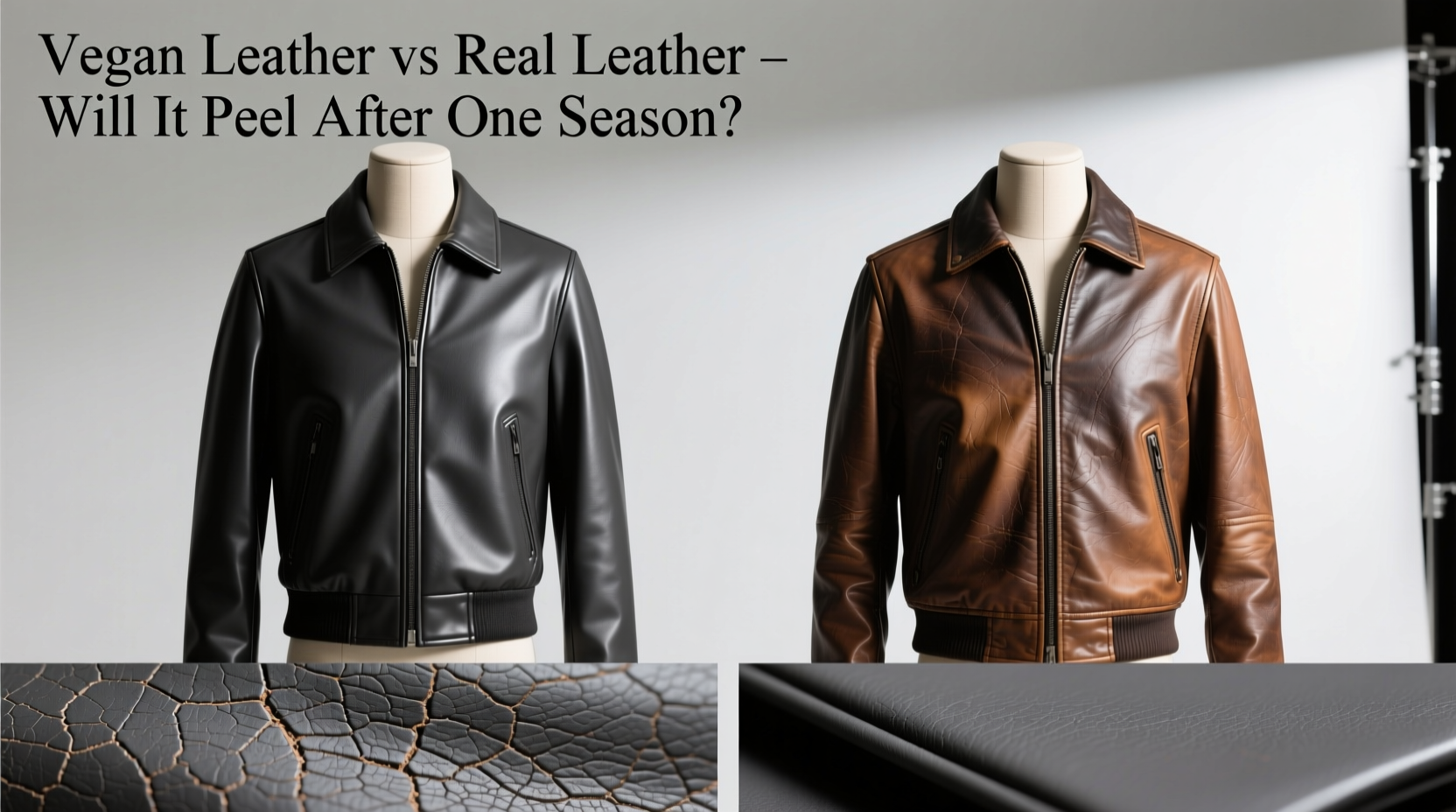
Vegan leather, also known as faux, synthetic, or plant-based leather, is any material designed to mimic the look and feel of genuine leather without using animal hides. There are several types, each with varying degrees of durability:
- Polyurethane (PU) Leather: A more breathable and flexible option than PVC, PU leather is commonly used in mid-range fashion items. It resists peeling better than PVC but can still degrade under prolonged sun exposure or moisture.
- Polyvinyl Chloride (PVC) Leather: One of the oldest forms of synthetic leather, PVC is rigid, less breathable, and highly prone to cracking and peeling—especially after a single harsh season. Most fast-fashion brands use this due to its low cost.
- Plant-Based Leathers: Innovations like Piñatex (from pineapple fibers), mushroom leather (mycelium), and apple leather offer sustainable alternatives. These materials are still emerging but show promise in durability and biodegradability.
The key issue with many vegan leathers lies in their layered construction: a fabric backing coated with plastic. Over time, especially with temperature fluctuations and physical stress, this coating can delaminate, leading to visible peeling.
“Not all vegan leathers are created equal. High-end PU and bio-based materials can last three to five years with proper care—comparable to entry-level real leather.” — Dr. Lena Torres, Sustainable Materials Researcher at Textile Futures LabTip: Look for jackets labeled “PU leather” rather than “PVC” if opting for synthetic. Avoid unbranded or ultra-cheap vegan leather outerwear—they’re most likely to peel within months.
Real Leather: Quality, Aging, and Longevity
Real leather is made from tanned animal hides, typically cowhide, sheepskin, or goatskin. Unlike synthetic alternatives, it’s a natural fiber that breathes, molds to the body, and develops character over time. However, not all real leather is durable by default—quality depends heavily on tanning methods and hide grading.
Full-grain leather, the highest quality, retains the original surface of the hide and becomes more attractive with age. Top-grain leather is sanded and finished for a smoother look but sacrifices some natural strength. Lower grades like corrected grain or bonded leather (made from scraps and adhesives) behave more like synthetic materials and may crack prematurely.
With regular conditioning and protection from moisture and UV light, a well-made real leather jacket can last decades. The initial stiffness gives way to a supple fit, and surface scratches often blend into a rich patina—a feature many enthusiasts cherish.
However, real leather demands maintenance. Without occasional oiling and cleaning, it dries out, fades, and eventually cracks. It’s also sensitive to water, which can cause staining or warping if not treated promptly.
Durability Comparison: First-Year Performance
In head-to-head wear tests conducted by independent fashion labs, entry-level vegan leather jackets showed signs of peeling along high-flex zones—elbows, collar, and seams—after just 8–10 months of regular use. In contrast, full-grain real leather jackets not only held up but began developing a soft luster.
Yet, premium vegan options—such as those made with high-density PU or mycelium—performed nearly as well as top-grain real leather over the same period, showing minimal wear when stored and cleaned appropriately.
Will Vegan Leather Peel After One Season? The Real Answer
The short answer: cheap vegan leather often does peel within one season, but higher-quality versions do not—if cared for correctly.
Peeling occurs when the plastic coating separates from the fabric base. This process accelerates due to:
- Frequent folding or creasing (e.g., wearing backpacks over the jacket)
- Exposure to direct sunlight (UV rays break down polymers)
- Contact with moisture followed by rapid drying (like sitting in a heated car)
- Poor ventilation during storage (trapped humidity weakens adhesive layers)
A 2023 consumer report from Ethical Fashion Review tested 15 vegan leather jackets priced between $40 and $300. Results showed that 7 of the 8 jackets under $80 exhibited noticeable peeling by month nine. Meanwhile, four of the five jackets above $200 remained intact after 14 months of mixed urban use.
So while the stereotype holds true for budget options, dismissing all vegan leather as temporary is outdated. The market now includes engineered textiles designed for longevity, though they come at a higher price point.
How to Prevent Peeling in Vegan Leather Jackets
Maintenance is critical. Unlike real leather, vegan leather cannot be deeply conditioned, but surface protection goes a long way.
- Wipe down after each wear with a slightly damp cloth to remove salt, dirt, and oils.
- Use a specialized vegan leather cleaner—never alcohol-based products, which strip protective coatings.
- Apply a silicone-free protectant spray every 6–8 weeks to shield against UV and moisture.
- Avoid hanging in direct sunlight or near heating vents.
- Store flat or on a wide hanger inside a breathable cotton bag—not plastic.
Side-by-Side Comparison: Vegan vs Real Leather Jackets
| Feature | Vegan Leather | Real Leather |
|---|---|---|
| Initial Cost | $50–$300 (mostly under $150) | $200–$1,500+ |
| Lifespan (with care) | 1–5 years (highly variable) | 10–30+ years |
| Peeling Risk | High (PVC), Medium (PU), Low (Premium Bio) | Low (if conditioned); high if dried out |
| Eco Impact | Lower animal harm; microplastics concern | High water/land use; tanning pollution |
| Maintenance Needs | Surface cleaning, UV protection | Conditioning, waterproofing, professional care |
| Weather Resistance | Good (but degrades in prolonged rain) | Fair (requires treatment to resist water) |
| Ethical Considerations | No animal sourcing | Animal-derived; welfare concerns |
Mini Case Study: Two Jackets, Two Years
Sophie, a freelance designer in Portland, bought two black moto jackets in 2022: one from a sustainable vegan brand ($220, PU-based), and another vintage real leather from a thrift store ($180, restored). Both were worn weekly during fall and spring commutes.
After year one, the vegan jacket showed minor scuffing at the elbows but no peeling—thanks to monthly wipe-downs and indoor storage. The real leather developed a soft sheen and fit better over time but required two conditioning treatments.
By year two, Sophie accidentally left the vegan jacket in a damp basement for six weeks. Upon retrieval, small areas began flaking. The real leather, stored properly with cedar blocks, remained flawless.
Her takeaway: “The vegan jacket looked great initially and aligned with my values, but I underestimated how sensitive it was to humidity. The real leather asked for more upfront care, but repaid me with resilience.”
Step-by-Step Guide to Extending Any Jacket’s Life
Whether you own vegan or real leather, follow this routine to maximize longevity:
- Month 1: Initial Protection
Apply a manufacturer-recommended protectant. For real leather, use a pH-balanced conditioner. For vegan, use a polymer sealant. - Every 2 Months: Surface Cleaning
Wipe with a damp microfiber cloth. For stains, use mild soap diluted in water—never saturate. - Seasonally: Deep Maintenance
Real leather: Recondition. Vegan leather: Reapply protective spray. Inspect seams and zippers. - Off-Season: Proper Storage
Clean thoroughly, then store in a cool, dry place on a broad hanger inside a breathable garment bag. - Yearly: Professional Check (Optional)
Consider a specialist inspection for real leather. For high-end vegan, check for early delamination signs.
FAQ: Common Questions About Leather Jacket Durability
Can I repair peeling on a vegan leather jacket?
Minor peeling can sometimes be stabilized with a fabric sealant or specialty adhesive like Aleene’s Leather & Suede Glue. However, once delamination begins, it’s usually progressive. Prevention is far more effective than repair.
Does real leather peel?
Real leather doesn’t “peel” like synthetic coatings—it cracks or flakes when severely dried out. This is preventable with regular conditioning. Unlike peeling, cracked leather can often be restored by a professional.
Is there a truly sustainable long-lasting vegan leather?
Yes, but it’s limited. Brands like MycoWorks (mushroom leather) and NuCork (cork-based) produce durable, biodegradable alternatives. These are currently found in niche or luxury markets due to production costs, but availability is growing.
Final Checklist Before You Buy
Use this checklist to choose a jacket built to last:
- ✅ Identify the material: Is it PU, PVC, or bio-based?
- ✅ Check customer reviews for “peeling,” “cracking,” or “first-year wear” comments.
- ✅ Feel the weight and flexibility—higher density usually means better durability.
- ✅ Look for reinforced stitching in high-stress areas (shoulders, cuffs).
- ✅ Confirm care instructions—are they realistic for your lifestyle?
- ✅ Consider brand transparency: Do they disclose material sources and testing?
Conclusion: Making the Right Choice for Your Lifestyle
The question isn’t whether vegan leather will peel after one season—but whether you’re choosing the right kind and caring for it properly. Cheap synthetic jackets often fail quickly, reinforcing negative stereotypes. Yet, high-quality vegan options now rival real leather in aesthetics and short-term performance, offering a viable alternative for ethically conscious consumers.
Real leather remains unmatched in lifespan and aging beauty, but it requires commitment, cost, and consideration of its environmental toll. Ultimately, the best jacket is one that aligns with your values, fits your maintenance habits, and withstands your daily life.
Don’t let marketing claims decide for you. Read labels, research brands, and prioritize craftsmanship over trends. Whether your jacket comes from a cow or a lab, how you treat it determines how long it lasts.
💬 Have experience with vegan or real leather jackets? Share your story, tips, or lessons learned in the comments—your insight could help someone avoid a costly mistake.








