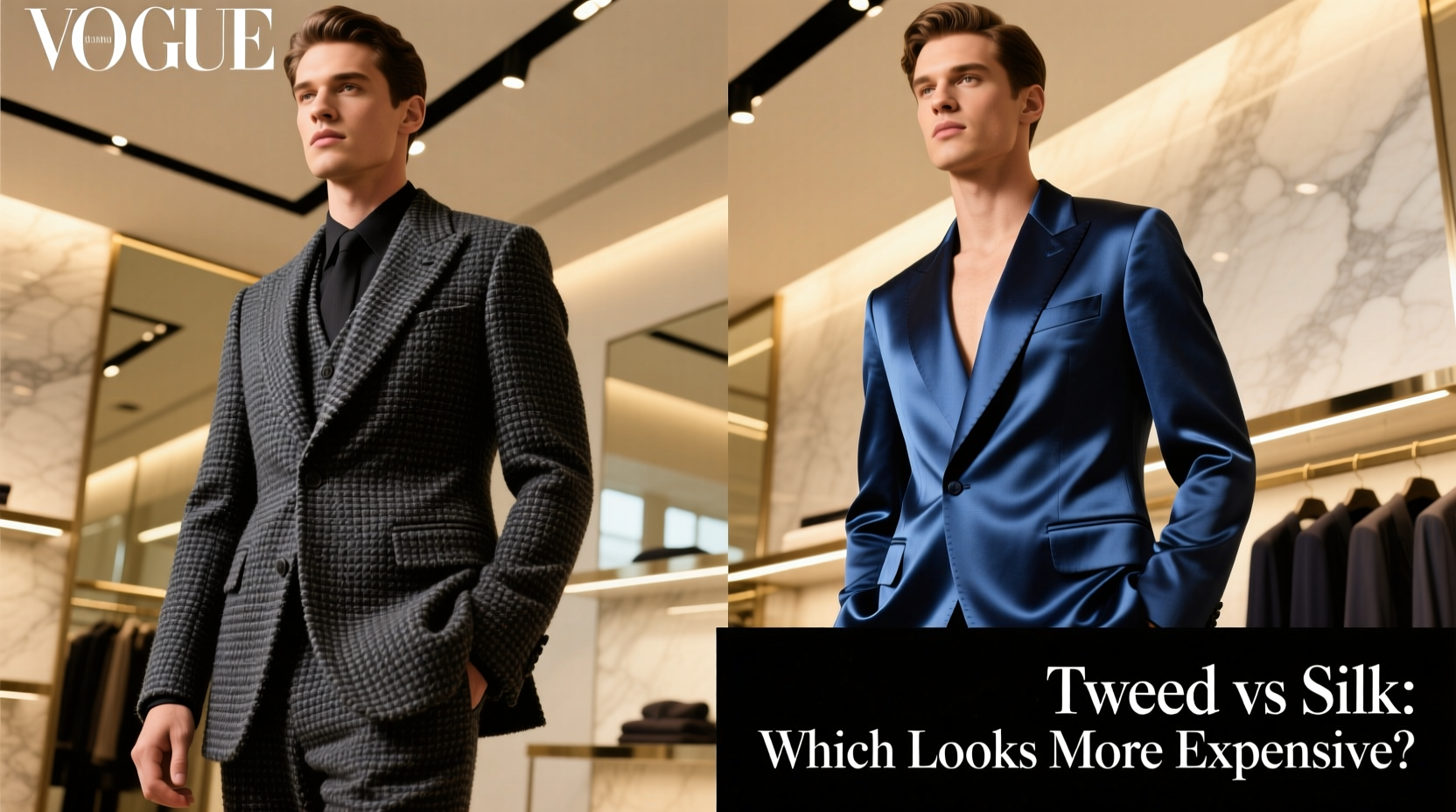
When it comes to high-end fashion, perception is everything. A garment’s price tag isn’t always what makes it appear luxurious—often, it’s the texture, drape, craftsmanship, and cultural associations that signal opulence. Tweed and silk are two materials steeped in sartorial tradition, each commanding respect in different corners of the fashion world. But when comparing tweed sets to silk sets, which one actually looks more expensive? The answer isn't straightforward, as it depends on context, execution, and audience. To understand this nuanced comparison, we must examine material heritage, tactile qualities, construction standards, and how each fabric performs in various social settings.
The Legacy of Luxury: Material Heritage Matters
Fabric history plays a significant role in how we perceive value. Silk has been synonymous with wealth for millennia. Originating in ancient China, it was once so tightly guarded that smuggling silkworms could carry a death sentence. For centuries, only royalty and aristocracy wore silk, reinforcing its image as the ultimate luxury textile. Its natural sheen, softness, and rarity gave it an aura of exclusivity that persists today.
Tweed, by contrast, emerged from rural Britain as a practical fabric for hunting and outdoor wear. Originally coarse and earthy, it was designed for durability, not glamour. Yet, over time, British tailoring elevated tweed into a symbol of understated sophistication. The association with elite institutions—Oxford dons, country estates, and Savile Row bespoke suits—imbued tweed with a quiet authority. While silk shouts luxury, tweed whispers refinement.
“Silk carries the weight of imperial history; tweed carries the weight of tradition. One dazzles, the other endures.” — Julian Hart, Textile Historian & Curator at the London Fashion Archive
Visual and Tactile Cues That Signal Expense
What makes a fabric look expensive isn’t just cost—it’s how it behaves under light, how it drapes on the body, and how it feels to the touch. These sensory details shape first impressions.
Silk’s natural luster reflects light elegantly, creating a glow that reads as opulent even from a distance. High-quality silk—such as charmeuse, crepe de chine, or habotai—has a fluid drape that moves gracefully with the wearer. When used in coordinated sets (like matching blazers and trousers or dresses and jackets), silk conveys sensuality and modern elegance. A well-cut silk suit in deep jewel tones can easily pass for couture.
Tweed, on the other hand, relies on texture rather than shine. A premium tweed set features intricate weaving patterns—herringbone, houndstooth, or Donegal speckles—with blended yarns that create depth. The fabric should feel substantial but not stiff, with a slightly nubby surface that suggests handcrafting. When tailored impeccably, tweed exudes precision and permanence. Think of Chanel’s iconic bouclé jackets: their perceived value comes not from shimmer, but from meticulous construction and heritage branding.
Tip: In low-light environments, silk’s sheen enhances perceived luxury. In daylight or outdoor settings, tweed’s texture reads as more substantial and refined.Comparative Analysis: Tweed Sets vs Silk Sets
| Feature | Tweed Sets | Silk Sets |
|---|---|---|
| Luxury Perception | Understated, intellectual, classic | Opulent, sensual, modern |
| Texture | Textured, woven, tactile | Smooth, glossy, fluid |
| Drape | Structured, crisp | Soft, flowing |
| Best Worn In | Formal daytime, academic, business-casual | Evening events, galas, romantic dinners |
| Care Requirements | Dry clean only; store with cedar blocks | Delicate; prone to water spots and snags |
| Longevity | High—resists wear over time | Moderate—degrades with sun and friction |
| Cost Range (Well-Made) | $800–$3,000+ | $1,200–$5,000+ |
Real-World Example: The Boardroom vs. The Gala
Consider two professionals preparing for high-stakes events. Sarah, a corporate lawyer, chooses a charcoal-gray tweed pantsuit for a merger negotiation. The fabric’s tight weave and subtle pinstripe suggest discipline and credibility. Her clients perceive her as grounded, experienced, and trustworthy. The suit costs $1,800—but no one asks the price because it simply looks “right” for the setting.
Meanwhile, Amira, a film producer, wears a deep emerald silk ensemble to a red-carpet premiere. The dress shimmers under the flashbulbs, catching light with every step. It took 40 hours to hand-sew the lining and finish the seams. Though the total cost exceeds $4,000, what stands out is the immediate visual impact. On camera, it looks undeniably expensive.
In this case, both garments project luxury—but in different languages. Sarah’s tweed commands respect through restraint; Amira’s silk demands attention through radiance. Neither is objectively “more expensive” in appearance—their effectiveness depends on alignment with context.
How to Make Either Fabric Look Luxurious
Ultimately, the perceived expense of a tweed or silk set hinges less on the material itself and more on execution. Poorly cut silk can look cheap despite its high cost. Conversely, expertly tailored tweed can elevate a modest budget into something that appears heirloom-quality.
- Finding the Right Fit: Both fabrics require precise tailoring. Silk that pulls at the shoulders or tweed that bunches at the waist undermines luxury instantly.
- Attention to Lining: High-end pieces use Bemberg or cupro linings. If the inside looks as good as the outside, the whole garment reads as expensive.
- Hardware and Details: Buttons on tweed should be horn or corozo; zippers on silk should be invisible or covered. Stitching must be even and dense.
- Color and Pattern: Rich, complex colors (navy with undertones, burgundy with depth) enhance perceived value. Avoid overly bright or plasticky hues.
“A luxury fabric poorly finished is a disappointment. A modest fabric perfectly made can fool the eye into seeing greatness.” — Margot Leclair, Master Tailor, Paris Atelier
Checklist: Ensuring Your Set Looks Expensive
- ✔️ Confirm the fabric has weight and structure (even silk should not feel flimsy)
- ✔️ Check stitching density—minimum 10 stitches per inch for visible seams
- ✔️ Ensure lining matches or exceeds outer fabric quality
- ✔️ Verify that closures (buttons, zippers) are smooth and secure
- ✔️ Test drape: silk should flow without clinging; tweed should hold shape without stiffness
- ✔️ Assess color depth—luxury fabrics avoid flat, single-tone appearances
- ✔️ Inspect for finishing details: bound buttonholes, hand-rolled hems, etc.
Frequently Asked Questions
Can a tweed set ever look as luxurious as silk?
Absolutely. In formal daytime settings or intellectual environments, a finely woven tweed set with impeccable tailoring often projects greater sophistication than silk. Chanel’s bouclé suits, for instance, are iconic symbols of luxury despite lacking shine.
Is silk inherently more expensive than tweed?
Raw silk fiber is typically more costly to produce than wool, but the final price depends on craftsmanship. A handwoven Scottish tweed with custom dyeing can surpass the cost of mass-produced silk blends. The key is quality, not just material origin.
Which fabric is better for long-term investment?
Tweed generally lasts longer due to its resilience. Silk, while beautiful, is delicate and prone to sun damage, perspiration stains, and snags. For wardrobe staples meant to endure, tweed offers superior longevity.
Final Verdict: Context Is King
So, which looks more expensive—tweed sets or silk sets? The truth is, neither holds a universal edge. Silk tends to win in evening and red-carpet scenarios where luminosity equates to luxury. Its sensuous drape and historical prestige make it the go-to for instant glamour. However, in professional, daytime, or heritage-driven contexts, tweed often appears more refined and intentionally luxurious.
The most expensive-looking outfit isn’t determined by fabric alone—it’s the harmony of material, cut, occasion, and confidence. A woman in a perfectly fitted silk jumpsuit may radiate million-dollar energy, while another in a vintage-inspired tweed coat might embody timeless wealth. The discerning eye doesn’t just see the fabric; it reads the story behind it.
💬 Which do you reach for when you want to look expensive—tweed or silk? Share your thoughts and personal experiences in the comments below. Let’s redefine luxury, one fabric at a time.








