Choosing a wedding band is more than selecting a symbol of love—it’s an investment in a piece of jewelry that must endure years of daily use. Among the most debated materials in modern ring shopping are titanium and platinum. One promises exceptional durability at a fraction of the cost; the other offers timeless luxury and prestige. But when it comes to long-term resilience, comfort, and suitability for everyday wear, how do titanium wedding bands really stack up against platinum?
This guide dives deep into the physical properties, maintenance needs, aesthetic evolution, and real-world performance of both metals. Whether you're drawn to titanium's lightweight strength or platinum's rich luster, understanding their differences can help you make a decision that aligns with your lifestyle and values.
Mechanical Strength and Daily Wear Resistance
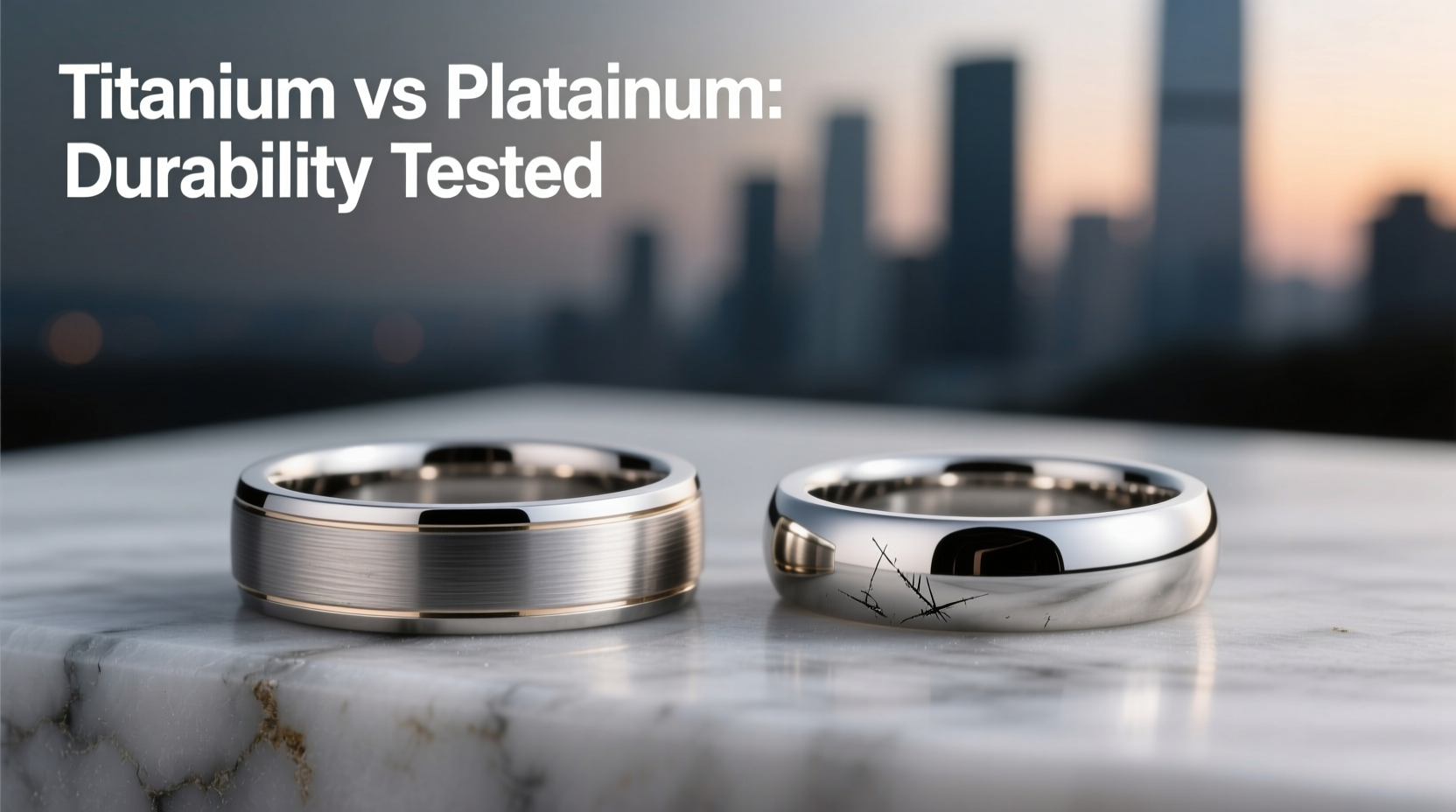
When evaluating a wedding band’s suitability for daily wear, mechanical strength—specifically scratch resistance, hardness, and impact resilience—is critical. Titanium and platinum differ significantly in these areas due to their inherent material science.
Titanium ranks between 6 and 6.5 on the Mohs hardness scale, making it substantially harder than precious metals like gold or platinum. Its high strength-to-density ratio means it resists dents and deformation better than softer metals. This makes titanium ideal for people with active lifestyles—those who work with their hands, exercise regularly, or engage in manual labor.
In contrast, platinum scores around 4.5 on the Mohs scale. While dense and durable in its own right, platinum is more prone to scratching and surface wear over time. However, unlike titanium, when platinum scratches, the metal isn’t lost—it simply displaces, creating a patina rather than thinning out.
Tip: If you prioritize low-maintenance durability and hate visible scratches, titanium may be the better choice. For those who appreciate evolving character in their jewelry, platinum’s developing patina can be a meaningful feature.Weight, Comfort, and Long-Term Wearability
Comfort is often overlooked in ring selection, yet it plays a crucial role in whether a band feels natural after months or years of continuous wear.
Titanium is about 45% lighter than steel and significantly lighter than platinum. This low density translates into a barely-there feel on the finger, which many wearers find comfortable for 24/7 use. The lightness reduces finger fatigue and makes the ring less noticeable during sleep or physical activity.
Platinum, by comparison, has a substantial heft—about 60% heavier than titanium. Many associate this weight with quality and permanence. For some, the presence of a heavy ring serves as a constant reminder of commitment. Others, however, find platinum cumbersome over time, especially if they’re not used to wearing jewelry.
The comfort factor also extends to fit. Titanium rings maintain their shape exceptionally well and resist bending. Platinum, while malleable, can slowly deform under extreme pressure, though this is rare in normal use.
“Titanium’s combination of lightness and toughness makes it one of the most practical options for men and women with dynamic lifestyles.” — Dr. Alan Reeves, Materials Scientist, Jewelry Institute of North America
Scratch Behavior and Aesthetic Longevity
One of the most misunderstood aspects of wedding band durability is how each metal ages visually. Scratches don’t just affect appearance—they reflect how the material interacts with the world.
Titanium develops fine surface scratches over time, but due to its hardness, deeper gouges are uncommon. Some manufacturers apply brushed or matte finishes that naturally hide micro-scratches. Polished titanium, while sleek, shows wear more readily. Unlike precious metals, titanium cannot be polished back to factory condition without specialized equipment because it doesn’t respond to traditional jeweler’s buffs.
Platinum scratches more easily, but as mentioned, the displaced metal accumulates around the scratch, preserving mass. Over time, this creates a soft, satin finish known as a patina. Many couples grow to love this lived-in look. Platinum can also be re-polished or re-finished professionally every few years to restore its original shine.
Color stability is another key difference. Titanium maintains its color indefinitely. It does not tarnish or corrode, even in saltwater or chlorinated environments. Most titanium wedding bands are made from aerospace-grade Grade 5 titanium (Ti-6Al-4V), which is highly resistant to environmental degradation.
Platinum remains white throughout its lifespan—unlike white gold, it never requires rhodium plating. However, its surface may appear slightly duller as the patina develops unless maintained.
Comparison Table: Titanium vs Platinum – Key Features
| Feature | Titanium | Platinum |
|---|---|---|
| Mohs Hardness | 6–6.5 | 4.5 |
| Density (g/cm³) | 4.5 | 21.4 |
| Weight Feel | Lightweight | Heavy, substantial |
| Scratch Resistance | High | Low (but retains mass) |
| Polish Restoration | Limited (requires industrial tools) | Yes, easily done by jewelers |
| Hypoallergenic | Yes (Grade 5+) | Yes |
| Corrosion Resistance | Excellent | Excellent |
| Average Price (6mm band) | $200–$500 | $1,000–$3,000+ |
| Resizing Possible? | No (too hard to cut/solder) | Yes (with limitations) |
Real-Life Example: Two Couples, Two Choices
Consider two newlyweds: Mark and Lena, and James and Nora.
Mark is a firefighter and frequently wears gloves, handles equipment, and works in harsh conditions. Lena is a nurse who washes her hands dozens of times a day and wears her ring through shifts. They chose matching titanium bands for their resilience and hypoallergenic qualities. After three years, their rings show light surface wear but no dents or structural damage. The brushed finish hides micro-scratches well, and neither has experienced skin irritation despite constant exposure to cleaning agents.
James and Nora opted for platinum—drawn to its rarity, weight, and classic elegance. James works in finance and leads a low-impact lifestyle. Nora is a teacher. Their rings have developed a soft sheen from daily use. Last year, they took them in for professional polishing and were thrilled to see them restored to a mirror-like finish. They appreciate the ritual of maintenance as part of honoring their marriage.
Both couples are satisfied. Their choices reflect different priorities: titanium for practical endurance, platinum for enduring tradition and restorability.
Care and Maintenance Requirements
Low maintenance is one of titanium’s strongest selling points. It requires only occasional cleaning with mild soap and water. Ultrasonic cleaners are safe for titanium, and the metal won’t react to chlorine, saltwater, or common household chemicals. There’s no need for periodic polishing or protective coatings.
Platinum demands more attention. While not high-maintenance by any means, it benefits from regular cleaning to remove oils and buildup. Professional inspections every 12–18 months help ensure prongs (if set with stones) remain secure. Re-polishing every few years keeps the bright white luster intact, though many now embrace the natural patina.
One critical limitation of titanium: it cannot be resized. Once crafted, the ring’s size is permanent. This is a significant consideration for anyone whose finger size may change due to aging, weight fluctuation, or medical conditions. Platinum rings can usually be resized by a skilled jeweler, although multiple resizings may weaken the band.
Checklist: Choosing Between Titanium and Platinum
- ✅ Consider titanium if: You lead an active lifestyle, want a lightweight ring, prefer minimal maintenance, or are on a budget.
- ✅ Choose platinum if: You value traditional luxury, appreciate a heavy, substantial feel, plan to pass the ring down as heirloom jewelry, or want the ability to resize or repair it later.
- ⚠️ Avoid titanium if: You anticipate needing a resize, desire frequent design changes, or prefer a ring that can be fully restored by a local jeweler.
- ⚠️ Think twice about platinum if: You’re sensitive to weight, dislike the idea of visible scratches, or prefer a “set-it-and-forget-it” approach.
- 🔍 Always confirm: The titanium is medical or aerospace grade (Grade 5 or higher), and the platinum is at least 90–95% pure (Pt900 or Pt950).
Expert Insight on Longevity and Safety
Beyond aesthetics and durability, safety and biocompatibility matter—especially for a ring worn continuously.
“Titanium has been used in surgical implants for decades because of its inert nature and compatibility with human tissue,” says Dr. Elena Torres, a dermatologist specializing in contact allergies. “For individuals with sensitivities to nickel or cobalt—common in lower-grade alloys—titanium is one of the safest options available.”
Platinum is equally hypoallergenic, making both metals excellent choices for sensitive skin. Neither metal tarnishes or oxidizes, eliminating concerns about discoloration or chemical reactions with lotions or soaps.
However, in extreme emergency situations—such as needing to remove a ring quickly during swelling or injury—titanium poses a challenge. Standard ring cutters used in hospitals may struggle with titanium due to its hardness. Some first responders carry diamond-coated cutting wheels specifically for such cases. Platinum, while strong, is softer and generally easier to cut in emergencies.
Tip: If you choose titanium, inform your family or doctor about the material. Consider engraving \"Ti - Hard Metal\" inside the band to alert medical personnel if needed.Frequently Asked Questions
Can titanium rings break under pressure?
Titanium is highly resistant to bending and denting, but it is not indestructible. Under extreme force—such as being caught in machinery or struck with a hammer—it can crack or shatter, whereas platinum would more likely deform. However, such scenarios are extremely rare in everyday life.
Do titanium rings lose their shine over time?
They may develop a matte appearance from microscopic scratches, especially if polished. However, the base color remains unchanged. Brushed or sandblasted finishes age gracefully and require no polishing to maintain their look.
Is platinum worth the extra cost compared to titanium?
That depends on your values. Platinum costs more due to its rarity, density, and artisanal craftsmanship. If you view your ring as a lifelong heirloom and appreciate traditional fine jewelry standards, the investment may be justified. For functional durability and affordability, titanium offers exceptional value.
Final Thoughts: Durability Beyond Hardness
Durability isn’t just about resisting scratches or dents—it encompasses longevity, comfort, adaptability, and personal relevance. Titanium rings are unquestionably durable for daily wear. Their resistance to corrosion, lightness, and strength make them ideal for modern, active lives. They won’t bend, fade, or irritate the skin, and they demand almost no upkeep.
Yet durability also includes emotional and sentimental endurance. Platinum, while softer physically, carries centuries of symbolic weight. Its ability to be refinished, resized, and passed down adds a dimension of legacy that titanium cannot match.
In the end, the best ring is the one you’ll wear proudly every day. Whether you choose titanium for its rugged practicality or platinum for its timeless elegance, both metals offer lasting value—just in different forms.
🚀 Ready to make your decision? Try on both metals, live with them for a day if possible, and ask yourself: Does it feel like *you*? The right ring shouldn’t just survive daily wear—it should belong on your hand.








