When it comes to statement jewelry, few pieces command attention like a Cuban link chain or ring. Known for their bold presence and intricate craftsmanship, these accessories have become staples in streetwear, luxury fashion, and everyday confidence. But as more materials enter the market, one debate persists: should you go with traditional sterling silver or embrace the modern appeal of titanium steel? The answer isn’t as simple as “one is better.” It depends on your lifestyle, values, and aesthetic goals.
Titanium steel—often marketed as \"titanium\" in jewelry—has surged in popularity due to claims of unmatched strength, hypoallergenic properties, and low maintenance. Meanwhile, sterling silver remains a classic choice, prized for its luster, tradition, and resale value. So, is the titanium trend built on substance—or just marketing smoke? Let’s break down both materials across key categories to help you decide where your next Cuban ring investment should lie.
Durability & Longevity: Who Wins the Wear Test?
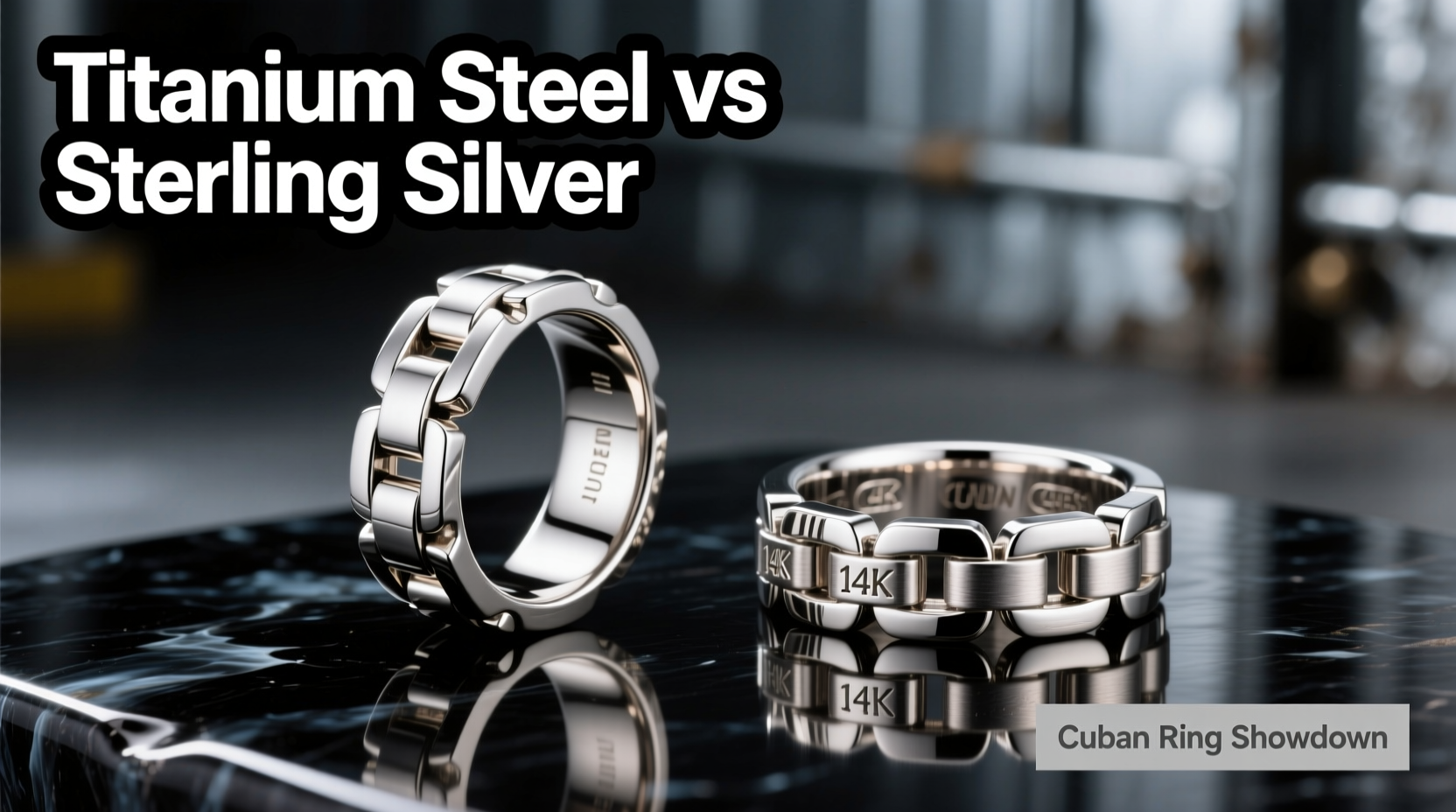
Durability is often the deciding factor when choosing a metal for daily wear, especially for rings that endure constant friction and pressure. Titanium steel (typically 316L surgical-grade stainless steel infused with trace titanium) is extremely resistant to scratches, corrosion, and tarnishing. It doesn’t react with sweat, water, or common chemicals, making it ideal for active lifestyles, outdoor work, or frequent hand use.
Sterling silver, by contrast, is softer—rated at about 2.5–3 on the Mohs hardness scale compared to titanium steel’s 5–6. This means it’s more prone to scratches, dents, and deformation over time. However, this softness also allows for finer detailing and polish, contributing to its luxurious finish.
That said, sterling silver tarnishes when exposed to air and moisture. While this can be cleaned, it requires regular upkeep. Titanium steel maintains its original appearance with minimal effort—just soap and water.
Tip: If you work with your hands, live in a humid climate, or swim regularly, titanium steel offers far better long-term resilience.Aesthetics & Style: Shine vs. Substance
Appearance matters—especially with a piece as visible as a Cuban ring. Sterling silver delivers a bright, reflective white sheen that many associate with elegance and authenticity. When polished, it rivals platinum in brilliance and pairs well with other precious metals. Over time, even as it tarnishes slightly, some wearers appreciate the vintage patina it develops.
Titanium steel has a cooler, bluer-gray tone. It’s sleek and modern but lacks the warmth and depth of silver. While high-polish finishes exist, they don’t achieve the same mirror-like luster. That said, titanium steel holds its finish longer. No polishing needed. For those who prefer a minimalist, industrial look, titanium wins on consistency.
The Cuban link design—thick, interwoven chains turned into rings—relies heavily on symmetry and shine. In this context, sterling silver enhances the craftsmanship, highlighting each twist and curve. Titanium steel flattens the visual texture slightly, making intricate designs less pronounced.
“Sterling silver captures light in a way no alloy can replicate. It’s not just metal—it’s a canvas.” — Marcus Lin, Jewelry Designer at Atelier Noir
Value & Investment: What Holds Worth Over Time?
If you're buying a Cuban ring as a keepsake, heirloom, or potential investment, material value becomes critical. Sterling silver contains 92.5% pure silver—the rest is copper or other alloys for strength. Its intrinsic metal value fluctuates with the market, but it always retains baseline worth. You can resell it, pawn it, or recycle it based on weight and purity.
Titanium steel has no scrap precious metal value. While durable, it’s considered a fashion material rather than a precious one. Resale markets for titanium jewelry are nearly nonexistent. You won’t recoup your cost down the line, regardless of condition.
This doesn’t mean titanium is a poor purchase—only that it serves a different purpose. Think of it as performance wear: built for use, not legacy.
Care & Maintenance: Effort vs. Reward
Maintenance habits vary drastically between the two metals. Here’s a side-by-side comparison:
| Maintenance Factor | Titanium Steel | Sterling Silver |
|---|---|---|
| Scratch Resistance | High | Low to Moderate |
| Tarnish Resistance | Excellent | Poor (requires polishing) |
| Cleaning Frequency | Occasional wipe-down | Every 1–2 weeks |
| Water Exposure | Safe (salt & chlorine) | Risk of tarnish |
| Hypoallergenic | Yes (nickel-free grades) | Usually, but copper may irritate sensitive skin |
For low-maintenance users—those who hate cleaning jewelry or forget to remove it before showers or workouts—titanium steel is clearly superior. It’s “set it and forget it” in terms of upkeep.
Sterling silver demands attention. To keep it looking fresh, store it in anti-tarnish pouches, avoid contact with lotions and perfumes, and polish monthly. But for many, this ritual is part of the ownership experience—a sign of respect for fine craftsmanship.
Real-World Example: Two Men, Two Choices
Consider two professionals: James, a construction site manager, and Amir, a corporate lawyer.
James wears his Cuban ring every day, through rain, dust, and manual labor. After six months, his titanium steel ring looks untouched. He never polishes it, rarely thinks about it. It’s functional, tough, and always present.
Amir wears his sterling silver Cuban ring only for evenings out or client dinners. He stores it in a velvet-lined box, cleans it weekly with a silver cloth, and appreciates how it catches the light during handshakes. When he sold an older piece, he recovered 70% of the original cost based on silver weight alone.
Both choices are valid. The best material depends on how—and why—you wear your ring.
Your Buying Checklist: Make the Right Choice
Before purchasing, ask yourself these questions:
- Will I wear this daily, including during physical activity?
- Do I mind regular cleaning and polishing?
- Is resale or inheritance value important to me?
- Do I prefer a warm, classic shine or a cool, modern look?
- Do I have sensitive skin or metal allergies?
- What’s my budget—under $200 or investing $500+?
If most answers lean toward practicality and affordability, titanium steel is likely your match. If you value tradition, beauty, and lasting worth, sterling silver remains king.
Frequently Asked Questions
Can you wear titanium steel Cuban rings in the shower?
Yes. Titanium steel resists water, soap, and chlorine. Unlike silver, it won’t tarnish or degrade, making it safe for daily exposure.
Does sterling silver Cuban ring turn your finger green?
Sometimes. The copper alloy in sterling silver can react with skin acidity, causing a green tint. This is harmless and can be minimized with rhodium plating or protective coatings.
Is titanium steel really titanium?
Not exactly. Most “titanium” jewelry is actually surgical-grade stainless steel with titanium added for strength. Pure titanium is rare in Cuban rings due to difficulty in machining and higher cost.
Final Verdict: Hype or Heritage?
The hype around titanium steel is real—but only within its niche. It excels in durability, affordability, and ease of care. For rugged, everyday wear, it’s a smart upgrade from traditional metals.
Yet, when it comes to heritage, prestige, and timeless elegance, sterling silver still reigns. It’s not just a metal; it’s a symbol of permanence, artistry, and value. It ages with character, not just wear.
So, is silver still king? In the court of craftsmanship and legacy—yes. But titanium steel is the rising challenger, earning its place in modern wardrobes through sheer utility.
🚀 Ready to choose your champion? Whether you side with enduring elegance or modern toughness, make your next Cuban ring a reflection of who you are—and how you live. Share your pick in the comments and help others navigate the metal maze.








