When choosing between suede and nubuck boots, style and comfort often take center stage. But for anyone who lives in a rainy climate—or simply walks through puddles on the way to work—durability in wet conditions becomes just as important. Both materials are made from split leather and boast a soft, velvety nap, but their structural differences lead to distinct reactions when exposed to moisture. Understanding these nuances isn’t just about preserving appearance; it’s about extending the life of your investment.
While both suede and nubuck require care, one clearly outperforms the other when it comes to resistance to water and ease of maintenance in damp environments. The answer lies not only in material composition but also in how each responds to cleaning, drying, and preventative treatments.
Understanding Suede and Nubuck: Origins and Structure
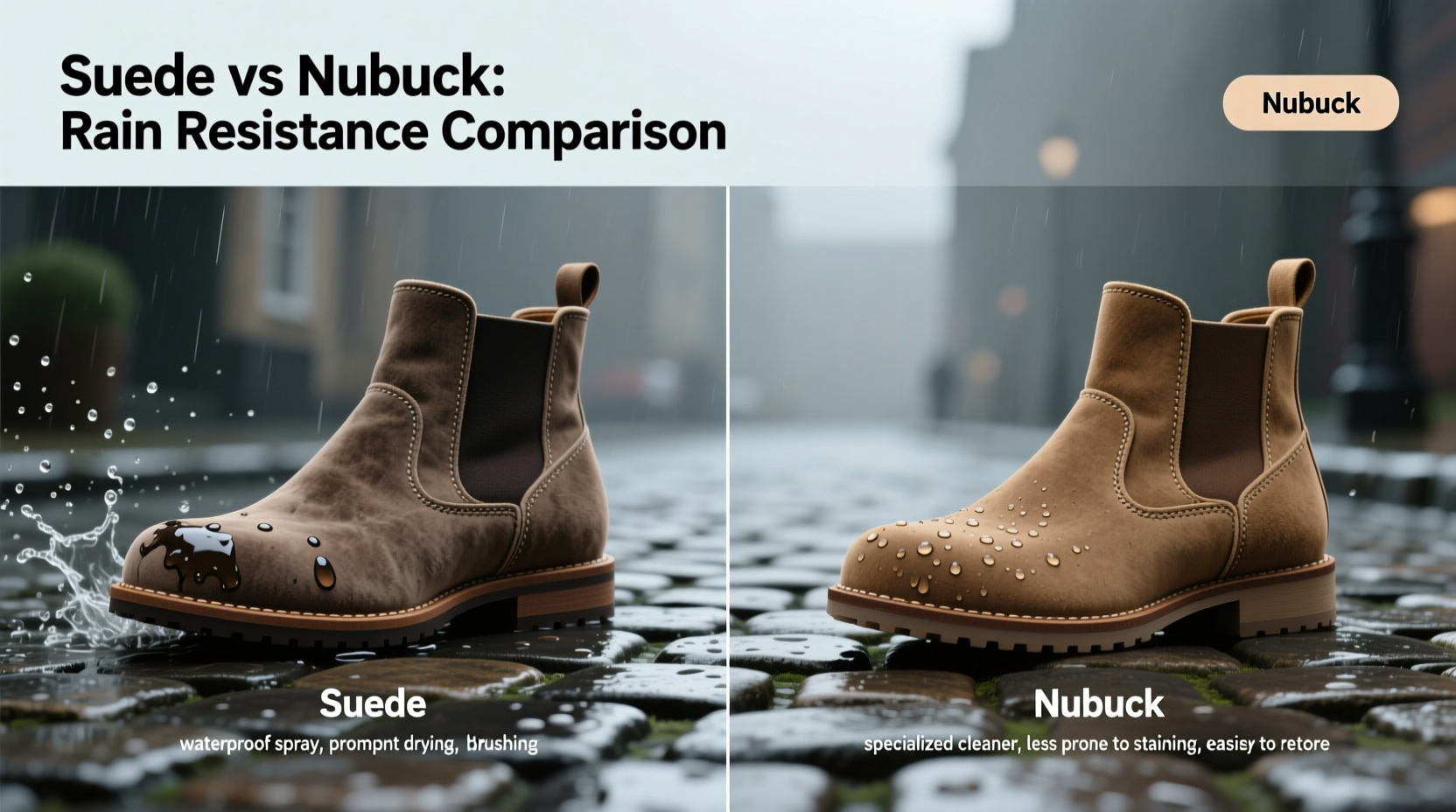
Suede and nubuck are both top-grain leathers, but they’re processed differently, resulting in unique textures and performance characteristics.
Suede is created by splitting the inner layer of the hide—often from lamb, calf, or goat—and buffing it to produce a soft, fuzzy surface. This gives suede its signature plush feel and matte finish. However, because it’s made from the flesh side of the hide, it’s more porous and delicate. This makes it highly susceptible to water absorption, staining, and scuffing.
Nubuck, on the other hand, is made from the outer side of the hide. It undergoes light sanding or buffing to create a fine nap similar to velvet, but with greater density and durability. Because it retains the grain side’s natural strength, nubuck is inherently more resistant to abrasion and moisture than suede.
The key difference lies beneath the surface: nubuck maintains the protective integrity of the hide’s exterior, while suede exposes the softer, weaker interior layer. This structural advantage gives nubuck an edge in real-world conditions, especially during unexpected downpours.
“Nubuck has the texture of suede but the toughness of full-grain leather. That combination makes it far more practical for daily wear in unpredictable weather.” — Marcus Reed, Footwear Materials Engineer
Rain Resistance: How Each Material Reacts to Moisture
When rain hits suede boots, the fibers swell and mat together, causing dark spots and water stains. Once soaked, suede can become stiff and discolored as it dries. Without immediate intervention, mold and mildew may develop inside the lining. Even brief exposure can leave lasting marks if not treated properly.
Nubuck fares significantly better. Its tighter fiber structure slows water absorption, allowing time to blot excess moisture before deep penetration occurs. While it’s not waterproof, nubuck resists saturation longer and recovers more gracefully when dried correctly. Surface water typically beads slightly, giving you a window to act before damage sets in.
Neither material should be worn in heavy rain without preparation, but nubuck provides a more forgiving margin for error. A quick drizzle that ruins suede might only require wiping and brushing on nubuck.
Tip: Never let wet boots dry near direct heat. Use shoe trees and room-temperature air to prevent cracking and warping.Comparative Maintenance: Effort, Tools, and Frequency
Maintenance effort varies greatly between the two materials. Suede demands consistent attention, especially in wet seasons. After every exposure to moisture—even high humidity—brushing with a brass or rubber suede brush is necessary to lift the nap and prevent crushing. Stains often require specialized erasers or foams, and once discoloration sets in, professional restoration may be the only solution.
Nubuck is lower maintenance by comparison. Regular brushing with a nubuck-specific brush (usually nylon or horsehair) keeps the surface clean and restores texture. Light soiling can be removed with a damp cloth, and water spots tend to fade naturally after drying and brushing. For tougher stains, nubuck cleaner solutions are effective without risking fiber damage.
Frequency of care also differs. Suede owners should inspect and condition their boots weekly during rainy months. Nubuck can go longer between cleanings, especially if treated with a protective spray.
Maintenance Comparison Table
| Factor | Suede | Nubuck |
|---|---|---|
| Water Absorption Speed | Very fast | Moderate |
| Drying Time | Longer, risk of stiffness | Faster, less distortion |
| Cleaning Difficulty | High – requires specialized tools | Medium – standard brushes suffice |
| Stain Resistance | Poor – shows water marks easily | Fair – minor marks fade |
| Recommended Protection | Water & stain repellent spray (reapplied monthly) | Water-resistant spray (reapplied every 6–8 weeks) |
| Brush Type | Brass, rubber, or suede-specific | Nylon or horsehair |
Step-by-Step: Caring for Boots After Rain Exposure
Accidents happen. Whether you stepped into a puddle or got caught in a sudden storm, here’s what to do immediately after your boots get wet—regardless of material.
- Remove them promptly. Continuing to wear wet boots traps moisture against your feet and accelerates internal damage.
- Wipe off surface water. Use a clean, absorbent microfiber cloth to gently blot the exterior. Avoid rubbing, which can grind dirt into the fibers.
- Insert shoe trees or crumpled paper. This helps maintain shape and draws moisture from the lining.
- Let them air dry at room temperature. Place in a well-ventilated area away from radiators, heaters, or direct sunlight. Drying takes 12–24 hours.
- Once fully dry, brush the surface. For suede, use a brass brush in one direction to lift the nap. For nubuck, use a nylon brush with light strokes.
- Apply restorative product if needed. Suede may need a refresher spray or color renovator. Nubuck benefits from a light conditioning treatment to restore softness.
- Reapply protective spray. After drying and cleaning, use a silicone-free water repellent designed for the specific material.
Real-World Example: Commuter in Seattle
Consider Alex, a software developer in Seattle, where rain averages over 150 days per year. He bought a pair of stylish suede chukka boots for fall wear. Within three weeks of regular commuting, the toes were permanently darkened, and salt stains from sidewalks had etched white streaks across the sides. Despite using a suede protector, the frequent exposure overwhelmed the treatment, and he lacked the time for nightly brushing and drying rituals.
He switched to nubuck hiking-inspired boots the following season. Though equally fashionable, they handled the damp concrete, misty mornings, and occasional downpour with far less drama. After six months of near-daily use, they showed minimal wear. A quick wipe and weekly brush kept them looking fresh. The nubuck’s resilience saved him time, stress, and replacement costs.
This scenario reflects a common pattern: in consistently wet environments, nubuck’s practical advantages outweigh the aesthetic appeal of suede for most users.
Protection Strategies: Extending Lifespan in Wet Climates
No leather boot is truly waterproof, but proper protection drastically improves performance. The right products make the difference between ruined footwear and manageable maintenance.
For **suede**, use a fluoropolymer-based water and stain repellent spray. These create an invisible barrier that repels liquids and dirt. Reapply every 3–4 weeks in rainy seasons. Avoid silicone-heavy sprays, which can darken the material.
For **nubuck**, choose a spray specifically labeled for nubuck or full-grain leather. Some formulas include conditioning agents that help maintain flexibility. Due to nubuck’s denser surface, protection lasts longer—typically 6 to 8 weeks under normal conditions.
In addition to sprays:
- Use boot gaiters in heavy rain to shield the upper.
- Rotate boots to allow full drying between wears.
- Store in breathable cotton bags with silica gel packets to reduce humidity.
Do’s and Don’ts for Rain-Ready Boot Care
| Action | Do | Don’t |
|---|---|---|
| Drying | Air dry at room temperature with shoe trees | Use hairdryers or place near heaters |
| Cleaning | Use material-specific brushes and cleaners | Scrub aggressively or use household detergents |
| Protection | Apply manufacturer-recommended sprays regularly | Assume “water-resistant” means “rainproof” |
| Storage | Keep in cool, dry place with airflow | Leave in damp basements or plastic bins |
Frequently Asked Questions
Can I wear suede boots in the rain if I spray them?
You can, but with caution. A quality protector adds a short-term defense, but prolonged or heavy rain will eventually penetrate. Suede should be considered fair-weather footwear even with treatment. If caught in rain, follow immediate drying steps to minimize damage.
Is nubuck completely waterproof?
No. Nubuck is water-resistant, not waterproof. It delays absorption but will still soak through if submerged or exposed for long periods. The benefit is that it handles incidental moisture better and recovers more easily than suede.
Can I use the same brush for suede and nubuck?
It’s not recommended. Suede brushes are often made with brass or rubber to lift crushed fibers, which can be too harsh for nubuck. Nubuck brushes use softer nylon or natural bristles to avoid damaging the finer nap. Using the wrong tool may wear down the surface prematurely.
Final Verdict: Which Is Easier to Maintain in Rain?
The evidence is clear: nubuck boots are significantly easier to maintain in rainy conditions than suede. Their tighter grain structure, superior resistance to water penetration, and simpler cleaning process make them the smarter choice for anyone facing regular exposure to moisture.
Suede remains a favorite for its luxurious look and softness, but it demands dedication. It thrives in dry climates or as a seasonal statement piece. Nubuck, while less dramatic in appearance, offers a balanced blend of elegance and endurance—ideal for urban environments, outdoor activities, or regions with unpredictable weather.
If you prioritize low maintenance and longevity, especially in wet conditions, nubuck is the logical upgrade. With proper care, a pair can last years with minimal fuss. Suede, while beautiful, requires vigilance and routine upkeep that many modern lifestyles simply don’t accommodate.
💬 Ready to protect your footwear? Start by checking your current boots’ material label, then apply the correct protector this week. Share your experience or ask questions in the comments—let’s build a smarter approach to boot care together.








