When the skies open and rain becomes a daily companion, your footwear choices matter more than ever. Among the most common winter and fall boot materials—suede and leather—there’s a critical difference in how they respond to moisture. While both offer style, durability, and comfort under dry conditions, their performance in wet weather varies dramatically. Choosing the wrong material on a rainy day doesn’t just lead to discomfort—it can cause long-term damage. Understanding the science behind these materials, how they interact with water, and what you can do to protect them is essential for anyone who values both function and fashion.
Material Science: How Suede and Leather React to Water
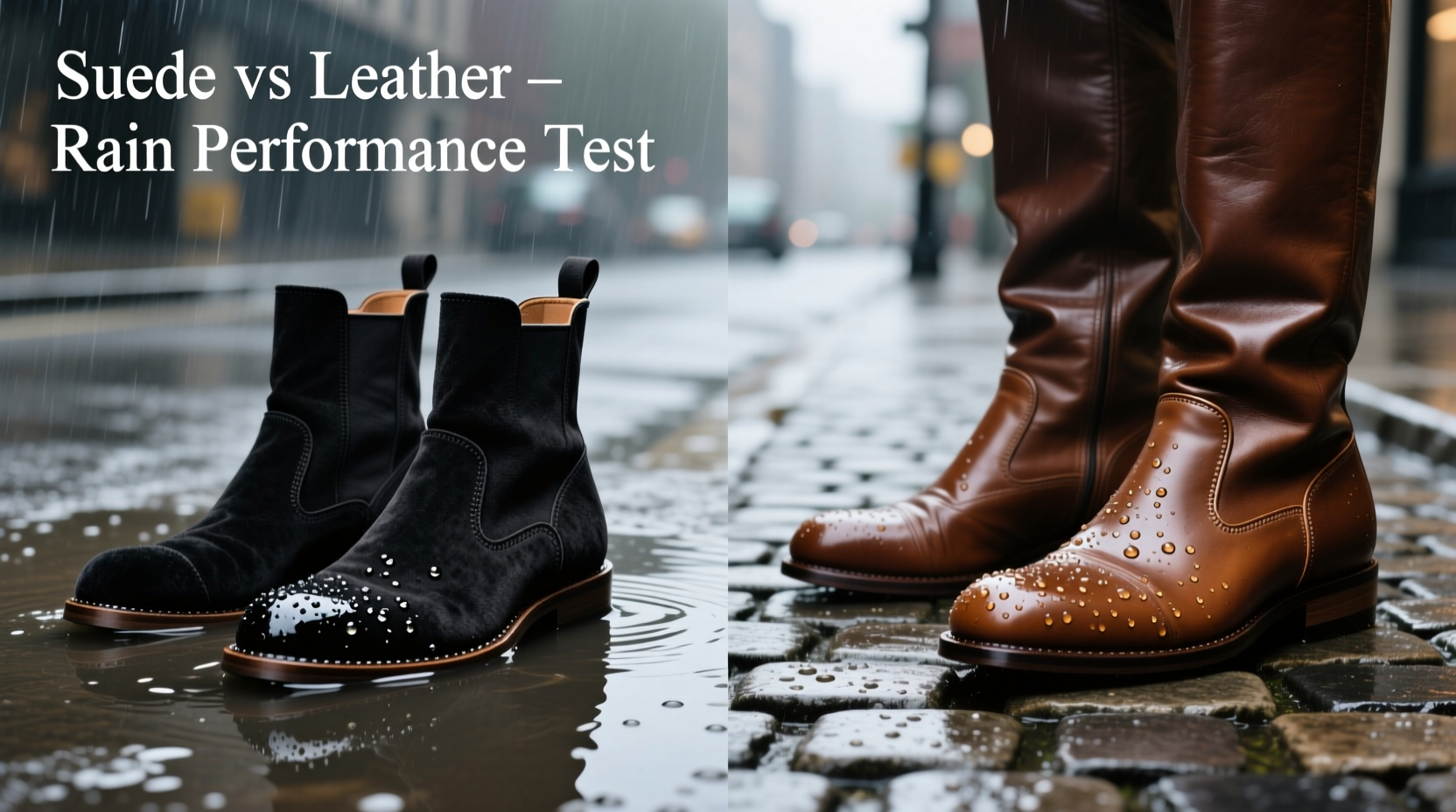
Suede and leather originate from the same source—animal hide—but undergo vastly different processing methods that define their behavior when exposed to moisture.
Leather is made from the outer layer of the hide, tanned and finished to create a dense, tightly grained surface. This natural structure, especially when treated with protective coatings, resists water absorption to a significant degree. Full-grain and top-grain leathers are particularly resilient, capable of shedding light rain if wiped promptly.
Suede, by contrast, is crafted from the inner layer of the hide (split leather) or buffed from the underside of full-grain leather. This process creates a soft, napped surface with millions of tiny fibers exposed. While this gives suede its luxurious texture and breathability, it also makes it highly porous. When water hits suede, it doesn’t bead up—it soaks in quickly, spreading through the material like a sponge.
The structural difference means leather generally maintains integrity during brief exposure to rain, while suede begins absorbing moisture almost immediately, leading to staining, darkening, and potential deformation.
“Water is suede’s worst enemy. Unlike smooth leather, it has no natural barrier. Once moisture penetrates, it disrupts the fiber matrix, often permanently altering texture and color.” — Daniel Reeves, Footwear Conservation Specialist at The Heritage Shoe Care Co.
Comparative Performance in Rainy Conditions
To assess real-world performance, consider how each material behaves across several key categories during wet weather use.
| Factor | Leather Boots | Suede Boots |
|---|---|---|
| Water Resistance | Naturally moderate; enhanced with waxes and sealants | Poor; highly absorbent due to open-pored texture |
| Drying Time | Slower but even; less prone to warping | Rapid surface drying but retains internal moisture longer |
| Staining Risk | Low to moderate; water spots possible if untreated | High; leaves watermarks and mineral rings as it dries |
| Odor Development | Minimal if aired properly | Higher risk due to trapped moisture in fibers |
| Long-Term Durability in Wet Climates | Excellent with routine conditioning | Poor unless meticulously protected and rarely worn in rain |
The data shows a clear advantage for leather in rainy environments. Its tighter grain and ability to be treated make it far more practical for unpredictable weather. Suede may look elegant, but its vulnerability limits its suitability to dry or lightly damp conditions only.
Tip: Never assume \"water-resistant\" means \"rainproof.\" Even treated suede offers minimal protection compared to oiled or waxed leather.Real-World Scenario: A Commuter’s Dilemma
Consider Sarah, a graphic designer living in Seattle—a city known for its frequent drizzle. She owns a pair of chestnut brown suede chukkas she loves for their vintage aesthetic and a backup pair of oiled leather brogues. One morning, caught in an unexpected downpour, she wears the suede boots, assuming her quick walk to the bus stop won’t cause harm.
Within minutes, the toes darken. By midday, white salt rings appear as the water evaporates. Attempts to brush them restore some texture, but the discoloration remains. Over the next two weeks, the boots develop a musty smell despite airing, and one heel starts to soften at the seam.
The following week, she repeats the commute in her leather brogues. They get equally wet. But after wiping them down with a dry cloth and applying a beeswax conditioner the next morning, they look nearly untouched. After three months of similar exposure, the leather pair remains structurally sound and visually clean, while the suede pair is retired from regular rotation.
This case illustrates a common mistake: equating aesthetic appeal with functional resilience. In climates with regular precipitation, material performance should outweigh style preferences when choosing daily footwear.
Protective Strategies for Wet Weather Wear
While leather outperforms suede naturally, neither material thrives without care. Proactive protection significantly extends lifespan and maintains appearance.
For Leather Boots
- Apply a waterproofing treatment every 4–6 weeks during rainy seasons. Use silicone-free sprays or wax-based polishes to avoid clogging pores.
- Wipe down after exposure with a soft, absorbent cloth to remove surface moisture before it seeps in.
- Condition regularly (every 6–8 weeks) to maintain oils lost due to environmental exposure and cleaning.
- Use shoe trees when not wearing them to preserve shape and absorb internal humidity.
- Air dry naturally away from direct heat sources, which can crack leather.
For Suede Boots
- Spray with a high-quality suede protector before first use and reapply monthly. Look for fluoropolymer-based formulas that repel water and oil.
- Avoid walking through puddles or standing in rain. Even treated suede loses protection under prolonged saturation.
- Brush gently with a suede eraser or brass brush after drying to lift the nap and remove surface stains.
- Store with silica gel packets inside to reduce ambient moisture absorption.
- Never use heat to dry wet suede—this collapses the fiber structure and causes permanent hardening.
“Think of suede like a wool sweater—beautiful but delicate. You wouldn’t wear a cashmere coat in a thunderstorm. Treat suede boots the same way.” — Lena Moretti, Sustainable Footwear Educator
Actionable Checklist: Rain-Ready Boot Care Routine
Follow this checklist to keep your boots in prime condition during wet months:
- ✅ Inspect all boots monthly for wear, moisture damage, or sole separation
- ✅ Apply waterproof spray to leather and suede before seasonal use
- ✅ Keep a microfiber cloth in your bag for post-rain wipe-downs
- ✅ Rotate footwear to allow 24–48 hours of drying between uses
- ✅ Store in a ventilated area with cedar shoe trees or breathable fabric bags
- ✅ Recondition leather every 6 weeks; re-proof suede monthly
- ✅ Invest in rubber overshoe covers (galoshes) for unavoidable heavy rain
Frequently Asked Questions
Can I wear suede boots in light rain if they’re treated?
Treated suede has improved resistance, but it’s not waterproof. Light mist may bead briefly, but absorbed moisture will still cause staining and texture changes over time. It’s best to reserve suede for dry days or indoor-heavy outings with minimal exposure.
What should I do if my leather boots get soaked?
Remove the laces and insoles, then stuff the boots with crumpled newspaper to draw out moisture. Wipe the exterior with a dry cloth and let them air dry at room temperature for 24–48 hours. Avoid radiators or hairdryers. Once dry, clean and condition the leather to restore oils.
Is there a type of suede that handles moisture better?
Some manufacturers use synthetic suedes (like Ultrasuede) or heavily treated natural suede with advanced nanocoatings. These perform better than traditional suede but still don’t match genuine leather in durability. They’re a compromise—not a solution—for damp climates.
Final Verdict: Which Is Better for Rainy Days?
When it comes to handling moisture, **leather boots are decisively superior to suede**. Their denser structure, compatibility with protective treatments, and resilience to repeated wet-dry cycles make them the logical choice for rainy environments. While suede offers unmatched softness and style, it demands near-ideal conditions to remain presentable and functional.
This isn’t to say suede has no place in a versatile wardrobe. It excels in autumn evenings, urban strolls on dry days, or transitional seasons with low humidity. But for daily commutes, unpredictable forecasts, or regions with consistent rainfall, leather—particularly oiled, waxed, or full-grain varieties—is the smarter, longer-lasting investment.
Ultimately, the choice depends on your lifestyle. If you value low-maintenance durability and weather adaptability, prioritize leather. If you’re willing to sacrifice convenience for aesthetics and wear boots primarily in controlled environments, suede can still earn a spot in your rotation—just keep them away from puddles.
💬 Have a favorite rain-safe boot care tip or brand? Share your experience in the comments and help others make smarter footwear choices this season.








