Genuine leather bags are more than accessories—they’re investments. Over time, exposure to environmental elements, oils from skin, and daily wear can dull their luster and compromise structural integrity. The charm of a well-maintained leather bag lies not only in its appearance but in its longevity. With proper care, a high-quality leather piece can age gracefully, developing a rich patina that enhances its character. This guide outlines precise, gentle techniques to clean and preserve your leather bag, ensuring it remains a timeless staple in your wardrobe.
Understanding Your Leather Type
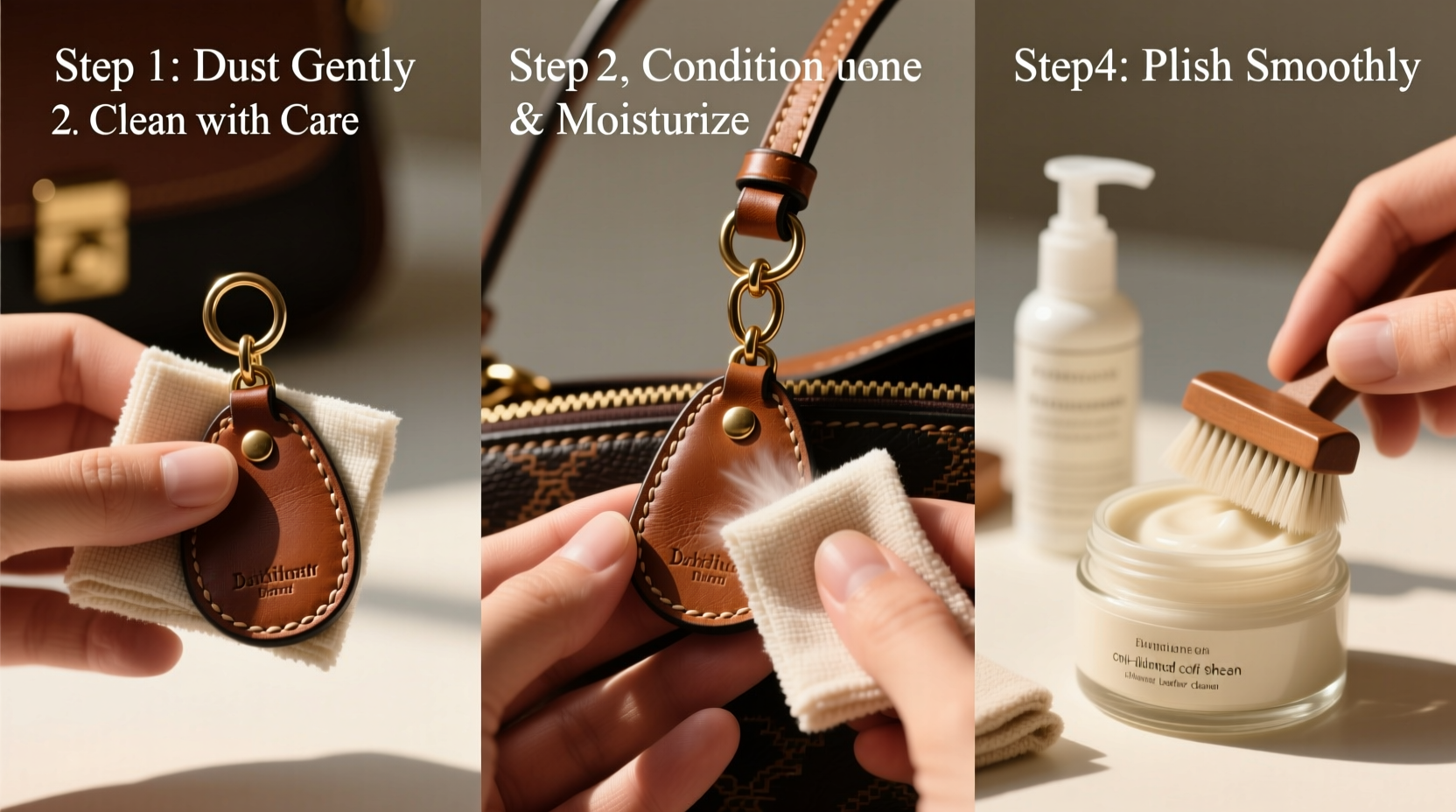
Before any cleaning begins, identifying the type of leather is essential. Different finishes react differently to moisture, conditioners, and cleaning agents. Common types include:
- Aniline leather: Full-grain with minimal coating, highly breathable but sensitive to stains.
- Semi-aniline: Slightly protected with a light surface coating, offering better stain resistance.
- Protected (pigmented) leather: Coated for durability; most common in handbags and easier to maintain.
- Nubuck & suede: Velvety surface, porous and prone to water marks—require specialized care.
Mistaking one for another can lead to irreversible damage. Check manufacturer tags or consult the retailer if unsure. When in doubt, test any product on a small, inconspicuous area first.
Tip: Avoid using universal cleaners on exotic or unfinished leathers. Always confirm compatibility.Step-by-Step Cleaning Process
Cleaning should be approached methodically. Rushing or skipping steps risks residue buildup or over-saturation. Follow this timeline for best results:
- Empty the bag completely – Remove all contents, including pouches and inserts. Shake gently to dislodge debris.
- Dust and dry brush – Use a soft-bristle brush (like a clean toothbrush) to remove surface dust, especially along seams and corners.
- Wipe with a microfiber cloth – Dampen slightly with distilled water. Wipe in circular motions, avoiding saturation.
- Apply a pH-balanced leather cleaner – Use a cotton pad to apply a pea-sized amount. Work in small sections, focusing on soiled areas.
- Allow to air-dry naturally – Never use heat sources like hairdryers. Keep away from direct sunlight for at least 2–3 hours.
- Condition after drying – Once fully dry, apply a thin layer of leather conditioner to restore moisture.
This process should be performed every 6–8 weeks for regularly used bags, or quarterly for occasional pieces.
Do’s and Don’ts: Preserving Leather Integrity
| Do’s | Don’ts |
|---|---|
| Use distilled water to avoid mineral deposits | Soak leather with water or household cleaners |
| Store in a breathable cotton dust bag | Keep in plastic bags which trap moisture |
| Rotate bag usage to reduce strain | Overstuff, which distorts shape and stress seams |
| Condition every 2–3 months | Apply silicone-based polishes that clog pores |
| Clean spills immediately with a dry cloth | Rub aggressively at stains, which spreads them |
Expert Insight on Long-Term Preservation
“Leather is a natural hide—it breathes, ages, and responds to its environment. Treating it like plastic leads to cracking and fading. Regular conditioning and mindful storage are non-negotiable for preserving both function and beauty.” — Daniel Reeves, Master Leather Conservator at The Heritage Atelier
Reeves emphasizes that neglecting conditioning causes fibers to dry out, leading to micro-tears invisible at first but evident over time. He also notes that stuffing bags with acid-free tissue paper helps retain structure while absorbing internal moisture from humidity or accidental spills.
Real Example: Reviving a Neglected Tote
Sophia, a freelance designer in Portland, inherited her grandmother’s vintage cognac leather tote. Stored in a cedar closet for years inside a plastic cover, the bag emerged stiff, with faded edges and a sticky residue from degraded lining. She followed these steps:
- Removed the plastic and aired the bag in a shaded room for 48 hours.
- Used a nubuck eraser for surface scuffs and a damp microfiber cloth for light grime.
- Applied a cream-based aniline leather cleaner, then conditioned with a beeswax-infused balm.
- Stuffed with tissue and stored upright in a cotton bag with silica gel packets.
Within three weeks—and two gentle conditioning rounds—the leather regained suppleness and developed a warm sheen. “It feels alive again,” she said. “Like it remembers being loved.”
Essential Care Checklist
To simplify maintenance, here’s a concise checklist for monthly and seasonal care:
Monthly Maintenance:- Inspect for stains, scratches, or hardware wear
- Wipe interior and exterior with dry microfiber cloth
- Check stitching near handles and base
- Perform full cleaning with approved leather cleaner
- Condition thoroughly, allowing 24-hour absorption
- Replace stuffing and verify storage conditions
- Polish metal hardware with a jewelry cloth if tarnished
Frequently Asked Questions
Can I use coconut oil to condition my leather bag?
No. While natural, coconut oil can go rancid over time and attract dirt. It may also darken light leathers unevenly. Stick to professional leather conditioners formulated for pH balance and long-term safety.
How do I remove ink stains from leather?
Ink requires precision. Dab (don’t rub) with a cotton swab lightly moistened with isopropyl alcohol (70% concentration), but only after testing on a hidden area. Immediately follow with a leather conditioner to prevent drying. For large or deep stains, consult a restoration specialist.
Is it safe to store leather bags in a closet with cedar lining?
Cedar repels moths but emits natural oils that can transfer to leather over time, causing discoloration. If using cedar, ensure the bag is fully enclosed in a breathable cotton dust bag and inspect quarterly for odor or residue.
Final Thoughts: Cultivating a Care Ritual
A genuine leather bag grows more beautiful with attention, not neglect. Its charm isn’t just in the initial shine but in the story it tells over years of use—subtle creases, softened handles, a deeper hue. These characteristics emerge only when care is consistent and informed. By integrating gentle cleaning into your routine and respecting the material’s natural needs, you honor both the craftsmanship and the journey the bag will take with you.
Preservation isn’t about perfection. It’s about intention. Whether it’s a daily crossbody or a cherished heirloom, every wipe, every conditioning session, is a quiet act of appreciation.
💬 Your bag has a story. How do you care for it? Share your personal tips or ask questions in the comments—let’s build a community of mindful leather keepers.








