
Stainless steel back watches are prized for their durability, sleek finish, and often, their mechanical or automatic movements. While they’re built to last, maintaining accuracy requires more than just wearing them daily. One of the most common maintenance tasks—adjusting the time—may seem simple, but doing it incorrectly can compromise water resistance, strain internal components, or misalign complications like date windows. Whether you've just purchased a new timepiece or inherited a vintage model, knowing how to properly set the time ensures both precision and longevity.
This comprehensive guide walks through every detail of adjusting your stainless steel back watch correctly, from identifying the crown position to avoiding common pitfalls that could cost hundreds in repairs.
Understanding Your Watch Movement and Crown Function
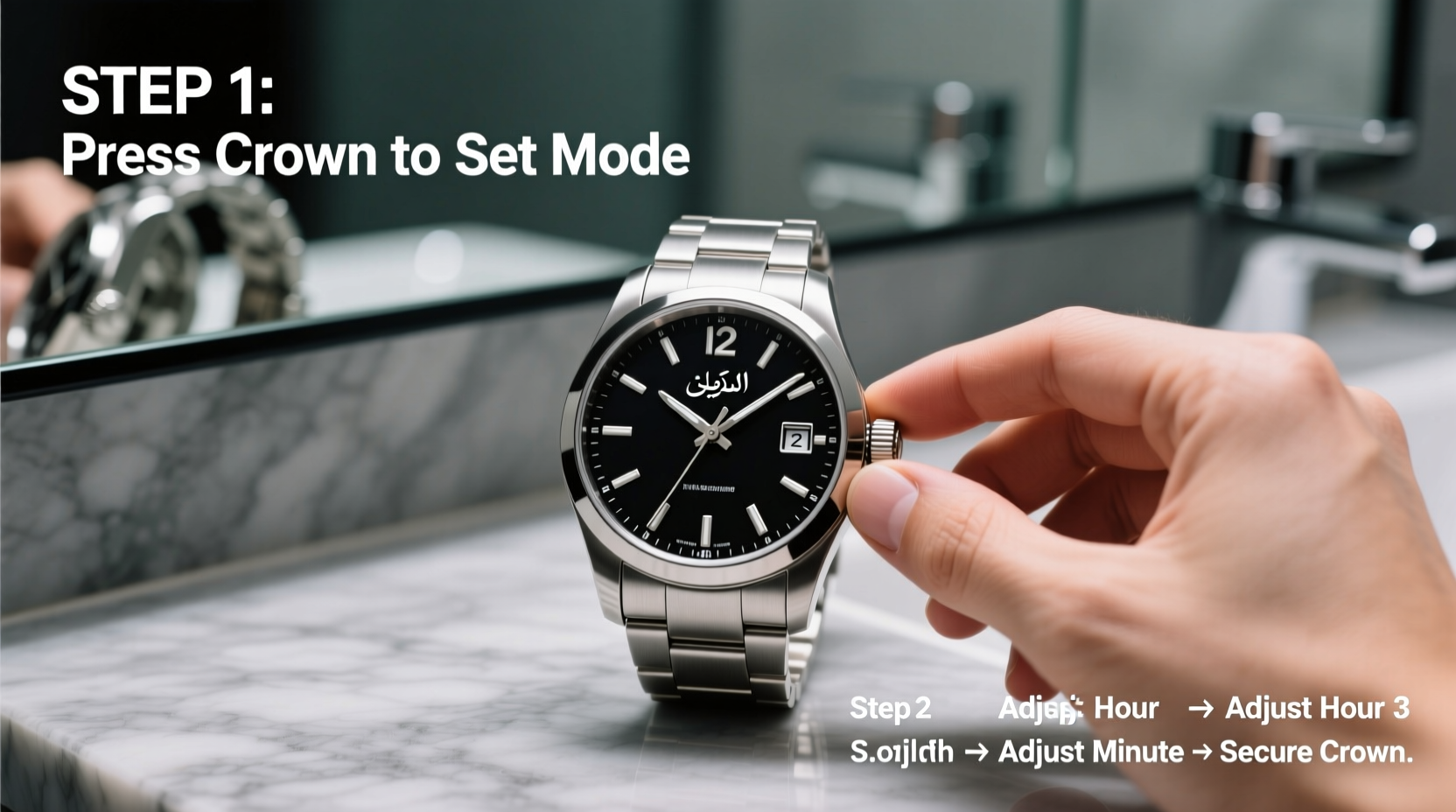
Before touching the crown, it's essential to understand what type of movement powers your watch. Most stainless steel back watches fall into one of three categories: manual wind, automatic (self-winding), or quartz. The method of setting the time varies slightly depending on the movement, though the physical action at the crown is similar.
The crown—the small knob typically located at the 3 o’clock position—is used to set the time and, in mechanical watches, to wind the mainspring. It usually operates in multiple positions:
- Position 0 (Pushed In): Normal operation; watch runs as usual.
- Position 1 (First Pull): Often used to adjust the date (if applicable).
- Position 2 (Second Pull): Used to set the hour and minute hands.
Some high-end models may have reverse-pull crowns or screw-down crowns, which require unscrewing before adjustment. Always check your manufacturer’s manual if unsure.
Tip: Never force the crown. If it doesn’t pull out smoothly, it may be a screw-down type or damaged. Forcing it can break internal gears.Step-by-Step Guide to Setting the Time Accurately
Follow this detailed sequence to safely adjust your watch without risking damage to the case, movement, or water seals.
- Check Water Resistance Status: If your watch has a screw-down crown, ensure it’s not tightened before attempting to pull it. Gently unscrew it counterclockwise until it pops out slightly.
- Pull the Crown to Position 2: Gently tug the crown outward. On most watches, the first stop adjusts the date; the second stop sets the time. Rotate the crown clockwise to move the hands.
- Set the Date (If Applicable): Avoid changing the date between 9 PM and 3 AM when the mechanism is engaging. Instead, set the time just before midnight, adjust the date using Position 1, then continue to set the correct time.
- Align Hands to Exact Time: Use an atomic clock, smartphone time sync, or GPS-based time source. Move the hands forward (never backward on many mechanical watches) until the correct time is displayed.
- Push and Secure the Crown: Once set, gently push the crown back in. For screw-down types, carefully twist it clockwise until snug—but do not over-tighten.
Setting the time seems straightforward, but rushing or skipping steps can lead to misaligned calendars or compromised seals, especially in dive watches where water resistance is critical.
“Improper crown handling is one of the top causes of early service visits. A few seconds of caution can prevent thousands in repair costs.” — Daniel Reeves, Master Watchmaker & Horology Instructor
Avoiding Common Mistakes: Do’s and Don’ts
Even experienced users make errors when adjusting their watches. Below is a summary of best practices versus frequent missteps.
| Do’s | Don’ts |
|---|---|
| Use a reliable time source (e.g., atomic clock app) | Set time based on memory or approximated clocks |
| Adjust date outside 9 PM – 3 AM window | Change date during transitional hours |
| Unscrew crown fully before pulling | Force the crown if it resists |
| Tighten screw-down crowns gently after use | Over-tighten, risking gasket deformation |
| Wash hands before handling (reduces oil transfer) | Adjust with greasy or wet fingers |
Real Example: Recovering Accuracy After Travel
Consider Mark, an engineer who frequently travels across time zones. He owns a stainless steel Seiko Prospex diver with a screw-down crown. After a red-eye flight from Tokyo to Berlin, he noticed his watch was six hours behind. Rather than immediately pulling the crown, he waited until he was indoors, washed his hands, and consulted his phone’s UTC-synced clock.
He unscrewed the crown carefully, pulled it to Position 1, advanced the date since he’d crossed the international date line, then moved to Position 2 to set the precise local time. After pushing and re-screwing the crown, he verified no wobble and checked for moisture inside the crystal—a sign of seal failure. His careful process preserved water resistance and ensured accurate tracking for his next dive trip.
This example underscores why routine time-setting should never become a rushed habit. Intentionality protects both function and value.
Essential Checklist Before Adjusting Your Watch
Use this quick-reference checklist each time you plan to change the time:
- ✅ Confirm the watch is not in a magnetic environment
- ✅ Wash and dry hands thoroughly
- ✅ Identify crown type (standard or screw-down)
- ✅ Unscrew crown completely if required
- ✅ Set current time on a trusted device
- ✅ Avoid 9 PM – 3 AM range when changing date
- ✅ Advance hands forward only (especially on older movements)
- ✅ Re-secure crown fully after adjustment
- ✅ Inspect for fogging or looseness post-adjustment
Frequently Asked Questions
Can I set the time backward on my stainless steel back watch?
It depends on the movement. Many modern automatic watches allow bidirectional setting, but older or high-precision models may be damaged by backward adjustments. When in doubt, always move the hands forward. Consult your user manual or brand support for confirmation.
Why shouldn’t I change the date between 9 PM and 3 AM?
During these hours, the date mechanism is actively shifting internally. Attempting to adjust it manually can stress or break the date wheel and associated gears. To be safe, set the time to 6 AM or 6 PM before toggling the date via Position 1 of the crown.
How often should I set the time on my watch?
If your watch is worn daily and keeps good time, minimal adjustment is needed. Mechanical watches may gain or lose a few seconds per day; quartz models are more precise. Set the time whenever deviation exceeds one minute, or after battery changes, long periods of non-use, or travel across time zones.
Maintaining Long-Term Accuracy and Care
Setting the time correctly is just one part of responsible ownership. Stainless steel backs, while resistant to corrosion, can still suffer from gasket degradation, magnetization, or shock damage. For optimal performance:
- Have water resistance tested annually if used in wet environments.
- Keep the watch away from strong magnets (phones, speakers, MRI machines).
- Service mechanical movements every 5–7 years to clean and lubricate internals.
- Store in a cool, dry place when not in use, preferably in a watch box or winder.
Accurate timekeeping reflects not just punctuality, but respect for craftsmanship. Each adjustment is a moment to engage with the engineering within your wristwear.
Conclusion
Changing the time on a stainless steel back watch is more than a convenience—it’s a ritual of care. With the right technique, you preserve functionality, protect investment, and honor the precision engineering behind your timepiece. From identifying crown positions to respecting mechanical limitations, every step matters.
💬 Now that you know the correct way to adjust your watch, will you double-check your habits? Share your experience or ask questions in the comments—let’s build a community of informed watch owners.








