Cooking eggs seems simple—crack, pour, cook. Yet anyone who’s tried to flip a sunny-side-up or slide out a scrambled batch knows the struggle: sticking, tearing, cleanup nightmares. The right pan makes all the difference. Two of the most common choices in home kitchens are stainless steel and nonstick. Each has strengths, but when it comes to cooking eggs cleanly and efficiently, one might edge ahead—if used correctly.
The debate isn’t just about convenience; it’s about control, durability, health, and long-term performance. While nonstick pans promise effortless release, stainless steel offers superior heat distribution and resilience. But which truly delivers a mess-free egg experience? Let’s break down the science, technique, and real-world use to find out.
Understanding the Key Differences
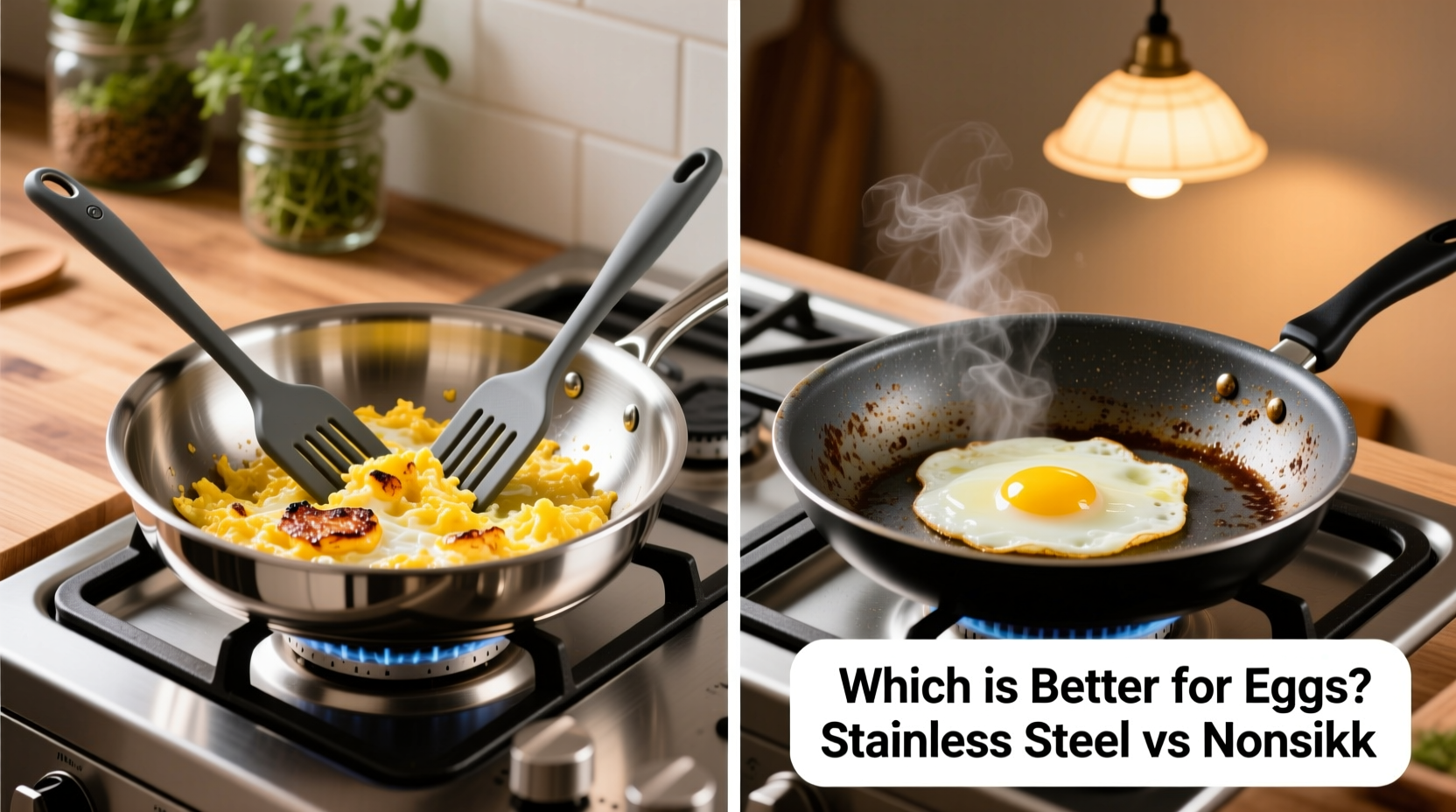
Before deciding which pan wins for eggs, it’s essential to understand how each type works at a fundamental level.
Nonstick pans are coated with materials like polytetrafluoroethylene (PTFE), commonly known as Teflon, or ceramic-based alternatives. These surfaces prevent food from bonding to the metal, allowing eggs to glide off with minimal oil. They’re ideal for low-heat cooking and require gentle handling to preserve the coating.
Stainless steel pans, typically made from a layered combination of aluminum or copper sandwiched between stainless steel, conduct heat evenly and respond well to temperature changes. However, they lack a natural non-stick surface. Without proper preheating and oiling, eggs will stick aggressively.
The myth that stainless steel is inherently “bad” for eggs stems from improper use—not inherent flaws. When heated correctly and seasoned with fat, stainless steel can perform nearly as smoothly as nonstick, especially for experienced cooks.
Heat Response and Control
Stainless steel excels in heat retention and distribution. It heats gradually and maintains consistent temperatures, reducing hot spots that cause uneven cooking. This stability allows precise control—critical when you want tender, evenly cooked eggs without browned edges.
Nonstick pans, while convenient, often have thinner bases and respond poorly to high heat. Excessive temperatures degrade the coating over time and can emit harmful fumes. For delicate foods like eggs, this limits usable heat range, making searing or browning impossible without risking damage.
Tip: Always preheat your stainless steel pan on medium heat for 2–3 minutes before adding oil. Use the water droplet test: if water beads up and dances, the pan is ready.Performance: Cooking Eggs Without the Mess
Eggs are protein-rich and prone to sticking, especially when proteins bond with metal surfaces before fat creates a barrier. How each pan handles this reaction determines the outcome.
Nonstick: The Immediate Advantage
For beginners or those prioritizing speed and simplicity, nonstick is unmatched. Add butter or oil over low-to-medium heat, crack the egg, and it slides off effortlessly after cooking. There’s little need for precision in timing or temperature.
However, nonstick has limitations:
- Lifespan averages 2–5 years with regular use.
- Metal utensils or abrasive scrubbing damage the surface.
- Cannot withstand high heat, limiting browning or crispiness.
- Coating degradation may pose health concerns if overheated above 500°F (260°C).
Stainless Steel: Mastery Through Technique
Stainless steel demands more attention but rewards with longevity and versatility. When properly preheated and lubricated, it forms a temporary non-stick layer through the Leidenfrost effect—where liquid vaporizes beneath the food, creating a cushion.
A well-executed fried egg on stainless steel should release cleanly with a spatula. Scrambled eggs brown slightly at the edges, enhancing flavor without sticking—provided the pan isn’t overheated and enough fat is used.
“With the right method, a stainless steel pan can outperform nonstick for eggs. It’s not the tool—it’s the technique.” — Chef Daniel Ruiz, Culinary Instructor at Boston Artisan Kitchen School
Side-by-Side Comparison: Stainless Steel vs Nonstick for Eggs
| Feature | Nonstick Pan | Stainless Steel Pan |
|---|---|---|
| Initial Ease of Use | Very easy—minimal oil, no preheating needed | Requires proper preheating and oiling technique |
| Egg Release Quality | Excellent when new and undamaged | Excellent with correct heat and oil management |
| Durability | 2–5 years; degrades with scratches and heat | 10+ years with proper care |
| Heat Tolerance | Up to 500°F max; avoid high heat | Safe up to 800°F+; oven-safe and sear-friendly |
| Cleaning Effort | Minimal; usually wipe or light wash | May require soaking if residue sticks |
| Flavor Development | Limited browning due to lower heat tolerance | Promotes fond formation and richer taste |
| Safety Concerns | Risk of fumes if overheated; microplastic shedding possible | No chemical coating; inert and safe at all temps |
Step-by-Step Guide: Cooking Perfect Eggs on Stainless Steel
Many assume stainless steel is too difficult for eggs. The truth is, it requires a repeatable process. Follow these steps for mess-free results every time:
- Select the right pan: Use a high-quality 3-ply or 5-ply stainless steel skillet with an aluminum core for even heating.
- Dry the pan completely: Any moisture can interfere with oil spread and create steam pockets.
- Preheat on medium heat: Allow 2–3 minutes for the pan to reach optimal temperature. Test using the water droplet method.
- Add fat: Pour in 1 tsp of oil or butter and swirl to coat the surface evenly.
- Wait for shimmering: Oil should shimmer but not smoke. This indicates readiness.
- Add the egg: Crack gently from a small bowl to avoid shell fragments.
- Reduce heat slightly: Maintain gentle sizzle without aggressive bubbling.
- Use a thin spatula: Slide under the egg only when edges are set and bottom is golden.
- Finish and clean: Wipe with a paper towel while warm to maintain seasoning-like patina.
Real-World Example: Morning Routine Upgrade
Sarah, a working mother of two in Denver, used to dread breakfast. Her old nonstick pan had worn spots where eggs would tear and stick. She’d spend extra minutes scraping, then feel guilty about replacing it annually. After a cooking class, she switched to a tri-ply stainless steel skillet.
At first, she burned a few eggs. But once she learned the water test and proper oil timing, her results improved dramatically. Now, her scrambled eggs come out fluffy and intact, and her daughter loves the crispy edges she can finally achieve. The pan goes from stovetop to oven for frittatas, something her old nonstick couldn’t handle. Three years later, it still performs flawlessly—no peeling, no worries about fumes.
“I wasted so much money on cheap pans,” she says. “Now I use one pan for everything. It takes five minutes to learn, but it changes how you cook.”
Long-Term Considerations: Health, Cost, and Sustainability
Beyond immediate performance, consider how each option affects your kitchen long-term.
Health: Modern nonstick coatings are generally safe under normal conditions. However, studies show that PTFE begins to degrade around 500°F, releasing toxic particles and gases. While rare in typical egg cooking, accidental overheating (e.g., leaving an empty pan on the burner) poses risks. Stainless steel contains no such vulnerabilities.
Cost: Nonstick pans range from $20–$60 but need replacement every few years. High-quality stainless steel skillets cost $80–$150 upfront but last decades. Over ten years, the nonstick user spends $120–$300; the stainless steel owner breaks even by year three and gains nine years of free use.
Sustainability: Discarded nonstick pans contribute to landfill waste and potential microplastic contamination. Stainless steel is fully recyclable and doesn’t shed synthetic materials during use.
Checklist: Choosing the Right Pan for Your Egg-Cooking Needs
- ☐ Assess your cooking frequency—daily users benefit more from durable stainless steel.
- ☐ Evaluate your skill level—nonstick is beginner-friendly; stainless steel rewards learning.
- ☐ Check stove compatibility—both work on gas, electric, and induction (if magnetic base).
- ☐ Prioritize safety—avoid overheating nonstick; ensure ventilation.
- ☐ Think long-term—invest in one premium stainless pan instead of multiple replacements.
- ☐ Match to other uses—do you also sear, roast, or bake? Stainless steel offers versatility.
Frequently Asked Questions
Can I cook eggs without oil on nonstick?
Yes, technically—but using a small amount of fat improves texture, flavor, and helps protect the coating. Completely dry cooking increases wear over time.
Why do my eggs always stick to stainless steel?
Most likely, the pan wasn’t preheated properly or the oil was added too early. Cold oil in a cold pan creates a sticky film. Always heat the pan first, then add oil, then wait for it to shimmer before adding the egg.
Is ceramic nonstick safer than Teflon?
Ceramic coatings are free of PTFE and PFOA, making them a popular eco-conscious choice. However, they tend to lose non-stick properties faster—often within 1–2 years—and are less durable than both traditional nonstick and stainless steel.
Final Verdict: Which Is Better for Eggs?
If your sole goal is zero-effort, mess-free eggs with minimal cleanup and you cook occasionally, a **nonstick pan** is perfectly suitable—provided you use it gently, avoid high heat, and replace it when signs of wear appear.
But if you value durability, flavor development, versatility, and long-term savings, **stainless steel is the superior choice**. With a short learning curve, it matches or exceeds nonstick performance for eggs while enabling broader culinary techniques. It’s also safer at high temperatures and more environmentally responsible.
The idea that stainless steel is messy for eggs is outdated—a reflection of poor technique, not the tool itself. Once mastered, it becomes the workhorse of the kitchen, handling eggs as gracefully as steaks, sauces, and roasts.
Conclusion & Call to Action
Choosing between stainless steel and nonstick isn’t about finding a perfect shortcut—it’s about aligning your tools with your lifestyle, values, and cooking goals. For the daily ritual of cooking eggs, investing time in mastering a stainless steel pan pays lasting dividends in performance, safety, and sustainability.
You don’t need ten pans to cook well. You need one good pan and the knowledge to use it right. Try cooking your next batch of eggs with deliberate preheating and proper fat application. Notice the difference. Share your results, experiment with heat levels, and see how a simple shift in method transforms your morning routine.
💬 Have a favorite egg-cooking tip or pan brand? Share your experience below and help others make smarter kitchen choices!








