Choosing between a Silky Terrier and a Yorkshire Terrier (Yorkie) often comes down to subtle differences in temperament, energy levels, and trainability. Both are small, spirited companion dogs with big personalities packed into compact frames. While they share ancestry and many behavioral traits, their responses to training can vary significantly based on breed tendencies, consistency in handling, and individual personality. Understanding these nuances helps prospective owners set realistic expectations and adopt effective training strategies from day one.
Temperament and Intelligence: The Foundation of Trainability
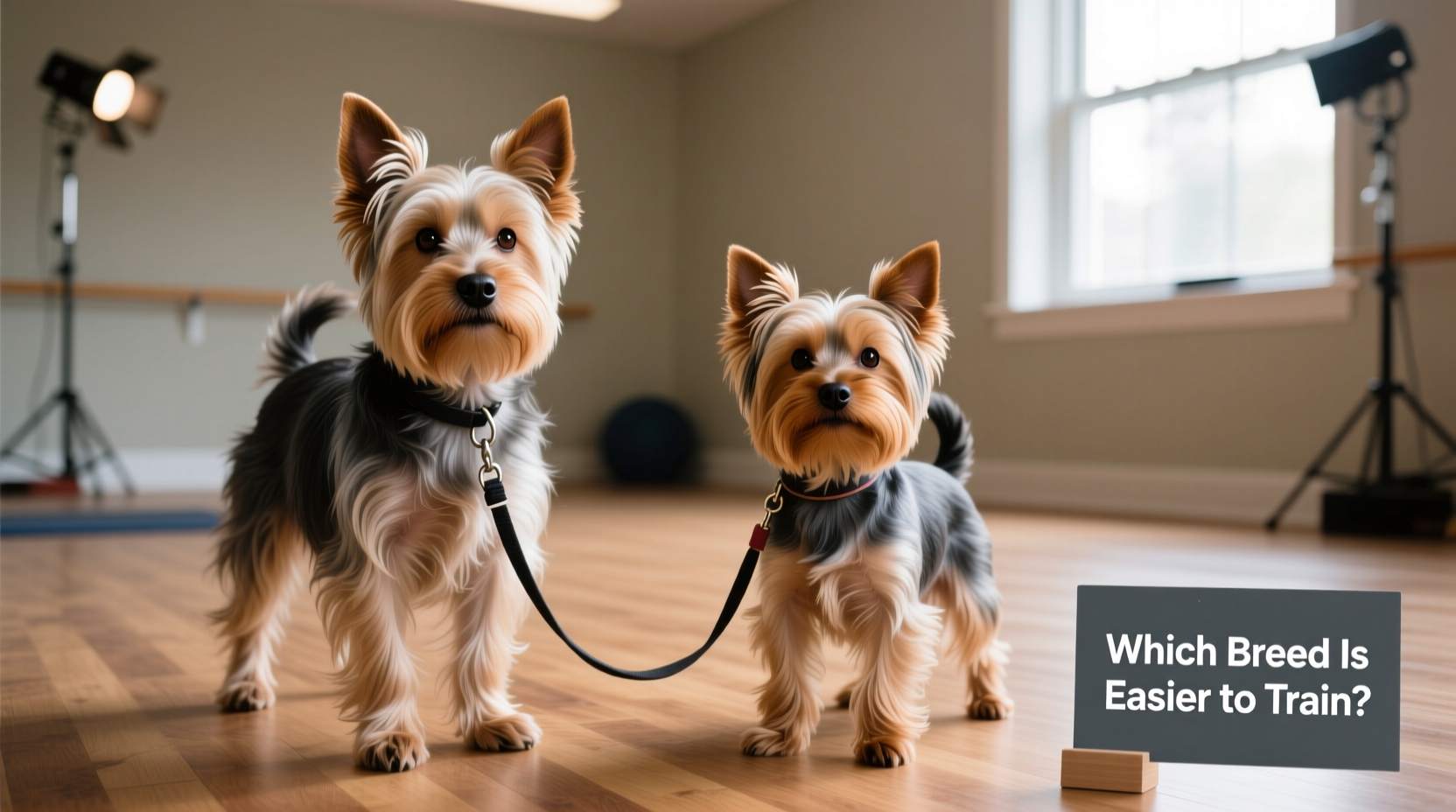
Trainability isn’t just about obedience; it’s rooted in a dog’s natural disposition, problem-solving ability, and willingness to cooperate. The American Kennel Club (AKC) ranks both the Silky Terrier and the Yorkshire Terrier in the “average” range for working/obedience intelligence—meaning they typically require 25–40 repetitions to learn a new command and obey the first command about 50% of the time.
However, where they differ lies in motivation and focus. Yorkies tend to be more eager to please, especially when rewards are involved. Their long history as lapdogs and companions has shaped them into socially attuned pets who thrive on human interaction. This makes them slightly more responsive during structured training sessions, particularly when positive reinforcement is used.
Silky Terriers, originally bred for vermin control in Australia, possess a stronger prey drive and independent streak. They’re alert, confident, and quick thinkers—but this independence can manifest as stubbornness when they perceive a task as unnecessary or uninteresting. Training a Silky requires patience and creativity to maintain engagement.
“Small terriers aren’t difficult to train—they’re selectively obedient. They’ll follow commands that make sense to them. Your job is to make learning worthwhile.” — Dr. Karen Becker, Veterinary Behaviorist
Training Challenges by Breed
Yorkshire Terrier
- Pros: Highly food-motivated, enjoys attention, quick to pick up tricks.
- Cons: Prone to distraction, may develop “small dog syndrome” if not consistently corrected, sensitive to harsh tones.
- Common Issues: Housebreaking delays, excessive barking, leash reactivity.
Silky Terrier
- Pros: Alert, intelligent, good watchdog instincts, less prone to separation anxiety than Yorkies.
- Cons: Strong-willed, easily bored, may ignore commands if distracted by scents or movement.
- Common Issues: Stubbornness during potty training, tendency to dig or chase small animals.
Comparative Training Approach: What Works for Each
| Training Factor | Yorkie | Silky Terrier |
|---|---|---|
| Learning Speed | Moderate to fast with rewards | Moderate, slower if disinterested |
| Focus Span | Short, easily distracted | Medium, better in quiet environments |
| Motivation Type | Highly food and praise-driven | Reward + challenge-driven |
| Socialization Needs | Critical to prevent fear-based aggression | Important to curb territorial behavior |
| Potty Training Difficulty | Challenging due to size and routine sensitivity | Challenging, but more consistent once trained |
The key difference emerges in consistency. Yorkies respond well to routine and repetition, especially when paired with treats or verbal praise. Silkies benefit more from variety—using puzzle toys, scent games, or agility drills alongside basic commands keeps them mentally engaged and reduces resistance.
A Real-Life Example: Two Owners, Two Breeds
Sarah adopted a female Yorkie named Luna at 10 weeks old. From day one, she used clicker training and tiny cheese cubes as rewards. Within three weeks, Luna learned “sit,” “stay,” and “come.” However, housebreaking took nearly five months. Sarah realized Luna resisted going outside in the rain, so she created a covered potty area and adjusted feeding times for predictability. Consistency paid off—by six months, Luna was reliably house-trained.
Meanwhile, Mark got a male Silky Terrier, Max, at the same age. Max mastered “sit” quickly but refused “down” for weeks. Mark switched tactics: he turned training into a game, using a favorite plush squirrel as a lure and rewarding Max only after completing two commands in a row. He also enrolled Max in a puppy agility class, which channeled his energy and sharpened focus. By eight months, Max responded reliably—even off-leash in safe areas.
This contrast illustrates a broader principle: Yorkies often respond best to emotional connection and reward predictability, while Silkies need mental stimulation woven into training to stay committed.
Step-by-Step Training Plan for Success
Whether you have a Yorkie or a Silky Terrier, the following six-week plan builds foundational skills while respecting each breed’s learning style.
- Week 1–2: Bonding & Basic Commands
Create daily routines. Teach “sit” and “name recognition” using high-value treats. Practice in low-distraction areas for 3–5 minutes, 3x/day. - Week 3–4: Leash Introduction & Crate Training
Introduce harness and leash indoors. Reward calm walking. Use the crate as a safe space—never for punishment. Yorkies may whine; Silkies may resist entering. Lure with treats and toys. - Week 5: Potty Training Focus
Take your dog out every 2 hours, after meals, naps, and play. Use a consistent phrase like “go potty.” Immediately reward outdoors. Use enzymatic cleaners for accidents—never scold. - Week 6: Socialization & Recall
Introduce controlled social experiences: friendly dogs, different surfaces, mild noises. Practice “come” with a long leash in a fenced yard. Call excitedly and reward generously when they respond.
Checklist: Essential Training Tools for Small Terriers
- ✅ Soft, pea-sized treats (e.g., freeze-dried liver)
- ✅ Clicker or verbal marker (“yes!”)
- ✅ Lightweight harness (front-clip recommended)
- ✅ Crate with cozy bedding
- ✅ Chew-safe teething toys
- ✅ Enzymatic cleaner for accidents
- ✅ Training leash (4–6 feet)
- ✅ Puzzle feeder or treat-dispensing toy
Frequently Asked Questions
Are Yorkies easier to potty train than Silky Terriers?
Not necessarily. Both breeds struggle with housebreaking due to their small bladders and sensitivity to weather or surface changes. Yorkies may learn faster initially, but Silkies often become more reliable over time with consistent outdoor access and positive reinforcement.
Which breed is better for first-time dog owners?
Yorkies are generally recommended for first-time owners because of their eagerness to please and adaptability to apartment living. However, they require firm boundaries to prevent bossiness. Silkies demand more experienced handling due to their independence and higher exercise needs, making them better suited for owners willing to invest time in structured training.
Do either breed do well with children or other pets?
Both can coexist with older, respectful children and pets if properly socialized. However, their small size makes them vulnerable to injury from rough play. Supervision is essential. Neither breed tolerates teasing or sudden movements well, so early exposure to calm interactions is crucial.
Final Verdict: Which Breed Is Easier to Train?
If measured by initial responsiveness, speed of learning, and eagerness to engage, the **Yorkshire Terrier** holds a slight edge in ease of training. Their desire for human approval makes them more likely to comply, especially when rewards are involved. They adapt quickly to household rules and excel in trick training and basic obedience.
However, the **Silky Terrier**, while requiring more patience and creative methods, often develops into a more balanced, confident companion when trained with consistency and mental enrichment. Their independence isn’t defiance—it’s a sign of an active mind that thrives on challenge.
In short: Yorkies are easier to start training. Silkies are more rewarding to train deeply. The “easier” choice depends on your experience level, lifestyle, and willingness to adapt your approach.
💬 Have a Yorkie or Silky Terrier? Share your training wins and challenges in the comments—your experience could help a future owner make the right choice!








