Every night, millions of people tie their hair back before bed to keep it out of their face or protect styles like waves, curls, or braids. But the choice of material—silk scarf or cotton bandana—can make a dramatic difference in how much friction, tugging, and breakage your hair experiences while you sleep. While both are commonly used, one clearly outperforms the other when it comes to preserving hair integrity and minimizing damage. Understanding the science behind fabric texture, moisture retention, and friction is essential to making an informed decision for long-term hair health.
The Role of Friction in Hair Breakage
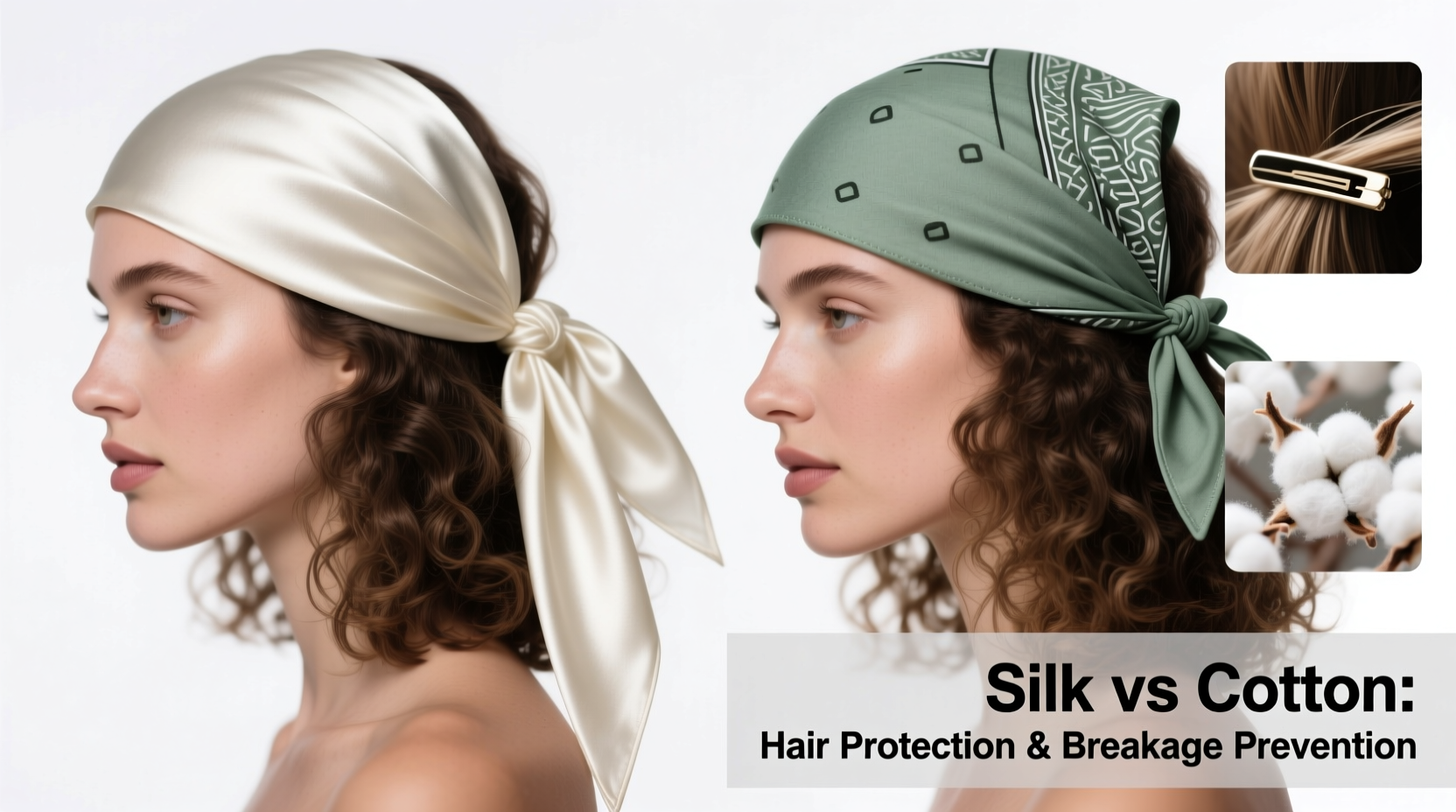
Hair breakage often occurs not from poor products or aggressive styling alone, but from consistent mechanical stress. One major source? Pillow-to-hair and accessory-to-hair friction during sleep. Cotton bandanas and pillowcases absorb moisture and create resistance as hair moves against them. This constant rubbing leads to cuticle damage—the outer protective layer of the hair shaft—which weakens strands over time, increasing split ends and breakage.
Silk, on the other hand, has a naturally smooth fiber structure. Its low coefficient of friction means hair glides across it rather than snagging. Studies in textile science have shown that silk generates up to 40% less friction than cotton when tested under similar conditions. This makes it significantly gentler on delicate strands, especially for those with curly, coily, or chemically treated hair that’s already prone to dryness and fragility.
Tip: If you frequently wake up with frizzy hair or notice strands caught in your bandana, high friction is likely the culprit—consider switching to silk.Moisture Retention: How Fabric Affects Hair Hydration
One of the most overlooked aspects of nighttime hair protection is moisture preservation. Cotton is highly absorbent—it pulls moisture from the air and, more importantly, from your hair. When you wrap your hair in a cotton bandana or sleep on a cotton pillowcase, your strands lose hydration throughout the night, leading to dryness, brittleness, and increased susceptibility to breakage.
Silk is far less absorbent. It doesn’t wick away natural oils or leave-in conditioners applied before bed. Instead, it creates a protective barrier that helps lock in moisture. For individuals with textured hair types (4a–4c), this can be transformative. These hair types naturally produce less sebum and struggle to retain moisture; using cotton accessories can exacerbate dryness, while silk supports a balanced moisture environment.
“Switching from cotton to silk for hair wrapping reduced my weekly breakage by nearly half. My edges started growing back stronger.” — Lila M., natural hair advocate and curl educator
Comparative Analysis: Silk Scarves vs Cotton Bandanas
To better understand the differences between these two materials, let’s compare them across key categories relevant to hair protection.
| Feature | Silk Scarf | Cotton Bandana |
|---|---|---|
| Friction Level | Low – smooth surface reduces snagging | High – rough fibers cause tangles and pulling |
| Moisture Absorption | Low – retains hair’s natural oils and hydration | High – absorbs moisture and product from hair |
| Durability | Moderate – requires gentle care but lasts years | High – durable but degrades faster with frequent washing |
| Breathability | Good – regulates temperature well | Excellent – highly breathable but dries hair |
| Impact on Hair Cuticles | Minimal – preserves cuticle integrity | Significant – causes lifting and weakening |
| Cost Over Time | Higher initial cost, lower long-term damage | Lower upfront cost, higher repair/loss costs |
While cotton may seem like the economical and breathable option, its impact on hair health over time often outweighs these benefits. Silk may require a slightly higher investment, but the reduction in breakage, improved moisture retention, and longer-lasting hairstyles deliver measurable returns.
Real-World Impact: A Case Study in Nighttime Hair Care
Jamila, a 32-year-old with 3b/3c curly hair, had struggled with thinning edges and frequent mid-shaft breakage for years. She regularly wore her hair in buns or twists at night, secured with cotton bandanas she purchased in multipacks. Despite using oils and leave-in conditioners, she noticed her hair felt drier in the mornings and required constant re-moisturizing.
After consulting a trichologist, she was advised to eliminate cotton from her nighttime routine. She switched to a 22-momme mulberry silk scarf and began sleeping on a silk pillowcase. Within four weeks, she reported less morning frizz, fewer loose strands on her pillow, and noticeably softer hair. After three months, her stylist noted a visible improvement in hair strength and edge regrowth.
This case illustrates how a simple fabric change can interrupt a cycle of preventable damage. The switch wasn’t about adding new products or routines—it was about removing a hidden aggressor: cotton-induced friction.
How to Use a Silk Scarf Effectively for Maximum Protection
Using a silk scarf correctly is just as important as choosing the right material. Improper wrapping can still lead to tension and breakage, even with silk. Follow this step-by-step guide to ensure optimal results:
- Start with damp or moisturized hair: Apply a light leave-in conditioner or sealant oil to keep strands hydrated overnight.
- Smooth hair into a low-manipulation style: Gather hair into a loose pineapple (high ponytail at the crown) or twist it gently into a flat twist-out to minimize tension.
- Choose the right size scarf: A 22” x 22” or 30” x 30” square allows enough fabric to wrap securely without pulling.
- Use the triangle fold method: Fold the scarf diagonally into a triangle, place the center at your hairline, and bring the two ends around your head.
- Tie at the nape or crown: Secure the ends with a knot or tuck them in. Avoid tight knots that pull on edges.
- Adjust for comfort: Ensure the scarf covers all exposed hair but isn’t constricting. You should feel no pressure on your scalp.
Expert Insights on Fabric Choice and Hair Longevity
Dermatologists and trichologists increasingly emphasize the importance of reducing mechanical stress on hair. Dr. Naomi Chen, a board-certified dermatologist specializing in hair disorders, explains:
“The cumulative effect of nightly friction is underestimated. Patients come in with traction alopecia or chronic breakage, unaware that their cotton headwrap is contributing to the problem. Silk isn’t a luxury—it’s a preventive tool.” — Dr. Naomi Chen, MD, FAAD
She notes that patients who switch to silk often report improvements within weeks, including reduced shedding, smoother cuticles, and better response to treatments. “It’s one of the simplest, most effective changes someone can make,” she adds.
Frequently Asked Questions
Can I use a satin scarf instead of silk?
Yes, satin (typically polyester-based) offers a smooth surface similar to silk and is less absorbent than cotton. However, it doesn’t breathe as well and can trap heat or sweat. While satin is a good budget-friendly alternative, silk remains superior due to its natural protein structure, temperature regulation, and biodegradability.
Is silk worth the higher price?
When considering the cost of hair loss, extensions, or restorative treatments, investing in a high-quality silk scarf (typically $25–$40) is cost-effective. One scarf can last 1–2 years with proper care, preventing hundreds of dollars in avoidable damage.
Does silk work for short or fine hair?
Absolutely. Fine or short hair is often more fragile and prone to breakage. Silk reduces friction at the root and along the shaft, helping preserve length and density. Even those with very short styles or recovering edges benefit from silk’s protective glide.
Checklist: Choosing and Using the Right Hair Wrap
- ✅ Assess your current hair wrap material—replace cotton with silk or high-quality satin
- ✅ Choose 100% mulberry silk with a momme weight of 19 or higher for durability
- ✅ Wash silk gently by hand or on delicate cycle with mild detergent
- ✅ Avoid tying too tightly—keep tension off edges and temples
- ✅ Combine with a silk pillowcase for full overnight protection
- ✅ Replace if frayed or excessively worn to maintain effectiveness
Final Thoughts: Prioritizing Prevention Over Repair
Preventing hair breakage is always more effective than trying to fix it after the fact. While cotton bandanas are widely available and inexpensive, their long-term impact on hair health is detrimental. Silk scarves, though initially pricier, offer a scientifically backed solution that protects hair at the microscopic level—preserving cuticles, retaining moisture, and minimizing friction.
For anyone serious about maintaining length, strength, and overall hair vitality, switching from cotton to silk is not a cosmetic upgrade—it’s a fundamental shift in hair care philosophy. It reflects a commitment to prevention, consistency, and respect for the delicate nature of each strand.
💬 Have you made the switch from cotton to silk? Share your experience or tips in the comments—your insight could help someone save their hair.








