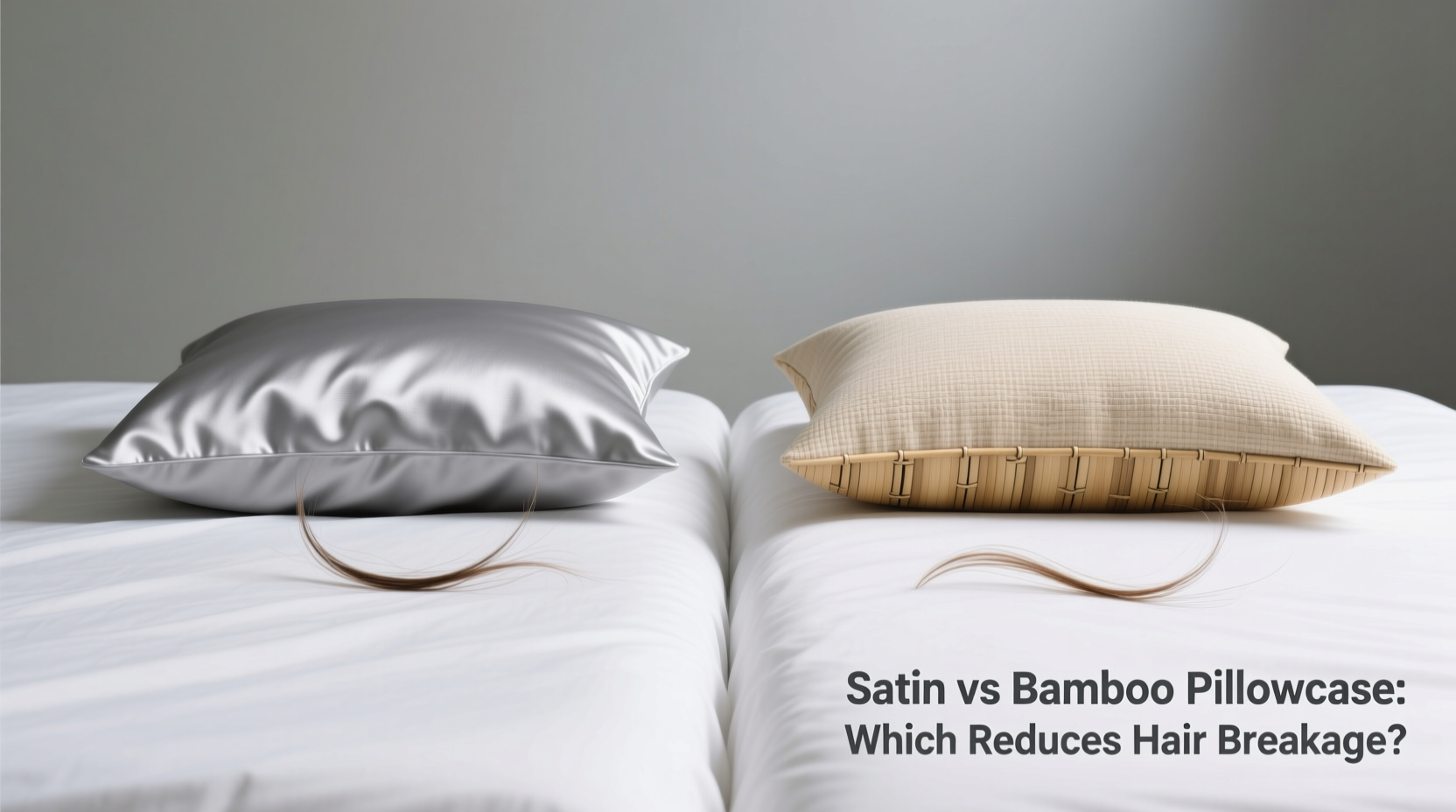
For anyone who values healthy, strong hair, the surface your hair rests on overnight matters more than most realize. Friction, moisture loss, and temperature regulation during sleep all play a role in hair integrity. Two popular alternatives to traditional cotton pillowcases—satin and bamboo—have gained attention for their potential to reduce hair breakage. But which one truly delivers better results? While both materials are marketed as hair-friendly, their composition, performance, and long-term effects differ significantly. This article dives into the science, structure, and real-world impact of satin versus bamboo pillowcases to help you make an informed decision based on hair health, not hype.
Understanding Hair Breakage: Causes and Prevention
Hair breakage occurs when the hair shaft weakens and snaps before reaching its natural lifespan. Common causes include mechanical stress (like brushing wet hair), chemical processing, heat styling, and environmental exposure. However, one often-overlooked contributor is friction during sleep. Cotton pillowcases, with their coarse texture, create drag against hair strands, especially for curly, coily, or textured hair types that are naturally more fragile. This nightly abrasion can lead to split ends, frizz, and weakened cuticles over time.
Reducing breakage isn’t just about changing products—it’s about minimizing stressors. A smoother sleeping surface helps maintain the hair’s natural alignment and moisture balance. Both satin and bamboo claim superiority here, but they achieve it through different mechanisms. Satin reduces friction through slickness; bamboo adds moisture management and breathability. Understanding these differences is key to choosing the right option for your hair type and lifestyle.
Material Science: Satin vs Bamboo
Satin is not a fiber but a weave. It’s typically made from polyester, nylon, or sometimes silk, using a tight, glossy weaving technique that creates a smooth, low-friction surface. The slippery texture is what makes satin feel cool and luxurious against the skin and hair. When used in pillowcases, this smoothness minimizes tugging and tangling, helping hair glide rather than snag.
Bamboo, on the other hand, refers to a natural fiber derived from bamboo plants, usually processed into viscose, rayon, or lyocell. Bamboo fabric is inherently soft, breathable, and moisture-wicking. Unlike satin, which repels water, bamboo absorbs moisture without holding onto it excessively, helping regulate humidity around the scalp. It also has natural antibacterial properties and is more environmentally sustainable than synthetic satins.
The structural difference between the two materials leads to distinct performance outcomes. Satin excels at reducing surface friction, while bamboo supports overall scalp and hair health through breathability and moisture control. For individuals focused solely on minimizing overnight tangles, satin may seem ideal. But for those dealing with dryness, scalp irritation, or frequent frizz, bamboo offers a more holistic benefit.
Friction and Hair Surface Interaction
Studies on textile-hair interaction show that friction coefficients vary widely between fabrics. Cotton has the highest coefficient, meaning it creates the most resistance. Satin, particularly silk-based satin, ranks among the lowest, reducing pulling forces on individual strands. This is why satin is often recommended for people with curly or chemically treated hair—types that are prone to knotting and breakage.
Bamboo, while not as slick as satin, still performs far better than cotton. Its smooth fiber structure reduces drag compared to traditional bedding. However, because it’s more absorbent, some users report slightly more friction in very dry conditions, especially if hair lacks sufficient hydration. In humid environments, bamboo’s ability to wick moisture helps prevent clumping and static, indirectly reducing breakage caused by tangled, sticky hair.
Tip: If you use leave-in conditioners or oils, a bamboo pillowcase may absorb small amounts overnight—this isn’t wasteful, but it means you might need to reapply in the morning.Moisture Retention and Scalp Health
One of the biggest advantages of switching from cotton to either satin or bamboo is improved moisture retention. Cotton is highly absorbent and pulls moisture from hair and skin, which can lead to dryness, brittleness, and increased breakage. Both satin and bamboo minimize this effect—but in different ways.
Satin acts as a barrier. Because it’s non-absorbent (especially when made from polyester), it doesn’t soak up natural oils or applied treatments. This means serums, creams, and sebum stay on your hair where they belong. For people with dry or damaged hair, this preservation of moisture can be a game-changer.
Bamboo strikes a balance. It wicks moisture away from the scalp to prevent sweat buildup but releases it quickly into the air, maintaining a balanced microclimate. This is particularly beneficial for those with oily scalps or who live in hot climates. Unlike satin, which can trap heat and cause sweating, bamboo remains cool and breathable, reducing the risk of scalp irritation—a secondary cause of hair weakness.
“Maintaining optimal scalp hydration and minimizing mechanical stress are equally important in preventing hair breakage. A pillowcase should support both.” — Dr. Lena Patel, Trichologist and Hair Research Specialist
Comparative Performance: Head-to-Head Analysis
| Feature | Satin Pillowcase | Bamboo Pillowcase |
|---|---|---|
| Friction Level | Very low – excellent slip, minimal tugging | Low – smooth but slightly more grip than satin |
| Motion Absorption | Poor – hair slides easily, increasing chance of tangles if not secured | Good – slight texture helps hold styles in place |
| Moisture Management | Non-absorbent – preserves oils and products | Wicking – regulates moisture, prevents excess sweat |
| Breathability | Poor – traps heat, especially polyester-based | Excellent – stays cool, ideal for sensitive skin |
| Durability | Varies – silk lasts longer than synthetic satin | High – resists pilling and wear with proper care |
| Eco-Friendliness | Poor – polyester is plastic-based and non-biodegradable | High – renewable source, biodegradable options available |
| Care Requirements | Delicate – hand wash or gentle cycle recommended | Easy – machine washable, retains softness |
This comparison shows that neither material is universally superior. Satin wins in friction reduction, making it ideal for preserving hairstyles and minimizing surface-level damage. Bamboo outperforms in breathability, sustainability, and scalp comfort, offering indirect protection against breakage by promoting a healthier hair environment.
Real-World Experience: A Case Study
Jasmine, a 34-year-old with 3C/4A curly hair, struggled with mid-shaft breakage and frizz despite a meticulous nighttime routine. She used a cotton pillowcase for years, believing her regimen was enough. After experiencing persistent dryness and shedding, she consulted a trichologist who suggested switching to a low-friction pillowcase.
She first tried a polyester satin pillowcase. Results were immediate: fewer tangles in the morning and less frizz. However, after a few weeks, she noticed her scalp felt warmer and occasionally itchy, especially in summer. She then switched to a bamboo viscose pillowcase. While the initial “slip” wasn’t as dramatic, she found her curls stayed defined, her scalp felt cooler, and breakage decreased further over time. After three months, a trim revealed significantly fewer split ends.
Her experience highlights a critical insight: short-term ease (less tangle) doesn’t always equal long-term hair health. Bamboo’s ability to regulate moisture and temperature contributed to stronger, more resilient hair—even if it didn’t feel as “slippery” as satin.
Action Plan: Choosing the Right Pillowcase for Your Hair
Selecting between satin and bamboo shouldn’t be arbitrary. Consider your hair type, climate, and specific concerns. Follow this step-by-step guide to make the best choice:
- Assess your hair type: Fine, straight, or silky hair benefits most from satin’s friction reduction. Curly, coily, or dry hair often thrives on bamboo’s moisture balance.
- Evaluate your scalp condition: If you have dandruff, oiliness, or sensitivity, bamboo’s breathability and antimicrobial properties offer added protection.
- Consider your climate: Hot, humid environments favor bamboo. Cold, dry climates may pair better with satin to preserve natural oils.
- Review your styling routine: If you apply heavy oils or creams at night, satin prevents absorption. If you prefer lightweight, water-based products, bamboo complements them well.
- Test and rotate: Use each material for 2–3 weeks and track changes in tangles, shine, and breakage. Some users alternate based on season or treatment needs.
Frequently Asked Questions
Can satin pillowcases prevent split ends?
Yes, to an extent. By reducing friction and tugging, satin minimizes mechanical stress that leads to split ends. However, split ends are primarily caused by cumulative damage, so while satin helps slow their formation, regular trims and protective styling are still essential.
Do bamboo pillowcases really last longer than satin?
In most cases, yes. High-quality bamboo fabric resists pilling and maintains softness over hundreds of washes. Synthetic satin tends to degrade faster, especially if washed frequently or exposed to heat. Silk satin is more durable but requires careful maintenance.
Is silk satin better than polyester satin for hair?
Generally, yes. Natural silk has a smoother surface, better temperature regulation, and is less likely to generate static. However, it’s significantly more expensive and delicate. For budget-conscious users, high-thread-count polyester satin can still offer meaningful benefits.
Final Recommendation: What Actually Reduces Hair Breakage?
When it comes to reducing hair breakage, bamboo pillowcases have a slight edge over satin—not because they’re smoother, but because they support a healthier hair ecosystem. While satin wins in immediate friction reduction, bamboo addresses root causes like moisture imbalance, scalp irritation, and overheating, all of which contribute to long-term hair strength.
That said, the “best” choice depends on your priorities. If you want instant detangling and product preservation, go with satin—preferably silk. If you’re focused on overall hair resilience, scalp comfort, and sustainability, bamboo is the superior long-term investment.
Ultimately, both materials are vastly better than cotton. The real breakthrough comes not from the fabric alone, but from combining it with good habits: securing hair in a loose braid or pineapple, using hydrating products, and avoiding excessive manipulation. A pillowcase is just one part of a complete hair care strategy.
💬 Ready to protect your hair while you sleep? Start by replacing your cotton pillowcase with satin or bamboo today. Share your experience or ask questions in the comments—your journey could help someone else find their perfect match.








