
When choosing between a recycled polyester jacket and an organic cotton windbreaker, breathability is often a deciding factor—especially for those who value comfort during physical activity or in fluctuating weather. While both fabrics are marketed as sustainable options, their performance in terms of moisture management, airflow, and temperature regulation varies significantly. Understanding these differences helps you make a smarter, more comfortable choice based on your lifestyle, climate, and intended use.
The Science of Breathability in Outdoor Apparel
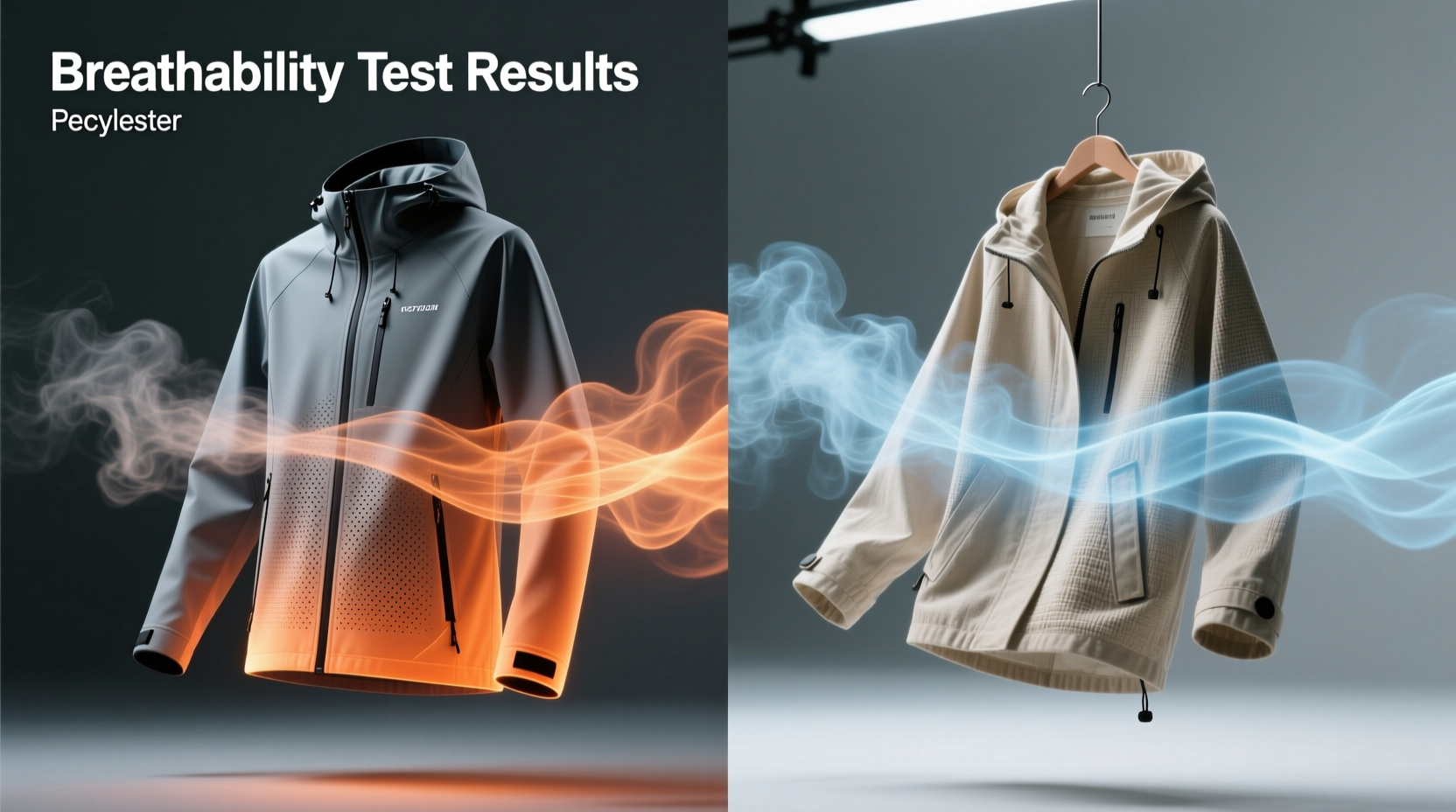
Breathability refers to a fabric’s ability to allow moisture vapor (sweat) to escape from the inside to the outside. High breathability prevents clamminess, reduces overheating, and maintains comfort during movement. It’s not just about air circulation—it's also about moisture-wicking efficiency and thermal regulation.
Fabrics breathe through two primary mechanisms: porosity (microscopic gaps between fibers) and hydrophilic/hydrophobic properties (how they interact with water molecules). Natural fibers like cotton absorb moisture, while synthetics like polyester repel it but rely on engineered weaves or membranes to vent vapor.
However, breathability isn’t solely dependent on material. Weave density, garment construction, lining presence, and layering all influence how well a jacket performs under exertion.
“Breathability isn't just a fabric property—it's a system. Even the most breathable material can fail if trapped by tight weaves or non-perforated linings.” — Dr. Lena Torres, Textile Performance Researcher at Alpine Institute of Fabric Engineering
Recycled Polyester Jackets: Performance with Environmental Trade-offs
Recycled polyester, typically made from post-consumer plastic bottles (rPET), has become a staple in eco-conscious outdoor wear. Brands favor it for its durability, water resistance, and lower carbon footprint compared to virgin polyester. But how does it perform when it comes to letting your skin breathe?
Most recycled polyester jackets are tightly woven to enhance wind resistance and durability. This tight structure limits natural airflow. However, many manufacturers integrate technical features such as:
- Moisture-wicking finishes that pull sweat away from the skin
- Underarm vents or laser-perforated zones for targeted airflow
- DWR (durable water repellent) coatings that maintain breathability during light rain
- Laminated membranes (e.g., recycled versions of Gore-Tex) that balance waterproofing with vapor transmission
Despite these innovations, recycled polyester remains hydrophobic—it doesn’t absorb moisture. Instead, it relies on capillary action to move sweat across the surface where it can evaporate. In high-humidity environments or during prolonged activity, this process slows down, leading to internal condensation and a sticky feeling against the skin.
Tip: Look for recycled polyester jackets labeled with “high moisture vapor transmission rate” (MVTR) — ideally above 10,000 g/m²/24hr for optimal breathability.Pros and Cons of Recycled Polyester for Breathability
| Aspect | Advantage | Limitation |
|---|---|---|
| MVTR Efficiency | High when paired with breathable membranes | Declines in humid conditions |
| Drying Speed | Very fast; doesn’t retain water | Can feel clammy before evaporation occurs |
| Air Permeability | Low in standard weaves; improved with mesh panels | Tight weaves reduce airflow |
| Odor Resistance | Good; resists bacterial retention | May trap body odor over time without washing |
Organic Cotton Windbreakers: Natural Comfort Meets Sustainability
Organic cotton is grown without synthetic pesticides or fertilizers, making it a preferred choice for environmentally sensitive consumers. Unlike polyester, cotton is a natural fiber with inherent hygroscopic qualities—it absorbs moisture directly into the fiber structure, holding up to 27% of its weight in water before feeling wet.
This absorption capacity contributes to a cooling effect through evaporative heat loss. As sweat is drawn into the fabric, it spreads out and slowly releases into the air, helping regulate body temperature during moderate activity.
Windbreakers made from organic cotton are typically lighter, looser-woven, and less laminated than synthetic counterparts. This open structure allows greater air exchange, enhancing passive breathability. However, once saturated, cotton takes longer to dry—especially in cool or humid climates—and loses insulating properties when wet.
Some modern organic cotton windbreakers blend small percentages of elastane or TENCEL™ to improve drape and wicking, but pure cotton models remain popular for casual urban wear and low-intensity outdoor use.
Real-World Example: Hiking the Pacific Northwest Trail
Consider a hiker traversing the damp forests of Washington State. She wears a lightweight organic cotton windbreaker over a merino base layer. The morning begins cool and misty. As she ascends a ridge, her body warms. The cotton shell absorbs initial perspiration and allows airflow through its loose weave. By midday, cloud cover breaks and sun emerges. The jacket dries quickly on her back, aided by breeze and radiant heat.
In contrast, her companion wears a recycled polyester soft-shell. Initially, he feels drier because the fabric repels moisture. But after 45 minutes of steady climbing, he notices a buildup of humidity inside the jacket. Without active ventilation (like zipping open the front), his torso feels stuffy despite minimal external moisture.
In this scenario, the organic cotton garment provided superior subjective breathability due to ambient airflow and gradual moisture handling—even though its technical specs might show lower MVTR numbers.
Direct Comparison: Key Factors That Affect Breathability
To determine which fabric truly breathes better, consider multiple variables beyond raw material type.
- Activity Level: High-output activities (running, cycling) favor polyester’s rapid wicking, even if perceived comfort dips later. Low-to-moderate activity favors cotton’s steady absorption and airflow.
- Climate Conditions: Dry, windy environments amplify cotton’s breathability. Humid, stagnant air hampers polyester’s evaporation-dependent system.
- Layering Strategy: Polyester works best in multi-layer systems with wicking base layers. Cotton excels as a standalone outer when worn over breathable mid-layers.
- Fit and Cut: Loose-fitting organic cotton windbreakers promote convective cooling. Slim-fit recycled polyester jackets may restrict airflow regardless of material.
- Care and Aging: Over time, DWR coatings on polyester degrade, reducing breathability unless re-treated. Organic cotton softens with washes and maintains airflow, though it may stretch or fade.
Checklist: Choosing Based on Breathability Needs
Select a recycled polyester jacket if:
- You engage in high-intensity outdoor activities
- You need quick-drying performance in variable weather
- You prioritize long-term durability and water resistance
- You live in a cold or alpine climate where insulation matters
Choose an organic cotton windbreaker if:
- You walk, bike casually, or run errands in mild weather
- You prefer natural materials and tactile comfort
- You spend time in dry or breezy environments
- You want a versatile, everyday layer that looks good off-trail
Expert Verdict: Which One Breathes Better?
The answer depends on context. From a technical standpoint, **recycled polyester can achieve higher measured breathability** (via MVTR ratings) when integrated with advanced membranes. These jackets are engineered for performance and excel in controlled lab tests.
However, in real-world use, especially during intermittent activity or in temperate climates, **organic cotton windbreakers often feel more breathable** due to superior air permeability, softer hand-feel, and absence of synthetic film barriers.
Dr. Lena Torres explains: “Consumers report greater comfort with cotton in daily wear scenarios, not because it moves more vapor, but because it doesn’t create that ‘plastic bag’ sensation common in fully synthetic shells.”
If breathability is your top priority and you're not facing extreme weather, an unlined organic cotton windbreaker with a relaxed fit will likely offer more consistent comfort. For rigorous outdoor pursuits where moisture must be expelled rapidly—even at the cost of occasional clamminess—recycled polyester remains the pragmatic choice.
FAQ: Common Questions About Fabric Breathability
Does recycled polyester breathe at all?
Yes, but indirectly. It doesn’t absorb sweat like cotton. Instead, it uses wicking and evaporation to manage moisture. Its breathability depends heavily on design features like mesh liners, pit zips, and membrane technology.
Is organic cotton suitable for rainy conditions?
Not ideal. While some organic cotton windbreakers have water-resistant finishes, cotton absorbs moisture and becomes heavy when wet. It’s best suited for dry or lightly misty days. For consistent rain protection, pair it with a separate waterproof shell.
Can I improve the breathability of either jacket?
Absolutely. For polyester, ensure regular cleaning to prevent pore clogging from oils and dirt. Reapply DWR treatments as needed. For cotton, avoid fabric softeners that coat fibers and reduce absorbency. Air drying preserves fiber integrity and airflow.
Final Recommendation: Match Fabric to Function
There is no universal winner in the recycled polyester vs. organic cotton debate when it comes to breathability. Each serves distinct purposes and user profiles.
For athletes, commuters in mixed climates, or adventurers needing reliable protection, a well-designed recycled polyester jacket offers measurable performance advantages. For city dwellers, weekend walkers, or those seeking naturally comfortable, low-impact clothing, the organic cotton windbreaker delivers unmatched ease and airflow.
Sustainability shouldn’t come at the cost of comfort. By aligning your choice with how and where you move, you gain both environmental responsibility and personal well-being.
💬 Have you tested both types in your daily routine? Share your experience below—your insights could help others find their perfect breathable layer.








