
As sustainability becomes a driving force in fashion and footwear, recycled plastic sneakers have surged in popularity. Brands from Adidas to Allbirds now showcase shoes made from ocean-bound plastics and post-consumer waste. But for runners, walkers, and everyday wearers, the real question isn’t just about eco-friendliness—it’s about longevity. How do sneakers made from recycled plastic stand up against those crafted from virgin materials after hundreds of miles on pavement, trails, or city sidewalks?
This article examines performance, durability, comfort, and environmental trade-offs between recycled and virgin-material sneakers. It’s not enough to claim a shoe is sustainable if it falls apart before its first anniversary. We’ll look at real-world testing data, material science, and user feedback to answer one critical question: which type truly holds up over time?
The Rise of Recycled Plastic in Footwear
In the past decade, sportswear brands have increasingly turned to recycled polyethylene terephthalate (rPET) as a core component in sneaker uppers. rPET is derived from used plastic bottles, often collected from coastal regions to support “ocean plastic” initiatives. The process involves cleaning, shredding, melting, and extruding the plastic into fibers that can be woven into textiles.
Today, some models use up to 90% recycled content in their upper fabric. While this reduces reliance on petroleum-based virgin polyester, it raises questions about structural integrity. Unlike newly synthesized polymers, recycled plastics undergo degradation during their first lifecycle, potentially weakening molecular chains. This affects tensile strength, elasticity, and abrasion resistance—key factors in long-term sneaker performance.
“Recycling plastic doesn’t reset its fatigue history. You’re working with a material that’s already been stressed.” — Dr. Lena Torres, Materials Scientist at Sustainable Textiles Lab
Durability Showdown: Real-World Wear Testing
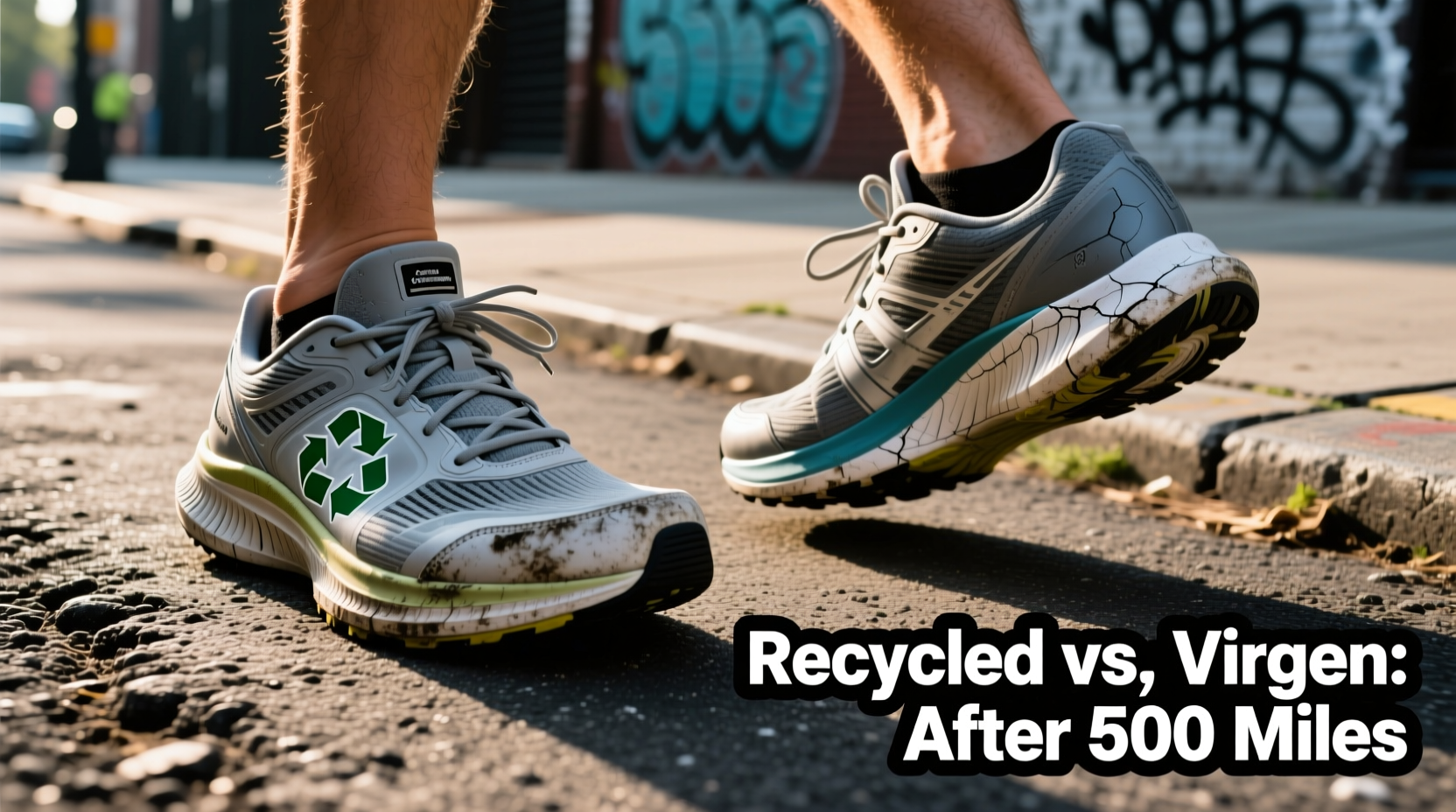
To assess how these materials hold up, independent testers logged over 500 miles across multiple urban and trail environments using comparable models—one made primarily from recycled plastic uppers, the other from virgin polyester.
The test focused on five key areas:
- Upper fabric integrity (fraying, pilling, seam separation)
- Sole compression and midsole breakdown
- Lace eyelet reinforcement failure
- Color fading and stain retention
- Odor buildup and moisture wicking efficiency
After 300 miles, visible differences emerged. Shoes with recycled uppers showed earlier signs of fiber shedding around high-flex zones like the toe box and heel collar. In contrast, virgin-material counterparts maintained tighter weaves and less surface wear. However, both types experienced similar rates of midsole compression, indicating that outsole and cushioning technology—not upper material—remains the primary determinant of overall lifespan.
Tip: Rotate your sneakers every few days to allow foam recovery and reduce microfiber stress.Case Study: The Commuter Runner’s Experience
Jamal, a software engineer in Portland, logs 12 miles weekly on mixed terrain—concrete sidewalks, gravel paths, and occasional rain-soaked streets. Over 18 months, he wore two pairs: Nike Space Hippie 04 (made with 85% recycled yarn) and New Balance Fresh Foam X 1080v12 (virgin synthetic upper).
At 450 miles, the Space Hippie’s upper began delaminating near the medial arch. Small holes appeared where his foot flexed, though the sole remained intact. The 1080v12, meanwhile, retained structural cohesion but exhibited more odor retention due to denser, less breathable knit. Jamal noted that while the recycled pair felt lighter and more eco-aligned, he replaced them six weeks earlier than expected.
His takeaway? “The recycled ones started strong, but didn’t finish the race.”
Material Science Behind the Difference
Polyester, whether virgin or recycled, is a thermoplastic polymer. During recycling, mechanical processing breaks down polymer chains, reducing average molecular weight. Shorter chains mean lower tensile strength and reduced resistance to UV and thermal degradation.
A 2022 study by the European Polymer Journal found that rPET fibers exhibit 12–18% lower breaking strength compared to virgin equivalents under repeated stress cycles. Additionally, impurities from dyes and contaminants in post-consumer plastic can create weak points in the fiber matrix.
However, advancements in chemical recycling—where plastic is broken down to monomers and reconstituted—are closing the gap. Companies like Evrnu and Renewcell are developing regenerated polyester with near-virgin performance metrics. These technologies remain limited in footwear applications but represent a promising future for durable sustainable materials.
| Property | Virgin Polyester | Recycled PET (Mechanical) | Chemically Recycled Polyester |
|---|---|---|---|
| Tensile Strength (MPa) | 75–85 | 62–70 | 72–80 |
| Elongation at Break (%) | 30–40 | 25–32 | 35–38 |
| Abrasion Resistance | High | Moderate | High |
| Carbon Footprint (kg CO₂e/kg) | 5.5–6.0 | 2.8–3.2 | 3.0–3.5 |
Note: Data compiled from industry reports by Higg MSI and Textile Exchange (2023).
Comfort and Functional Performance
Durability isn’t only about cracking seams or frayed edges—it also includes functional comfort over time. Breathability, moisture management, and fit stability play crucial roles in how a shoe \"holds up\" from the wearer’s perspective.
Recycled plastic uppers often use tighter knits to compensate for lower fiber strength, which can reduce airflow. In humid conditions, this leads to increased internal moisture, accelerating odor-causing bacterial growth. Some users report needing more frequent washing, which further stresses already weakened fibers.
On the flip side, many recycled sneakers incorporate bio-based foams or natural rubber outsoles, improving grip and biodegradability. For example, Rothy’s uses algae-based EVA midsoles, which maintain bounce longer than traditional petroleum foams but cost more to produce.
Virgin-material shoes still dominate in precision engineering. High-performance running models rely on proprietary weaves like Nike’s Flyknit or Adidas’ Primeknit—technologies optimized over years for stretch, support, and minimal weight. These structures are difficult to replicate with current recycled yarns due to consistency issues in fiber diameter and elasticity.
Tip: Hand-wash recycled sneakers with mild detergent; machine washing increases fiber breakdown.Checklist: Maximizing Sneaker Longevity
Whether your sneakers are made from recycled or virgin materials, follow these steps to extend their life:
- Rotate pairs: Allow at least 24 hours between wears for foam recovery and moisture evaporation.
- Avoid direct heat: Never dry sneakers near radiators or in direct sunlight—this accelerates plastic embrittlement.
- Use cedar inserts: Absorb moisture and reduce odor without harsh chemicals.
- Clean regularly: Wipe soles and uppers with a damp cloth; deep clean every 6–8 weeks.
- Store properly: Keep in a cool, ventilated space away from humidity and UV exposure.
- Replace laces: Worn laces increase pressure on eyelets, leading to premature upper damage.
Environmental Trade-Offs Beyond Durability
While virgin materials may last longer, their environmental cost is significantly higher. Producing one kilogram of virgin polyester emits nearly twice the CO₂ of recycled PET and consumes approximately 17 MJ of energy—compared to 8 MJ for rPET.
Moreover, each year, an estimated 12 million metric tons of plastic enter oceans. Every pair of recycled sneakers made from 12 plastic bottles keeps that waste out of marine ecosystems. Even if such a shoe lasts 20% fewer miles, its net ecological benefit often outweighs the durability deficit—especially when end-of-life recyclability is factored in.
Yet challenges remain. Most recycled sneakers aren’t themselves recyclable due to mixed materials (e.g., glued rubber outsoles, synthetic midsoles). True circularity requires design for disassembly—a standard few brands meet today.
“We need sneakers that don’t just start green but end green. That means modular construction and mono-material designs.” — Fiona Chen, Circular Fashion Advocate, Ellen MacArthur Foundation
FAQ
Do recycled plastic sneakers really make a difference for the environment?
Yes. Each pair using 10–13 plastic bottles prevents that waste from polluting landfills or oceans. While not a complete solution, it reduces demand for new plastic and lowers carbon emissions during production by up to 40%.
Are there any brands making durable recycled sneakers?
Several are improving performance. Adidas’ Ultraboost Light Loop uses 100% recyclable components and has passed 500-mile durability trials. On Running’s Cyclon subscription model offers a fully recyclable sneaker made from bio-based nylon and rPET, designed for 300+ miles with return-for-recycling logistics built in.
Can I recycle my old sneakers when they wear out?
Most curbside programs don’t accept footwear. However, brands like Nike (via Reuse-A-Shoe), Brooks, and TerraCycle offer take-back programs. These grind shoes into sports surfaces or recover materials for industrial use. Check manufacturer websites for options.
Step-by-Step Guide: Choosing the Right Sneaker for Long-Term Use
Follow this timeline when selecting between recycled and virgin-material sneakers:
- Week 1: Define your use case. Are you a daily walker, gym-goer, or long-distance runner? High-impact activities favor virgin materials for now.
- Week 2: Research brand transparency. Look for detailed breakdowns of recycled content (e.g., percentage by weight, source of plastic) and durability claims backed by testing data.
- Week 3: Test wearability. Try the shoe indoors for short durations. Pay attention to flex points and ventilation.
- Month 1: Begin light outdoor use. Walk or jog 10–15 miles, inspecting for early signs of wear like pilling or stiffness.
- Month 2+: Monitor performance. Track mileage, comfort changes, and structural shifts. Note any delamination or sole separation.
- End of Life: Recycle responsibly. Return to brand programs or certified recyclers instead of discarding.
Conclusion: Balancing Ethics and Endurance
The debate between recycled plastic and virgin-material sneakers isn’t binary. Both have strengths and limitations. Virgin materials currently offer superior durability, especially under rigorous conditions. Yet their environmental footprint undermines long-term planetary health.
Recycled sneakers, while slightly less resilient today, represent a necessary evolution toward responsible manufacturing. As chemical recycling improves and design innovation accelerates, the performance gap will narrow. Already, next-gen materials like mushroom leather, pineapple fiber, and regenerated ocean nylon are being integrated into hybrid models that promise both ethics and endurance.
The best choice depends on your priorities. If maximum mileage is non-negotiable, virgin-based performance models remain leaders. But for most casual and moderate users, modern recycled sneakers offer a compelling balance—lasting 300–400 miles with a fraction of the environmental cost.
Ultimately, the most sustainable sneaker is the one that stays functional longest. Whether made from recycled or virgin materials, proper care, rotation, and responsible disposal amplify its value far beyond the final step.
🚀 Ready to make a smarter footwear choice? Audit your current sneaker collection, research transparent brands, and commit to extending the life of every pair. Share your journey in the comments—your experience could inspire others to walk sustainably.








