When selecting a rug for high-traffic spaces—such as entryways, hallways, or living rooms—durability and maintenance are top priorities. Two popular eco-conscious options have emerged: recycled plastic rugs and jute rugs. Both are marketed as sustainable, stylish, and suitable for modern homes. However, their performance under heavy foot traffic, especially regarding shedding, varies significantly. Understanding the differences between these materials helps homeowners make informed decisions that balance aesthetics, environmental impact, and long-term usability.
Shedding isn’t just about loose fibers on the floor—it can signal structural weakness, affect air quality, and increase cleaning demands. In high-traffic zones, constant wear accelerates fiber breakdown, making material composition critical. This article compares recycled plastic and jute rugs across shedding resistance, durability, texture, care requirements, and environmental footprint to determine which is better suited for busy household areas.
Material Composition and Manufacturing Process
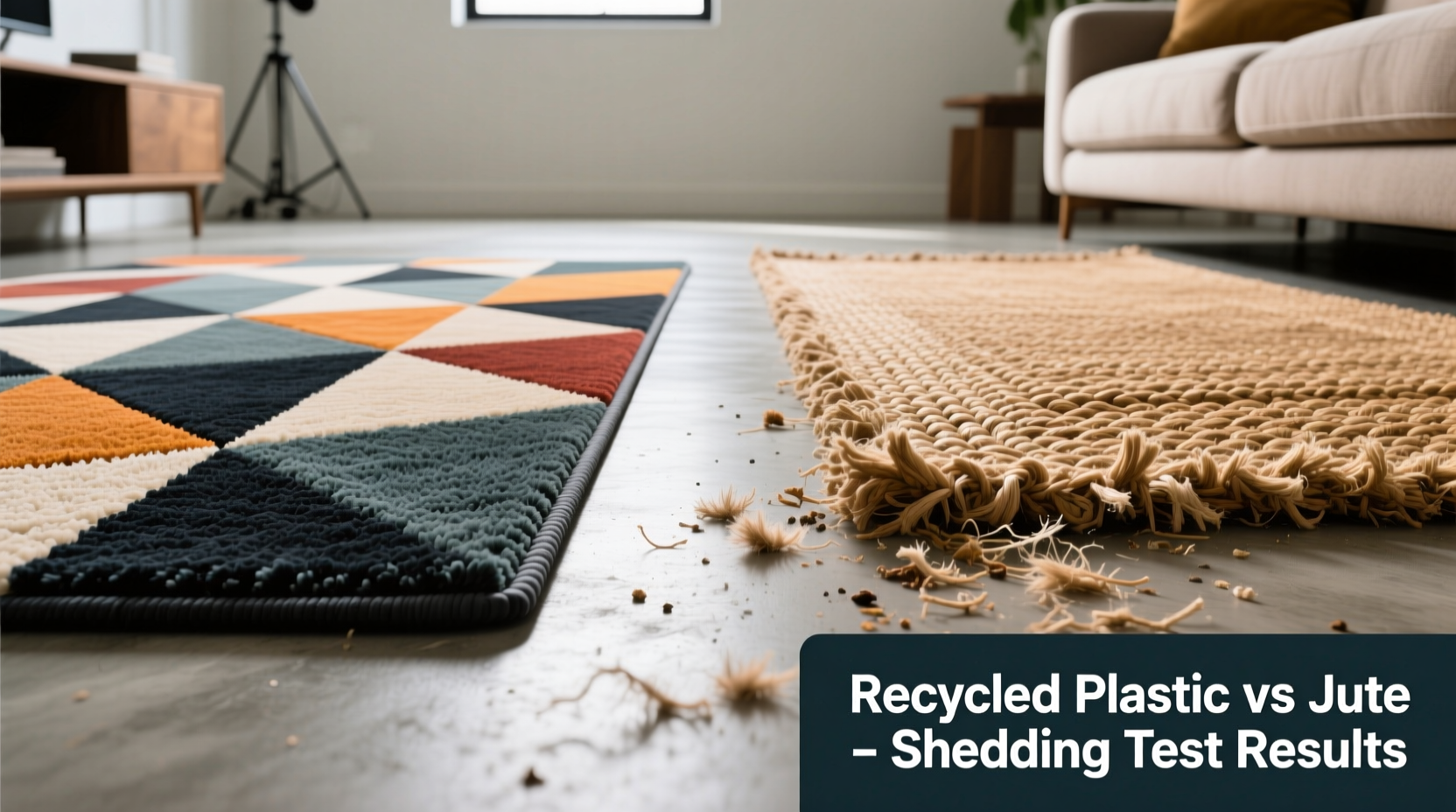
Understanding how each rug type is made reveals much about its shedding potential. Recycled plastic rugs, often labeled as “rugs made from recycled PET bottles,” are crafted from post-consumer polyethylene terephthalate (PET). The plastic undergoes washing, shredding, melting, and extrusion into synthetic yarns. These fibers are then woven or tufted into durable, moisture-resistant floor coverings.
In contrast, jute rugs are made from natural vegetable fibers extracted from the bark of the jute plant (*Corchorus* species), primarily grown in South Asia. The fibers are spun into coarse threads and handwoven or machine-woven into flatweave rugs. Jute is biodegradable, renewable, and typically processed with minimal chemicals, appealing to environmentally conscious consumers.
The fundamental difference lies in fiber origin: one is engineered polymer; the other is organic cellulose. Synthetic fibers resist degradation from friction and moisture far more effectively than natural ones. This gives recycled plastic an inherent advantage in resisting shedding when subjected to frequent walking, dragging furniture, or pet activity.
Tip: Always check product labels for fiber content—even \"jute\" rugs may blend in synthetic backing that affects performance.Shedding Performance in High-Traffic Areas
Shedding occurs when fibers break free from the rug’s structure due to mechanical stress. In high-traffic areas, this stress comes from daily footfall, vacuuming, and occasional abrasion from shoes or furniture movement.
Recycled plastic rugs exhibit minimal shedding over time. The thermoplastic fibers are tightly bonded during manufacturing, creating a resilient surface that withstands repeated use without fraying. Most recycled plastic area rugs are constructed using low-pile weaves or flatweaves designed for stability. Even after months of use in commercial or residential entryways, users report little to no visible fiber loss.
Jute rugs, while attractive and earthy in appearance, are prone to shedding—especially during the first few weeks after purchase. Natural jute fibers are brittle and lack elasticity. Under consistent pressure, individual strands snap and detach, accumulating as lint or dust on floors. In high-traffic settings, this shedding intensifies and can persist for several months. While some shedding decreases over time, it rarely stops completely, particularly in homes with pets or children.
“Natural fibers like jute offer warmth and sustainability, but they’re not inherently durable under load. Expect initial shedding and ongoing maintenance.” — Dr. Lena Patel, Textile Materials Researcher, University of Leeds
Comparative Durability and Longevity
Durability directly influences shedding. A rug that maintains structural integrity resists fiber loss more effectively. Below is a comparison of key durability factors between the two materials:
| Factor | Recycled Plastic Rugs | Jute Rugs |
|---|---|---|
| Tensile Strength | High – synthetic fibers resist stretching and breaking | Moderate to Low – fibers degrade with repeated stress |
| Abrasion Resistance | Excellent – ideal for staircases and hallways | Poor – wears down quickly under friction |
| Moisture Tolerance | Very High – mold and mildew resistant | Low – absorbs moisture, leading to rot and odor |
| Lifespan (with regular use) | 7–15 years | 3–7 years |
| Shedding Level | Minimal to none | High initially, moderate long-term |
The data shows that recycled plastic outperforms jute across nearly every metric relevant to high-traffic environments. Its resistance to physical and environmental stressors ensures lower maintenance and longer service life. Jute, though renewable, sacrifices longevity for aesthetic appeal and breathability.
Care and Maintenance Requirements
Maintenance plays a crucial role in managing shedding and extending rug life. How each material responds to cleaning determines how well it holds up over time.
Recycled plastic rugs are exceptionally low-maintenance. They can be spot-cleaned with mild soap and water, hosed down outdoors, or even machine-washed in some cases. Vacuuming with a brushless attachment prevents unnecessary abrasion. Because the fibers don’t absorb liquids, spills bead up and wipe away easily, reducing the risk of staining or microbial growth.
Jute rugs require careful handling. Water exposure causes swelling and discoloration, so steam cleaning or wet mopping is discouraged. Dry vacuuming (without a beater bar) is recommended weekly to reduce dust buildup and minimize fiber fatigue. Despite precautions, embedded dirt can grind against brittle jute fibers during foot traffic, accelerating shedding. Over time, accumulated soil weakens the weave, leading to edge fraying and pilling.
Tip: Rotate jute rugs every 3–6 months to distribute wear evenly and slow localized shedding.Real-World Example: A Family Home Entryway
The Thompson family lives in a suburban home with two active children, a dog, and frequent guests. Their front hallway sees over 50 foot traversals per day. Initially, they chose a large jute runner for its natural look and eco-friendly branding. Within three weeks, they noticed fibers collecting near the baseboards and tracked into adjacent rooms. Dusting and vacuuming became daily chores. After five months, the rug developed thin spots near the door where shoes were removed.
They replaced it with a recycled plastic flatweave rug made from 100% post-consumer bottles. Despite similar usage patterns—including muddy paws and dropped snacks—the new rug showed no signs of shedding after eight months. It was wiped down monthly with a damp cloth and vacuumed weekly. The family reported significantly less cleaning effort and greater satisfaction with both appearance and function.
This case illustrates how material choice impacts real-life usability. While jute offered initial charm, its performance faltered under demand. Recycled plastic proved resilient, practical, and truly low-shedding in continuous-use conditions.
Environmental Impact and Sustainability Considerations
Both materials are promoted as green alternatives, but their ecological profiles differ beyond surface-level claims.
Recycled plastic rugs divert waste from landfills and oceans. Each square meter can incorporate the equivalent of 20–50 plastic bottles. However, they are not biodegradable and may eventually contribute to microplastic pollution if improperly disposed of. That said, many manufacturers design them for long lifespans, delaying end-of-life concerns. Some brands also offer take-back programs for recycling at end-of-use.
Jute is fully biodegradable and grows rapidly with low pesticide use. It sequesters carbon during cultivation and supports rural economies in India and Bangladesh. Yet, transportation emissions (as most jute is imported), vulnerability to mold, and shorter lifespan reduce its net sustainability in high-traffic applications. A jute rug replaced every five years generates more cumulative waste than a single recycled plastic rug lasting 12 years.
Sustainability isn’t just about origin—it’s about lifecycle performance. A durable, long-lasting recycled plastic rug may have a smaller total environmental footprint than a frequently replaced natural fiber option.
Actionable Checklist: Choosing the Right Rug for High Traffic
Use this checklist to evaluate suitability before purchasing:
- ✅ Assess foot traffic level: Is the space used multiple times daily?
- ✅ Prioritize low-pile, tight-weave constructions for reduced snagging
- ✅ Avoid natural fibers like jute, sisal, or seagrass in entryways or hallways
- ✅ Confirm 100% recycled content if sustainability is a priority
- ✅ Test texture: Run your hand over the sample—does it feel brittle or flexible?
- ✅ Check return policy: Allow time to assess shedding in your environment
- ✅ Look for non-slip backing or compatibility with rug pads
Frequently Asked Questions
Do recycled plastic rugs feel cheap or plasticky underfoot?
Modern manufacturing techniques allow recycled plastic rugs to mimic the texture of wool, cotton, or even silk. Many feature soft-touch finishes and come in textured weaves that feel warm and inviting. While they lack the plushness of pile carpets, their comfort is sufficient for bare feet in moderate climates.
Can jute rugs be treated to stop shedding?
There is no permanent treatment to eliminate jute shedding. Some users apply fabric sealants or spray adhesives to bind loose fibers, but these can discolor the rug or create stiffness. Regular vacuuming with a suction-only nozzle helps manage loose fibers but does not prevent new shedding.
Are recycled plastic rugs safe for indoor air quality?
Yes. High-quality recycled plastic rugs are tested for volatile organic compounds (VOCs) and comply with indoor air safety standards such as OEKO-TEX® or GREENGUARD. Off-gassing is rare and typically dissipates within days of unrolling. Always air out new rugs for 24–48 hours before placing in enclosed spaces.
Final Recommendation
For high-traffic areas, recycled plastic rugs are the superior choice when shedding, durability, and ease of care are priorities. They maintain structural integrity under constant use, resist moisture and stains, and require minimal upkeep. While jute rugs bring natural beauty and biodegradability, their tendency to shed and degrade under pressure makes them better suited for low-impact spaces like bedrooms or formal sitting rooms.
Homeowners seeking both sustainability and performance should lean toward recycled plastic options—particularly those certified for recycled content and low environmental impact. By choosing wisely, you invest in a floor covering that looks good, stays clean, and lasts for years without contributing to daily messes.
💬 Have experience with either rug type in busy areas? Share your insights below to help others make smarter flooring choices!








