
When sudden storms roll in, a reliable windbreaker can mean the difference between staying dry and enduring a soggy trek. Among the most common materials used for these lightweight shells—nylon and polyester—there’s ongoing debate about which performs better under heavy rain. While both fabrics are hydrophobic to some degree, their molecular structure, weave density, coating compatibility, and long-term resilience vary significantly. Understanding these differences is essential for anyone who spends time outdoors, whether hiking, commuting, or traveling through unpredictable climates.
This article dives deep into the science and practical performance of nylon and polyester windbreakers when exposed to storm conditions. We’ll examine water repellency mechanisms, breathability trade-offs, durability concerns, and real-world use cases to determine which fabric offers superior protection when the skies open up.
Understanding Water Resistance in Windbreakers
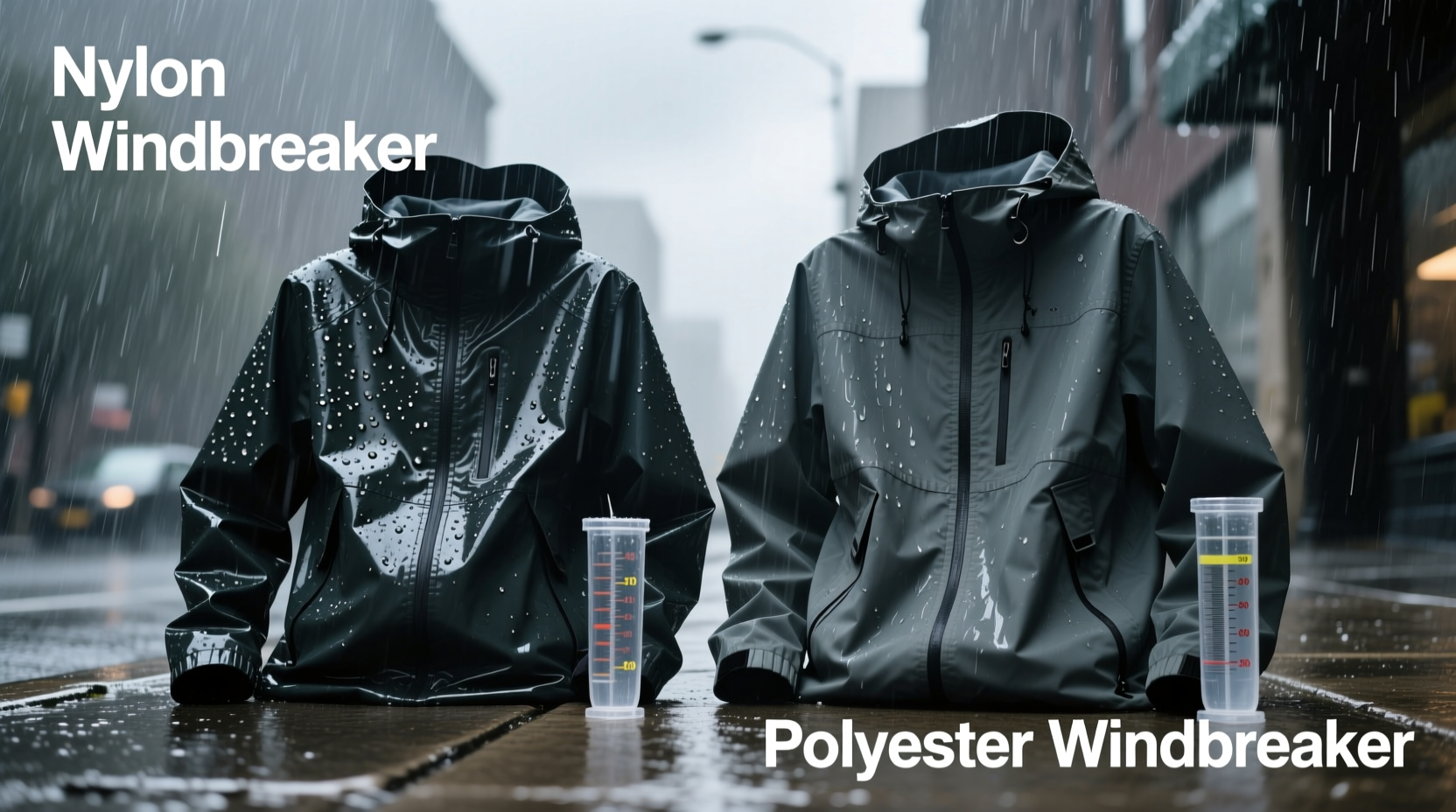
Before comparing nylon and polyester, it's crucial to distinguish between water resistance, water repellency, and waterproofing. Most windbreakers are not fully waterproof but instead rely on water-repellent finishes and tight weaves to resist light to moderate rain.
- Water-resistant: Delays water penetration but will eventually soak through under prolonged exposure.
- Water-repellent: Causes water to bead up and roll off the surface due to chemical treatments like DWR (durable water repellent).
- Waterproof: Prevents any water from passing through, typically achieved with membranes like Gore-Tex or PU coatings.
Windbreakers sit mostly in the water-resistant to water-repellent range. Their effectiveness depends not just on the base fabric but also on construction techniques such as seam taping, zipper quality, and fabric weight. However, the foundational material—nylon or polyester—plays a decisive role in how well the jacket handles moisture over time.
Nylon: Lightweight Strength with High Moisture Sensitivity
Nylon is renowned for its strength-to-weight ratio, making it a favorite for ultralight outdoor gear. In windbreakers, it provides excellent wind resistance and a soft hand feel. When treated with a DWR finish, nylon initially shows strong water beading properties.
However, nylon has a critical weakness: it absorbs moisture. Nylon fibers can absorb up to 4% of their weight in water, which compromises performance during extended storms. Once saturated, the fabric becomes heavier, loses breathability, and begins to conduct heat away from the body—a process known as “wicking chill.”
Despite this, high-denier nylon (measured in threads per inch) with a polyurethane (PU) or silicone coating can offer impressive storm resistance. These coated versions are common in expedition-grade gear but are less typical in standard windbreakers due to added stiffness and reduced packability.
Tip: If your nylon windbreaker starts absorbing water instead of beading it, reapply a DWR spray treatment to restore performance.Polyester: Superior Moisture Management and UV Resistance
Polyester outperforms nylon in one key area relevant to storm conditions: moisture resistance. Unlike nylon, polyester is inherently hydrophobic—it does not absorb water at the fiber level. This means that even after hours of drizzle, a polyester windbreaker remains lightweight and maintains its insulating properties.
In addition, polyester holds up better against UV degradation, which matters if you're caught in a storm followed by sudden sun exposure. Over time, UV rays break down nylon more quickly than polyester, leading to brittleness and reduced lifespan—especially in untreated fabrics.
Modern polyester windbreakers often use microfiber weaves (like those in Polartec or Schoeller fabrics) that enhance wind and water resistance without sacrificing breathability. Combined with factory-applied DWR, these jackets maintain consistent performance across multiple storm events.
“Polyester’s non-absorbent nature makes it ideal for damp environments where repeated wetting and drying cycles occur.” — Dr. Lena Torres, Textile Scientist at Outdoor Materials Lab
Comparative Performance in Storm Conditions
To evaluate real-world performance, consider three factors: initial water beading, sustained rain exposure, and post-storm recovery.
| Factor | Nylon Windbreaker | Polyester Windbreaker |
|---|---|---|
| Initial Water Beading (DWR active) | Excellent – forms tight beads quickly | Very Good – slightly larger beads |
| Performance After 30 Min Rain | Fabric may begin to absorb moisture; slight darkening | Surface stays dry; minimal saturation |
| Breathability Under Load | Declines as fabric wets out | Maintains airflow longer |
| Drying Time (Post-Storm) | Slower due to internal moisture retention | Faster – no fiber absorption |
| Long-Term Durability in Wet Climates | Moderate – degrades faster with UV and moisture | High – resists mold, mildew, and UV damage |
The data shows that while nylon starts strong with excellent water beading, polyester sustains performance longer during continuous rain. Once a nylon shell \"wets out\"—when water stops beading and soaks into the outer layer—it loses much of its ability to keep the wearer dry from the inside by limiting breathability. Polyester delays wettability significantly, preserving comfort and thermal regulation.
Real-World Example: Hiking the Pacific Northwest Trail
Consider a hiker traversing the Olympic Peninsula in Washington State, where rainfall averages over 140 inches annually. Carrying a lightweight nylon windbreaker, they start strong during a morning drizzle—the jacket beads water effectively. But by mid-afternoon, after four hours of steady rain and high humidity, the jacket begins to feel clammy. The outer fabric darkens, indicating moisture absorption, and condensation builds inside despite minimal exertion.
A companion wearing a similarly styled polyester windbreaker reports staying drier and more comfortable throughout the same stretch. Though neither jacket is fully waterproof, the polyester version resists saturation longer and feels lighter at day’s end. After stopping, the polyester jacket dries in under an hour when hung in a breeze, while the nylon one takes nearly two hours due to retained moisture within the fibers.
This scenario illustrates why many thru-hikers and backpackers now prefer polyester-based shells for wet, temperate climates—even if they sacrifice a few grams in weight.
Treatment and Maintenance: What Extends Performance?
Both nylon and polyester benefit from proper care, but their maintenance needs differ. DWR treatments wear off over time due to abrasion, dirt buildup, and washing. Reapplication is necessary to maintain water repellency.
Polyester generally retains DWR longer because its surface chemistry bonds more effectively with fluoropolymer treatments. Nylon, especially when dirty or oily, tends to degrade DWR faster. Additionally, frequent laundering accelerates the loss of repellency in both fabrics—but nylon suffers greater fiber fatigue over time.
Step-by-Step: Restoring Water Repellency
- Wash the windbreaker using a technical garment cleaner (e.g., Nikwax Tech Wash) to remove oils and residues.
- Air-dry completely before applying any treatment.
- Apply a DWR revitalizer spray evenly across the outer surface, focusing on shoulders and hood.
- Tumble dry on low heat for 20 minutes to reactivate the finish.
- Test performance by sprinkling water droplets—if they bead and roll off, the treatment worked.
Checklist: Choosing the Right Windbreaker for Stormy Weather
- ✅ Prioritize polyester if you frequently face prolonged rain or high humidity.
- ✅ Look for jackets with taped seams and storm flaps over zippers.
- ✅ Check for a durable water repellent (DWR) finish applied at the factory.
- ✅ Consider denier count—higher (e.g., 30D–70D) improves tear resistance.
- ✅ Ensure the fabric is breathable (look for MVTR ratings above 5,000 g/m²/24hr).
- ✅ Test water beading before purchase, if possible.
- ✅ Verify ease of re-treatment with aftermarket DWR products.
Frequently Asked Questions
Can a windbreaker really protect me in heavy rain?
Most windbreakers are designed for light rain and wind, not torrential downpours. While both nylon and polyester offer temporary protection, neither replaces a true waterproof hardshell in sustained storms. However, polyester models with high-density weaves and robust DWR perform better than nylon in moderate rain lasting 30–60 minutes.
Is nylon ever better than polyester for wet weather?
Yes—in specific cases. High-denier, silicone-coated nylon (like Cordura or Robic) used in premium rain shells can surpass basic polyester in abrasion resistance and water shedding. Additionally, some hybrid fabrics combine nylon’s strength with external polyester layers to balance performance. For ultralight packability and short bursts of rain, nylon remains competitive.
Do all polyester windbreakers repel rain equally?
No. Performance varies widely based on weave tightness, fabric weight, and finish quality. A cheap, loosely woven polyester shell may wet out faster than a high-quality ripstop nylon jacket. Always check construction details—not just the base material—when evaluating storm readiness.
Final Verdict: Which Fabric Wins in Storms?
For pure rain resistance during storms, **polyester outperforms nylon** in most real-world scenarios. Its inherent inability to absorb moisture ensures longer-lasting protection, faster drying, and better breathability under wet conditions. While nylon excels in strength and softness, its tendency to absorb water undermines its utility in prolonged rain.
That said, the best choice depends on context. For urban commuters facing brief showers, either fabric works well. For backpackers, cyclists, or adventurers in rainy climates, polyester-based windbreakers provide more reliable defense against the elements. Advances in fabric engineering have also blurred the lines—some modern jackets use nylon-poly blends or laminated membranes to leverage the strengths of both.
Ultimately, material is only one factor. Seams, fit, hood design, and maintenance play equally important roles in keeping you dry. But when comparing base fabrics head-to-head under storm conditions, polyester earns the edge for consistent, dependable performance.
“The future of storm-ready outerwear isn’t just about choosing nylon or polyester—it’s about smart finishing, construction, and knowing your environment.” — Mark Ellison, Gear Editor at *Trail & Climate Journal*
Take Action: Optimize Your Outerwear Strategy
Your next adventure doesn’t have to leave you soaked. Evaluate your current windbreaker: Is it made of nylon or polyester? Has the DWR worn off? Does it wet out too quickly in light rain? If so, consider upgrading to a high-performance polyester model or refreshing your existing gear with proper cleaning and re-treatment.
💬 Have experience with nylon vs polyester in storms? Share your story in the comments—your insights could help others stay dry on their next outing!








