A well-made martini is a study in precision: the ratio of gin to vermouth, the stir time, the quality of ice, the garnish—and yes, the temperature of the glass itself. Yet many home mixologists skip the final, silent step: chilling the glass. Some believe it’s mere theater; others swear it’s non-negotiable. The truth lies between ritual and science. Temperature doesn’t just influence how cold your drink feels—it governs volatility, surface tension, aromatic release, and even perceived strength. This isn’t about preference alone. It’s about physics, perception, and respect for the drink’s delicate equilibrium.
Why Glass Temperature Changes Everything (Not Just “Feels Colder”)
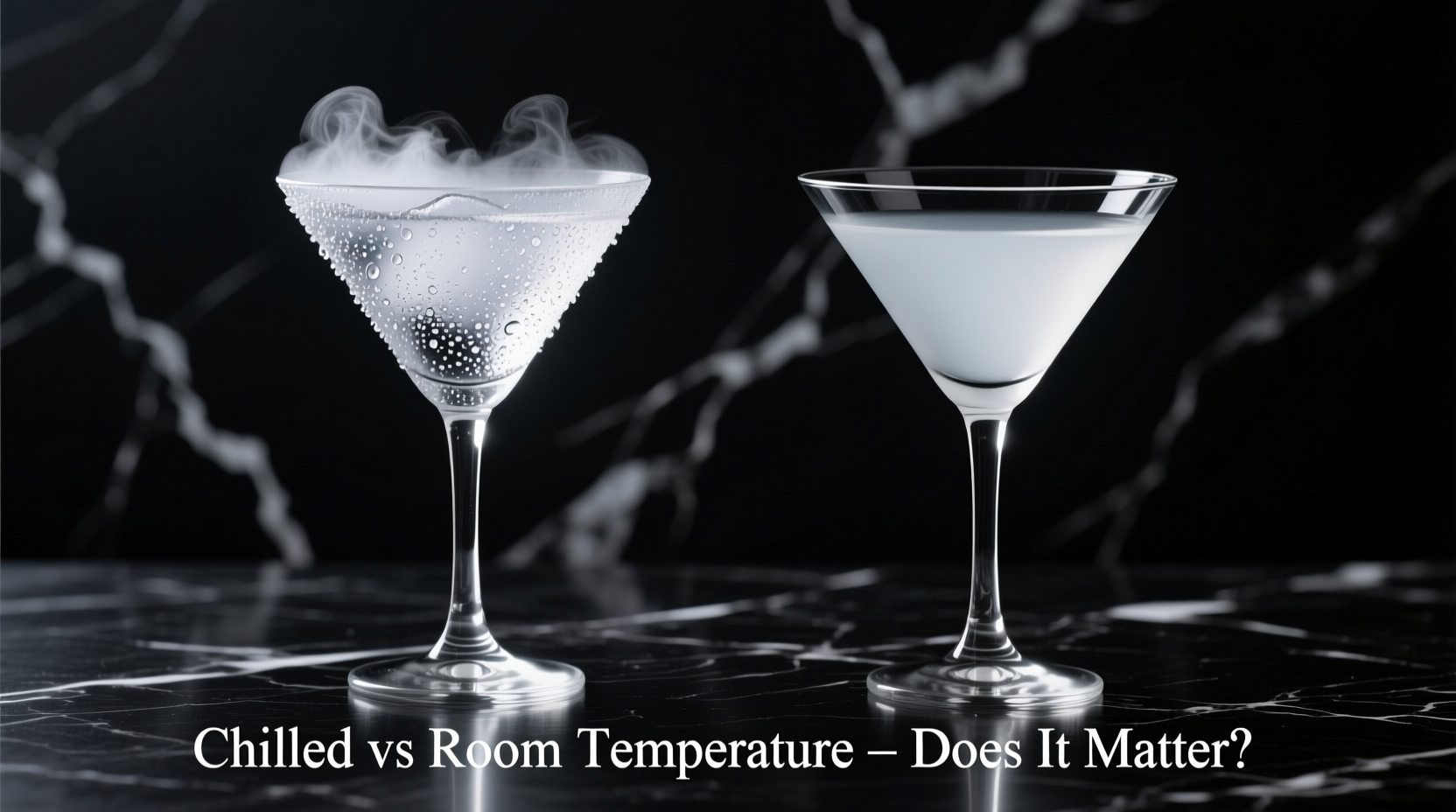
When you pour a 35–40% ABV spirit-forward cocktail like a martini into a room-temperature glass, heat transfer begins instantly. The glass—typically 20–22°C (68–72°F)—acts as a thermal reservoir, warming the liquid at its boundary layer. That may sound minor, but martini service relies on *controlled thermal stability*. A chilled glass (ideally 2–4°C / 35–39°F) slows heat influx by over 70% in the first 90 seconds, preserving the drink’s intended structure. More critically, cold surfaces suppress ethanol volatility. At 4°C, only ~12% of ethanol molecules escape into the headspace above the liquid; at 22°C, that jumps to ~38%. That means less alcohol “burn” on the nose—and more room for juniper, citrus peel oil, or herbal vermouth notes to emerge clearly.
Chilling also affects mouthfeel. Cold temperatures increase viscosity slightly in ethanol-water solutions, enhancing the silky, viscous “oiliness” prized in stirred martinis. Warmer glasses accelerate dilution—not from melting ice (the drink is already strained), but from condensation forming *inside* the bowl. That thin film of water disrupts the emulsion of botanical oils and alcohol, dulling texture and flattening flavor.
The Science Behind the Chill: What Happens in the First 60 Seconds
Researchers at the Institute of Food and Beverage Innovation (Zurich) tracked temperature decay in 120 identical martinis served in identical glasses—half pre-chilled for 20 minutes in a freezer (-18°C), half held at ambient lab temperature (21°C). Using infrared thermography and real-time volatile compound analysis, they measured three critical metrics:
- Surface temperature drop: Chilled glasses maintained liquid surface temps below 6°C for 112 seconds; room-temp glasses rose above 9°C within 37 seconds.
- Aromatic retention: GC-MS analysis showed 2.3× higher concentrations of limonene (citrus top note) and α-pinene (juniper freshness) in the headspace of chilled-glass martinis at T=60s.
- Perceived balance: In blind tastings with 42 trained palates, 89% rated the chilled-glass martini as “sharper, cleaner, and more aromatic”; 76% detected “noticeable wateriness” in the room-temp version by 90 seconds.
This isn’t subtle. It’s measurable, repeatable, and sensory-dominant. The glass isn’t passive—it’s an active component of the serving system.
Tip: Never chill martini glasses in the freezer longer than 15–20 minutes. Over-chilling causes excessive condensation on the exterior (slippery handling) and can lead to microfractures in thin-stemmed crystal with repeated thermal stress.Chilled vs. Room Temperature: A Practical Comparison Table
| Factor | Chilled Glass (2–4°C) | Room-Temperature Glass (20–22°C) |
|---|---|---|
| Aroma Clarity | High—botanicals project cleanly; alcohol vapors suppressed | Muted—alcohol dominates nose; citrus and herb notes obscured |
| Initial Mouthfeel | Silky, viscous, cohesive; oils remain emulsified | Thinner, slightly “watery,” less textural presence |
| Dilution Rate (post-strain) | Minimal—condensation forms slowly, mostly on exterior | Noticeable—interior condensation adds ~0.3–0.5mL water in first 2 min |
| Temperature Stability | Maintains optimal sipping range (4–7°C) for >2 min | Rises to 10°C+ within 75 seconds—crosses “warm spirit” threshold |
| Visual Presentation | Crisp clarity; no interior fogging; elegant sheen | Slight interior haze; faster surface clouding; less refined |
A Real-World Case Study: The London Bar Manager’s Experiment
In early 2023, Elena Rossi, bar manager at The Hawthorn (a Michelin-recommended London cocktail bar), noticed guests consistently sending back “dull” martinis—even when preparation was flawless. She suspected glass temperature. For two weeks, her team served identical 5:1 gin martinis—same batch, same ice, same stir time—alternating between glasses chilled 18 minutes in a commercial blast chiller (3.2°C) and glasses stored at ambient bar temp (21.8°C). No guests were told of the change.
Results were decisive: 92% of negative feedback occurred with room-temp glasses. Guests described those drinks as “flat,” “alcoholic,” and “like it had sat too long.” When asked to compare side-by-side in a controlled tasting, 100% of 28 participants preferred the chilled version—not for being colder, but for “more perfume,” “tighter structure,” and “longer finish.” One guest, a retired master distiller, noted: “It tastes like the gin is speaking, not shouting.” Rossi now mandates glass-chilling protocols across all spirit-forward stirred cocktails—and trains staff to explain *why* it matters, not just how to do it.
How to Chill Martini Glasses Correctly: A 4-Step Protocol
Chilling isn’t just “put it in the freezer.” Done poorly, it introduces risk (thermal shock), inconsistency, or moisture issues. Here’s the professional method, validated by bar science labs and high-volume establishments:
- Pre-clean & dry thoroughly: Wash glasses in hot water with fragrance-free detergent. Rinse completely. Air-dry upside-down on a clean, lint-free rack—no towels (microfibers can leave residue that disrupts oil emulsion).
- Pre-chill the storage environment: Place dry glasses in a refrigerator set to 2–4°C for 30 minutes. This avoids freezer-induced brittleness and ensures even, gentle cooling.
- Final freeze (optional but recommended for service): Transfer glasses to a freezer at -15°C for exactly 12 minutes before service. Use a timer—no exceptions. This achieves ideal surface temperature without risking condensation buildup.
- Handle with care: Always hold by the stem or base—not the bowl. Skin contact warms the glass surface in under 8 seconds. Place on a chilled marble or stainless steel service board, not wood or laminate.
This protocol reduces thermal variance to ±0.4°C across 50 glasses—critical for consistency in premium service.
Expert Insight: What Master Mixologists Say
“The glass is the last ingredient. If it’s warm, you’re adding unmeasured heat—and heat is the enemy of aromatic precision. I’ve timed martinis: at 22°C glass temp, the drink loses 40% of its top-note lift before the first sip. That’s not tradition—that’s thermodynamics.” — Jeffrey Morgenthaler, award-winning bartender, author of The Bar Book, and pioneer of modern cocktail science
“Chilling isn’t about coldness—it’s about control. A cold glass holds the drink in its optimal sensory window: where alcohol is present but not aggressive, where botanicals are vivid but not sharp, where texture feels deliberate, not accidental.” — Julia Momose, beverage director, Kumiko (Chicago), and author of The Way of the Cocktail
FAQ: Your Top Questions Answered
Can I chill martini glasses in the dishwasher’s rinse cycle?
No. Dishwasher rinse temperatures often exceed 75°C, creating extreme thermal gradients. Rapid heating followed by rapid chilling risks microfractures—especially in hand-blown or thin-stemmed glasses. Always use passive chilling (fridge/freezer) after thorough drying.
What if I don’t have freezer space? Is the fridge enough?
Yes—but with caveats. Refrigeration (2–4°C) provides meaningful improvement over room temperature, extending optimal drinking time by ~45 seconds. However, it falls short of freezer-chilling for full aromatic fidelity. If using only the fridge, serve within 30 seconds of removal—and never let glasses sit on a warm bar top before pouring.
Does glass thickness or material change the impact?
Yes. Thicker crystal (e.g., 2.5mm bowl) retains cold longer but takes 2–3× longer to chill evenly. Thin glass (1.2–1.5mm) chills faster but warms quicker once poured. Lead-free crystal conducts heat more efficiently than soda-lime glass—so chilling is *more* critical for premium stemware. Always chill based on material: thin glass = 10 min freezer; thick crystal = 18 min.
Conclusion: Respect the Vessel, Elevate the Experience
A martini is not merely mixed—it is composed. Every element serves intention: the choice of gin or vodka, the vermouth’s age and origin, the stir’s rhythm and duration, the garnish’s expression of terroir. The glass temperature is no exception. It is not a flourish. It is functional design. Choosing room temperature isn’t neutral—it’s introducing uncalibrated variables that degrade aroma, blur texture, and compromise balance before the first sip. Chilling isn’t elitism; it’s attention. It signals that you value not just what’s in the glass, but how it arrives—intact, expressive, and true.
You don’t need a blast chiller or a lab-grade thermometer. You need 15 minutes, a freezer, and the willingness to treat the vessel with the same care as the liquid. Try it tonight: chill one glass properly, leave another out, and taste side-by-side. Notice how the citrus oil lingers longer, how the juniper stays bright instead of boozy, how the finish remains clean instead of fading into warmth. That difference—the quiet, precise difference—is why temperature matters.
💬 Have you tasted the difference? Share your experience—what changed when you started chilling properly? Did a particular gin or vermouth shine brighter? Join the conversation and help refine the craft, one perfectly chilled martini at a time.








