As homes and commercial buildings transition to energy-efficient lighting, one persistent challenge remains: identifying the right LED replacement for outdated or obscure light bulb bases. Many older fixtures use sockets that are no longer standard—ranging from bayonet mounts in vintage chandeliers to proprietary industrial connectors. Consumers today face a choice between two emerging technologies designed to solve this problem: smartphone-based LED replacement bulb finder apps and physical universal socket scanner tools. Each offers distinct advantages depending on context, user expertise, and infrastructure needs.
This article examines both options in depth, comparing their accuracy, ease of use, cost, scalability, and long-term utility. Whether you're a homeowner replacing a single bulb or a facility manager overseeing hundreds of fixtures across a campus, understanding these tools can save time, reduce errors, and ensure optimal lighting performance.
Understanding the Problem: Obsolete Bulb Bases in Modern Lighting
The shift from incandescent and fluorescent lighting to LED technology has introduced compatibility issues many didn’t anticipate. While LEDs last longer and consume less power, they must physically and electrically match existing sockets. Unfortunately, manufacturers have used over 40 different base types globally, including rare variants like E11 (mini-candelabra), G38 (bi-pin flood), or even discontinued industrial designs such as the BA15d double-contact bayonet.
When a fixture fails and the original bulb is unavailable, users often resort to guesswork. Misidentifying a base leads to returns, delays, and sometimes unsafe installations. A survey by the Illuminating Engineering Society (IES) found that nearly 37% of residential LED returns were due to incorrect base fitment—a costly issue for both consumers and retailers.
This growing need has spurred innovation in identification tools. Two primary solutions now dominate the market: software-driven mobile apps and hardware-based universal scanners. Both aim to eliminate confusion, but they take fundamentally different approaches.
How LED Replacement Bulb Finder Apps Work
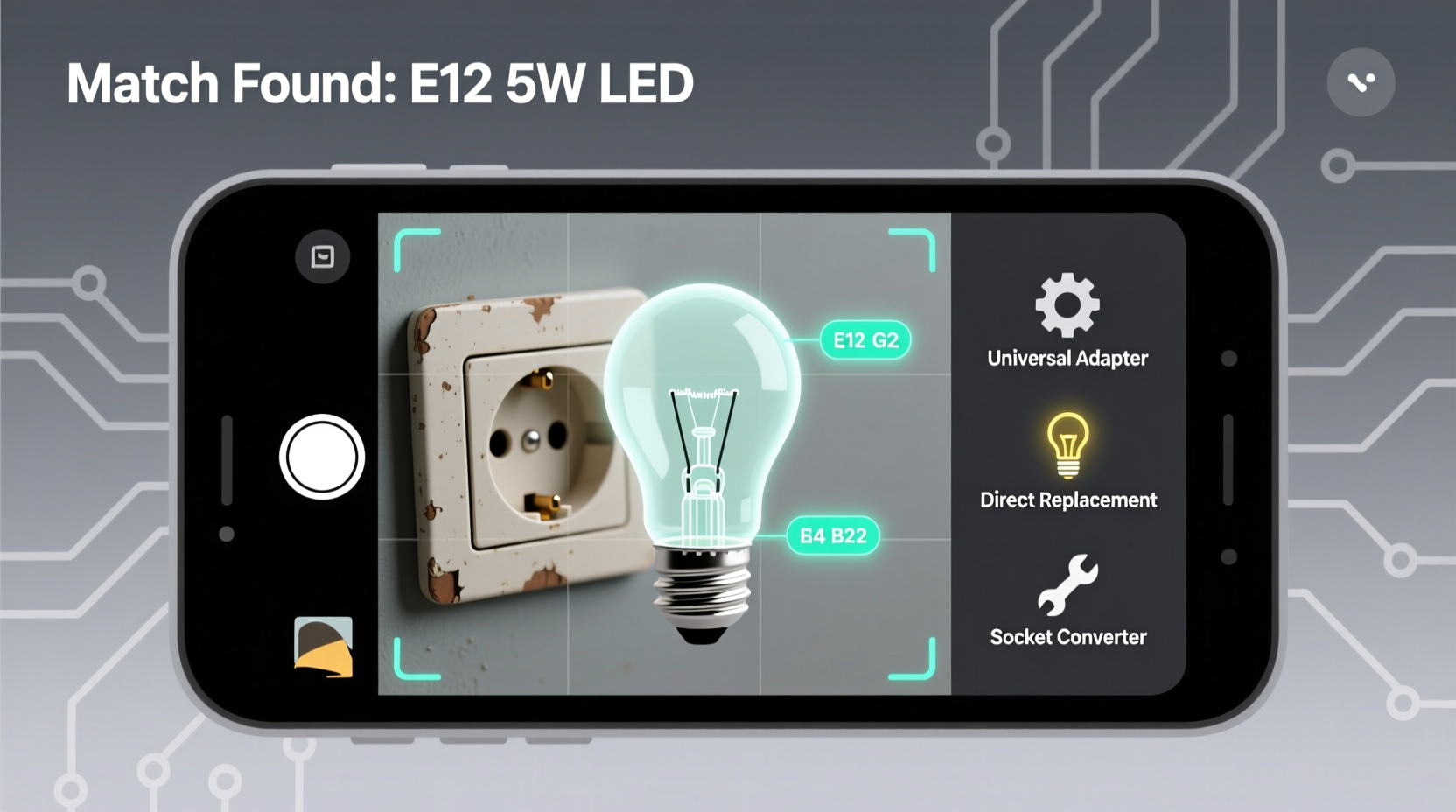
Bulb finder apps leverage smartphone cameras, augmented reality (AR), and machine learning to identify bulb types. Users simply snap a photo of the socket or remaining bulb fragment, and the app analyzes visual cues—such as pin configuration, diameter, length, and shape—to suggest compatible LED replacements.
Leading apps like Lumivision Match, BulbScan+, and SocketID Pro maintain extensive databases of over 500 bulb types, updated regularly with new product entries. Some integrate directly with e-commerce platforms, allowing instant purchasing once a match is confirmed.
These apps excel in accessibility. Most are free or low-cost, require no additional hardware, and can be used anywhere with a smartphone. They’re particularly useful for homeowners dealing with isolated replacements in lamps, ceiling fans, or under-cabinet lighting.
Tip: When using a bulb finder app, clean the socket first and take photos in bright, natural light to improve recognition accuracy.However, limitations exist. Image recognition struggles with obscured or corroded sockets. Reflective surfaces, shadows, or partial views can mislead algorithms. Additionally, apps cannot verify electrical parameters like voltage tolerance or dimming compatibility without manual input.
Universal Socket Scanner Tools: The Hardware Alternative
In contrast, universal socket scanners are handheld electronic devices designed to physically interact with the socket. These tools feature retractable probes, digital calipers, and built-in multimeters that measure not only physical dimensions but also electrical characteristics such as wattage rating, voltage, and polarity.
Devices like the LuxCheck SC-300 or BaseSense X1 work by gently inserting into the socket. Sensors detect contact points, spacing, and resistance, then cross-reference findings against an internal database. Results appear on an LCD screen, listing exact bulb equivalents—including model numbers from major brands like Philips, Sylvania, and GE.
One key advantage is precision. Because the scanner makes direct contact, it avoids the ambiguity of visual estimation. It can distinguish between similar-looking bases—for example, differentiating E26 (standard medium) from E27 (European medium) based on thread pitch differences as small as 0.1mm.
“Physical measurement eliminates guesswork. In retrofit projects, a single mismatched base can delay an entire job. Scanners provide certainty.” — Marcus Tran, Electrical Project Manager at MetroLight Systems
These tools are especially valuable in commercial environments. Maintenance crews servicing hospitals, schools, or warehouses benefit from fast, repeatable identifications across large inventories. Some models even support Bluetooth logging, enabling teams to generate replacement lists and track fixture histories digitally.
Comparative Analysis: App vs Scanner
| Feature | LED Bulb Finder App | Universal Socket Scanner |
|---|---|---|
| Cost | $0–$10 (most free) | $80–$200 |
| Accuracy | Moderate (depends on image quality) | High (direct measurement) |
| Electrical Testing | No | Yes (voltage, wattage, continuity) |
| Portability | Excellent (uses existing phone) | Good (requires carrying device) |
| Durability | Depends on phone condition | Built for field use (rugged casing) |
| Learning Curve | Low | Moderate (requires basic electrical safety knowledge) |
| Best For | Homeowners, occasional users | Electricians, facility managers |
The data shows a clear trade-off: apps offer convenience and affordability; scanners deliver reliability and technical depth. Neither is universally superior—the best choice depends on usage frequency, risk tolerance, and operational scale.
Real-World Application: A Case Study
Consider the renovation of the historic Grandview Theater in Portland, Oregon. Built in 1928, the venue featured dozens of ornamental sconces with non-standard BA10d bayonet bases—long since discontinued. The maintenance team initially tried a popular bulb finder app, but inconsistent lighting and tarnished contacts led to repeated misidentifications.
Frustrated, they invested in a LuxCheck SC-300 scanner. Within two days, every socket was accurately mapped. The scanner detected subtle variations in spring tension and contact alignment, revealing that some fixtures had been manually modified over decades. Using the scanner’s export function, the team generated a procurement list and completed the full LED retrofit with zero return shipments.
Project lead Dana Reeves noted: “The app saved us a few bucks upfront, but cost us more in downtime. The scanner paid for itself in one week.”
Step-by-Step Guide: Choosing and Using the Right Tool
- Assess your needs: Are you replacing one bulb or managing a building-wide upgrade? Single-use favors apps; recurring tasks justify scanner investment.
- Inspect the socket: If it’s dirty, damaged, or hard to reach, clean it carefully before scanning or photographing.
- Choose your method: For quick home fixes, open a trusted bulb finder app. For commercial or high-stakes jobs, use a universal scanner.
- Capture data: With apps, take multiple angles in good light. With scanners, follow manufacturer instructions for safe insertion.
- Verify results: Cross-check suggested bulbs with manufacturer catalogs or retailer specs. Confirm dimmability, color temperature, and lumen output.
- Purchase and install: Buy from reputable suppliers. Test the new bulb briefly before final mounting.
- Document findings: Especially in commercial settings, log replacements for future reference.
Expert Recommendations and Industry Trends
According to the National Electrical Manufacturers Association (NEMA), interoperability tools will become increasingly important as legacy infrastructure ages. “By 2030, over 60% of installed lighting in the U.S. will be LED—but much of it retrofitted into old housings,” says NEMA spokesperson Linda Cho. “Tools that bridge the gap between past and present are essential.”
Emerging hybrid solutions may soon combine both approaches. Prototype devices like the SmartSocket One pair a compact scanner with a companion app, syncing measurements to cloud databases for real-time inventory management. Such innovations suggest a future where physical and digital identification converge.
For now, professionals recommend starting simple. Homeowners should try a top-rated app first. Those in trades or property management should consider a scanner as part of their standard toolkit—just like a multimeter or voltage tester.
FAQ
Can a bulb finder app tell me if an LED is dimmable?
No—not automatically. While some apps include filters for dimmability, this information must be manually selected or verified through product details. Always check packaging or specifications before purchase.
Are universal socket scanners safe to use in live circuits?
No. Most scanners are designed for use only when power is completely disconnected. Inserting any probe into an energized socket poses serious shock and short-circuit risks. Always de-energize the circuit before testing.
Do these tools work with specialty bulbs like UV or grow lights?
Partially. Both apps and scanners can identify the base type of specialty bulbs, but neither confirms spectral output or intended use. You’ll still need to select the correct bulb type based on application requirements.
Action Plan: What You Should Do Next
- If you’re a homeowner handling occasional bulb changes: Download a highly rated LED replacement bulb finder app. Test it on a few known bulbs to build confidence.
- If you manage multiple properties or perform electrical work: Invest in a universal socket scanner. Train your team on proper use and integrate it into maintenance workflows.
- Always prioritize safety: Turn off power, use insulated tools, and wear protective gear when working with fixtures.
- Keep records: Maintain a log of bulb types per room or building zone to speed up future replacements.
Conclusion
The debate between LED replacement bulb finder apps and universal socket scanner tools isn't about declaring a winner—it's about matching the solution to the problem. Technology has given us powerful options, but wisdom lies in knowing when to use each. For everyday convenience, apps offer fast, accessible answers. For precision, safety, and efficiency in professional settings, scanners are unmatched.
As lighting continues to evolve, so too will the tools we use to maintain it. By adopting the right identification method today, you ensure smoother transitions tomorrow—whether upgrading a porch light or modernizing an entire facility. Make informed choices, work safely, and let clarity guide every connection.
💬 Have experience with bulb ID tools? Share your insights below—your story could help others avoid costly mistakes and light the way forward.








