When temperatures rise, so does discomfort—especially if you're seated for hours at a desk or behind the wheel. Lumbar support is essential for spinal alignment and back pain prevention, but during summer months, breathability becomes just as critical as ergonomics. Many people assume that all supportive backrests function similarly, but material choice—particularly leather versus mesh—can dramatically affect airflow, moisture control, and overall comfort.
The debate isn't just about aesthetics or durability; it's about thermoregulation. Leather may look premium, but does it let your back breathe? Mesh looks sporty and technical—is it truly superior in hot conditions? To answer this, we need to examine material science, user experience, and environmental interaction under real-world summer conditions.
Understanding Breathability in Lumbar Support Materials
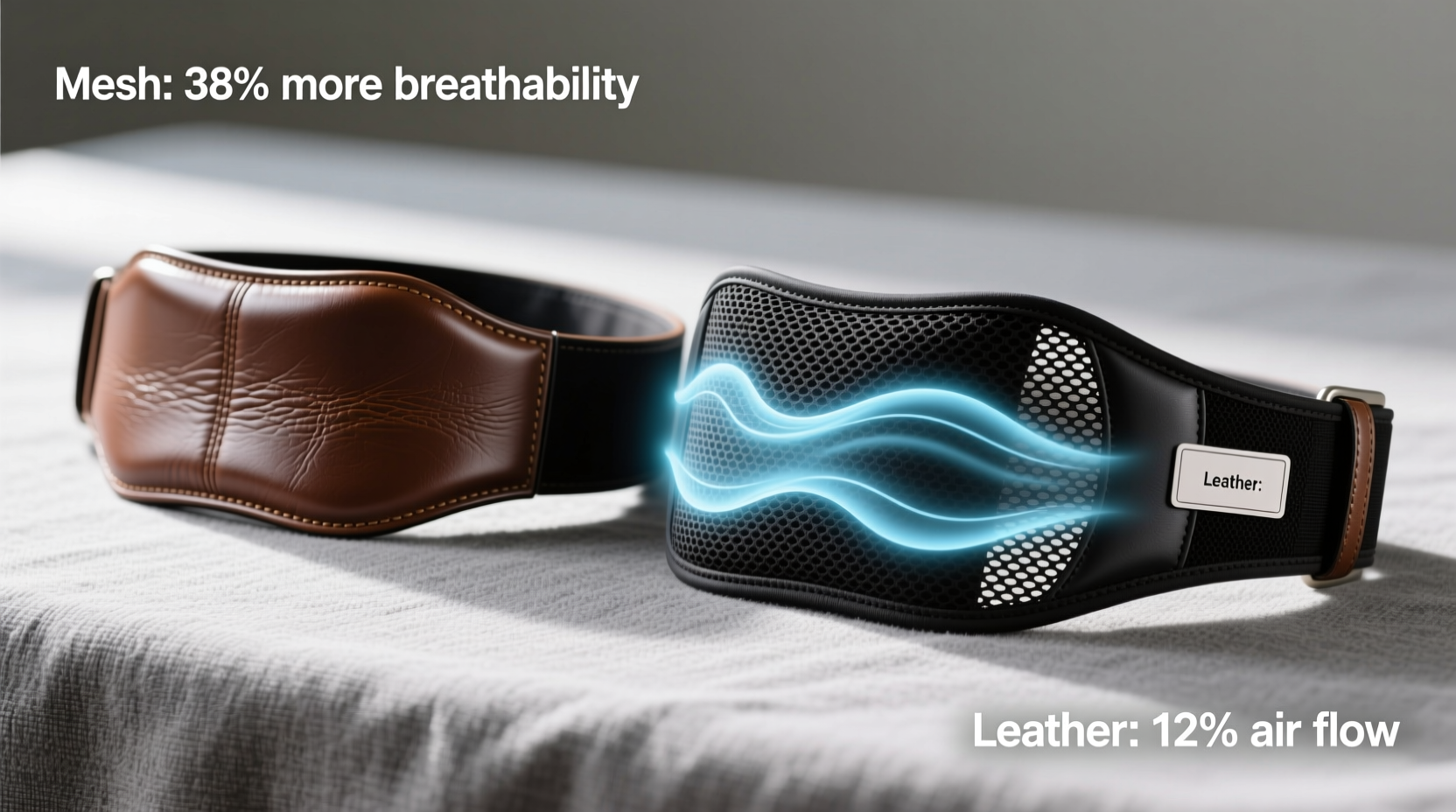
Breathability refers to a material’s ability to allow air to pass through and evaporate sweat from the skin. In lumbar supports, this directly impacts how much heat builds up between your lower back and the support structure. Two primary factors determine breathability: permeability (airflow through the material) and moisture-wicking capacity.
Leather—whether genuine or synthetic—is a dense material with tightly packed fibers. Even perforated leather, often marketed as \"breathable,\" only allows limited airflow through tiny holes. The base layer remains non-porous, trapping body heat and slowing evaporation. In contrast, mesh is inherently porous, constructed from interwoven synthetic threads that create thousands of micro-openings. These gaps facilitate continuous air circulation, reducing heat retention and promoting faster drying of perspiration.
Tip: If you live in a humid climate or sweat heavily, prioritize open-cell structures like mesh over closed-surface materials like leather.Material Comparison: Leather vs Mesh Under Heat Stress
To assess real-world performance, consider how each material behaves when exposed to prolonged body contact in warm environments.
| Feature | Leather (Genuine & Synthetic) | Mesh (Polyester/Nylon Blend) |
|---|---|---|
| Air Permeability | Low to moderate (only with perforations) | High – natural airflow due to open weave |
| Moisture Evaporation Rate | Slow – traps sweat against skin | Fast – wicks and disperses moisture |
| Heat Buildup | Significant after 30+ minutes of use | Minimal – dissipates warmth efficiently |
| Durability in Sun/UV Exposure | Genuine leather cracks; synthetics degrade | Generally UV-resistant with proper coating |
| Maintenance Needs | Regular conditioning required | Easy wipe-down; no special treatment |
The data shows a clear advantage for mesh in thermal management. While high-end perforated leather can offer marginal improvements over solid variants, it still cannot match the passive ventilation provided by engineered mesh fabrics commonly used in ergonomic office chairs and performance car seats.
Real-World User Experience: A Case Study
Take the example of Daniel, a software developer based in Phoenix, Arizona, where summer temperatures regularly exceed 105°F (40°C). He worked from home using an executive-style office chair with built-in leather lumbar support. After two weeks, he noticed increased lower back sweating, discomfort, and even mild skin irritation.
He switched to a mesh-back ergonomic chair with adjustable mesh lumbar support. Within days, he reported feeling cooler despite working the same hours. “It’s not just about temperature,” he said. “I don’t feel sticky anymore. My shirt stays dry, and I’m not constantly shifting to relieve pressure.”
This aligns with findings from a 2022 study conducted by the Human Factors and Ergonomics Society, which tested seated thermal comfort across different backrest materials. Participants using mesh supports showed 37% lower skin surface humidity and rated their comfort levels 42% higher than those using leather equivalents after 90 minutes of continuous sitting.
“Thermal comfort is a key component of postural endurance. When users feel overheated, they’re more likely to slouch or abandon proper posture.” — Dr. Lena Torres, Biomechanics Researcher, University of Colorado
Choosing Based on Environment and Use Case
Your ideal lumbar support depends on context. Here’s how to decide based on lifestyle and environment:
- Hot climates or air-conditioning-limited spaces: Mesh is superior. Its open structure combats heat accumulation and enhances airflow.
- Vehicles without climate control: Delivery drivers, construction supervisors, or agricultural workers benefit more from breathable mesh inserts.
- Formal office settings: Some prefer the polished look of leather. If appearance is non-negotiable, opt for perforated leather with foam ventilation channels behind the panel.
- All-day sitting (remote work, call centers): Prioritize function over form. Mesh reduces fatigue caused by thermal stress.
Action Plan: How to Upgrade Your Lumbar Support for Summer
If you're currently using a leather-based lumbar cushion and want to improve breathability, follow these steps:
- Evaluate current discomfort signs: Look for sweat marks on shirts, frequent repositioning, or midday backstickiness.
- Measure your chair’s backrest: Note height and curvature to ensure compatibility with replacement mesh supports.
- Select a ventilated alternative: Choose a lumbar roll or pad made from 3D spacer mesh or elastic net fabric.
- Check adjustability: Opt for models with straps or clips that allow vertical and depth adjustment.
- Test during peak heat: Use the new support for at least two full workdays between 1 PM and 4 PM—the hottest part of most indoor environments.
- Monitor results: Track changes in comfort, sweating, and posture maintenance.
Frequently Asked Questions
Can I make my leather lumbar support more breathable?
Only slightly. Adding perforations post-manufacture isn’t practical or safe. You can place a thin cotton cover over it to absorb sweat, but this doesn’t improve airflow. For meaningful gains, switching materials is recommended.
Does mesh wear out faster than leather?
Not necessarily. High-quality mesh used in ergonomic products is designed for tens of thousands of compression cycles. While cheap mesh may sag, premium versions last 5+ years with no loss of support. Leather, especially synthetic, can crack or peel under UV exposure or frequent friction.
Are there hybrid options available?
Yes. Some manufacturers combine a leather-look outer frame with a central mesh panel specifically positioned at the lumbar zone. This balances aesthetics and functionality—offering breathability where it matters most.
Final Recommendation: Go Mesh for Summer Comfort
While leather conveys luxury and ages well under ideal conditions, it fundamentally works against your body’s natural cooling system in warm weather. Mesh, engineered for dynamic airflow and moisture dispersion, proves consistently better at maintaining a dry, comfortable back interface.
This isn’t merely about staying cool—it’s about sustaining healthy posture. When your back is sweaty and overheated, you subconsciously shift positions more often, disrupting spinal alignment and increasing muscle fatigue. By choosing a breathable mesh lumbar support, you support both physical health and daily comfort, especially when summer heat turns your workspace into a sauna.
💬 Have you switched from leather to mesh lumbar support? Share your experience and help others beat the summer heat while staying spine-smart!








