
For urban commuters, a reliable bag isn’t just about style—it’s about resilience. Few challenges test a bag more than daily exposure to rain, humidity, and sudden downpours. Two popular choices—leather crossbody bags and nylon sling packs—each bring strengths to the table. But when it comes to surviving wet conditions, one clearly outperforms the other in raw durability and low-maintenance performance. Understanding how each material responds to moisture, how they age over time, and what kind of care they demand can help you make an informed decision for your rainy-day routine.
Material Behavior in Wet Conditions
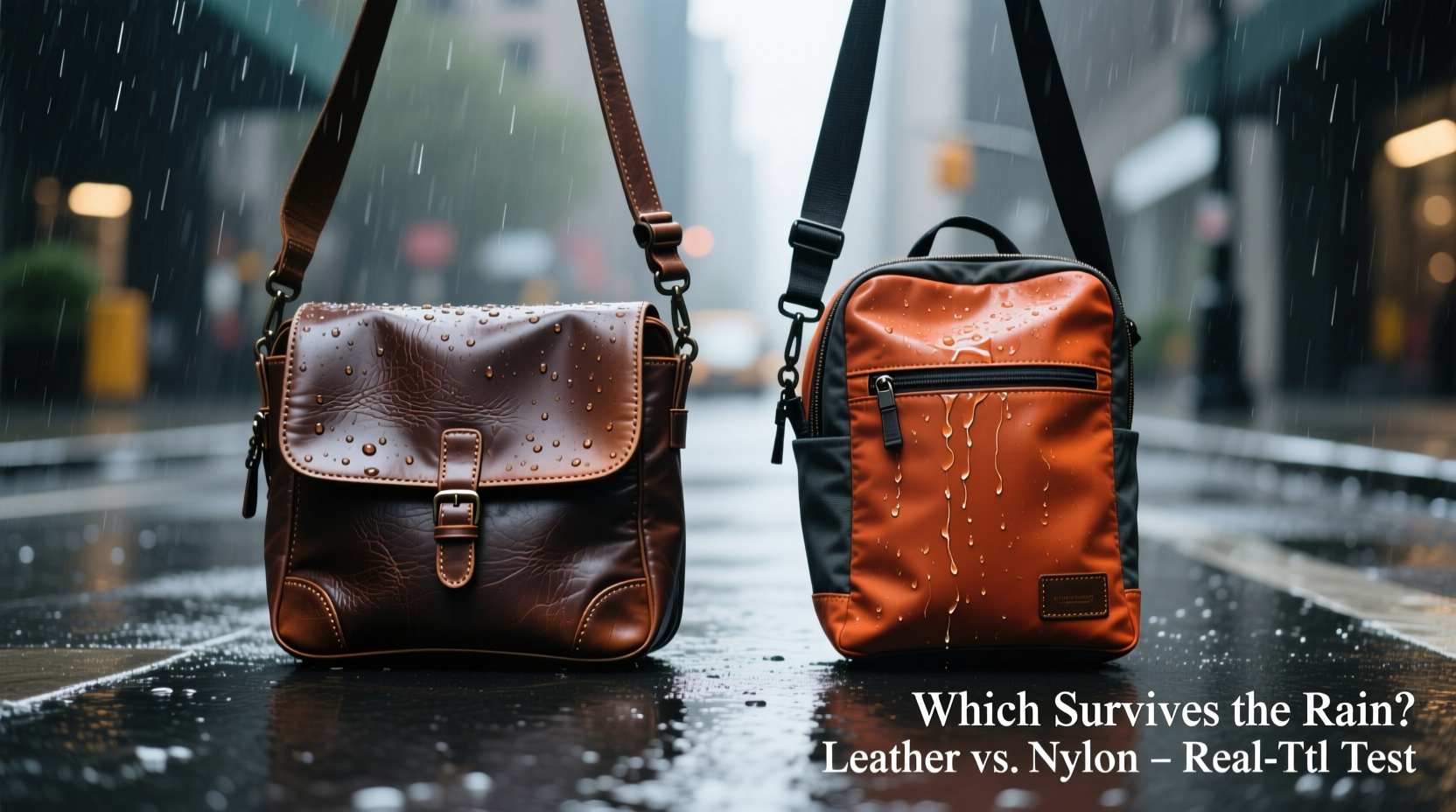
The fundamental difference between leather and nylon lies in their interaction with water. Leather is a natural material derived from animal hides, making it porous and reactive to environmental changes. When exposed to rain, untreated or even lightly conditioned leather absorbs moisture quickly. This leads to swelling, discoloration, and, if not dried properly, mold growth. Over time, repeated exposure causes the fibers to break down, resulting in stiffness, cracking, and irreversible damage.
In contrast, nylon is a synthetic polymer engineered for toughness and water resistance. Most modern sling packs are constructed from high-denier nylon (often 420D to 1000D), which features tightly woven fibers and a polyurethane (PU) or silicone coating. This makes them inherently water-repellent, allowing droplets to bead up and roll off rather than soak through. Even in heavy rain, a well-designed nylon sling pack keeps contents dry without requiring immediate post-exposure maintenance.
Tip: If caught in the rain with a leather bag, wipe it immediately with a soft cloth and let it air-dry naturally—never use heat.Long-Term Durability and Aging
Leather has a reputation for aging gracefully. With proper care, full-grain leather develops a rich patina—a lustrous sheen that enhances its appearance over years of use. However, this benefit assumes controlled conditions and consistent maintenance. In real-world rainy climates like Seattle, London, or Vancouver, where dampness is frequent, the “patina” can turn into warping, mildew, or seam deterioration.
Nylon, while lacking the organic elegance of leather, excels in longevity under harsh conditions. It resists UV degradation, doesn’t rot, and maintains structural integrity even after years of wet-dry cycles. High-quality nylon sling packs often feature reinforced stitching, weather-sealed zippers, and internal linings that prevent water migration. Brands like Peak Design, Fjällräven, and Nomatic engineer their slings specifically for all-weather reliability, making them ideal for unpredictable commutes.
“Nylon’s synthetic nature gives it a decisive edge in wet environments. It won’t absorb water, degrade from humidity, or require seasonal conditioning like leather.” — Marcus Tran, Product Engineer at Urban Gear Labs
Comparative Performance Table
| Feature | Leather Crossbody Bag | Nylon Sling Pack |
|---|---|---|
| Water Resistance | Poor (absorbs moisture unless treated) | Excellent (water-repellent coating) |
| Drying Time After Rain | 6–24 hours (risk of mold if rushed) | 1–3 hours (surface dries quickly) |
| Maintenance Frequency | Monthly conditioning recommended | Occasional wipe-down only |
| Lifespan in Wet Climate | 2–5 years with diligent care | 5–10+ years with minimal upkeep |
| Weight When Wet | Increases significantly | Minimal change |
| Aesthetic Evolution | Develops patina (positive or negative) | Retains original look |
| Cost Range (USD) | $150–$500+ | $80–$200 |
Real-World Commute Scenario: A Mini Case Study
Consider Sarah, a graphic designer commuting daily in Portland, Oregon—a city averaging 152 rainy days per year. She initially chose a premium brown leather crossbody for its minimalist design and professional look. Within six months, despite using a water-resistant spray, the bag showed signs of distress: dark water stains near the base, stiffened straps, and a musty odor after prolonged drizzle. After replacing the lining due to mildew, she switched to a 600D nylon sling pack with a roll-top closure.
The difference was immediate. During a particularly soggy week with four consecutive days of rain, her electronics stayed dry, the exterior wiped clean in seconds, and there was no lingering dampness. After ten months, the nylon pack showed only minor scuffing on corners, while the leather bag had been relegated to indoor use. For Sarah, functionality outweighed aesthetics when weather was a constant factor.
Care Requirements and Maintenance Timelines
Maintaining a leather crossbody in a rainy environment demands a proactive schedule:
- Before Rainy Season: Apply a high-quality leather protector (e.g., Saphir Super Invulner or Lexol).
- After Each Exposure: Wipe with a dry microfiber cloth, then air-dry away from direct heat.
- Monthly: Condition with a pH-balanced cream to prevent drying and cracking.
- Every 3–6 Months: Reapply waterproofing treatment.
Nylon sling packs require far less intervention:
- Wipe down with a damp cloth monthly.
- Use mild soap for deeper cleaning (no machine washing unless specified).
- Inspect seams and zippers biannually for wear.
- No conditioning or sealing needed.
When Leather Might Still Be the Right Choice
Despite its vulnerability to rain, leather remains a compelling option in specific scenarios. If your commute is short, sheltered, or primarily indoors—and you value craftsmanship and timeless style—leather can be justified. Full-grain or bridle leather, especially when waxed or oiled, offers moderate water resistance. Some luxury brands treat their leather with DWR (durable water repellent) finishes, improving performance slightly.
However, these enhancements are temporary. Rain protection wears off after several months and requires reapplication. Additionally, leather’s weight increases when wet, placing extra strain on shoulder straps and altering comfort during extended wear. For those who prioritize function over form during inclement weather, leather’s trade-offs become harder to justify.
Actionable Checklist: Choosing the Right Bag for Rainy Commutes
Use this checklist to evaluate your next purchase:
- ✅ Assess your local climate: Do you face frequent rain or just occasional showers?
- ✅ Prioritize coated or ripstop nylon if rain is common.
- ✅ Look for sealed seams and water-resistant zippers (e.g., YKK AquaGuard).
- ✅ Avoid unlined leather or suede in wet environments.
- ✅ Check interior lining: nylon or polyester linings resist moisture better than cotton.
- ✅ Consider roll-top or flap closures for added water protection.
- ✅ Test wipe-clean capability: spills and mud should not soak in.
“People underestimate how much daily micro-exposure to moisture degrades materials. Nylon wins not because it’s flashy, but because it’s unfazed by reality.” — Lena Patel, Sustainable Accessory Designer
Frequently Asked Questions
Can I make my leather crossbody bag fully waterproof?
No product makes leather completely waterproof. Treatments can enhance water resistance temporarily, but leather will always absorb some moisture. Prolonged exposure will eventually compromise the material. Waterproof sprays offer limited protection against light rain but fail under sustained wet conditions.
Are all nylon sling packs equally good in the rain?
No. Lower-denier nylon (e.g., 210D) tears easily and may not have protective coatings. Opt for 400D or higher with a PU or silicone finish. Look for terms like “water-resistant,” “weatherproof,” or “DWR-coated” in product descriptions. Fully waterproof models often feature roll-tops or dry-bag designs.
What should I do if my nylon sling gets muddy?
Let the mud dry first, then brush it off with a soft-bristle brush. Wipe remaining residue with a damp cloth and mild soap. Avoid soaking or machine washing unless the manufacturer specifies it’s safe. Air dry completely before storing.
Final Recommendation
While leather crossbody bags offer undeniable aesthetic appeal and a sense of sophistication, they are fundamentally ill-suited for regular rainy commutes. Their need for constant maintenance, susceptibility to water damage, and long drying times make them impractical in wet climates. Nylon sling packs, on the other hand, are built for resilience. They repel water, dry quickly, resist wear, and demand minimal upkeep—all critical traits for dependable daily carry.
If your commute involves walking, cycling, or transit delays in unpredictable weather, choosing a high-quality nylon sling pack isn’t just practical—it’s a long-term investment in convenience and durability. That said, owning both types allows you to switch based on forecast: nylon for storms, leather for sunny days. But when rain is the norm, let function guide your choice.
🚀 Ready to upgrade your rainy-day gear? Evaluate your current bag’s performance after the next shower. If it shows stains, stiffness, or lingering dampness, it’s time to consider a weather-ready nylon sling. Share your experience or ask questions in the comments below—we’re building a community of smarter commuters.








