Every day, millions of people sling a backpack over their shoulder—commuters, students, travelers, professionals. The choice between leather and nylon often comes down to aesthetics, price, or weight. But few consider how each material evolves under the strain of daily wear. Over months and years, how a backpack ages can dramatically affect its appearance, functionality, and emotional value. While nylon promises lightweight resilience, leather offers timeless character. So which truly ages more gracefully with consistent use?
This isn’t just about longevity—it’s about patina versus performance, soul versus practicality. One may fade and fray; the other may deepen in color and strength. Understanding the real-world behavior of these materials helps you make a decision that lasts beyond the first impression.
The Nature of Aging: What “Graceful Aging” Really Means
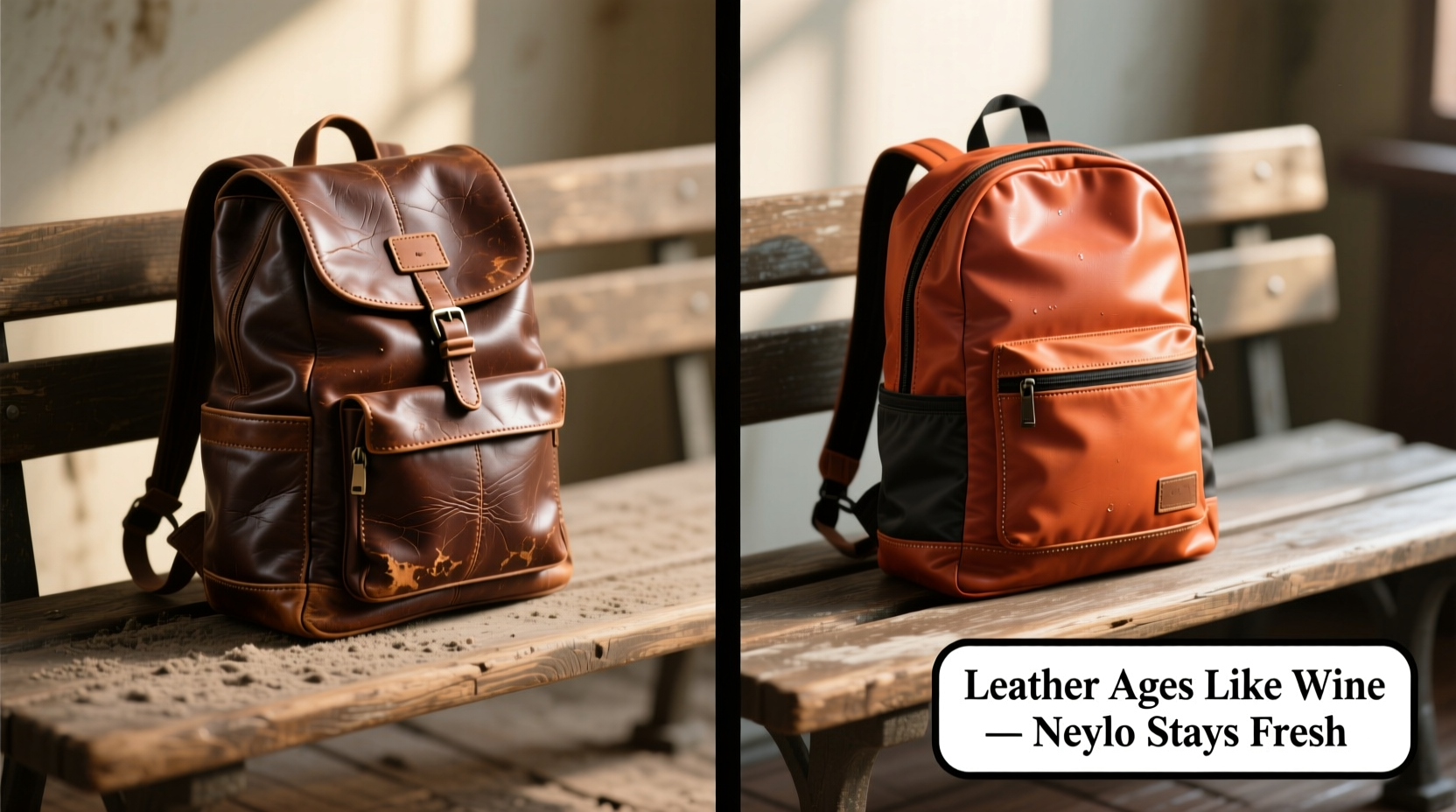
Aging gracefully doesn’t mean staying unchanged. In fact, it often means changing in a way that enhances appeal. Think of a well-worn pair of boots that mold to the foot, or a vintage watch that gains character with every scratch. Graceful aging implies resilience, beauty in imperfection, and sustained function.
In backpacks, this concept breaks down into several factors:
- Durability over time: Does the material resist tears, abrasions, and structural failure?
- Visual evolution: Do scuffs and marks degrade the look, or do they add charm?
- Maintenance demands: How much effort is needed to keep it looking respectable?
- Environmental resistance: How does it handle rain, sun, dirt, and spills?
Nylon and leather respond very differently to these stressors. Their paths diverge not just in initial cost but in how they carry the story of your daily life.
Leather Backpacks: The Slow Burn of Character
Full-grain or top-grain leather backpacks are often marketed as heirloom pieces. They’re heavier, pricier, and require more care than synthetic alternatives—but for good reason. Leather is a natural material that reacts dynamically to its environment and usage.
With regular exposure to sunlight, body oils, and friction, high-quality leather develops a patina—a rich, lustrous surface that deepens in color and texture. Scuffs don’t vanish, but they blend into the narrative of the bag, like creases in a favorite jacket. Over time, a leather backpack becomes uniquely yours.
However, not all leather is created equal. Bonded or corrected-grain leather may crack, peel, or discolor prematurely. True aging grace belongs to full-grain hides, which are minimally processed and retain the hide’s natural fibers.
“A well-cared-for leather backpack can outlive three nylon ones. It’s not maintenance—it’s stewardship.” — Daniel Reyes, Artisan Bagmaker at Timber & Thread Co.Tip: Condition your leather backpack every 3–6 months with a pH-balanced balm to prevent drying and cracking.
Leather also performs surprisingly well against moderate moisture when treated. Waxed or oiled leathers naturally repel water, forming beads on the surface. However, prolonged exposure to rain or humidity without proper drying can lead to mildew or warping.
The Long-Term Trajectory of Leather Use
After one year of daily use:
- Edges begin to soften and round slightly.
- Straps conform to shoulder shape.
- Surface shows light scratches that contribute to patina.
After three to five years:
- Pronounced color variation appears, especially on corners and handles.
- Stitching remains intact if waxed thread was used.
- Hardware (zippers, buckles) may show wear before the leather fails.
The key to leather’s graceful aging lies in consistency—not just in use, but in care. Neglect leads to dryness, fading, and eventual breakdown. Attention fosters resilience and beauty.
Nylon Backpacks: Functional Resilience with Fading Appeal
Nylon, particularly in its ballistic or ripstop forms, is engineered for toughness. It’s lightweight, water-resistant, and highly resistant to abrasion. Military-grade packs, hiking gear, and urban commuters often favor nylon for its ability to endure harsh conditions with minimal upkeep.
Unlike leather, nylon doesn’t develop character—it resists change. It won’t darken with age or form a patina. Instead, it slowly degrades through fiber fatigue, UV exposure, and repeated mechanical stress. The zippers, stitching, and coatings usually fail before the fabric itself tears.
Over time, nylon can:
- Fade from prolonged sun exposure.
- Develop pilling or fraying at high-friction points (e.g., straps, base).
- Lose water repellency as DWR (durable water repellent) coating wears off.
- Show permanent stains from oil, dirt, or ink.
While some users appreciate the “battle-tested” look of a worn nylon pack, others find it simply looks tired—faded, grimy, and outdated. There’s no romantic patina, only evidence of wear.
Real-World Example: The Commuter’s Dilemma
Consider Mark, a software developer in Seattle. He uses his backpack daily—rain or shine, bus or bike. He bought two packs: a $220 full-grain leather model and a $90 ripstop nylon alternative.
After 18 months:
- The nylon pack survived heavy rain and coffee spills but began showing faded patches on the back panel. The shoulder straps developed thinning fabric near the clips. Washing restored some cleanliness but left watermarks.
- The leather pack darkened beautifully along the edges and developed a soft sheen. Minor scuffs from subway doors blended in. He conditioned it twice and wiped it down weekly. It looked lived-in, not worn out.
Mark still uses both—but he reaches for the leather one more often, not for function, but for pride. “It feels like it’s growing with me,” he says. “The nylon just feels disposable.”
Tip: For nylon packs, reapply a fabric refresher spray every few months to restore water resistance.Direct Comparison: Leather vs Nylon Over Time
| Factor | Leather (Full-Grain) | Nylon (Ripstop/Ballistic) |
|---|---|---|
| Initial Appearance | Rich, structured, premium | Clean, utilitarian, modern |
| 5-Year Visual Change | Develops patina, deepens in color, scuffs blend in | Fades, shows pilling, stains become visible |
| Durability Under Daily Use | High—resists tearing; weak point is hardware | High—resists abrasion; weak point is seams and coating |
| Water Resistance | Good when conditioned; absorbs if soaked | Excellent initially; degrades over time |
| Maintenance Needs | Moderate (cleaning, conditioning) | Low (spot cleaning, occasional wash) |
| Weight | Heavier (3–5 lbs average) | Lighter (1.5–3 lbs average) |
| Eco-Impact Long-Term | Biodegradable; longer lifespan reduces waste | Petroleum-based; microplastics when worn |
| Emotional Value Over Time | Increases—seen as personal artifact | Decreases—often replaced after 2–3 years |
This table reveals a crucial insight: while nylon wins on convenience and initial performance, leather gains value over time—both aesthetically and emotionally. Its aging process is not decay, but transformation.
How to Maximize Longevity: A Step-by-Step Care Guide
No material ages well without attention. Whether you choose leather or nylon, follow this timeline to preserve integrity and appearance.
- Week 1: Initial Protection
- For leather: Apply a leather conditioner to hydrate and seal.
- For nylon: Spray with a DWR treatment to boost water resistance.
- Monthly: Surface Maintenance
- Wipe leather with a damp cloth; avoid soaking.
- Vacuum nylon interiors and spot-clean stains promptly.
- Every 3–6 Months: Deep Care
- Leather: Re-condition and inspect stitching/hardware.
- Nylon: Wash according to manufacturer instructions (usually hand or gentle machine cycle).
- Annually: Structural Check
- Test zippers, straps, and buckles for weakness.
- Rotate storage position to prevent flat spots.
- Seasonal: Environmental Adjustment
- In winter: Protect leather from salt and moisture.
- In summer: Shield nylon from prolonged UV exposure.
Checklist: Choosing the Right Pack for Long-Term Use
Ask yourself these questions before purchasing:
- ✅ Do I value aesthetic evolution over time?
- ✅ Am I willing to invest 10 minutes a month in maintenance?
- ✅ Will I be exposed to frequent rain or extreme weather?
- ✅ Do I prefer a lightweight or substantial feel?
- ✅ Is this bag meant to last 5+ years, or be replaced regularly?
- ✅ Does the design complement professional, casual, or outdoor settings?
If you answered “yes” to the first two, leather is likely the better fit. If you prioritize low maintenance and weight savings, nylon remains a strong contender—just accept that it won’t improve with age.
FAQ: Common Questions About Backpack Aging
Can I speed up the leather patina process?
Yes, but cautiously. Regular handling, controlled sunlight exposure, and occasional buffing with a soft cloth accelerate patina. Avoid oils or heat guns—they can cause uneven darkening or damage.
Do nylon backpacks really last longer than leather?
Not necessarily. While nylon resists immediate damage, most high-use nylon packs show functional decline within 3–4 years. Quality leather backpacks, properly maintained, often exceed 7–10 years of daily use.
What’s the biggest mistake people make with leather backpacks?
Letting them get wet and then storing them damp. Moisture trapped in leather causes mildew and stiffness. Always air-dry thoroughly away from direct heat before storing.
Conclusion: Aging Is a Choice, Not a Guarantee
The question isn’t whether leather or nylon ages better—it’s what kind of story you want your backpack to tell. Nylon serves efficiency. It performs reliably, asks little, and fades quietly into obsolescence. Leather invites participation. It changes, matures, and reflects the life it carries.
Graceful aging isn’t passive. It requires intention. A neglected leather backpack will crack. An overused nylon pack will fray. But with mindful use and simple care, leather transforms into something more valuable than new—it becomes meaningful.
If you value objects that grow with you, that bear the marks of your journey with dignity, then leather is the clear winner in the long run. It doesn’t just survive daily use—it thrives because of it.
💬 Have a backpack that’s aged beautifully? Share your experience or care tips in the comments—your story could inspire someone’s next lifelong companion.








