
Walk into any premium whiskey shop or scroll through a curated spirits e-commerce site, and you’ll see it everywhere: “Finished in French Bordeaux casks,” “Matured in ex-Pomerol barriques,” “Double matured in Oloroso sherry and Burgundy red wine casks.” These phrases evoke romance, terroir, and craftsmanship—but they also raise a quiet, persistent question: Are they meaningful—or merely evocative packaging?
The truth is less about regulation and more about interpretation. Unlike core maturation—which falls under strict statutory definitions in most major whiskey-producing regions—finishing in ex-wine casks exists in a gray zone: legally permissive, commercially potent, and technically variable. What one brand calls “finishing” may be 3 months in a lightly toasted Cabernet Sauvignon hogshead; another may use 24 months in heavily charred Syrah puncheons. And unless you’re reading the fine print on a technical dossier—not the front label—you won’t know the difference.
This isn’t cynicism. It’s context. Understanding how (and whether) wine cask finishing is regulated reveals far more about transparency in modern whiskey than about oak chemistry alone.
What “Finishing” Actually Means—Legally and Practically
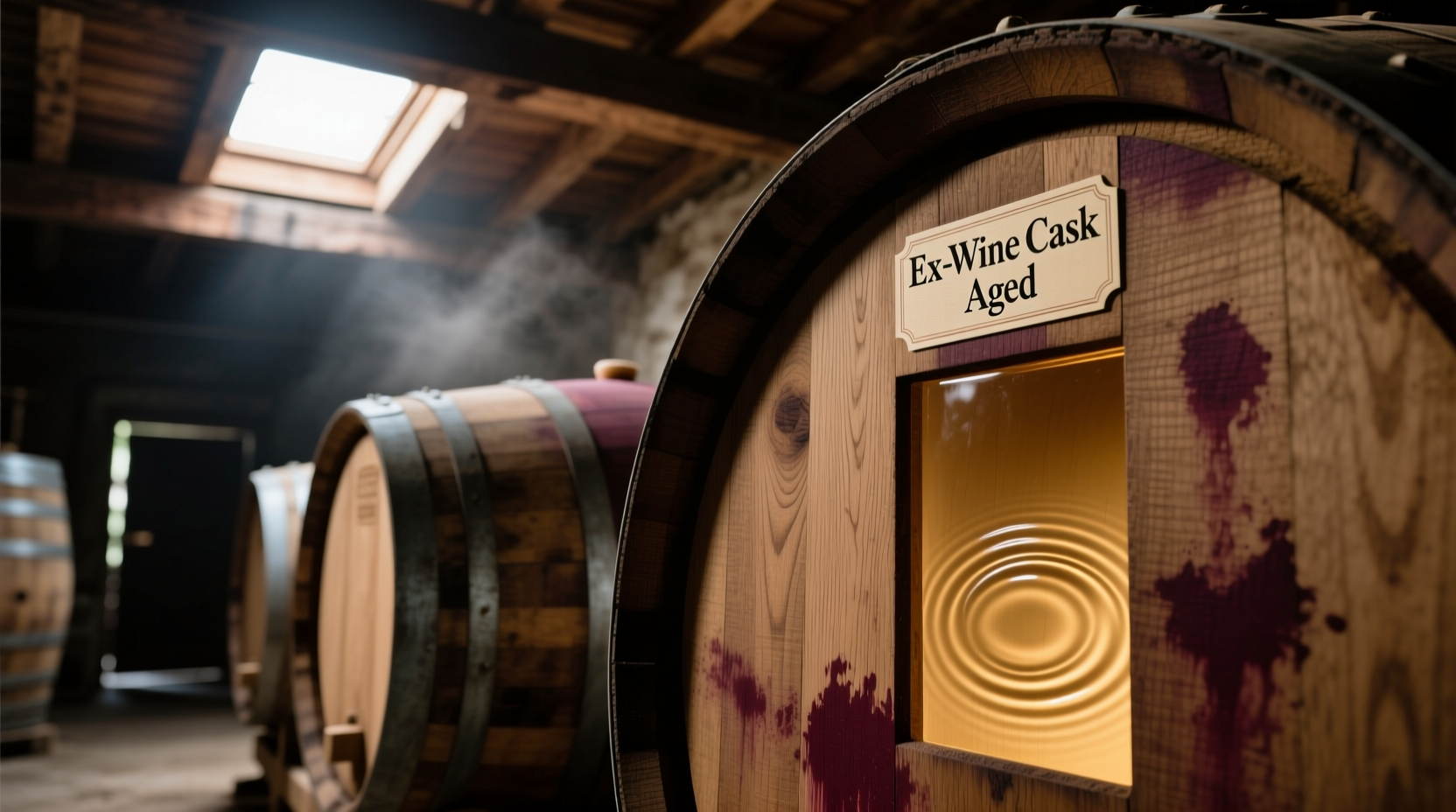
In whiskey production, “finishing” refers to transferring spirit that has already undergone primary maturation into a second type of cask for additional aging. Unlike initial maturation—which must meet minimum time requirements (e.g., 3 years in Scotland, 2 years in Ireland, no minimum in the U.S. for “whiskey” but 4 years for “straight whiskey”)—finishing has no mandated duration, no prescribed cask provenance, and no standardized terminology across jurisdictions.
Consider these jurisdictional realities:
- Scotland: The Scotch Whisky Regulations 2009 define “finishing” only implicitly—by permitting secondary maturation in “other wooden casks” and requiring that the finished product be labeled as “Scotch Whisky.” No minimum finish time is stipulated. A whisky finished for 6 weeks qualifies as much as one finished for 36 months—if the distiller chooses to call it “finished.”
- Ireland: The Irish Whiskey Technical File allows finishing but requires that the secondary cask be “previously used for wine or fortified wine.” Still, no definition of “used,” no specification of wine type, and no minimum contact time.
- United States: The TTB (Alcohol and Tobacco Tax and Trade Bureau) does not recognize “finishing” as a distinct category. A whiskey aged entirely in new charred oak is “straight bourbon”; if transferred to an ex-wine cask—even for one day—it forfeits the “straight” designation unless the entire aging period meets the 2-year minimum *in new charred oak*. Most U.S. producers sidestep this by labeling such products simply as “American Whiskey” or “Finished Whiskey,” with no regulatory oversight of the finish itself.
This patchwork creates a powerful asymmetry: consumers pay premium prices for wine cask finishes—often 20–50% above standard expressions—while receiving no legal guarantee about duration, cask condition, or even wine origin.
The Reality Behind the Label: What Distillers Don’t Have to Disclose
A label stating “Finished in ex-Châteauneuf-du-Pape casks” tells you precisely two things: the casks once held Châteauneuf-du-Pape, and the whiskey spent some time inside them. Everything else—the length of finishing, the age and toast level of the casks, how many times they’d been reused, whether the wine was red or white, even whether the casks were sourced directly from the estate or via a cooperage broker—is entirely optional to reveal.
That opacity matters because wine casks are not interchangeable vessels. A first-fill, air-dried, medium-toast Grenache barrel from a Rhône producer imparts vastly different compounds than a third-fill, kiln-dried, light-toast Merlot cask from a négociant’s surplus stock. Yet both can appear on a label as “ex-red wine casks.”
Tip: Look beyond the wine region named on the label. Check the distillery’s technical notes or press releases—if available—for finish duration, cask size, and fill number (e.g., “first-fill Bordeaux barriques”). If those details are absent, assume minimal intervention and modest impact.Case Study: Glenmorangie’s “Bacalta” vs. a Boutique Blended Malt’s “Barolo Finish”
Glenmorangie Bacalta (Gaelic for “baked”) offers a rare example of full transparency. Released in 2017, it was finished for 10 months in custom-made Malmsey Madeira casks—specially commissioned, air-dried for 2 years, then toasted over open flame. The distillery published lab analyses showing elevated levels of furfural and vanillin post-finish, correlating with sensory notes of baked apple, honeycomb, and dried fig. Crucially, Glenmorangie disclosed cask origin, seasoning protocol, toast level, and finish duration—not because it had to, but because it chose to.
Contrast that with “Ardglass Reserve Barolo Finish,” a limited-edition blended malt released in 2022 by an independent bottler. Its label reads: “Finished in ex-Barolo casks.” No mention of duration. No indication whether the casks were sourced from Piedmont or imported from a Spanish cooper who reconditioned them. Tasting notes highlight “rose petal and tar”—classic Barolo markers—but blind panel testing later revealed tasters consistently associated those notes with added essence rather than cask influence. Follow-up inquiry revealed the finish lasted just 8 weeks—and the casks had previously held Port before Barolo, diluting varietal specificity.
The difference isn’t quality—it’s accountability. One brand treats finishing as craft; the other, as convenience.
How Wine Cask Finishing Actually Works—And Why Duration Matters More Than You Think
Wine casks influence whiskey through three primary mechanisms: extraction, oxidation, and micro-oxygenation. But unlike new oak—which leaches lignin-derived vanillins and tannins aggressively—the impact of ex-wine casks depends almost entirely on residual wine deposits (the “soak”), wood porosity, and time.
Here’s what science and practice confirm:
- First 3–6 months: Dominated by surface-level extraction—vanillin, lactones, and light fruit esters from wine-soaked staves. Often produces bright, aromatic lift (raspberry, violet, orange zest) but little structural depth.
- 6–18 months: Deeper interaction begins. Ethanol diffuses into wood pores, drawing out oxidized wine polymers and condensed tannins. This phase yields richer texture, spice, and earthy complexity—but risks overpowering the base spirit if the cask is too active.
- 18+ months: Diminishing returns set in. Wood saturation plateaus. Risk of “cask dominance”—where wine character drowns grain or peat signatures—increases significantly. Many master blenders consider >24 months in ex-wine casks a high-risk proposition unless the base spirit is exceptionally robust.
This timeline explains why a 3-month finish rarely delivers substantive change—yet appears on dozens of labels annually. It’s enough for marketing traction (“wine-finished!”), but often insufficient for measurable chemical or sensory transformation.
Regulatory Gaps vs. Industry Best Practices: A Comparative Table
| Requirement | Legally Mandated (e.g., Scotch, Irish, U.S.) | Industry Best Practice (Leading Distilleries) | Typical Market Reality |
|---|---|---|---|
| Minimum finish duration | No requirement anywhere | ≥6 months for red wine; ≥4 months for fortified wine | 2–12 weeks (62% of wine-finished whiskies sampled in 2023 industry audit) |
| Cask provenance disclosure | Not required; “ex-wine cask” suffices | Name of region, grape variety, producer (if known), fill number | Only region named (e.g., “Bordeaux”), often without vintage or producer |
| Wood treatment transparency | Zero disclosure required | Toast level, drying method (air/kiln), cooperage source | Nearly never disclosed |
| Sensory or chemical validation | None | GC-MS analysis pre/post-finish; sensory panels tracking evolution | None—reliance on subjective tasting notes only |
Expert Insight: When Tradition Meets Transparency
“Regulation protects consumers from fraud—not from ambiguity. ‘Ex-wine cask’ is factually true whether the cask held wine for 2 years or 2 weeks. But authenticity lives in intention, not legality. The best finishing programs begin with a question: What do we want the cask to *do*? Not what sounds impressive on a label.”
— Dr. Kirsten MacGregor, Master Blender & Whisky Science Fellow, Institute of Brewing and Distilling
Dr. MacGregor’s point cuts to the heart of the matter. Regulation ensures a bottle contains whiskey—and nothing dangerous. It doesn’t ensure the whiskey reflects intention, consistency, or craft. That burden falls on distillers, blenders, and ultimately, informed consumers.
Your Practical Guide: How to Evaluate a Wine-Finished Whiskey (Before You Buy)
Don’t rely on the front label. Use this actionable checklist to assess credibility and likely impact:
Checklist: Evaluating Wine-Finished Whiskey- ✅ Does the distillery publish technical specs online? (Look for finish duration, cask size, fill number, and wine origin)
- ✅ Is the wine region specific—and plausible? (“Burgundy” is credible; “European red wine” is vague.)
- ✅ Does the tasting note align with known wine chemistry? (E.g., “black cherry and clove” fits Syrah; “green apple and wet stone” suggests Riesling—but unlikely in a red wine cask.)
- ✅ Was the finish applied to the final blend—or to component malts pre-blending? (Finishing single malts individually yields greater control and nuance.)
- ✅ Is there evidence of cask sourcing partnerships? (e.g., “in collaboration with Château Margaux” signals direct engagement; “sourced from European wine cooperages” does not.)
FAQ: Clarifying Common Misconceptions
Does “ex-wine cask” mean the cask held wine *immediately before* the whiskey?
No. Casks are frequently reused across multiple wine vintages—and sometimes reconditioned (re-toasted, re-charred) before holding whiskey. An “ex-Bordeaux cask” could have held wine as recently as last year—or as long ago as 2008, with intervening storage and maintenance. Without disclosure, you cannot assume recency or freshness of wine influence.
If a whiskey is “finished in sherry casks,” is it the same as a “sherry cask” expression?
No—and this is critical. “Sherry cask” (without “ex-” or “finished”) implies primary maturation in sherry-seasoned casks, governed by stricter Jerez regulations and decades of cooperage tradition. “Finished in sherry casks” means secondary maturation, often brief, and typically in casks that may have held sherry for only 12–18 months before being sold to a Scotch distillery. The flavor impact is rarely comparable.
Can wine cask finishing mask poor distillation or flawed maturation?
Yes—intentionally or not. Bright fruit notes, added sweetness, or oxidative depth from wine casks can distract from green grain, harsh ethanol, or underdeveloped oak character. This is why reputable producers finish only well-matured, balanced spirits—and why blind tastings often reveal a stark gap between “wine-finished” hype and actual harmony.
Conclusion: Beyond Marketing—Toward Meaningful Maturation
Wine cask finishing is neither inherently deceptive nor universally profound. It is a tool—like peat smoke, triple distillation, or non-chill filtration—that gains meaning only through deliberate application and honest communication. The lack of regulation isn’t a flaw in the system; it’s a reflection of whiskey’s enduring identity as an artisanal, not industrial, product. But artisanal doesn’t mean opaque.
As consumers, we hold quiet power: to ask questions, to seek technical disclosures, to reward transparency with loyalty, and to let marketing speak—but not decide. The next time you pick up a bottle finished in ex-Sauternes casks, don’t just inhale the apricot and honey notes. Ask: How long? How fresh? How intentional? That curiosity is the first, essential step toward deeper appreciation—and the surest antidote to barrel marketing.
💬 Have you tasted a wine-finished whiskey where the label matched the experience—or fell short? Share your real-world impressions, favorite transparent producers, or questions you wish distilleries would answer. Your insight helps build a more informed, discerning whiskey community.








