Barrel-aged beer occupies a curious space in the craft beer world: revered by connoisseurs, fetishized on tap lists, and priced like rare whiskey—yet often misunderstood. A 2023 Brewers Association report found that barrel-aged releases accounted for less than 1.2% of total craft volume, yet generated over 8% of premium-tier revenue. That disparity alone signals something deeper than flavor at play. It’s not just about oak, vanillin, or bourbon notes. It’s about time, scarcity, narrative, and the human tendency to equate effort with excellence. This article cuts through the oak-scented fog—not to dismiss barrel aging, but to clarify when it elevates beer and when it merely inflates price tags and ego.
What Actually Happens Inside the Barrel (Beyond the Buzzwords)
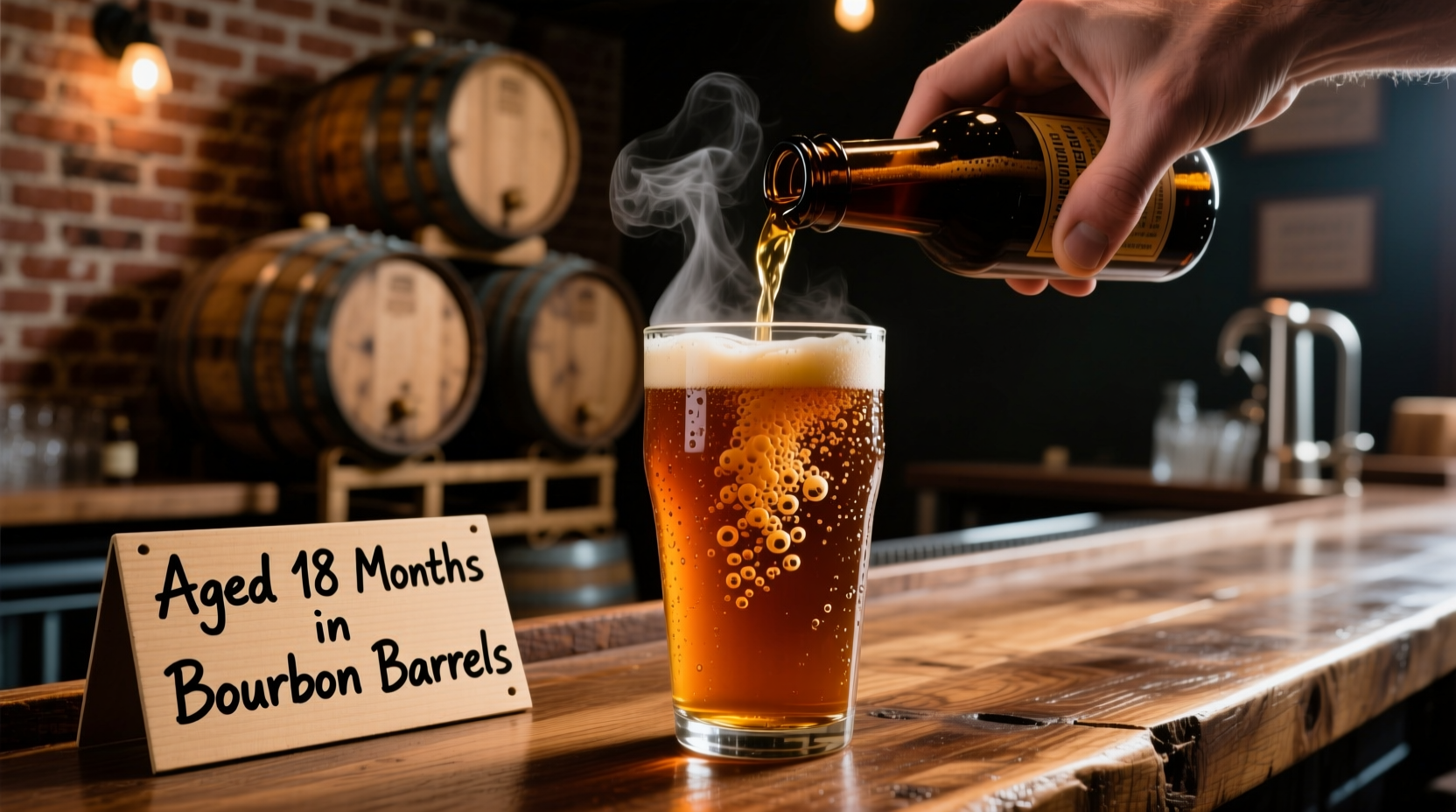
Barrel aging is neither magic nor alchemy—it’s controlled microbial and chemical interaction. When beer enters a used spirit barrel (most commonly bourbon, but also rum, tequila, wine, or brandy casks), three primary processes unfold simultaneously:
- Extraction: The beer pulls compounds from the wood—lignin (vanilla, clove), hemicellulose (caramel, toffee), tannins (structure, astringency), and residual spirit character (ethyl acetate, oak lactones, char-derived phenols).
- Oxidation: Slow, measured oxygen ingress through the staves softens harsh alcohols, rounds out esters, and develops nutty, sherry-like complexity—but excessive oxidation yields cardboard, wet paper, or stale fruit.
- Microbial activity: In sour or mixed-culture barrels, Brettanomyces, Lactobacillus, and Pediococcus transform sugars and acids over months or years, creating funk, tartness, and layered umami rarely achievable in stainless steel.
Critical nuance: Not all barrels are equal. A freshly dumped, high-char, first-fill Kentucky bourbon barrel delivers intense coconut, oak, and ethanol heat. A third-use, low-toast Chardonnay barrel may contribute little more than subtle acidity and faint citrus peel. And a “barrel-aged” label doesn’t guarantee contact time—some beers rest for 72 hours; others for 36 months. Without transparency on barrel origin, fill count, toast level, and aging duration, the term becomes meaningless.
Tip: Look for specific barrel details on the label or brewery website—e.g., “aged 14 months in 2nd-fill Heaven Hill bourbon barrels, medium-toast.” Vague terms like “oak-aged” or “spirit-barrel aged” signal minimal or cosmetic treatment.The Hype Gap: Where Flavor Ends and Marketing Begins
The disconnect between perception and reality starts with language. “Barrel-aged” has become shorthand for “premium,” even when the beer shows negligible oak influence. A 2022 blind tasting study by the Cicerone Certification Program tested 42 craft drinkers on six identical imperial stouts—one unaged, two barrel-aged (bourbon and rye), and three “oak-chipped” versions. Over 68% rated the oak-chipped samples as “more complex” than the true barrel-aged counterparts, citing “richer vanilla” and “smoother mouthfeel”—despite lab analysis confirming significantly lower lignin extraction in the chipped versions. Why? Expectancy bias. The mental framework of “barrel = better” overrides actual sensory input.
This extends to pricing. A standard 22-oz bottle of an unaged imperial stout averages $12–$14. Its barrel-aged sibling typically retails for $24–$36. That 100%+ markup assumes labor, barrel cost ($250–$450 per used bourbon barrel), storage space, evaporation loss (“angel’s share”), and extended capital lockup. But economics don’t always track with impact. Some breweries age beers in barrels solely to justify premium pricing, then blend them back with unaged batches to stretch yield—diluting the very characteristic they’re selling.
“Barrel aging isn’t a flavor booster—it’s a flavor transformer. If you can’t taste the barrel’s fingerprint, you’ve either under-aged, over-diluted, or mislabeled. There’s no ‘subtle’ barrel character that just ‘enhances’ a beer without changing its core identity.” — Dr. Emily Rho, Sensory Scientist & Former Quality Director, Firestone Walker Brewing Co.
A Real-World Case Study: The Rise and Refinement of Fremont Brewing’s Bourbon Abominable
Fremont Brewing in Seattle launched its Bourbon Abominable Imperial Stout in 2011 as a limited release aged 6–9 months in Jim Beam barrels. Early batches were polarizing: some reviewers praised “intense bourbon heat and char,” while others noted “harsh ethanol burn masking roast and chocolate.” Sales spiked—but so did complaints about inconsistency. By 2015, Fremont shifted strategy: they began sourcing only 2nd- and 3rd-fill barrels, reduced aging to 4–5 months, and introduced rigorous sensory triaging—discarding any barrel showing excessive acetic acid or green oak tannins.
The result? A more balanced, drinkable beer where bourbon notes complement rather than dominate. ABV dropped from 13.2% to 11.8%, and shelf life improved dramatically. Crucially, the price remained stable—$26 per 22-oz bottle—while distribution widened. Their internal data showed a 41% increase in repeat buyers after the reformulation, proving that authenticity trumps intensity. As their head brewer stated in a 2022 interview: “We stopped aging for Instagram and started aging for the palate.”
How to Judge Barrel-Aged Beer Like a Critical Drinker (Not a Collector)
Forget chasing rarity or chasing “whiskey-forward” profiles. Evaluate barrel-aged beer on three functional criteria:
- Integration: Do oak, spirit, and base beer elements cohere? Vanillin should support, not smother, the malt backbone. Heat should be warming, not burning. Tannins should add structure, not bitterness.
- Balance: Is the beer still recognizably *beer*? Can you identify the base style? A barrel-aged IPA shouldn’t taste like a bourbon cocktail with hops as an afterthought.
- Evolution: Does the flavor change meaningfully across the sip? Does the finish reveal new layers (e.g., dark cherry emerging after oak, or dried fig after initial vanilla)? Stagnant, one-note barrel character suggests poor blending or insufficient aging.
| Criterion | Sign of Success | Red Flag |
|---|---|---|
| Integration | Oak tannins mirror malt astringency; spirit warmth amplifies alcohol warmth without clashing | Hot, solvent-like ethanol; disjointed flavors (e.g., bourbon up front, roasted barley only on finish) |
| Balance | You can still taste the base beer’s DNA—e.g., coffee and dark chocolate in a stout, citrus zest in a saison | Base beer is indistinguishable; only “oak” or “bourbon” registers |
| Evolution | Flavor arc: initial spirit/oak → mid-palate malt/fruit → lingering complexity (tobacco, leather, dried fruit) | Flat profile; same note from first sip to last; no development or nuance |
Your Action Plan: Drink Smarter, Not Just Pricier
Barrel-aged beer deserves respect—but not blind reverence. Apply this practical, step-by-step approach before your next purchase or pour:
- Research the barrel source: Visit the brewery’s website or social media. Look for specifics: distillery name, barrel age (1st/2nd/3rd fill), toast level, and aging duration. If absent, assume minimal impact.
- Check the base beer’s reputation: A poorly brewed stout won’t improve in oak. Seek breweries known for clean fermentation, robust malt profiles, and consistent quality—even in unaged versions.
- Read beyond the hype: Skip press releases. Read independent reviews (e.g., RateBeer, Untappd) focusing on *integration* and *balance*, not just “wow factor.” Filter for reviewers with >500 check-ins for credibility.
- Taste methodically: Serve at 50–55°F (not ice-cold). Pour into a tulip or snifter. Note: (a) aroma balance (spirit vs. malt vs. hop), (b) first impression on the tongue (heat, sweetness, acidity), (c) mid-palate texture and flavor layering, (d) finish length and evolution.
- Compare side-by-side: Buy a bottle of the unaged version (if available) and taste them blind. You’ll quickly discern whether the barrel adds dimension—or merely dilutes clarity.
FAQ: Straight Answers, No Jargon
Does longer aging always mean better barrel-aged beer?
No. Extended aging increases risk of over-oaking, oxidation, or microbial spoilage. Most robust stouts peak between 6–12 months in bourbon barrels; delicate saisons or sours often shine best at 3–6 months. Beyond 18 months, diminishing returns set in—unless the beer is intentionally built for extreme aging (e.g., Flanders reds, imperial stouts with high ABV and residual sugar).
Are “finished” beers—like those aged in wine barrels after bourbon—worth the extra cost?
Sometimes—but only if the finishing barrel contributes distinct, complementary character. A Pinot Noir barrel may add bright red fruit and earthy tannins to a stout, while a Pedro Ximénez sherry cask can lend rich date and fig notes. However, many “wine-finished” beers use neutral, exhausted barrels that impart little beyond vague acidity. Always verify the wine varietal, vintage, and barrel condition—not just the label’s romantic phrasing.
Can I cellar barrel-aged beer at home like wine?
Yes—but selectively. Only high-ABV (≥11%), high-IBU, or sour/funky styles benefit from cellaring. Store bottles upright in a cool (50–55°F), dark, humid (60–70%) environment. Avoid temperature swings. Most barrel-aged stouts peak within 2–3 years; sour ales with Brett evolve beautifully for 5–10 years. Never cellar hazy IPAs or light lagers—they degrade rapidly.
Conclusion: Respect the Process, Reject the Posturing
Barrel-aged craft beer is neither universally transcendent nor inherently hollow. It’s a tool—like dry-hopping, kettle souring, or decoction mashing—with the power to deepen, complicate, and humanize beer when applied with intention, transparency, and humility. The hype persists because it sells stories: of patience, craftsmanship, and exclusivity. But the best barrel-aged beers don’t shout about their origins—they invite quiet attention, reward repeated sips, and leave you thinking less about the barrel and more about the brewer’s quiet mastery. Next time you see “barrel-aged” on a menu or shelf, pause. Ask not “Is this rare?” but “Does this taste like it needed the barrel?” Then trust your palate—not the price tag, not the lore, not the influencer’s glowing review. That shift—from collector to critic—is where genuine appreciation begins.
💬 Your turn: What’s the most memorable barrel-aged beer you’ve tasted—and what made it stand out? Share your honest take (good or critical) in the comments. Let’s build a smarter conversation around oak, time, and truth in beer.








