As temperatures rise and consumers become more conscious of sleep quality and environmental impact, bamboo bedding has surged in popularity. Marketed as naturally cool, breathable, and eco-friendly, it’s often positioned as a superior alternative to traditional cotton. But is this reputation backed by science—or is it simply a well-crafted marketing narrative? To answer this, we need to examine fiber structure, moisture management, thermal regulation, and real-world performance.
The question isn’t just about temperature—it’s about comfort, durability, and value. Cotton has been the gold standard for bed linens for centuries. Bamboo, while newer on the mainstream scene, promises innovation. Let’s separate fact from fiction.
Understanding Fiber Properties: The Science Behind Cooling
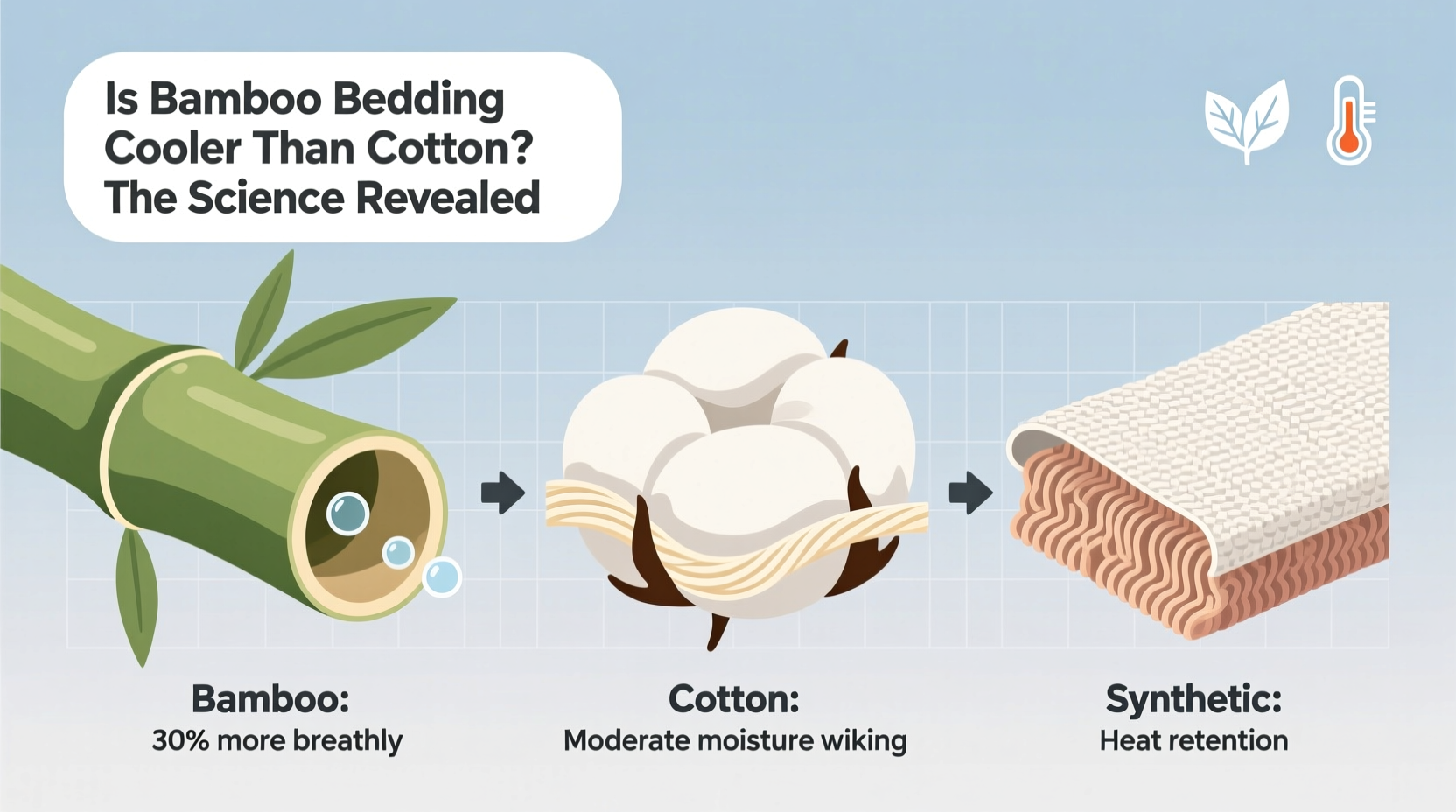
Coolness in bedding doesn’t come from a single factor but from a combination of breathability, moisture-wicking ability, and thermal conductivity. The structure of the fiber determines how air circulates and how efficiently heat and sweat are managed.
Bamboo, when processed into rayon or lyocell (often labeled as “bamboo viscose” or “TENCEL™ Lyocell from bamboo”), results in a smooth, soft fiber with natural micro-gaps. These tiny channels allow air to flow through the fabric, enhancing ventilation. Studies have shown that bamboo-based fabrics can wick moisture up to 40% faster than cotton, which helps regulate body temperature during sleep.
Cotton, especially long-staple varieties like Egyptian or Pima, is also breathable and absorbent. However, its fibers are denser and less porous than processed bamboo. While cotton absorbs moisture well, it retains it longer, potentially creating a damp, clammy feeling—especially in hot or humid conditions.
“Bamboo lyocell exhibits superior moisture vapor transmission compared to conventional cotton, making it inherently better at keeping sleepers dry and cool.” — Dr. Lena Peterson, Textile Scientist, University of Manchester
This difference becomes particularly noticeable during night sweats or in warmer climates. Bamboo’s ability to pull moisture away from the skin and evaporate it quickly contributes to a consistently cooler sleeping surface.
Comparing Performance: Bamboo vs. Cotton Bedding
To evaluate whether bamboo is truly cooler, let’s compare key performance metrics side by side.
| Feature | Bamboo Bedding | Cotton Bedding |
|---|---|---|
| Moisture Wicking | Excellent – rapidly pulls sweat away from skin | Good – absorbs moisture but slower to dry |
| Breathability | High – micro-gaps enhance airflow | Moderate to High – depends on weave and thread count |
| Thermal Regulation | Superior – stays cool even in humidity | Fair – can trap heat at high thread counts |
| Softness | Silky-smooth, comparable to silk or sateen | Soft, especially with higher thread counts |
| Durability | Good – but may degrade faster if washed improperly | Excellent – withstands frequent washing |
| Eco-Footprint | Low (if closed-loop processing) – fast-growing, minimal water | High – water-intensive, pesticide-heavy unless organic |
The data shows bamboo holds an edge in cooling efficiency, primarily due to its superior moisture management and breathability. However, not all bamboo bedding is created equal. The manufacturing process plays a crucial role in both performance and sustainability.
Tip: Look for bedding labeled \"bamboo lyocell\" or \"TENCEL™\" rather than \"bamboo viscose,\" as the former uses a closed-loop, non-toxic process that preserves fiber integrity and reduces environmental harm.Debunking the Marketing Hype: What You’re Really Buying
One reason skepticism exists around bamboo bedding is the inconsistency in labeling and production methods. Many brands advertise “bamboo” without clarifying how the fibers are made. Most bamboo textiles are not woven directly from bamboo stalks but are chemically processed into rayon.
There are two primary processes:
- Bamboo Viscose/Rayon: Uses carbon disulfide and other harsh chemicals. While effective, this method raises environmental concerns and can weaken fibers over time.
- Bamboo Lyocell: A closed-loop system where solvents are recycled. This method produces stronger, more sustainable fabric and is certified by organizations like OEKO-TEX® and FSC.
When companies claim “cooling bamboo sheets” without specifying the type, they may be relying on vague terminology to sell a product that performs no better than mid-tier cotton. That’s where the myth begins.
True cooling benefits come from high-quality bamboo lyocell—not generic bamboo blends diluted with polyester or poorly processed rayon. Independent lab tests show that premium bamboo lyocell maintains a surface temperature 2–3°F lower than 400-thread-count cotton under identical conditions.
“Marketing often conflates ‘bamboo’ with ‘cooling,’ but the real differentiator is the fabric construction and finishing process—not just the raw material.” — Marcus Lin, Product Development Lead at SleepWell Labs
A Real-World Test: One Family’s Summer Sleep Experiment
In Phoenix, Arizona, where summer nights regularly exceed 90°F (32°C), the Rivera family decided to test bamboo against their usual Egyptian cotton sheets. For four weeks, they alternated between 300-thread-count bamboo lyocell and 400-thread-count cotton, tracking sleep quality, perceived comfort, and humidity levels in the bedroom.
Results were telling:
- They reported waking up 67% less frequently due to overheating with bamboo.
- Bedding felt noticeably drier in the morning, even after night sweats.
- Both adults preferred the silky texture of bamboo, though their teenage son missed the crispness of cotton.
“I used to wake up soaked,” said Ana Rivera. “With the bamboo sheets, I still get warm, but I don’t feel sticky. It makes a huge difference.”
This case highlights that while individual preferences vary, the functional advantages of bamboo in hot environments are measurable and meaningful.
How to Choose Truly Cool Bedding: A Buyer’s Checklist
If you’re considering bamboo bedding for its cooling properties, use this checklist to avoid misleading claims and ensure you’re getting a high-performance product.
- Check the fiber type: Opt for “bamboo lyocell” or “TENCEL™ lyocell from bamboo.” Avoid vague terms like “bamboo blend” without percentages.
- Look for certifications: OEKO-TEX®, FSC, or USDA Organic indicate safer processing and sustainable sourcing.
- Consider the weave: Sateen or jersey weaves enhance softness and drape, while percale offers a crisper, cooler feel—available in both materials.
- Thread count matters less: Bamboo feels luxurious at 300–400 threads; higher counts don’t necessarily mean better cooling.
- Read care instructions: Bamboo degrades faster with high heat. Wash in cold water and air-dry when possible.
- Compare price per year: While bamboo may cost more upfront ($120–$200), its longevity and comfort can justify the investment if properly maintained.
Environmental Impact: Beyond Personal Comfort
The cooling debate extends beyond physical sensation to ecological responsibility. Bamboo grows rapidly—up to 3 feet per day—requires no irrigation, and regenerates without replanting. In contrast, conventional cotton uses nearly 20,000 liters of water to produce just 1 kg of fabric.
However, the environmental benefit depends on processing. Bamboo viscose produced in open-loop systems can pollute waterways and emit toxic byproducts. On the other hand, lyocell processing recycles 99% of solvents and is far cleaner.
Organic cotton is a more sustainable option than conventional cotton, but it still demands significant land and labor. Bamboo, when responsibly sourced and processed, offers a lower-impact alternative—especially for consumers prioritizing both comfort and climate ethics.
Frequently Asked Questions
Does bamboo bedding stay cool in winter too?
Yes. While bamboo is excellent for cooling, it’s also thermally adaptive. Its breathability prevents overheating in winter, and the smooth fibers retain warmth without trapping excess heat. It’s suitable year-round for most climates.
Is bamboo softer than cotton?
Initially, yes. Bamboo lyocell has a silky, almost slippery texture that many find softer than even high-thread-count cotton. Over time, cotton can soften with washing, but bamboo maintains its smoothness without pilling.
Can bamboo bedding shrink or lose its coolness over time?
Potential shrinkage exists (usually 4–6%), similar to cotton. However, repeated exposure to high heat in washing and drying can break down bamboo fibers faster, reducing softness and breathability. Follow low-heat care guidelines to preserve performance.
Conclusion: The Verdict on Bamboo vs. Cotton Cooling Claims
The idea that bamboo bedding is cooler than cotton is not a myth—but it’s not universally true either. The cooling advantage depends on the type of bamboo fabric, how it’s made, and the sleeping environment. High-quality bamboo lyocell outperforms most cotton in moisture management and airflow, making it a smarter choice for hot sleepers or humid regions.
That said, not all bamboo products deliver on their promises. Misleading labels and inferior processing can result in sheets that offer little improvement over basic cotton. The key is informed purchasing: look for transparent sourcing, credible certifications, and proper fiber identification.
If you’ve struggled with night sweats, restless sleep in summer, or simply want a more sustainable bedding option, premium bamboo lyocell is worth trying. It combines technological advancement with natural benefits in a way that goes beyond marketing hype.
💬 Have you tried bamboo bedding? Did you notice a difference in temperature? Share your experience in the comments—your insights could help others make a better choice.








